
Government officials are reportedly discussing a follow-up to India’s flagship rooftop solar scheme, and the headlines are already creating confusion among homeowners mid-decision. Should you install solar now, or hold off for a better deal under PM Surya Ghar 2.0?
Reports from the Times of India and Financial Express describe a proposal under government review that would add battery storage to the subsidy structure, open a shared rooftop model for renters and apartment residents, and tie part of the payout to actual electricity generation instead of installed capacity alone. None of this is notified policy yet. It is a set of ideas being evaluated inside the Ministry of New and Renewable Energy (MNRE), based on gaps the current scheme has struggled with since its 2024 launch.
This guide separates what is confirmed from what is speculative, and tells you exactly what to do with your own rooftop decision today. We cover what is actually changing, whether waiting makes financial sense, how existing PM Surya Ghar customers are affected, the real math on battery storage, how generation-linked subsidies would work, and the myths already spreading about this proposal.
TL;DR
- PM Surya Ghar 2.0 is a proposal under government review as of July 2026, not a notified scheme with an application window.
- Three changes are reportedly under discussion: battery storage subsidies, shared/community rooftop solar for renters, and generation-linked (performance-based) payouts.
- The current scheme’s ₹78,000 subsidy cap for a 3 kW system remains active and unaffected by the proposal.
- Waiting for 2.0 typically costs more in lost DISCOM bill savings than any future subsidy is likely to return, based on how long past scheme revisions took to notify.
- A 5 kWh lithium battery today costs ₹1.5 Lakh to ₹2 Lakh and saves roughly ₹600 to ₹900 a month in shifted self-consumption, even without a subsidy.
- Homeowners planning to add a battery later should install a hybrid inverter now to avoid replacing equipment.
- No confirmed dates exist for PM Surya Ghar 2.0 guidelines, subsidy amounts, or application opening as of this writing.
Short version. PM Surya Ghar 2.0 is a proposed government scheme, reported by the Times of India and Financial Express, that would add battery storage subsidies, shared rooftop solar for renters, and generation-linked payouts to the existing PM Surya Ghar Muft Bijli Yojana. It has not been notified, has no confirmed subsidy amount, and does not affect the current ₹78,000 subsidy for a 3 kW rooftop system. Most homeowners should install solar now under the live scheme and treat any 2.0 battery benefit as a future add-on, not a reason to delay.
Solar policy in India moves through a predictable pipeline: press reports of internal discussion, a draft framework circulated for feedback, cabinet approval, and finally an MNRE notification with implementation guidelines. The original PM Surya Ghar Muft Bijli Yojana itself took roughly a year to move from budget announcement in February 2023 to a fully operational online portal in 2024. PM Surya Ghar 2.0 is currently at the first stage of that pipeline.
Latest Updates
As of July 2026, PM Surya Ghar 2.0 remains an internal government proposal reported through media sources, not a cabinet-approved or MNRE-notified scheme. Times of India reported that officials are evaluating battery storage incentives and a shared rooftop solar model for households that lack their own roof access. Financial Express separately reported that the proposal under discussion would link part of the subsidy to actual electricity generation, moving away from a pure capacity-based payout. Neither report cites a confirmed subsidy amount, budget allocation, or notification date. We will update this guide the moment MNRE issues an official circular. Homeowners tracking the current, live scheme should instead check the PM Surya Ghar 2026 update covering ALMM Phase III and DISCOM timelines.
What Is Actually Changing Under PM Surya Ghar 2.0?
Three specific changes are under discussion, and they solve three different problems with the current scheme.
Battery storage inclusion. The existing PM Surya Ghar subsidy covers solar panels and the inverter, but not a battery. This means homeowners who lose grid power during outages, or who want to shift self-consumption to evening hours, pay for storage entirely out of pocket. A storage subsidy would change that math directly.
Shared or community rooftop solar. The current scheme requires the applicant to own the roof and hold the DISCOM connection in their own name. Renters, apartment residents without terrace rights, and homeowners with shaded or structurally unsuitable roofs are excluded entirely. A shared model, sometimes described as utility-linked aggregation, would let these households buy into a system on a third-party or shared roof and receive proportional bill credits.
Generation-linked, performance-based subsidies. Today’s subsidy pays out once, based on installed kW capacity, regardless of how much electricity the system produces afterward. A generation-linked structure would pay part of the subsidy based on actual units generated over time, similar in spirit to a feed-in tariff.
| Feature | PM Surya Ghar (current, live) | PM Surya Ghar 2.0 (proposed) |
|---|---|---|
| Status | Notified, operational since 2024 | Under government review, not notified |
| Subsidy basis | One-time, based on installed kW | Reportedly partly generation-linked |
| Battery storage | Not covered | Reportedly included |
| Roof requirement | Applicant must own the roof | Shared/community model reportedly proposed |
| Eligibility | Homeowners with own connection | May extend to renters, apartment residents |
| Subsidy cap | ₹78,000 for a 3 kW system | Not yet announced |
| Application window | Open now via the national portal | Does not exist yet |
Should I Wait Before Installing Solar?
For nearly every homeowner, no. The math runs against waiting, and it is worth showing why with numbers rather than a general reassurance.
A 3 kW rooftop system installed today, after the ₹78,000 central subsidy plus most state top-ups, typically nets a payback period of 4 to 6 years, according to the current PM Surya Ghar subsidy structure. Every month you delay is a month at full DISCOM tariff, which for a mid-size urban home running ₹4,000 to ₹7,000 in monthly bills is real money walking out the door.
Compare that to the likely timeline for PM Surya Ghar 2.0. Using the original scheme’s own history as the benchmark, a proposal reported in the press in mid-2026 realistically reaches a notified, applicable state sometime in 2027 or later, after draft circulation, inter-ministerial review, and budget approval. That is 12 to 24 months of full-tariff electricity bills weighed against a storage subsidy whose amount is not yet known.
What most homeowners get wrong: they assume “the government is planning something better” means the current subsidy will look bad in hindsight. In practice, PM Surya Ghar 2.0 is reported as an addition, primarily covering battery storage and shared access, not a replacement for the existing panel and inverter subsidy. Installing now under the live scheme does not disqualify you from a future storage benefit.
The exception: if your only reason to go solar is backup power during outages, and battery storage economics without a subsidy do not work for your budget, it is reasonable to install the solar array now under the current scheme and hold off specifically on the battery purchase until storage incentives are confirmed. That decision costs you nothing, because a hybrid inverter installed today accepts a battery addition later without rework.
Will Existing PM Surya Ghar Customers Get New Benefits?
If you already applied, were approved, or completed installation under the current scheme, your subsidy and DBT payout are unaffected by any future PM Surya Ghar 2.0 announcement. Government schemes do not retroactively revise disbursements already processed.
What is more relevant to existing customers is the battery add-on. If PM Surya Ghar 2.0 does introduce a storage subsidy, it would logically apply to a battery purchased and installed as a separate transaction, regardless of when the original solar system went live. This is common practice in Indian energy policy, where component-specific subsidies (like the ALMM inverter mandate) apply going forward without touching prior installations.
Practical implication: if you installed solar under PM Surya Ghar with an on-grid inverter, adding a battery later means replacing that inverter with a hybrid unit, since on-grid inverters have no battery charge controller. Homeowners who chose hybrid from the start, even without a battery on day one, are positioned to add storage with a single equipment purchase whenever a subsidy or budget allows it.
How Battery Storage Could Affect Your Savings
This is where the proposal has the most direct financial impact, so it is worth running actual numbers instead of general claims.
Example: a 3 kW solar system with a 5 kWh lithium battery in a home with ₹7 tariff.
| Line item | Without battery | With 5 kWh battery |
|---|---|---|
| Solar generation shifted to self-use | Daytime only | Daytime plus 4-5 evening units |
| Monthly units saved from grid | ~90 units (daytime) | ~135-150 units |
| Approximate monthly bill saving | ₹630 | ₹950-1,050 |
| Battery cost (2026, unsubsidised) | N/A | ₹1.5-2 Lakh |
| Payback on battery alone (bill savings only) | N/A | 14-20 years |
| Payback on battery with a hypothetical 40% subsidy | N/A | 8-12 years |
The unsubsidised payback period on a battery, at 14 to 20 years, is longer than most homeowners will keep the same battery, since lithium batteries used daily typically last 8 to 12 years before capacity fade makes replacement worthwhile. This is exactly the gap a PM Surya Ghar 2.0 storage subsidy is reportedly meant to close. Even a moderate subsidy, in the 30 to 40 percent range seen in other Indian storage incentive pilots, would bring payback into the 8 to 12 year range, which is a realistic decision for most homeowners.
Backup power during outages is a separate, non-financial value that does not show up in a bill-savings calculation but matters in states with frequent DISCOM interruptions, such as parts of Uttar Pradesh, Bihar, and rural Maharashtra.
How Performance-Based Subsidies Would Work
A generation-linked or performance-based subsidy structure pays part of the incentive based on units of electricity a system actually produces over a defined period, rather than a single payout tied only to installed capacity at commissioning.
Here is the practical difference:
Current model: Install a 3 kW system, pass DISCOM inspection, receive ₹78,000 via DBT within 30 to 90 days. The subsidy amount is fixed regardless of whether the system later underperforms due to shading, poor angle, or maintenance neglect.
Proposed generation-linked model: A portion of the subsidy, or a supplementary payout, would be calculated against metered generation data over months or years, rewarding systems that actually produce the electricity they were sized for.
This has a direct quality-control effect the industry has needed for a while. Under the current one-time payout, an installer has limited financial incentive to optimize panel angle, avoid shading, or use quality components, once the commissioning report is filed. A generation-linked structure changes that incentive, because underperforming systems, whether from bad siting or low-quality equipment, earn less over time.
The tradeoff is added complexity. Metered, ongoing verification requires smart meters and DISCOM data integration that is inconsistent across states today. States with strong net-metering infrastructure, such as Gujarat and Maharashtra, are better positioned to implement a generation-linked model than states still running manual net-metering approvals.
How Homeowners Can Prepare
You do not need to wait for official guidelines to make sensible decisions today.
-
Apply under the current scheme now. The live PM Surya Ghar subsidy is real money on the table today. Waiting for a proposal with no confirmed date or amount is the more expensive choice for almost every homeowner. Start with the eligibility check and document checklist.
-
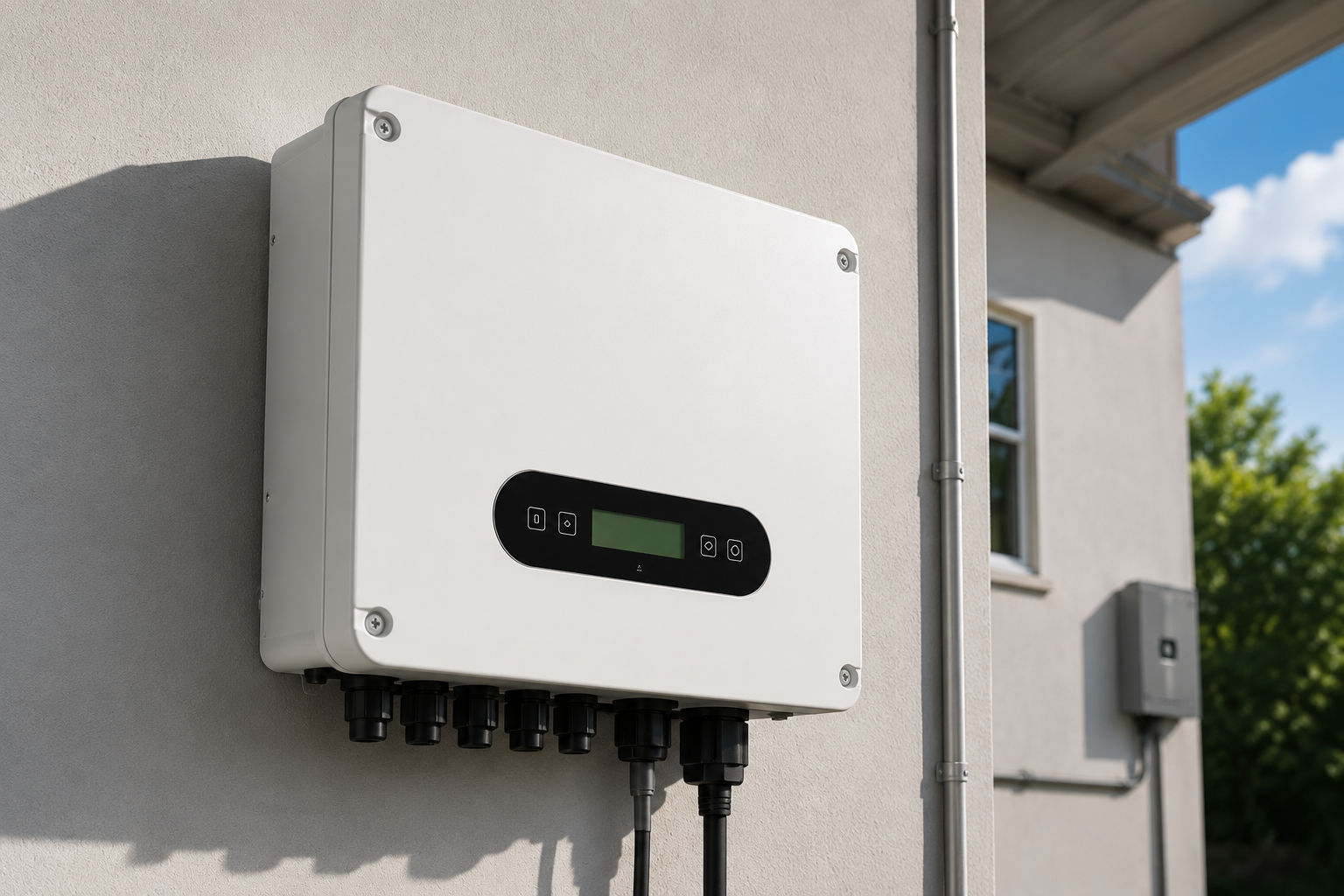
Choose a hybrid inverter over an on-grid inverter, even without an immediate battery purchase. This is the single highest-leverage decision for anyone who thinks they might want storage under a future subsidy. Confirm the inverter’s voltage range and MPPT specification support your likely battery chemistry, typically LiFePO4 (LFP) for Indian rooftop use.
-
Keep your installation records and generation data. If a generation-linked subsidy component does arrive, systems with documented commissioning reports and consistent generation history are likely to qualify faster. Ask your installer for monthly generation logs, not just the commissioning certificate.
-
Verify ALMM compliance on any equipment you buy now. Any future scheme revision is unlikely to loosen quality standards; ALMM Phase III enforcement has only tightened. Confirm your inverter is on the current MNRE ALMM list before signing a contract.
-
If you rent or live in an apartment without roof access, there is genuinely nothing actionable to do yet beyond staying informed, since the shared rooftop model has no operational framework. Community solar and utility-linked models require DISCOM-level infrastructure that does not exist in most Indian cities today.
For homeowners further along in system design, exploring shadow analysis and system sizing before committing to equipment is worth doing through a proper design tool rather than a rough installer estimate; SurgePV’s solar design and simulation platform is built for exactly this kind of pre-installation modeling.
Common Myths About PM Surya Ghar 2.0
Myth: “PM Surya Ghar 2.0 replaces the current scheme.” False. Every report describes it as an addition, primarily battery storage and shared access, layered onto the existing structure, not a replacement of the panel and inverter subsidy that is already live.
Myth: “I should cancel my current application and wait.” This is actively harmful advice circulating in some online forums. Cancelling a live, notified subsidy application to wait for an unconfirmed future scheme, with no announced date, sacrifices a real ₹78,000 for a hypothetical, smaller, and later benefit.
Myth: “The subsidy amount will definitely increase under 2.0.” Neither report cites a confirmed figure. Generation-linked models in other markets, including some Indian state-level pilots, have in some cases paid out less than flat capacity-based subsidies for underperforming systems, so a higher number is not guaranteed.
Myth: “Battery storage will become mandatory.” Nothing in either report suggests batteries become compulsory. The proposal reportedly makes battery storage newly eligible for subsidy, not required for solar subsidy eligibility.
Myth: “This scheme is already open for applications.” As of July 2026, there is no PM Surya Ghar 2.0 application portal, no notified guideline document, and no confirmed launch date. Any website or agent claiming to process 2.0 applications should be treated as unverified.
Frequently Asked Questions
Common homeowner questions on this topic are answered in the FAQ section below this article.
Expert Recommendation
For most homeowners currently deciding whether to go solar, the right move is to apply under the live PM Surya Ghar scheme now, choose a hybrid inverter to keep storage options open, and treat any PM Surya Ghar 2.0 benefit as a bonus you become eligible for later rather than a reason to pause. The current subsidy, DBT timelines, and payback math are proven and operating today. A proposal still moving through internal government review is not.
The bottom line:
- Install now under the current PM Surya Ghar scheme; the ₹78,000 subsidy and 4-6 year payback are live, proposal-based waiting is not.
- Buy a hybrid inverter today even without a battery, so a future storage subsidy does not require replacing equipment.
- Track this guide and PM Surya Ghar’s official application status rather than acting on unofficial 2.0 rumors; talk to a Qbits-certified installer about sizing a hybrid-ready system correctly the first time.
Frequently Asked Questions
What is PM Surya Ghar 2.0?
Should I wait for PM Surya Ghar 2.0 before installing solar?
Will homeowners who already installed solar get PM Surya Ghar 2.0 benefits?
How much can a home battery actually save on electricity bills?
What does a generation-linked subsidy mean in practice?
What is shared or community rooftop solar under PM Surya Ghar 2.0?
Is my current PM Surya Ghar application affected by the 2.0 proposal?
Which solar inverter should I buy if I plan to add a battery later under PM Surya Ghar 2.0?

Akash Hirapara CFO, Qbits Energy
CFO overseeing solar financing, procurement, and channel partner enablement at Qbits.