



Qbits vs Sungrow vs Growatt: Inverter Brands Comparison

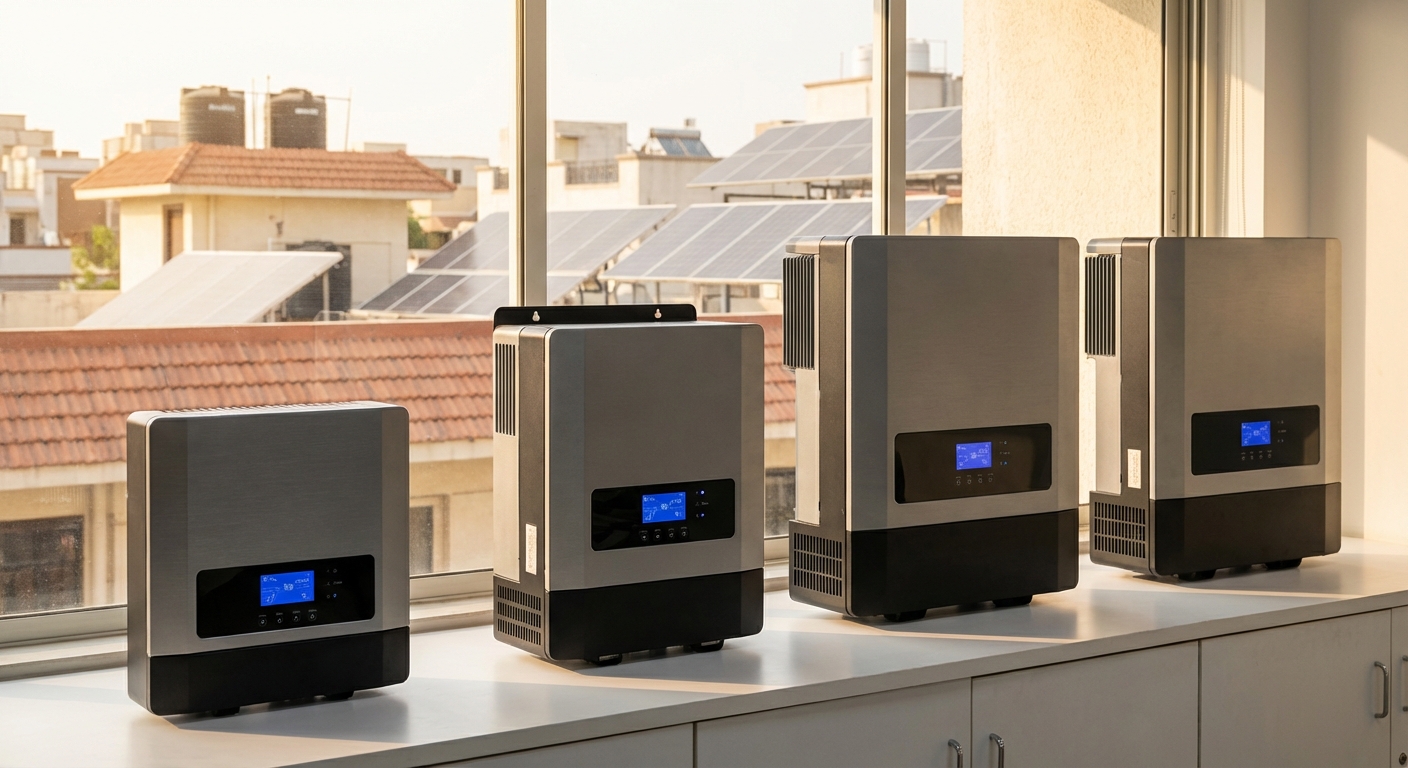
Selecting the right solar inverter brand can make or break your EPC project’s profitability and reputation. With India’s solar market projected to reach 500 GW by 2030, the stakes have never been higher for installation companies and distributors choosing inverter partners. The wrong choice leads to warranty claims, customer complaints, and eroded margins. The right choice builds long-term relationships and recurring revenue.
This comprehensive inverter brands comparison analyzes five leading manufacturers serving the Indian market in 2026: Qbits, Sungrow, Growatt, Fronius, and Solis. We’ll examine warranty coverage, monitoring capabilities, component quality, India-specific features, pricing structures, and technical performance across residential and commercial & industrial (C&I) applications. Whether you’re an EPC company evaluating suppliers or a distributor expanding your portfolio, this guide provides the data-driven insights you need to make informed decisions.
The Indian solar inverter market presents unique challenges that global brands often overlook. Extreme temperature variations, voltage fluctuations, dust accumulation, and monsoon moisture demand inverters engineered specifically for these conditions. Additionally, the rise of high-wattage solar panels (750W+) requires inverters with advanced DC oversizing capabilities. This inverter brands comparison India focuses specifically on how each manufacturer addresses these local requirements while delivering long-term value to EPCs and their customers.
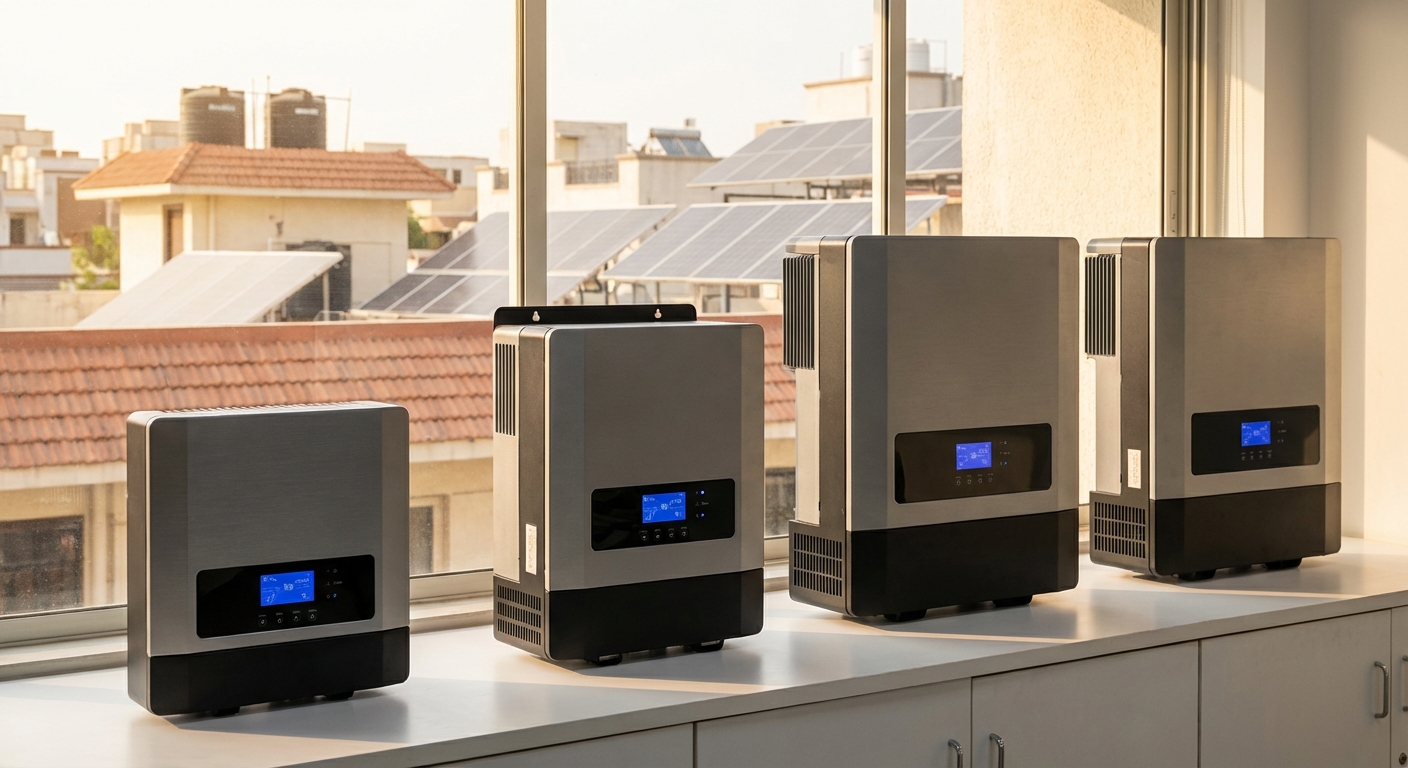
Understanding the Solar Inverter Landscape in India (2026)
The solar inverter market in India has evolved dramatically over the past five years. What was once dominated by imported brands has transformed into a competitive ecosystem featuring both international manufacturers and emerging Indian players with advanced engineering capabilities. For EPCs and installation companies, this evolution presents both opportunities and complexities.
Three major trends are reshaping inverter selection criteria in 2026. First, AI-powered monitoring systems have moved from premium features to essential requirements, with customers expecting real-time performance tracking and instant alerts via familiar platforms like WhatsApp. Second, warranty coverage has become a critical differentiator, with leading brands extending protection from the standard 5 years to 10 or even 12 years with full replacement guarantees. Third, the shift to high-wattage panels (650W-750W) has made DC oversizing capability and advanced MPPT tracking non-negotiable features.
For EPCs, inverter selection directly impacts three business-critical factors: project margins (initial equipment cost vs. long-term service costs), customer satisfaction (system performance and reliability), and competitive positioning (ability to offer superior warranties and monitoring). The brands that understand these priorities and engineer solutions accordingly are capturing market share rapidly.
According to industry data, inverter-related issues account for approximately 60% of all solar system service calls in India. This statistic underscores why component quality, weather protection, and local service infrastructure matter far more than initial purchase price. EPCs that prioritize these factors report 40-50% fewer warranty claims and significantly higher customer retention rates. Understanding how different brands perform across these parameters is essential for sustainable business growth.
1. Warranty Coverage: The Foundation of Long-Term Value
Warranty terms reveal a manufacturer’s confidence in their product quality and commitment to customer support. In the inverter brands comparison landscape, warranty coverage varies dramatically and directly impacts your total cost of ownership and customer satisfaction.
Qbits leads the Indian market with a comprehensive 12-year full replacement warranty backed by a digital warranty system. This extended coverage reflects the company’s use of German-grade components and rigorous quality testing (1000+ automated tests per unit). The digital warranty platform enables instant claim processing and transparent tracking, reducing administrative burden for EPCs. For a typical 5kW residential installation, this extended warranty translates to approximately ₹15,000-20,000 in additional value compared to standard 5-year coverage.
Sungrow, as a global brand, offers standard warranty terms that typically range from 5 to 10 years depending on the product line and market segment. Their warranty claim process follows international protocols, which can sometimes involve longer processing times for Indian installations. However, their established service network in major metros provides reasonable support infrastructure.
Growatt provides competitive warranty coverage in the 5-10 year range, positioning themselves in the mid-market segment. Their warranty terms are straightforward, though EPCs should carefully review exclusions related to environmental conditions and installation practices. Service response times can vary significantly based on location and distributor relationships.
Fronius, representing the premium European segment, offers robust warranty coverage with options for extended protection plans. Their warranty terms are comprehensive but come with strict installation and commissioning requirements. The premium positioning means warranty claims are processed through authorized service centers, which may be limited in tier 2 and tier 3 cities.
Solis maintains standard industry warranty terms, typically 5-10 years depending on product category. Their warranty structure is straightforward, though EPCs should verify local service availability before committing to large projects in remote locations.
For EPCs evaluating warranty value, consider three factors beyond the stated term: claim processing speed (digital vs. manual systems), replacement vs. repair policies (full replacement reduces downtime), and local service infrastructure (proximity of authorized service centers). A 12-year warranty with fast digital processing and local support delivers far more value than a 10-year warranty requiring international claim approvals and distant service centers.
2. Monitoring Capabilities and Smart Features
Modern solar installations demand intelligent monitoring systems that provide real-time visibility, predictive maintenance alerts, and seamless user experiences. The inverter monitoring capabilities across brands reveal significant differences in technological sophistication and user-centric design.

Qbits has revolutionized inverter monitoring for the Indian market with its AI-powered WhatsApp monitoring system. This innovative approach recognizes that Indian customers are far more comfortable with WhatsApp than proprietary apps. The system delivers real-time performance data, instant alerts for system issues, and troubleshooting guidance directly through WhatsApp, complemented by Wi-Fi, 4G, and Bluetooth connectivity options. For EPCs, this dramatically reduces support calls and enables proactive maintenance before customers even notice issues.
The AI component analyzes performance patterns to predict potential failures, optimize energy production, and provide actionable insights. For example, if the system detects declining morning performance, it might alert the installer to potential panel shading or soiling issues. This level of intelligence transforms monitoring from passive data collection to active system optimization. Learn more about advanced monitoring capabilities in our detailed guide on solar inverter monitoring systems in India.
Sungrow offers the iSolarCloud platform, a comprehensive web and mobile-based monitoring solution with robust features for fleet management. The platform provides detailed analytics, remote diagnostics, and multi-site management capabilities ideal for large EPCs managing hundreds of installations. However, the interface can feel complex for residential customers, and the learning curve may require additional customer education.
Growatt provides ShinePhone app and web-based monitoring with solid basic functionality. The platform covers essential monitoring needs including real-time production, historical data, and basic alerts. The interface is straightforward, though it lacks the advanced AI-driven insights and predictive capabilities of more sophisticated systems.
Fronius delivers the Solar.web monitoring ecosystem, known for its detailed technical data and professional-grade analytics. The platform excels in commercial applications where detailed performance analysis justifies the complexity. For residential customers, the extensive features may be overwhelming, requiring more installer support for onboarding.
Solis operates the SolisCloud platform with standard monitoring features including mobile app access, basic analytics, and alert notifications. The system is functional and reliable, though it doesn’t offer distinctive features that differentiate it from competitors in this category.
For EPCs, monitoring capabilities directly impact your service costs and customer satisfaction. Systems with intuitive interfaces and proactive alerts reduce support calls by 30-40%. Platforms that customers actually use (like WhatsApp-based monitoring) generate higher satisfaction scores than sophisticated apps that remain unused. When conducting your inverter brands comparison, prioritize monitoring systems that match your customer segment’s technical comfort level and communication preferences.
3. Component Quality and Manufacturing Standards
Component quality determines inverter lifespan, reliability, and long-term performance. In India’s challenging environmental conditions, the difference between premium and standard components becomes evident within the first few years of operation.
Qbits distinguishes itself through the use of German-grade electronic components and an exceptional quality assurance process involving over 1,000 automated tests per unit. This rigorous testing protocol, combined with the backing of the Heaven Group’s manufacturing legacy, ensures consistent quality across production batches. The company’s focus on component-level excellence reflects an engineering-first approach rather than cost optimization, which explains their confidence in offering 12-year warranties.
The quality testing covers thermal cycling, voltage stress testing, humidity resistance, vibration testing, and electromagnetic compatibility. Each inverter undergoes burn-in testing under simulated extreme conditions before receiving BIS/IEC certification. For EPCs, this translates to predictable performance and minimal field failures, which is critical for maintaining profitability and reputation.
Sungrow, as one of the world’s largest inverter manufacturers, maintains robust quality control processes across their global production facilities. Their scale enables significant R&D investment and access to premium components. However, quality can vary between product lines, with commercial-grade units receiving more stringent testing than entry-level residential models.
Growatt focuses on cost-effective manufacturing with acceptable quality standards for their market positioning. Component selection prioritizes value optimization, which works well for budget-conscious projects but may result in higher failure rates in extreme conditions. EPCs should carefully evaluate the specific product line and verify component specifications for critical installations.
Fronius represents European manufacturing excellence with premium components and meticulous quality control. Their Austrian production facilities maintain strict standards, and component selection emphasizes longevity over cost. This quality comes at a premium price point, which is justified for high-end residential and commercial projects where performance and reliability are paramount.
Solis maintains solid manufacturing standards with a focus on reliability and consistency. Their quality control processes meet international standards, though they don’t emphasize component-level differentiation as a key marketing message. The products deliver dependable performance appropriate for their market segment.
When evaluating component quality in your inverter brands comparison India analysis, request detailed specifications on key components: capacitors (lifespan and temperature ratings), IGBT modules (switching frequency and thermal management), transformers (if applicable), and cooling systems. Also verify the number and type of quality tests performed before shipment. These details reveal far more about long-term reliability than marketing claims. For comprehensive selection criteria, review our guide on solar inverter selection for EPCs.
4. India-Specific Features and Weather Protection
India’s diverse climate zones present unique challenges that generic global products often fail to address. From 50°C rooftop temperatures in Rajasthan to high humidity in coastal regions and extreme dust in northern plains, inverters must be engineered specifically for Indian conditions to deliver reliable long-term performance.

Qbits has engineered its inverters specifically for Indian environmental challenges with IP66 weather protection rating, providing complete dust ingress protection and protection against powerful water jets. This level of protection is essential for rooftop installations exposed to monsoon rains and dust storms. Additionally, Qbits inverters include comprehensive DC and AC surge protection devices (SPDs) to handle India’s notorious voltage fluctuations and lightning strikes, which are among the leading causes of inverter failure in the country.
The thermal management system in Qbits inverters is designed to maintain 98% efficiency even at ambient temperatures exceeding 45°C, a common occurrence on Indian rooftops during summer months. The inverters support up to 100% DC oversizing, enabling optimal performance with modern high-wattage panels (750W+) that are becoming standard in Indian installations. This oversizing capability ensures maximum energy harvest during cooler morning and evening hours when panels can exceed their rated output.
Furthermore, Qbits inverters feature low start-up voltage, enabling earlier morning generation and extended evening production, which is particularly valuable during winter months when daylight hours are limited. The wide input voltage range accommodates India’s variable grid conditions without frequent disconnections or derating.
Sungrow offers global products with some India-specific adaptations in their newer models. Their inverters generally handle high temperatures adequately, though derating may occur at extreme ambient temperatures. Surge protection is available but may require additional external components depending on the model. Their IP rating varies by product line, with commercial models typically offering better protection than entry-level residential units.
Growatt provides standard environmental protection suitable for most Indian conditions, though EPCs should verify IP ratings and operating temperature ranges for specific installation environments. Surge protection capabilities vary by model, and additional external SPDs may be necessary for areas with frequent lightning activity or poor grid quality.
Fronius inverters are engineered for European conditions, which means excellent performance in moderate climates but potential challenges in extreme Indian heat. Their thermal management is sophisticated, but derating at 45°C+ is common. The premium build quality provides good dust and moisture resistance, though the IP ratings may not match India-specific designs. Voltage range and grid compatibility require careful verification for Indian grid conditions.
Solis offers reasonable environmental protection with IP ratings appropriate for most installations. Their inverters handle Indian conditions adequately, though they don’t emphasize India-specific engineering as a differentiator. Temperature performance and surge protection meet standard industry requirements without exceptional features.
For EPCs conducting an inverter brands comparison, India-specific features directly impact your service costs and customer satisfaction. Inverters without adequate surge protection generate frequent warranty claims in areas with poor grid quality. Units that derate significantly in high temperatures underperform customer expectations and damage your reputation. Prioritize brands that demonstrate understanding of Indian conditions through specific engineering features, not just marketing claims about “suitable for all climates.”
5. Pricing and Value Proposition for EPCs
Price positioning reveals each brand’s market strategy and target customer segment. However, for EPCs, the critical metric isn’t initial purchase price but rather total cost of ownership, which includes warranty coverage, service costs, failure rates, and customer satisfaction impact on referrals and repeat business.
Qbits positions itself in the competitive-to-premium segment, offering advanced features and extended warranty at pricing that undercuts European brands while delivering comparable or superior specifications. The value proposition centers on premium features at competitive pricing, specifically targeting EPCs who want to differentiate on quality without pricing themselves out of the market. When you factor in the 12-year warranty, AI-powered monitoring, and German-grade components, the total cost of ownership is highly competitive, often 20-30% lower than premium European brands over the inverter’s lifespan.
For a typical 5kW residential installation, Qbits pricing enables EPCs to maintain healthy margins while offering customers superior warranty and monitoring capabilities. The digital warranty system reduces administrative costs, and the low failure rate minimizes service calls. EPCs report that the combination of competitive pricing and premium features makes Qbits an easy sell to quality-conscious customers who balk at European premium pricing.
Sungrow operates in the mid-to-premium segment with pricing that reflects their global brand positioning and extensive R&D investment. Their scale enables competitive pricing on commercial projects, though residential units may carry a premium compared to emerging brands. The brand recognition provides value for EPCs working with corporate clients who prioritize established names.
Growatt targets the budget-conscious segment with aggressive pricing that appeals to cost-sensitive residential customers and developers focused on minimizing upfront investment. This positioning works well for EPCs competing primarily on price, though the lower initial cost may be offset by higher service costs and shorter effective lifespan. The brand is popular in the mass-market residential segment where customers prioritize affordability over advanced features.
Fronius occupies the premium segment with pricing that reflects European manufacturing, premium components, and brand prestige. Their inverters command 40-60% price premiums over mid-market brands, which is justified for high-end residential projects and commercial installations where performance and reliability are paramount. EPCs working with affluent customers or corporate clients with strict quality requirements find Fronius pricing acceptable, but the brand struggles in price-sensitive segments.
Solis positions in the mid-market segment with competitive pricing that balances features and cost. Their pricing strategy targets EPCs seeking reliable performance without premium brand premiums or budget-brand compromises. The value proposition is straightforward: dependable inverters at fair prices without distinctive features that command premiums.
When evaluating pricing in your inverter brands comparison, calculate total cost of ownership over 10-12 years, including expected service costs, warranty value, and impact on customer satisfaction. A ₹5,000 cheaper inverter that generates ₹15,000 in additional service costs and warranty claims destroys value. Conversely, a premium-priced inverter that eliminates service calls and generates referrals through superior performance creates long-term profitability. For detailed pricing strategies, explore our guide on solar inverter pricing strategies for EPCs.
6. Product Range: On-Grid vs Hybrid Inverter Brands Comparison
Product range breadth and depth determine whether a brand can serve all your project types or requires you to maintain relationships with multiple suppliers. For EPCs and distributors, consolidating around fewer suppliers reduces complexity, improves purchasing power, and simplifies inventory management.
Qbits offers a focused product portfolio covering the most common Indian market segments: on-grid residential inverters (1kW to 10kW) and on-grid commercial & industrial inverters, plus hybrid inverters with battery integration capabilities. The residential range supports panels up to 750W, future-proofing installations as high-wattage panels become standard. The hybrid offerings enable EPCs to serve customers seeking backup power or energy independence, a growing segment in areas with unreliable grid supply.
The product range is deliberately curated rather than exhaustive, focusing on the 80% of market demand rather than niche applications. This approach ensures consistent quality across all models and simplifies selection for EPCs. For distributors, the focused range reduces inventory complexity while covering the vast majority of residential and C&I projects.
Sungrow provides an extensive product portfolio spanning residential, commercial, industrial, and utility-scale applications. Their range includes string inverters, central inverters, hybrid solutions, and energy storage systems. This breadth makes Sungrow a one-stop solution for large EPCs handling diverse project types, though the extensive options can overwhelm smaller installers.
Growatt offers a wide range of products across residential and commercial segments, including on-grid, hybrid, and off-grid solutions. Their product breadth is impressive for their market positioning, enabling EPCs to source multiple product types from a single supplier. However, quality and features vary significantly across product lines, requiring careful evaluation of specific models.
Fronius focuses on premium residential and commercial string inverters with sophisticated features and exceptional build quality. Their product range is more selective, targeting quality over breadth. EPCs working exclusively in premium segments appreciate the focused offering, while those serving diverse market segments may need supplementary suppliers for budget-conscious projects.
Solis provides a comprehensive range covering residential, commercial, and hybrid applications. Their product breadth is solid, enabling EPCs to source most common requirements from a single supplier. The range balances breadth with consistency, avoiding the quality variations that sometimes plague brands with overly extensive portfolios.
For EPCs evaluating product range in your inverter brands comparison India analysis, consider your project mix and customer segments. If you primarily serve residential and small commercial customers, a focused range with consistent quality may serve you better than extensive options with variable quality. If you handle diverse project types from residential to utility-scale, broader product portfolios provide convenience. Also verify product availability and lead times, as extensive catalogs are only valuable if products are actually in stock.
7. Technical Performance: Efficiency and Reliability
Technical performance metrics reveal how effectively inverters convert DC power to AC power and how reliably they operate under real-world conditions. While marketing materials emphasize peak efficiency numbers, EPCs should focus on weighted efficiency, performance under varying load conditions, and proven reliability in Indian installations.
Qbits achieves 98% efficiency across its product range, with sophisticated MPPT algorithms that maximize energy harvest under varying conditions including partial shading, soiling, and temperature fluctuations. The low start-up voltage (as low as 80V depending on model) enables earlier morning generation and extended evening production, adding 15-30 minutes of productive generation daily compared to inverters with higher start-up thresholds.
The thermal management system maintains efficiency even at high ambient temperatures, minimizing the derating that plagues many inverters in Indian summer conditions. Real-world performance data from installations across India shows consistent performance matching or exceeding specifications, with failure rates well below industry averages. The 1000+ quality tests per unit translate to predictable, reliable operation that EPCs can confidently guarantee to customers.
Sungrow delivers excellent efficiency ratings, typically 97-98% depending on model and capacity. Their MPPT tracking is sophisticated, and performance under varying conditions is strong. The brand’s extensive global installation base provides substantial real-world performance data, showing reliable operation across diverse climates. Failure rates are reasonable, though service response times in India can vary by location.
Growatt offers competitive efficiency ratings in the 96-97.5% range across most models. Performance is adequate for their market positioning, though efficiency may decline more noticeably under high temperatures or partial load conditions compared to premium brands. Real-world reliability varies by product line, with commercial models generally outperforming entry-level residential units.
Fronius achieves exceptional efficiency ratings, often exceeding 98%, with sophisticated algorithms that optimize performance under all conditions. Their thermal management is excellent, and the premium components deliver consistent performance over time. Reliability is outstanding, with very low failure rates, though the premium pricing reflects this quality. Real-world performance consistently matches or exceeds specifications.
Solis provides solid efficiency ratings in the 97-98% range with reliable performance under normal operating conditions. Their MPPT tracking is effective, and thermal management is adequate for most Indian installations. Reliability is good, with failure rates in line with industry standards for their market segment.
When evaluating technical performance in your inverter brands comparison, request real-world performance data from installations in climates similar to your target markets. Peak efficiency numbers are less meaningful than weighted efficiency across varying load and temperature conditions. Also investigate failure rates and common failure modes, as some issues (like capacitor failures) are easily serviced while others (like IGBT failures) require complete unit replacement. Understanding these nuances helps you select inverters that deliver predictable, reliable performance that protects your reputation and profitability. For insights on how performance impacts long-term value, read our analysis of solar inverter lifespan and financial planning.
Inverter Brands Comparison: Decision Matrix for EPCs
After analyzing warranty coverage, monitoring capabilities, component quality, India-specific features, pricing, product range, and technical performance, the optimal brand choice depends on your specific business model, target customer segments, and competitive positioning. Here’s a practical decision framework to guide your selection.

Choose Qbits when: You’re targeting quality-conscious residential and C&I customers in India who value advanced monitoring, extended warranty, and India-specific engineering. Qbits is ideal for EPCs who want to differentiate on quality and service without premium European pricing. The 12-year warranty, AI-powered WhatsApp monitoring, and German-grade components enable you to compete effectively against both budget brands (on quality) and premium brands (on value). The India-focused engineering, IP66 weather protection, and comprehensive surge protection make Qbits particularly suitable for challenging installation environments. EPCs report that Qbits enables them to build long-term customer relationships through superior performance and minimal service requirements.
Choose Sungrow when: You’re handling large commercial or utility-scale projects where global brand recognition matters to corporate clients or financial institutions. Sungrow’s extensive track record, broad product range, and established service network make them a safe choice for projects where brand reputation influences financing or corporate approval processes. Their commercial and industrial inverters are well-suited for large installations requiring sophisticated fleet management and monitoring.
Choose Growatt when: You’re competing primarily on price in the budget-conscious residential segment where customers prioritize minimizing upfront investment over advanced features or extended warranties. Growatt enables competitive pricing for developers and EPCs serving cost-sensitive markets. However, factor in potentially higher service costs and shorter effective lifespan when calculating project margins.
Choose Fronius when: You’re serving high-end residential customers or corporate clients with strict quality requirements and budgets that accommodate premium pricing. Fronius delivers exceptional quality, sophisticated features, and brand prestige that justify premium pricing in luxury residential projects or corporate installations where performance and reliability are paramount. The European manufacturing and premium components provide peace of mind for customers who view solar as a long-term investment rather than a cost to minimize.
Choose Solis when: You’re seeking a reliable mid-market option that balances features, quality, and pricing without distinctive advantages or disadvantages. Solis works well for EPCs serving mainstream residential and commercial customers who want dependable performance at fair pricing without premium features or budget compromises.
Key Selection Criteria Summary
When conducting your final inverter brands comparison, prioritize these factors based on your business model:
- Warranty Coverage: Qbits leads with 12-year full replacement; critical for long-term customer relationships and reduced service costs
- Monitoring Technology: Qbits’ AI-powered WhatsApp monitoring provides the most user-friendly experience for Indian customers; reduces support calls by 30-40%
- India-Specific Engineering: Qbits’ IP66 protection, comprehensive surge protection, and thermal management designed for Indian conditions minimize field failures
- Component Quality: Qbits’ German-grade components and 1000+ quality tests, Fronius’ European manufacturing excellence deliver lowest failure rates
- Total Cost of Ownership: Calculate 10-12 year costs including warranty value, service costs, and failure rates; Qbits and Fronius typically deliver best long-term value despite different price points
- Product Range: Match brand portfolio to your project mix; Sungrow and Growatt offer broadest ranges, Qbits focuses on high-demand segments
- Technical Performance: Qbits, Fronius, and Sungrow deliver highest efficiency and reliability; critical for customer satisfaction and referrals
- Local Support Infrastructure: Verify service center proximity and response times in your operating regions; critical for minimizing customer downtime
Final Recommendations by Project Type
For residential projects targeting quality-conscious homeowners, Qbits delivers the optimal balance of advanced features, extended warranty, and competitive pricing. The WhatsApp monitoring and 12-year warranty are powerful selling points that differentiate your offerings from competitors using budget brands.
For commercial & industrial projects where customers value India-specific engineering and long-term reliability, Qbits provides comprehensive solutions with the weather protection and surge protection essential for rooftop installations. The extended warranty reduces total cost of ownership, making it easier to justify quality investments to CFOs and facility managers.
For premium residential projects where customers prioritize European brand prestige and have budgets to match, Fronius delivers exceptional quality that justifies premium pricing. However, Qbits increasingly competes in this segment by offering comparable technical specifications and superior India-specific features at more accessible pricing.
For large-scale commercial or utility projects requiring global brand recognition for financing or corporate approval, Sungrow’s established track record and extensive product range provide the credibility and scalability these projects demand.
For budget-conscious residential developments where price is the primary decision factor, Growatt enables competitive bidding, though EPCs should carefully manage customer expectations regarding features and warranty coverage.
The Indian solar inverter market in 2026 offers EPCs and distributors more choices than ever before. The brands that succeed are those that understand India’s unique requirements and engineer solutions accordingly, rather than simply adapting global products for the Indian market. For a comprehensive evaluation framework, review our guide on solar inverter manufacturers in India.
Making Your Inverter Brand Decision: Next Steps
Selecting the right inverter brand partner is one of the most consequential decisions for your EPC business or distribution operation. The choice impacts your project margins, customer satisfaction, service costs, competitive positioning, and long-term reputation. This comprehensive inverter brands comparison has analyzed the leading options across warranty coverage, monitoring capabilities, component quality, India-specific features, pricing, product range, and technical performance.
The data clearly shows that brands engineered specifically for Indian conditions with advanced monitoring, extended warranties, and premium components deliver superior total cost of ownership despite varying initial price points. Qbits’ combination of 12-year warranty, AI-powered WhatsApp monitoring, German-grade components, IP66 weather protection, and competitive pricing positions it as the optimal choice for EPCs targeting quality-conscious customers without premium European pricing.
For EPCs and distributors ready to differentiate on quality and build long-term customer relationships, Qbits offers the features, warranty coverage, and India-specific engineering that today’s informed customers demand. The Heaven Group legacy, rigorous quality testing, and focus on the Indian market provide the foundation for sustainable partnerships.
Take the next step in your inverter brands comparison evaluation by exploring Qbits’ complete product range and technical specifications. Discover our on-grid and hybrid inverter solutions engineered specifically for Indian residential and C&I installations. For EPCs and distributors interested in partnering with India’s next-generation inverter manufacturer, explore our partnership program offering comprehensive support, competitive margins, and digital warranty systems that simplify your operations.
Ready to discuss how Qbits inverters can differentiate your solar installations and reduce your service costs? Connect with our technical team via WhatsApp for detailed specifications, pricing, and partnership opportunities. You can also contact our support team for comprehensive product information and evaluation samples.
The Indian solar market’s growth trajectory demands inverter partners who understand local conditions, prioritize quality, and provide the warranty coverage and monitoring capabilities that build customer confidence. Make your inverter brand selection based on total cost of ownership, India-specific engineering, and long-term partnership potential rather than initial purchase price alone. Your customers, your margins, and your reputation depend on it.
This blog post was written using thestacc.com