



Solar EPC India: Complete Guide for Installation Companies

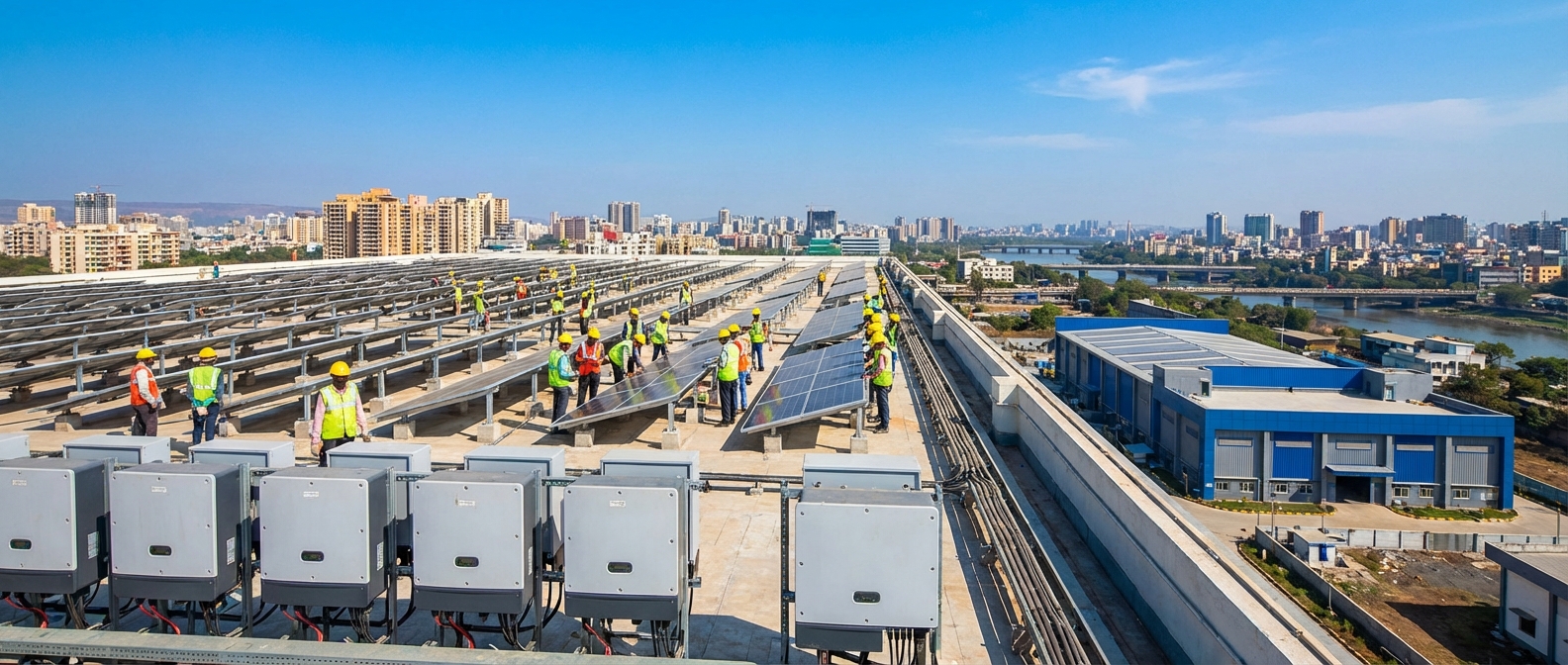
The solar energy sector in India is experiencing unprecedented growth, with solar EPC India companies at the forefront of this transformation. As an Engineering, Procurement, and Construction provider, your success depends on delivering reliable, high-performance solar installations that generate consistent returns for your clients. This comprehensive guide walks you through every phase of the solar EPC India process, from initial project planning to long-term warranty management, with a special focus on critical equipment selection decisions that can make or break your project outcomes.
Whether you’re managing residential rooftop installations or large-scale commercial and industrial projects, understanding the complete EPC workflow and choosing the right technology partners will determine your competitive position in India’s rapidly evolving solar market in 2026.
Understanding Solar EPC Services in India’s Growing Market
Solar EPC India services encompass the complete lifecycle of solar power projects, integrating engineering design, equipment procurement, and construction execution into a single, streamlined delivery model. As an EPC provider, you take full responsibility for transforming a client’s energy requirements into a functioning solar power system that delivers measurable performance and financial returns.
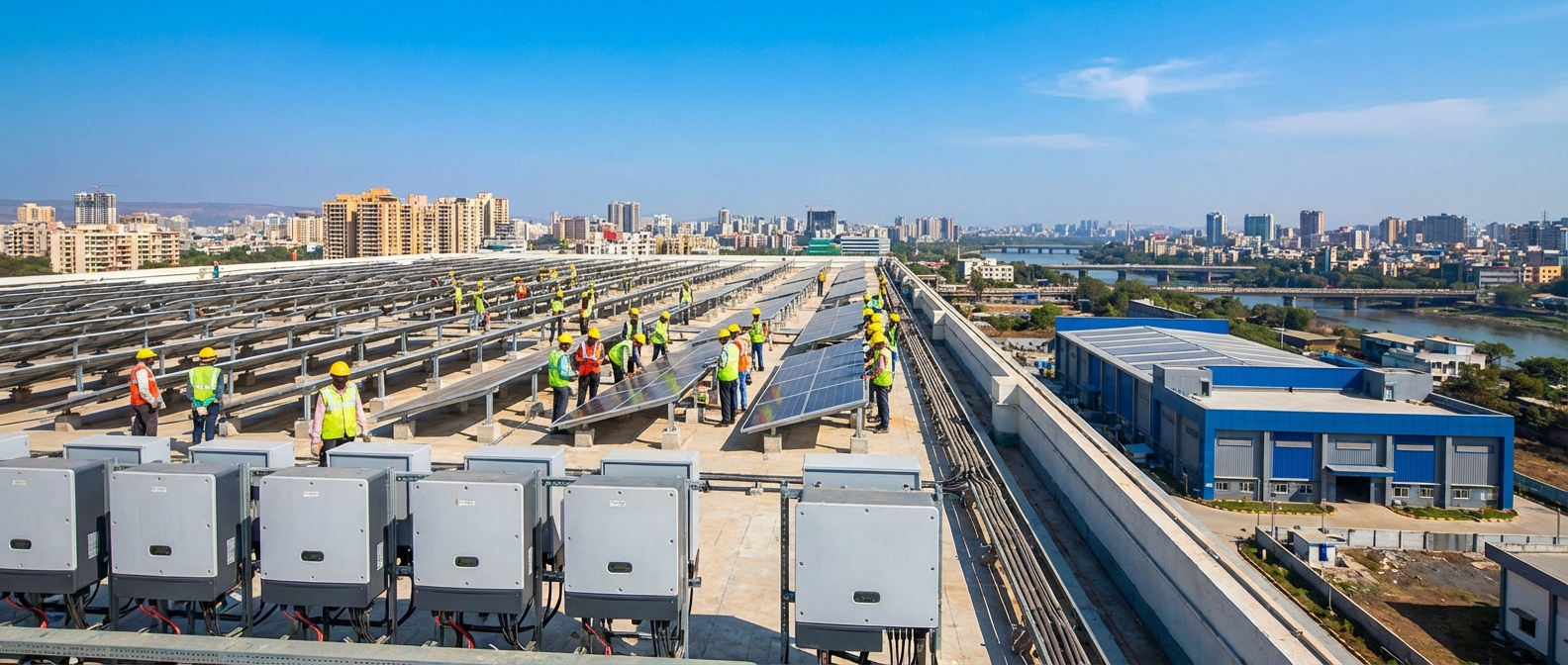
The Indian solar market has reached a critical inflection point in 2026. Government initiatives including the PM Surya Ghar Muft Bijli Yojana, enhanced net metering policies across states, and accelerated depreciation benefits for commercial installations have created massive demand for professional solar EPC India services. The market is shifting from basic installations to sophisticated, technology-driven projects that require advanced monitoring, superior component quality, and long-term performance guarantees.
Key challenges facing solar EPCs in India today include:
- Equipment reliability concerns: Harsh Indian weather conditions, including extreme temperatures, monsoon humidity, and dust exposure, demand inverters with robust weather protection like IP66 ratings
- Warranty and support gaps: Many EPCs struggle with equipment failures outside warranty periods or face difficulties claiming warranty coverage, impacting client relationships and project profitability
- Monitoring and maintenance complexity: Without intelligent monitoring systems, identifying performance issues requires costly site visits and reactive troubleshooting
- High-wattage panel compatibility: Modern solar panels reaching 750W require inverters with adequate DC oversizing capabilities and voltage handling
- Price pressure vs quality balance: Competitive bidding environments tempt EPCs to compromise on component quality, leading to long-term performance issues
Your equipment selection, particularly your choice of solar inverter partner, directly impacts every one of these challenges. The right inverter manufacturer provides not just hardware, but a complete support ecosystem that enhances your solar EPC India operations and protects your reputation.
1. Project Planning and Site Assessment for Solar EPC India Projects
Every successful solar EPC India project begins with thorough planning and site assessment. This foundational phase determines system sizing, technology selection, and project feasibility, setting the stage for smooth execution and long-term performance.
Site evaluation starts with comprehensive data collection: Conduct detailed roof surveys measuring available area, structural load capacity, shading analysis throughout the day and across seasons, and roof orientation. For ground-mounted commercial installations, assess land topography, soil conditions, and accessibility for construction equipment. Document existing electrical infrastructure, including sanctioned load, available breaker capacity, and distance to grid connection points.
Load analysis forms the core of system sizing for solar EPC India projects. Review at least 12 months of electricity bills to understand consumption patterns, peak demand periods, and seasonal variations. For commercial clients, analyze time-of-day usage to optimize system sizing for maximum self-consumption. This analysis determines whether an on-grid system suffices or if a hybrid inverter with battery backup better serves the client’s needs.
Technical Requirements and Compliance
Navigating India’s regulatory landscape requires attention to multiple compliance layers. All equipment must carry BIS (Bureau of Indian Standards) certification, with inverters meeting IEC 62109 safety standards and IEC 61683 efficiency testing protocols. Each state maintains specific net metering regulations governing system size limits, metering arrangements, and grid interconnection procedures.
Document your approval workflow early in the planning phase. Residential projects typically require net metering applications, electrical safety certificates, and building permissions. Commercial solar EPC India projects add complexity with sanctioned load modifications, fire safety clearances, and sometimes environmental impact assessments for larger installations. Building relationships with local electricity distribution companies streamlines the approval process and reduces project timelines.
Financial modeling at this stage should account for all project costs, including equipment, installation labor, approvals, and commissioning. Calculate realistic ROI projections based on actual electricity tariffs, expected generation (accounting for losses), and available subsidies or incentives. Transparent financial projections build client confidence and set appropriate expectations for system performance.
2. Engineering and Design Phase for Solar EPC India Installations
The engineering phase translates site assessment data into detailed technical specifications and installation drawings. Quality engineering work prevents costly modifications during construction and ensures optimal system performance throughout the project lifecycle.
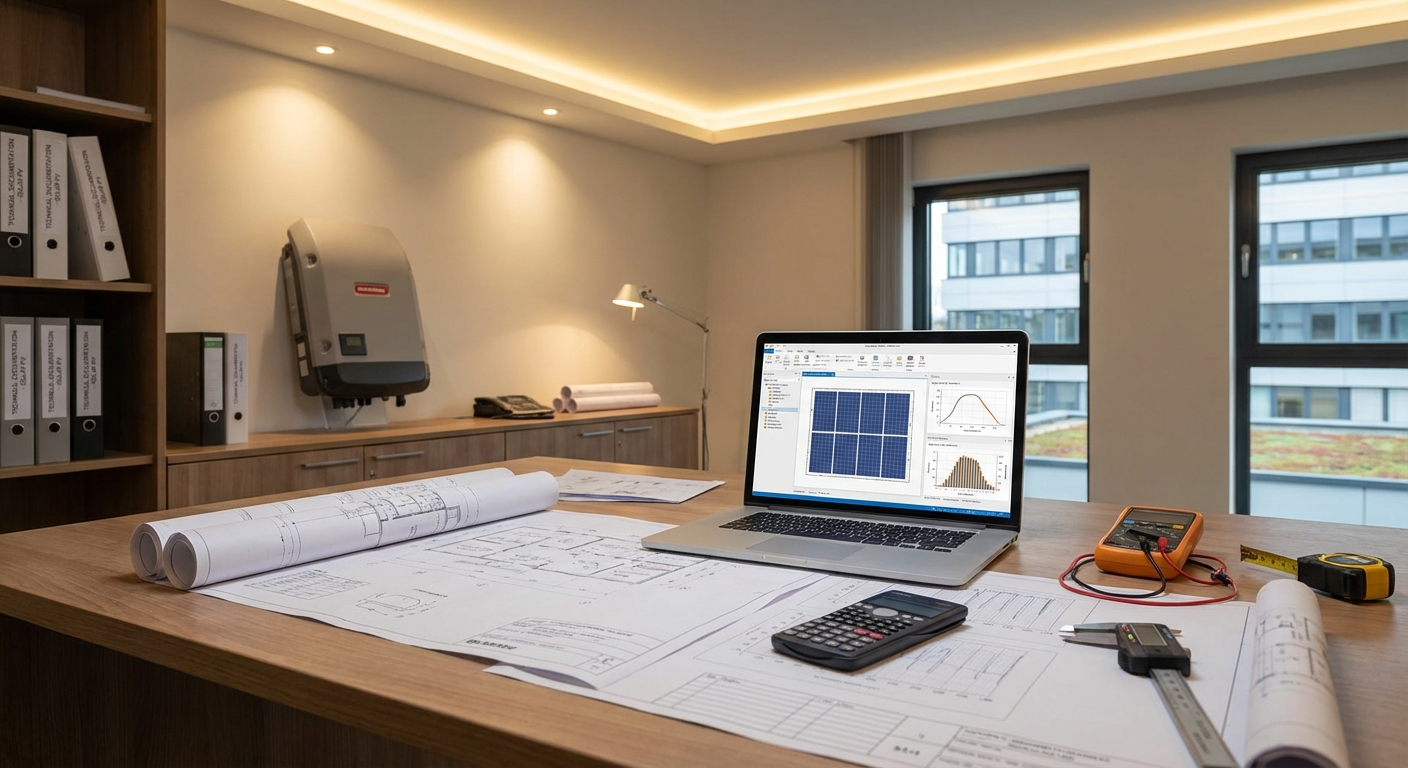
System architecture decisions begin with choosing between on-grid and hybrid configurations. On-grid systems offer simplicity and lower costs, ideal for clients with reliable grid connectivity who prioritize maximum ROI. Hybrid inverters add battery integration capability, providing backup power during outages and enabling advanced energy management strategies. For solar EPC India projects in areas with frequent grid instability, hybrid systems deliver significant value despite higher initial investment.
Panel layout engineering optimizes available space while accounting for shading, maintenance access, and structural constraints. Modern design software simulates shading patterns and calculates expected generation, but experienced EPCs verify these calculations with site-specific knowledge. Consider future expansion possibilities in your layout design, leaving space for additional capacity as client energy needs grow.
Inverter Selection: The Heart of Your Solar EPC India Project
Your inverter selection decision carries more weight than any other component choice in solar EPC India projects. The inverter converts DC power from panels to usable AC power, manages grid synchronization, and increasingly serves as the intelligence center for system monitoring and optimization.
Critical inverter selection criteria include:
- Capacity matching and DC oversizing: Modern solar EPC India projects use high-wattage panels (750W and above) requiring inverters that support adequate DC oversizing, typically 100% or more, to maximize energy harvest during peak sun hours
- Efficiency ratings: Look for inverters achieving 98% or higher efficiency, as even small efficiency differences compound into significant energy losses over the system’s 25-year lifespan
- Weather protection: Indian rooftop conditions demand IP66-rated enclosures that protect against dust ingress and monsoon water exposure, preventing premature failures
- Voltage range and start-up characteristics: Wide MPPT voltage ranges and low start-up voltages ensure the inverter begins generating early in the morning and continues until late evening, maximizing daily energy production
- Monitoring capabilities: Advanced monitoring systems with AI-powered analytics, mobile app integration, and instant alert systems reduce your maintenance costs and improve client satisfaction
- Warranty coverage: Standard 5-year warranties leave significant risk exposure; seek manufacturers offering extended warranty periods like 12-year full replacement coverage that protects both your business and your clients
The solar inverter selection process requires balancing technical specifications, cost considerations, and manufacturer support capabilities. Established manufacturers with India-focused operations provide faster service response, readily available spare parts, and technical support teams that understand local installation challenges.
Electrical design encompasses DC wiring from panels to inverter, AC wiring from inverter to distribution board, and critical protection devices. Integrate DC and AC surge protection devices (SPDs) to safeguard equipment from voltage spikes common in Indian grid conditions. Proper cable sizing accounts for voltage drop, ambient temperature derating, and future-proofing for potential system expansion.
3. Procurement: Sourcing Quality Components for Solar EPC India Success
Procurement strategy directly impacts your project margins, timeline reliability, and long-term reputation. The solar EPC India market offers numerous equipment options across wide price ranges, but the lowest-cost procurement approach often generates the highest lifetime costs through failures, warranty claims, and damaged client relationships.
When evaluating solar inverter manufacturers in India, look beyond specification sheets to assess the complete value proposition. Manufacturers with comprehensive quality testing protocols, such as conducting 1000+ automated tests per unit, demonstrate commitment to reliability that translates into fewer field failures. Component quality matters significantly; inverters built with German-grade electronic components withstand voltage fluctuations and temperature extremes better than units using lower-grade alternatives.
Supply chain management requires balancing inventory costs against project timeline risks. Establish relationships with manufacturers who maintain adequate stock levels and can commit to delivery schedules. For solar EPC India companies managing multiple concurrent projects, reliable equipment availability prevents costly project delays and client dissatisfaction.
Critical Procurement Considerations
Warranty terms deserve careful evaluation during procurement. A 12-year full replacement warranty provides substantially more value than a standard 5-year warranty with limited coverage. Examine warranty claim processes: manufacturers with digital warranty systems and streamlined claim procedures minimize your administrative burden and reduce client downtime when issues arise.
After-sales support infrastructure separates reliable partners from problematic suppliers. Assess the manufacturer’s service network coverage in your operating regions, average response times for technical support, and availability of trained service technicians. For solar EPC India operations spanning multiple states, nationwide support coverage ensures consistent service quality regardless of project location.
The evaluation of solar inverter manufacturers should include site visits to manufacturing facilities when possible, conversations with other EPCs using their equipment, and review of their technical documentation quality. Manufacturers who invest in comprehensive installation manuals, training programs, and technical resources demonstrate commitment to partner success.
Cost optimization in procurement doesn’t mean choosing the cheapest option. Calculate total cost of ownership including warranty coverage, expected failure rates, monitoring system costs, and service expenses. A moderately higher upfront investment in quality equipment typically delivers superior returns through reduced maintenance costs and longer operational life.
4. Construction and Installation Best Practices
The construction phase transforms engineering designs into physical solar installations. Quality execution during this phase determines system performance, safety, and longevity, making installation best practices essential for solar EPC India success.
Site preparation establishes the foundation for safe, efficient construction. Implement comprehensive safety protocols including fall protection for rooftop work, electrical safety procedures, and proper tool handling. Designate clear material storage areas, establish controlled access to work zones, and conduct daily safety briefings with installation teams.
Mounting structure installation requires precision and attention to structural integrity: Verify roof load capacity before beginning installation, use appropriate waterproofing techniques at all penetration points, and ensure mounting rails are level and properly aligned. Poor mounting work leads to panel misalignment, shading issues, and potential water damage to the building structure.
Panel installation follows systematic procedures to ensure optimal performance. Install panels in the planned orientation and tilt angle, maintain consistent spacing for airflow and maintenance access, and verify all electrical connections are tight and properly insulated. String configuration should match the inverter’s MPPT input specifications, balancing string lengths and avoiding mixing panels of different specifications within the same string.
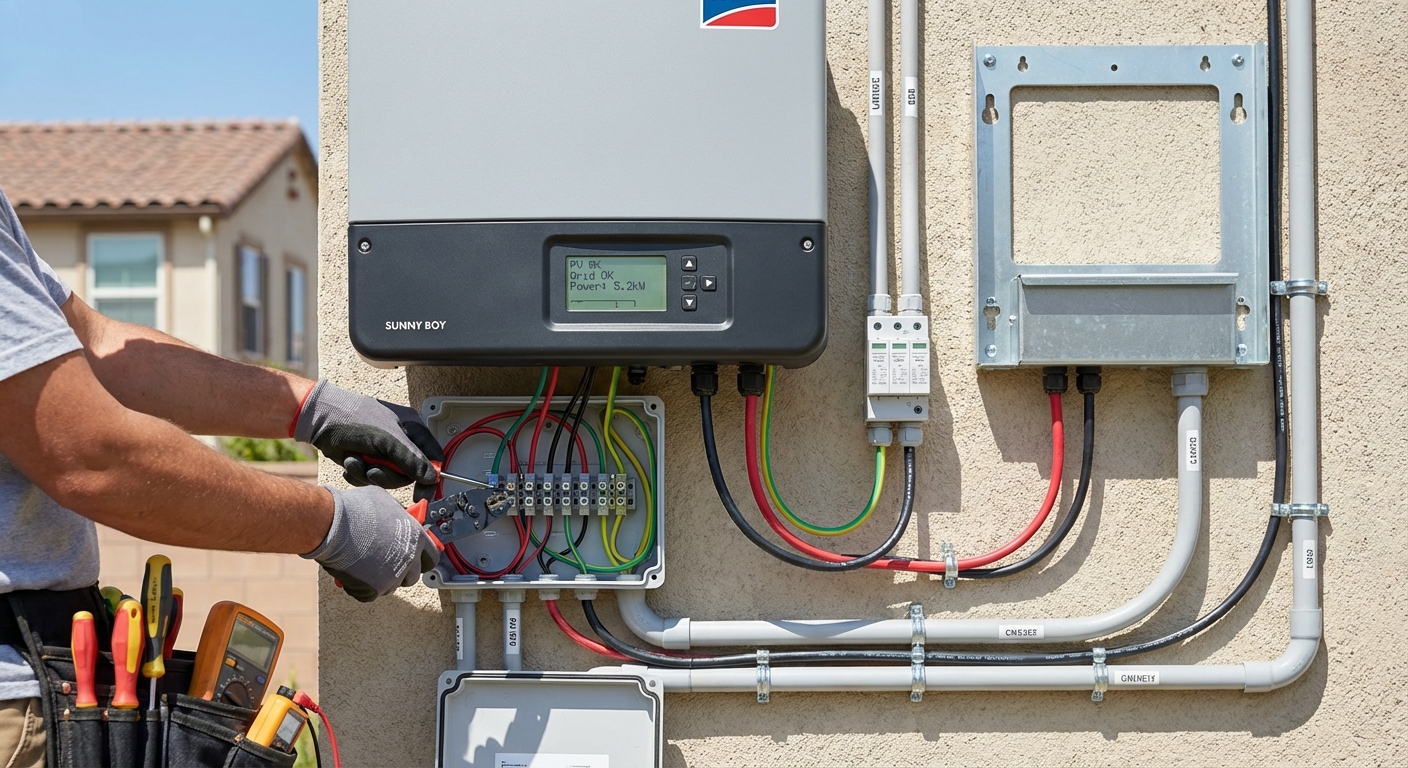
Inverter installation positioning significantly impacts performance and longevity. Mount inverters in shaded, well-ventilated locations away from direct sun exposure and rain. Ensure adequate clearance around the unit for heat dissipation and future maintenance access. For solar EPC India projects in coastal or industrial areas with high dust levels, position inverters to minimize exposure while maintaining accessibility for cleaning and service.
Surge protection device integration protects your installation from voltage spikes and lightning-induced surges common during monsoon season. Install DC SPDs between panel strings and inverter input, and AC SPDs between inverter output and distribution board. Proper grounding and earthing systems provide the foundation for effective surge protection, requiring low-resistance earth connections verified through testing.
Cable management affects both system aesthetics and long-term reliability. Use UV-resistant conduits for all outdoor wiring, maintain proper bend radius to prevent cable damage, and implement clear labeling for all circuits to facilitate future troubleshooting. Professional cable management distinguishes quality solar EPC India installations from amateur work, enhancing client satisfaction and simplifying future maintenance.
5. Commissioning and Testing for Solar EPC India Projects
Commissioning transforms a completed installation into an operational solar power system. Thorough testing and verification during this phase catch installation errors before they impact performance and establish baseline performance data for future reference.
Pre-commissioning inspection follows a systematic checklist covering all system components. Verify all mechanical connections are secure, electrical terminations are tight, and no physical damage occurred during installation. Check that all safety labels and warning signs are properly affixed, and that system documentation is complete and accessible.
Electrical testing procedures validate system safety and performance:
- Insulation resistance testing: Measure insulation resistance between DC positive and ground, DC negative and ground, and AC output and ground to verify no current leakage paths exist
- Polarity verification: Confirm correct polarity on all DC strings and AC connections to prevent equipment damage during energization
- Grounding continuity: Test earth continuity across all equipment and verify ground resistance meets code requirements (typically below 5 ohms)
- String voltage and current measurement: Measure open-circuit voltage and short-circuit current for each string, comparing against expected values based on panel specifications and irradiance conditions
Inverter configuration involves setting parameters specific to the installation and grid conditions. Configure grid voltage and frequency limits according to local utility requirements, set power factor and reactive power parameters if applicable, and enable monitoring system connectivity. Modern inverters with AI-powered monitoring require initial setup of alert thresholds, notification preferences, and user access permissions.
Monitoring system setup and connectivity testing ensures you can track system performance remotely. Verify Wi-Fi, 4G, or Bluetooth connectivity depending on the monitoring system architecture. Test data transmission to cloud servers, confirm mobile app access, and validate alert notification delivery through WhatsApp or other configured channels. The implementation of advanced monitoring systems provides ongoing visibility into system performance and enables proactive maintenance.
Performance verification compares actual system output against expected generation based on current irradiance conditions. Run the system under observation for several hours, documenting generation data, inverter efficiency, and any error messages or warnings. This baseline performance data becomes the reference point for evaluating system health throughout its operational life.
Client handover and training complete the commissioning process. Walk clients through the monitoring system interface, explain how to interpret performance data, and demonstrate the alert notification system. Provide comprehensive documentation including system design drawings, equipment manuals, warranty certificates, and maintenance schedules. Professional handover builds client confidence and reduces post-installation support calls.
6. Advanced Monitoring Systems for Ongoing Performance Management
Monitoring systems have evolved from basic data logging to sophisticated AI-powered platforms that transform how solar EPC India companies manage installed systems. Advanced monitoring reduces your operational costs, improves client satisfaction, and creates opportunities for ongoing service revenue.
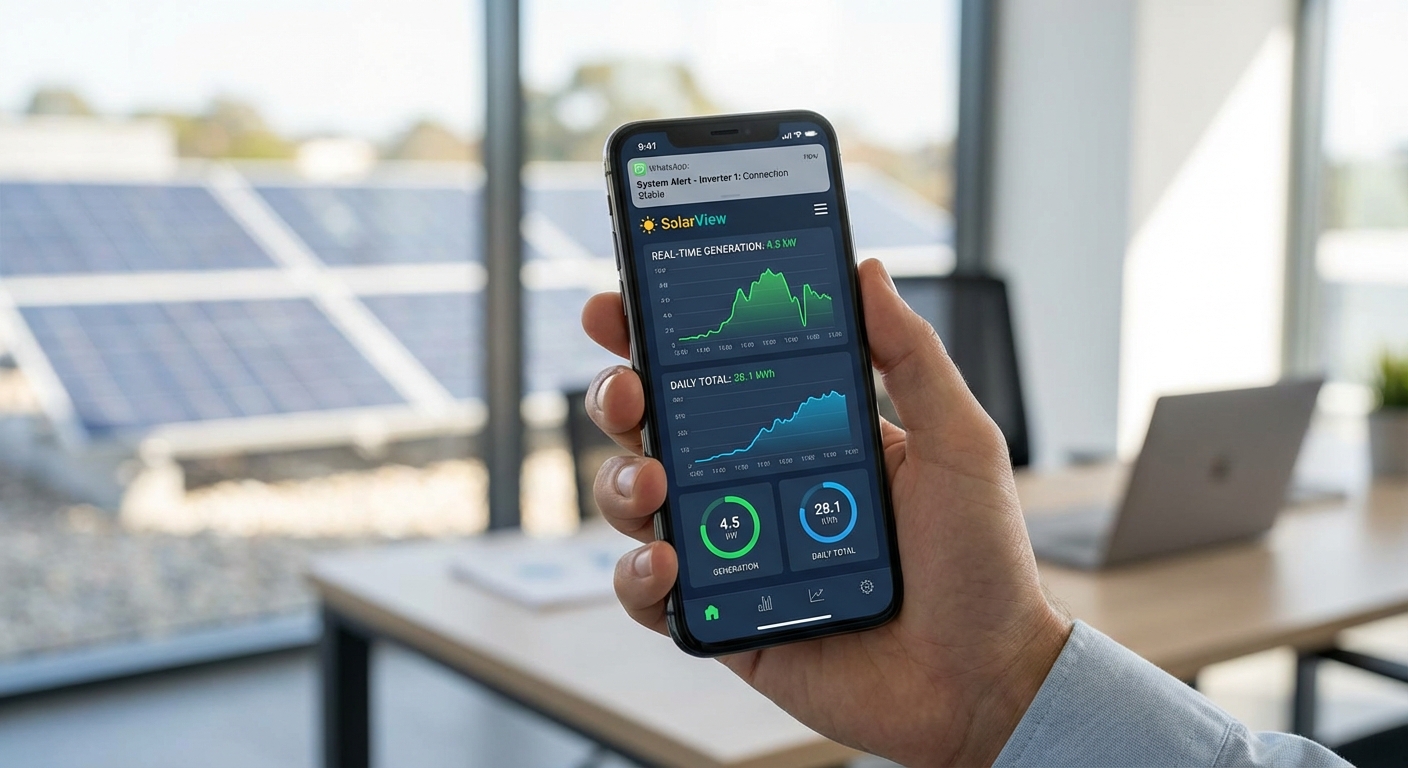
Real-time performance tracking provides instant visibility into system operation across your entire installed base. Monitor key parameters including current power output, daily energy generation, inverter efficiency, and grid voltage conditions. AI-powered analytics identify performance anomalies by comparing actual output against expected generation based on weather conditions, flagging issues before they significantly impact energy production.
WhatsApp monitoring integration addresses the unique communication preferences of the Indian market. Clients receive instant notifications about system status, performance milestones, and any issues requiring attention, all through the familiar WhatsApp interface. This approach dramatically improves client engagement compared to traditional monitoring platforms requiring separate app downloads and login credentials.
Remote troubleshooting capabilities reduce the need for costly site visits. When performance issues arise, access detailed diagnostic data including string voltages, inverter temperatures, and error logs to identify problems remotely. Many issues can be resolved through parameter adjustments or client guidance for simple fixes like cleaning panels or resetting breakers, saving time and travel costs.
Data analytics for preventive maintenance shift your service model from reactive repairs to proactive care. Analyze performance trends to identify gradual degradation indicating soiling, shading changes, or component aging. Schedule preventive maintenance based on actual system conditions rather than arbitrary time intervals, optimizing maintenance costs while maximizing system uptime.
Client reporting and transparency tools strengthen relationships and demonstrate the value of your solar EPC India installations. Generate automated monthly performance reports showing energy generation, cost savings, and environmental impact. Transparent performance data builds trust and creates opportunities for referrals and additional business from satisfied clients.
7. Warranty Management and Long-Term Project Success
Warranty management separates successful solar EPC India companies from those struggling with post-installation issues. Comprehensive warranty coverage protects your business from unexpected equipment replacement costs while ensuring client satisfaction throughout the system lifecycle.
Understanding inverter warranty terms requires reading beyond headline numbers. A 12-year full replacement warranty provides significantly more protection than a 10-year warranty with pro-rated coverage or limited parts-only replacement. Examine what the warranty covers: some manufacturers exclude certain failure modes, limit claims to specific conditions, or require extensive documentation that complicates the claim process.
Digital warranty registration and tracking systems simplify warranty management across your project portfolio. Manufacturers offering digital warranty platforms allow instant registration at commissioning, automated warranty certificate generation, and streamlined claim submission. This infrastructure reduces your administrative burden and accelerates claim resolution when equipment issues arise.
Maintenance schedules and preventive care extend system life and preserve warranty coverage. Most warranties require periodic maintenance as a coverage condition. Implement systematic maintenance programs including panel cleaning, electrical connection inspection, inverter filter cleaning (if applicable), and performance verification. Document all maintenance activities to support warranty claims if needed.
Troubleshooting common issues in Indian installations requires understanding the specific challenges of local operating conditions. Dust accumulation reduces panel output and can cause inverter derating; establish appropriate cleaning schedules based on local conditions. Voltage fluctuations from unstable grids may trigger inverter protection mechanisms; verify grid voltage stays within inverter specifications. High ambient temperatures can cause thermal derating; ensure adequate inverter ventilation and consider shade structures if needed.
Building client relationships through reliable support creates competitive differentiation for your solar EPC India business. Respond promptly to client inquiries, provide transparent communication about any issues, and leverage manufacturer support resources to resolve problems quickly. Clients who experience excellent post-installation support become your most effective marketing channel through referrals and testimonials.
The financial planning around inverter lifespan helps clients understand long-term system economics and positions you as a trusted advisor rather than just an equipment installer. Discuss realistic equipment life expectancy, potential replacement timelines, and strategies for maximizing return on investment throughout the system’s operational life.
Choosing the Right Inverter Partner for Your Solar EPC India Business
Your inverter manufacturer partnership fundamentally shapes your solar EPC India business success. The right partner provides not just quality hardware, but comprehensive support that enhances your competitive position and operational efficiency.
Key criteria for evaluating inverter manufacturers include:
- India-focused solutions: Manufacturers designing specifically for Indian conditions understand challenges like extreme temperatures, voltage fluctuations, and dust exposure, delivering products optimized for local requirements rather than adapted from global designs
- Technical support and training: Comprehensive training programs for your installation teams, responsive technical support during commissioning, and ongoing education about new products and features enhance your team’s capabilities
- Channel partner programs: Manufacturers offering structured partner programs provide business development support, marketing resources, and preferential pricing that improve your margins and market reach
- Quality certifications and testing: BIS/IEC certifications are baseline requirements; look for manufacturers exceeding minimum standards through extensive quality testing protocols and premium component selection
- Innovation and technology leadership: Next-generation features like AI-powered monitoring, WhatsApp integration, and advanced grid support functions differentiate your offerings in competitive markets
Qbits Energy represents the evolution of solar inverter manufacturing in India, combining German-grade electronic components with AI-powered monitoring designed specifically for Indian EPCs and their clients. With 12-year full replacement warranty coverage, IP66 weather protection, and support for high-wattage panels up to 750W, Qbits inverters address the critical challenges facing solar EPC India companies in 2026.
The company’s digital warranty system streamlines registration and claims, while WhatsApp monitoring integration delivers the client communication experience that resonates in the Indian market. Backed by the Heaven Group’s legacy in renewable energy, Qbits provides the manufacturing scale, quality assurance, and support infrastructure that growing EPC businesses require. Explore the complete range of on-grid and hybrid inverters designed for residential and commercial installations.
For solar EPC India companies ready to differentiate through superior equipment partnerships, becoming a Qbits channel partner provides access to competitive pricing, technical training, and business development support that accelerates growth.
Future-Proofing Your Solar EPC India Operations in 2026
The solar industry continues evolving rapidly, with technological advances and market dynamics creating both opportunities and challenges for solar EPC India companies. Future-proofing your operations requires anticipating these changes and building capabilities that maintain your competitive edge.
Emerging trends in solar technology center on higher efficiency and greater intelligence. Panel wattages continue increasing, with 750W panels becoming standard and 800W+ panels entering the market. Your inverter partnerships must support these high-wattage panels through adequate DC oversizing capabilities and voltage handling. Inverters themselves are evolving from simple power conversion devices to intelligent energy management systems with grid support functions, battery integration, and predictive maintenance capabilities.
High-wattage panel compatibility requirements will separate forward-looking solar EPC India companies from those locked into outdated technology. Ensure your equipment selections today support the panels that will dominate the market tomorrow, avoiding costly retrofits or limited equipment options as technology advances.
Integration of battery storage and hybrid systems represents significant growth opportunity as battery costs decline and grid reliability concerns persist. Develop expertise in hybrid inverter installation, battery sizing, and energy management system configuration. Clients increasingly seek backup power capability alongside grid-tied generation, making hybrid system proficiency a competitive requirement.
Digital transformation in solar project management streamlines operations and improves profitability. Implement project management software that tracks installations from initial site survey through commissioning and warranty management. Integrate monitoring system data into your operational dashboards, enabling proactive service delivery and data-driven business decisions.
Building competitive advantage through equipment partnerships requires strategic thinking beyond transactional procurement. Cultivate deep relationships with manufacturers who invest in your success through training, technical support, and business development resources. Manufacturers offering comprehensive partner programs provide marketing support, lead generation assistance, and co-branding opportunities that enhance your market presence.
Scaling your EPC business with reliable supply chains becomes critical as you grow. Partner with manufacturers who can support your expansion with consistent product availability, predictable pricing, and service coverage across your operating regions. Supply chain reliability enables you to commit to aggressive project timelines and take on larger contracts with confidence.
The solar EPC India market in 2026 rewards companies that combine technical excellence with strategic partnerships and operational efficiency. By mastering the complete EPC process from planning through long-term warranty management, and by choosing equipment partners who enhance rather than constrain your capabilities, you position your business for sustained growth in India’s dynamic solar market.
Ready to elevate your solar EPC India operations with next-generation inverter technology and comprehensive support? Connect with Qbits Energy today to discuss how our AI-powered inverters, 12-year warranty coverage, and EPC partner program can strengthen your competitive position and drive long-term project success across your solar installations.
This blog post was written using thestacc.com