



How to Choose Solar Inverters with Surge Protection (2026)

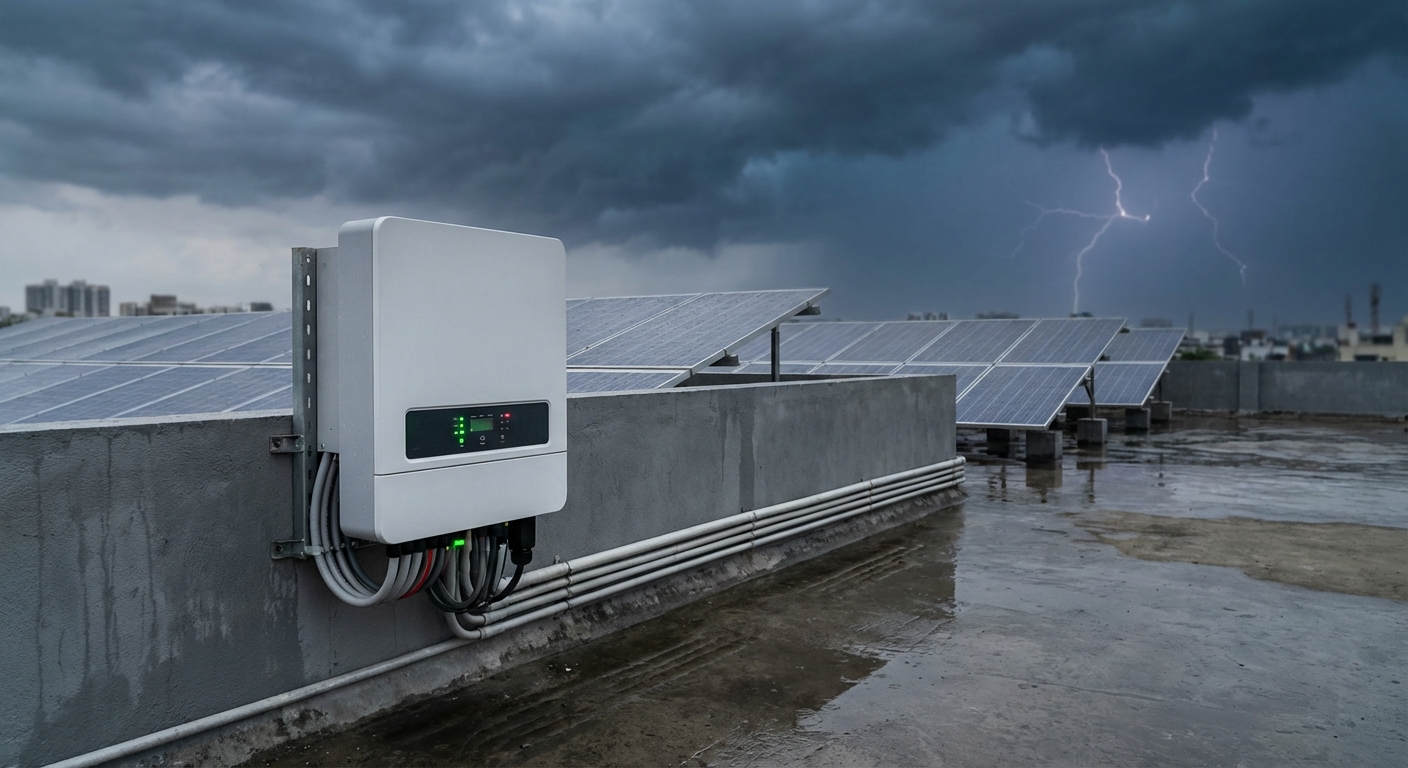
For solar EPCs and installation companies operating in India, selecting inverters with adequate surge protection isn’t just a technical checkbox—it’s a critical decision that determines project longevity, warranty validity, and ultimately, your reputation. With India’s unpredictable power grid conditions, frequent voltage fluctuations, and intense monsoon lightning activity, the quality of surge protection devices (SPDs) integrated into solar inverters can make the difference between a 25-year performing asset and a costly equipment failure within the first few years.
This comprehensive guide walks you through the essential selection criteria for evaluating surge protection in solar inverters, technical specifications you must verify, red flags that signal inadequate protection, and how to match SPD capabilities to India’s unique environmental challenges. Whether you’re specifying equipment for a residential rooftop or a multi-megawatt commercial installation, understanding surge protection fundamentals will protect your projects and your bottom line.
Why Surge Protection Is Critical for Solar Inverters in India
India presents a uniquely challenging environment for solar inverter operation. The combination of grid instability, seasonal lightning storms, and varying power quality across regions creates multiple surge risk vectors that can devastate unprotected equipment.
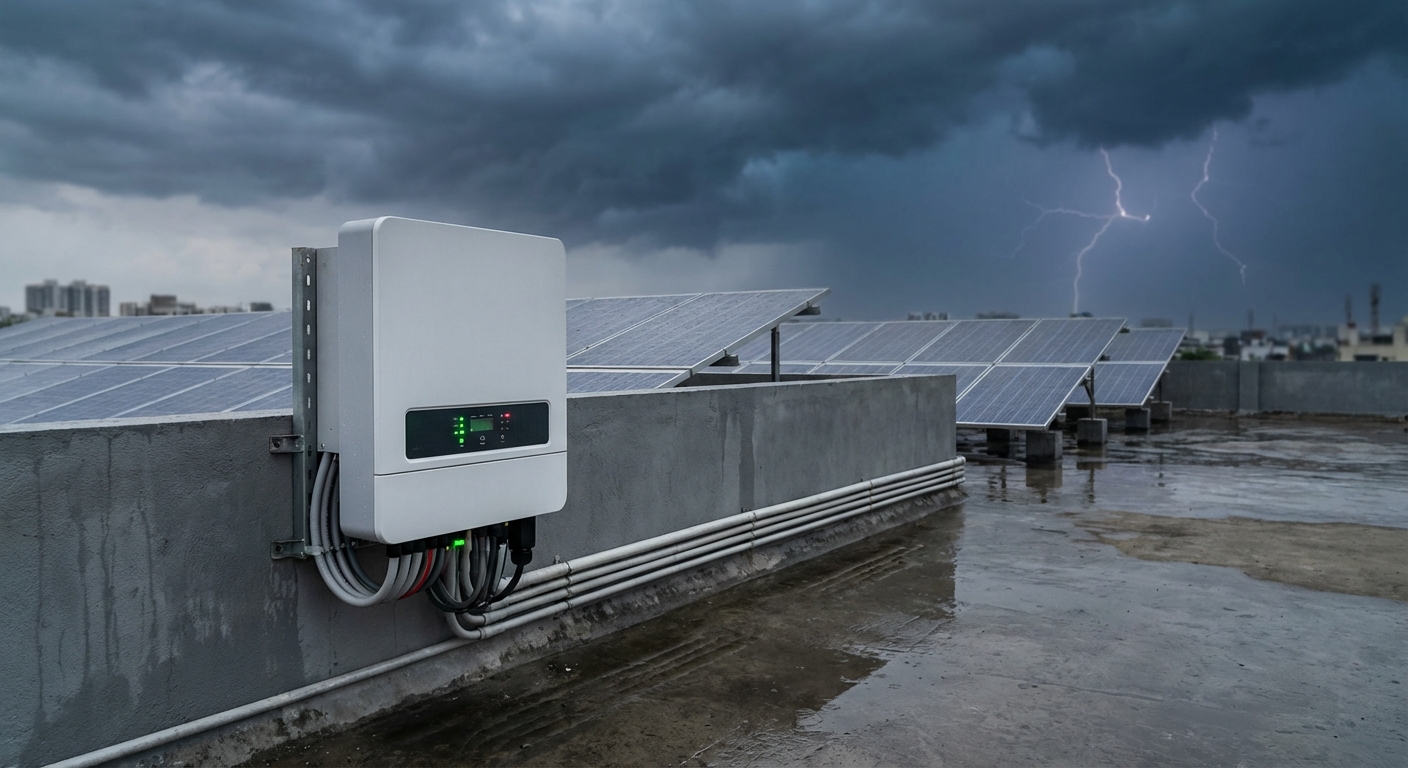
The Indian power grid experiences frequent voltage fluctuations due to load variations, transformer switching, and infrastructure limitations—particularly in tier-2 and tier-3 cities. These transient overvoltages can range from minor spikes to severe surges exceeding 6,000 volts. Without proper surge protection, these events cause cumulative damage to sensitive inverter electronics, gradually degrading performance before causing complete failure.
Lightning strikes represent an even more severe threat. India’s monsoon season brings intense electrical storms, with the country experiencing one of the world’s highest lightning densities. According to the India Meteorological Department, lightning causes thousands of incidents annually. A direct or nearby lightning strike can induce surges exceeding 20,000 volts through solar arrays and grid connections, instantly destroying inverters lacking adequate SPD protection.
The financial implications are substantial. A failed inverter on a commercial solar installation can mean weeks of downtime, lost generation revenue, emergency replacement costs, and potential warranty disputes. For EPCs, a single surge-related failure can erase the profit margin on an entire project. More critically, inadequate surge protection often voids manufacturer warranties, leaving installation companies liable for replacement costs that should have been covered.
Beyond immediate replacement costs, surge damage affects inverter lifespan and long-term ROI. Even non-catastrophic surge events cause micro-damage to components, accelerating aging and reducing the inverter’s operational life from an expected 15-20 years to potentially just 5-7 years. This premature failure disrupts the entire financial model of solar installations, affecting payback periods and lifetime energy production calculations.
Understanding DC and AC Surge Protection Devices (SPDs)
Effective solar inverter surge protection requires understanding the dual nature of surge threats and the corresponding protection mechanisms. Solar inverters face surge risks from two distinct sources: the DC side (solar array) and the AC side (grid connection). Comprehensive protection demands SPDs on both sides, each designed for their specific electrical characteristics.
DC surge protection devices guard the inverter’s input stage against surges originating from the solar array. Lightning-induced surges are the primary concern here—when lightning strikes near a solar installation, the electromagnetic pulse induces high voltages in the array wiring. DC SPDs clamp these voltages to safe levels before they reach sensitive inverter electronics. Quality DC SPDs must handle the unique characteristics of photovoltaic systems, including high DC voltages (up to 1,000V or more) and the continuous current flow from solar panels.
AC surge protection devices protect the inverter’s output stage and grid connection from surges originating in the utility network. Grid-side surges result from lightning strikes to power lines, transformer switching operations, capacitor bank switching, and faults in the distribution network. AC SPDs prevent these transients from entering the inverter through the grid connection, protecting both the inverter’s output stage and preventing damage from traveling backward into the DC side.
SPDs are classified into three types based on their application and protection capability. Type 1 SPDs provide the highest level of protection against direct lightning strikes and are typically installed at the main service entrance. Type 2 SPDs offer protection against indirect lightning effects and switching surges, commonly integrated into inverters or installed at distribution boards. Type 3 SPDs provide fine protection for sensitive equipment and are used as supplementary devices. For solar inverters in India, Type 2 SPDs are the minimum requirement, with Type 1 protection recommended for installations in high-lightning-risk areas.
The critical distinction between integrated and external SPD configurations significantly impacts installation quality and long-term reliability. Integrated SPDs are factory-installed within the inverter enclosure, tested as part of the complete system, and covered under the inverter warranty. External SPDs require separate procurement, installation, and maintenance, introducing additional failure points and potential coordination issues between devices. For EPCs managing multiple installations, integrated SPD systems reduce complexity and ensure consistent protection across all projects.
1. Evaluate SPD Technical Ratings and Specifications
When selecting solar inverters with adequate surge protection, the SPD technical specifications reveal the true protection capability. Don’t rely on vague marketing claims—demand specific ratings and verify they meet the requirements for Indian operating conditions.
The maximum discharge current (Imax) rating indicates the highest surge current the SPD can safely conduct without failure. For solar inverters in India, look for DC SPDs with Imax ratings of at least 20 kA (8/20 μs waveform) and AC SPDs with minimum 40 kA ratings. Installations in high-lightning-risk regions should specify even higher ratings, 40 kA for DC and 60 kA for AC protection. These ratings ensure the SPD can handle severe surge events without degradation.
The voltage protection level (VPL or Up) specifies the maximum voltage that will appear across the SPD terminals during a surge event. This is the voltage that reaches your inverter’s sensitive electronics. Lower VPL values provide better protection. For 1,000V DC solar systems, look for VPL ratings below 3,500V. For AC protection on 230V/400V systems, VPL should not exceed 1,500V. These levels ensure surges are clamped to voltages the inverter’s internal components can withstand.
Response time determines how quickly the SPD reacts to a surge event. Lightning-induced surges rise to peak voltage in nanoseconds, so SPD response time must be equally fast. Quality metal oxide varistor (MOV) based SPDs respond in less than 25 nanoseconds, while gas discharge tube (GDT) based devices may take 100 nanoseconds or more. For solar inverter applications, specify SPDs with response times under 25 nanoseconds to ensure protection activates before surge energy damages components.
The short-circuit current rating (SCCR) indicates the maximum fault current the SPD can safely interrupt if it fails. This rating must exceed the available short-circuit current at the installation point. For grid-connected solar systems, verify the AC SPD’s SCCR matches or exceeds the utility’s fault current capacity, typically 10 kA minimum for residential installations and 25 kA or higher for commercial systems.
Finally, verify the temperature operating range matches India’s climate extremes. Rooftop-mounted inverters in regions like Rajasthan or Gujarat can experience ambient temperatures exceeding 50°C, while Himalayan installations face sub-zero conditions. SPD specifications should confirm operation across -40°C to +85°C to ensure protection remains effective regardless of seasonal temperature variations.
2. Verify SPD Certification and Compliance Standards
Technical specifications mean nothing without independent verification. Certification from recognized standards bodies confirms that SPD performance claims have been tested and validated by third-party laboratories. For solar inverters deployed in India, several key certifications indicate quality surge protection.
The international standard IEC 61643-11 specifies requirements and test methods for low-voltage surge protective devices. This comprehensive standard covers SPD classification, performance requirements, and testing procedures. Inverters with SPDs certified to IEC 61643-11 have undergone rigorous testing for discharge current capacity, voltage protection level, and operational reliability. When evaluating inverter specifications, verify that both DC and AC SPDs carry this certification.
BIS certification is mandatory for electrical equipment sold in India. The Bureau of Indian Standards has adopted IEC standards for SPDs, and products must carry the BIS mark to legally operate in the country. Beyond legal compliance, BIS certification ensures the SPD meets minimum safety and performance requirements for Indian conditions. Always verify BIS certification documentation, counterfeit certifications are unfortunately common in the market.
International certifications like UL 1449 (North American standard) and EN 61643-11 (European standard) provide additional confidence in SPD quality. While not mandatory for Indian installations, these certifications indicate the manufacturer maintains global quality standards and subjects their products to multiple independent testing regimes. Manufacturers pursuing international certifications typically demonstrate higher overall quality control.
Verification of authentic certification requires more than just seeing a logo on a datasheet. Request copies of actual test reports from accredited laboratories. Check certification numbers against the issuing body’s database, most certification organizations maintain online verification systems. For large projects, consider requiring manufacturers to provide traceability documentation linking the specific inverter serial numbers to batch testing records.
Understanding why certification matters extends beyond technical compliance. Insurance companies increasingly require certified surge protection for commercial solar installations. Warranty claims for surge damage often depend on proper SPD certification, manufacturers can deny claims if uncertified or improperly rated SPDs were used. For EPCs, specifying properly certified surge protection protects against liability and ensures warranty coverage remains valid throughout the inverter’s operational life.
3. Assess Integrated SPD System Design
The architecture of surge protection within the inverter reveals significant differences in quality, reliability, and long-term performance. How SPDs are integrated into the inverter design affects everything from installation complexity to maintenance requirements and warranty coverage.
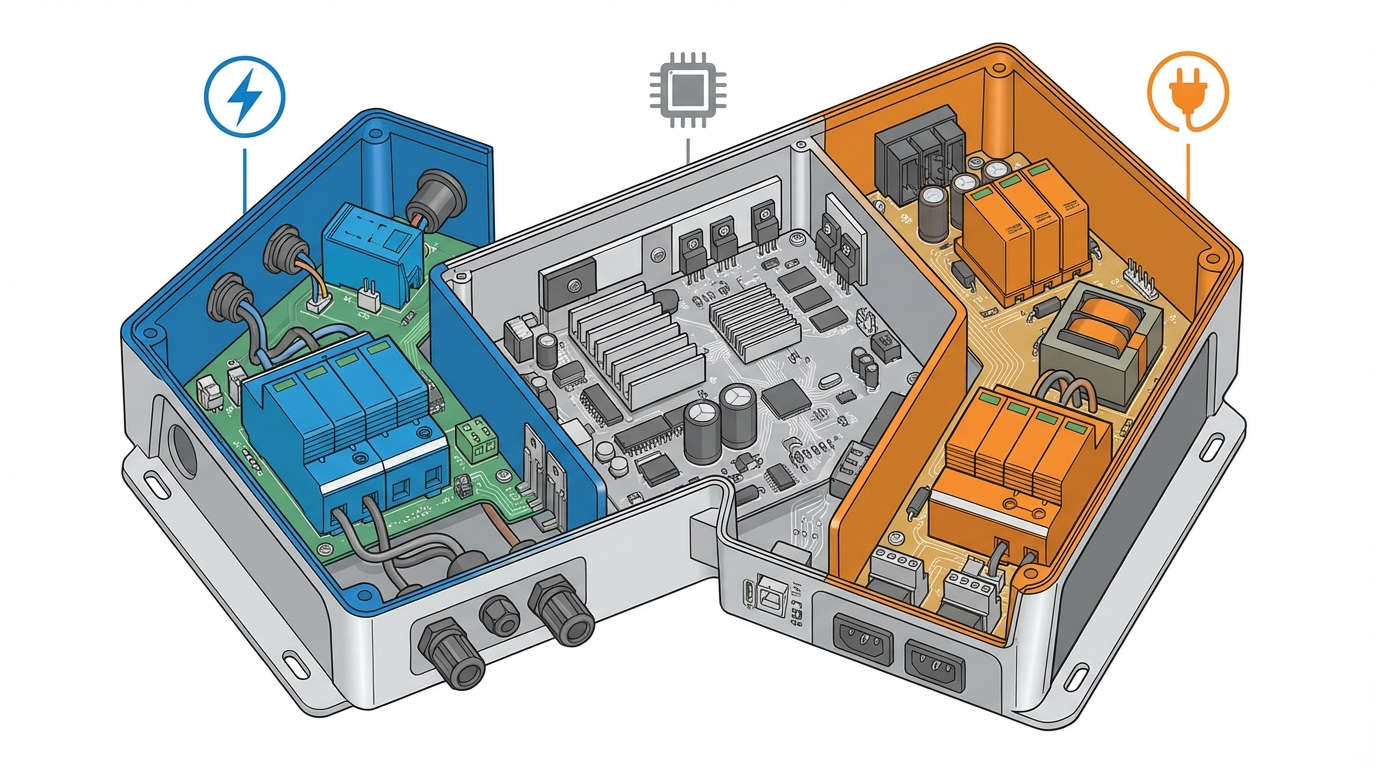
Factory-integrated SPDs offer substantial advantages over aftermarket additions. When SPDs are designed into the inverter from the beginning, engineers can optimize the protection coordination, minimize lead lengths (which affect SPD effectiveness), and test the complete system as an integrated unit. This integration ensures the SPDs work harmoniously with the inverter’s other protection systems, including overvoltage protection, ground fault detection, and arc fault protection.
Aftermarket SPD additions, while better than no protection, introduce several complications. External SPDs require additional enclosures, mounting space, and wiring, each adding cost and potential failure points. The connection between external SPDs and the inverter creates inductance that can reduce protection effectiveness. Most critically, external SPDs typically aren’t covered under the inverter warranty, creating ambiguity about responsibility when surge damage occurs.
Effective surge protection requires coordination between DC and AC SPDs. When a surge event occurs, both SPDs must activate in the correct sequence to prevent voltage from finding alternative paths through the inverter. Integrated systems are designed with this coordination built-in, with SPD voltage ratings carefully selected to ensure proper cascading. External SPD installations require careful engineering to achieve this coordination, a complexity that’s often overlooked during installation.
The quality of SPD components themselves varies dramatically across manufacturers. Premium inverters use industrial-grade metal oxide varistors (MOVs) from established component manufacturers like Littelfuse, EPCOS, or Bourns. Budget inverters may use generic MOVs with inconsistent performance and shorter operational life. When evaluating inverter selection criteria, ask manufacturers to specify their SPD component sources and quality standards.
Qbits inverters exemplify integrated SPD system design with factory-installed DC and AC surge protection using German-grade components. The integrated architecture ensures optimal protection coordination while the 1,000+ automated quality tests validate SPD performance on every unit before shipment. This integration means EPCs receive inverters with verified surge protection, eliminating the complexity and risk of aftermarket SPD installation while ensuring complete warranty coverage for surge-related incidents.
4. Check SPD Monitoring and Failure Indication Features
Surge protection devices don’t last forever. Each surge event that an SPD successfully diverts causes incremental degradation to the protective components. After multiple surge events or one particularly severe event, SPDs can fail, either degrading to a point where they no longer provide adequate protection, or failing short-circuit and requiring replacement. Without monitoring and failure indication, you won’t know your surge protection has failed until the inverter itself is damaged.
Basic visual indicators provide the minimum level of SPD monitoring. Quality inverters include LED indicators or mechanical flags that show SPD status. A green indicator confirms the SPD is operational, while red or no indication signals SPD failure or degradation. These visual indicators allow technicians to quickly assess SPD health during routine maintenance visits. However, visual indicators require someone to physically inspect the inverter, failures between maintenance visits go undetected.
Remote monitoring capabilities represent a significant advancement in SPD management. Advanced inverters integrate SPD status into their monitoring systems, transmitting SPD health data alongside performance metrics. This integration enables real-time awareness of protection status across entire solar portfolios. When an SPD degrades or fails, the monitoring system generates an alert, enabling proactive replacement before the next surge event damages the unprotected inverter.
Automatic alerts for SPD degradation provide critical early warning. Modern solar inverter monitoring systems can detect subtle changes in SPD characteristics that indicate approaching failure. These predictive alerts enable scheduled maintenance rather than emergency repairs, reducing downtime and preventing secondary damage. For EPCs managing multiple installations, centralized SPD monitoring across all sites enables efficient maintenance planning and inventory management for replacement SPDs.
Understanding replacement indicators and maintenance requirements is essential for long-term protection. SPD manufacturers specify expected operational life based on surge exposure. In high-lightning-risk areas, SPDs may require replacement every 3-5 years even without visible failure. Inverter manufacturers should provide clear guidance on SPD inspection intervals and replacement procedures. For integrated SPDs, verify whether replacement requires inverter shutdown, specialized tools, or factory service, factors that affect maintenance costs and downtime.
Smart monitoring systems can track individual surge events, logging the date, time, and magnitude of each surge that the SPD diverted. This data provides valuable insights into the surge environment at each installation site, enabling better protection specification for future projects. Event logging also supports warranty claims by documenting the surge conditions that led to equipment damage, providing evidence for insurance claims or utility discussions about power quality issues.
5. Consider Regional Lightning and Surge Risk Factors
India’s vast geography creates dramatically different surge risk profiles across regions. Effective surge protection specification requires matching SPD ratings to the specific environmental challenges of each installation location. A one-size-fits-all approach leaves some installations under-protected while over-specifying protection for low-risk areas wastes budget.
Lightning density mapping provides the foundation for risk assessment. The India Meteorological Department publishes lightning flash density data showing strikes per square kilometer per year across different regions. States like Kerala, Karnataka, and West Bengal experience high lightning density during monsoon seasons, with flash densities exceeding 10 strikes per km² annually. In contrast, regions like Rajasthan and Gujarat have lower lightning frequency but face different surge challenges from grid instability.
Grid stability variations across Indian states significantly impact surge risk. Metropolitan areas with modern grid infrastructure experience fewer voltage fluctuations than rural areas with aging transformers and long distribution lines. Tier-1 cities like Mumbai, Delhi, and Bangalore generally provide more stable power, while tier-2 and tier-3 cities may experience frequent voltage swings. When specifying inverters for projects across multiple locations, consider regional grid quality in your SPD rating requirements.
Coastal versus inland installations face different environmental factors affecting surge protection. Coastal regions experience higher humidity and salt air exposure, which can accelerate SPD component degradation. These installations benefit from inverters with superior environmental protection, like IP66-rated enclosures that prevent moisture ingress into SPD components. Inland installations, particularly in northern India, face extreme temperature variations that stress SPD components differently, requiring verification of temperature operating ranges.
Industrial area installations encounter unique power quality challenges. Large motor loads, welding equipment, and variable frequency drives create electrical noise and voltage transients on the local grid. Solar installations in industrial parks or near manufacturing facilities should specify enhanced surge protection to handle these frequent low-level transients that, while not as dramatic as lightning strikes, cause cumulative damage over time.
Matching SPD ratings to local risk levels optimizes both protection and cost-effectiveness. High-risk regions justify premium SPD specifications, Type 1 protection, higher discharge current ratings, and more frequent inspection intervals. Lower-risk areas can use standard Type 2 protection while still maintaining adequate safety margins. For EPCs operating across India, developing regional specification standards based on lightning density and grid quality data ensures consistent, appropriate protection across your project portfolio.
6. Review Warranty Coverage for Surge-Related Damage
The quality of surge protection directly impacts warranty validity and coverage. Understanding what surge-related damage is covered, documentation requirements for claims, and how SPD specifications affect warranty terms is essential for protecting your investment and managing project risk.
Most solar inverter warranties include coverage for surge damage, but the details matter significantly. Comprehensive warranties cover surge damage regardless of source, lightning strikes, grid transients, or switching surges. Limited warranties may exclude certain surge types or cap coverage amounts for surge incidents. When comparing inverter options, request specific warranty language regarding surge protection rather than relying on general warranty summaries.
Documentation requirements for surge-related claims can be extensive. Manufacturers typically require evidence that the surge event occurred, proof that the inverter’s SPDs were properly rated and functional before the event, and sometimes third-party assessment of the damage. Installations with monitoring systems that log surge events have significant advantages in warranty claims, the data provides clear evidence of the surge magnitude and timing. Without this documentation, warranty claims may be denied or disputed.
Here’s a critical point many EPCs overlook: inadequate SPDs void warranty protection. If an inverter is damaged by a surge that properly rated SPDs should have prevented, manufacturers can deny warranty coverage. This includes situations where external SPDs were improperly specified, incorrectly installed, or had failed without replacement. The warranty fine print typically requires that all protection devices meet manufacturer specifications and remain functional throughout the warranty period.
Manufacturer support for surge incident investigation varies significantly across brands. Premium manufacturers provide technical support to analyze surge damage, determine root causes, and process warranty claims efficiently. Budget brands may offer minimal support, leaving EPCs to navigate complex claim processes alone. When evaluating inverter manufacturers in India, consider their reputation for warranty claim handling and technical support quality.
The length and terms of warranty coverage reflect manufacturer confidence in their surge protection design. A 12-year full replacement warranty, like that offered by Qbits, indicates the manufacturer trusts their integrated SPD system to protect the inverter throughout its operational life. Shorter warranties or warranties with prorated coverage after a few years may signal less confidence in long-term surge protection effectiveness. For EPCs, longer comprehensive warranties reduce long-term risk and provide stronger value propositions to end customers.
Red Flags to Avoid When Evaluating Surge Protection
Recognizing warning signs of inadequate surge protection helps EPCs avoid inverters that will create future problems. These red flags indicate manufacturers cutting corners on protection quality or lacking the engineering expertise to design effective surge protection systems.
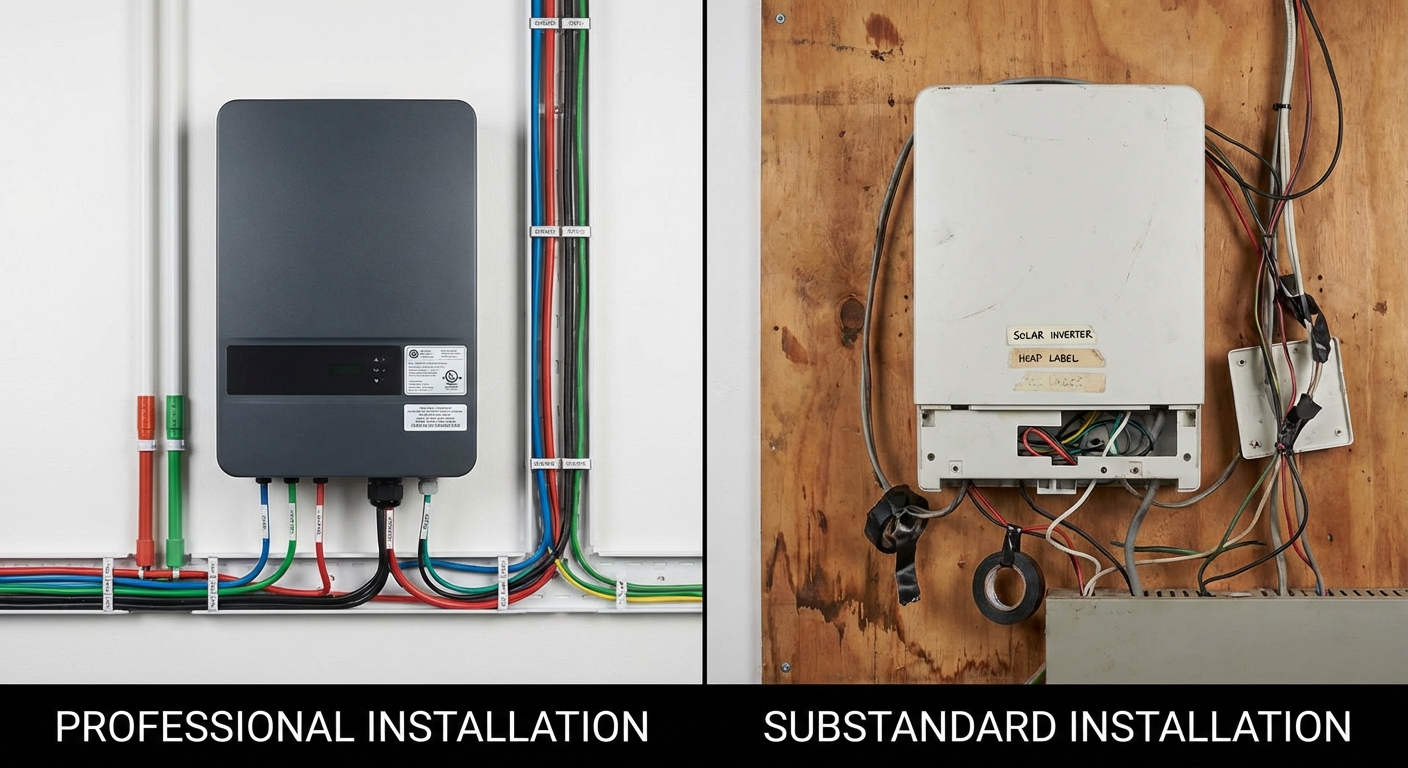
Missing or unclear SPD specifications in product datasheets is the most obvious red flag. If a manufacturer doesn’t clearly specify DC and AC SPD ratings, discharge current capacity, voltage protection levels, and certification standards, assume the protection is inadequate. Quality manufacturers proudly detail their surge protection specifications because it’s a competitive advantage. Vague claims like “built-in surge protection” without technical details suggest minimal or poorly designed protection.
Inverters requiring separate SPD purchases indicate the manufacturer hasn’t invested in integrated protection design. While external SPDs can provide adequate protection if properly specified and installed, requiring customers to source and install separate protection devices creates complexity, increases failure risk, and often results in inadequate protection when installers choose budget SPDs or skip them entirely to reduce costs.
Uncertified or generic SPD components represent serious quality concerns. Some manufacturers use uncertified MOVs or gas discharge tubes from unknown suppliers to reduce costs. These components may provide minimal protection under light surge conditions but fail catastrophically during severe events. Always verify that SPD components carry proper certifications and come from established component manufacturers.
Inadequate discharge current ratings for Indian conditions signal insufficient protection. If an inverter’s DC SPD is rated below 15 kA or AC SPD below 30 kA, the protection won’t survive severe lightning-induced surges common during monsoon seasons. These minimal ratings might meet basic certification requirements but don’t provide the safety margin needed for reliable long-term operation in high-risk environments.
Lack of SPD monitoring or failure indication means you’ll never know when protection has failed. Inverters without even basic visual SPD status indicators leave installations vulnerable to undetected protection failures. This is particularly problematic for remote installations where regular physical inspections are impractical. Modern inverters should integrate SPD status into their monitoring systems, providing remote visibility of protection health.
Finally, research manufacturers’ surge damage claim history. Industry forums, installer communities, and distributor feedback reveal patterns of surge-related failures and warranty claim difficulties. Manufacturers with frequent surge damage reports or reputations for denying legitimate surge claims should be avoided regardless of their initial pricing advantages. The cost savings disappear quickly when you’re replacing failed inverters at your own expense.
How Qbits Inverters Deliver Comprehensive Surge Protection
Qbits has engineered comprehensive surge protection into every inverter, recognizing that protection quality directly determines inverter longevity and customer satisfaction in India’s challenging electrical environment. The integrated approach to surge protection reflects the company’s commitment to German-grade quality standards and long-term reliability.
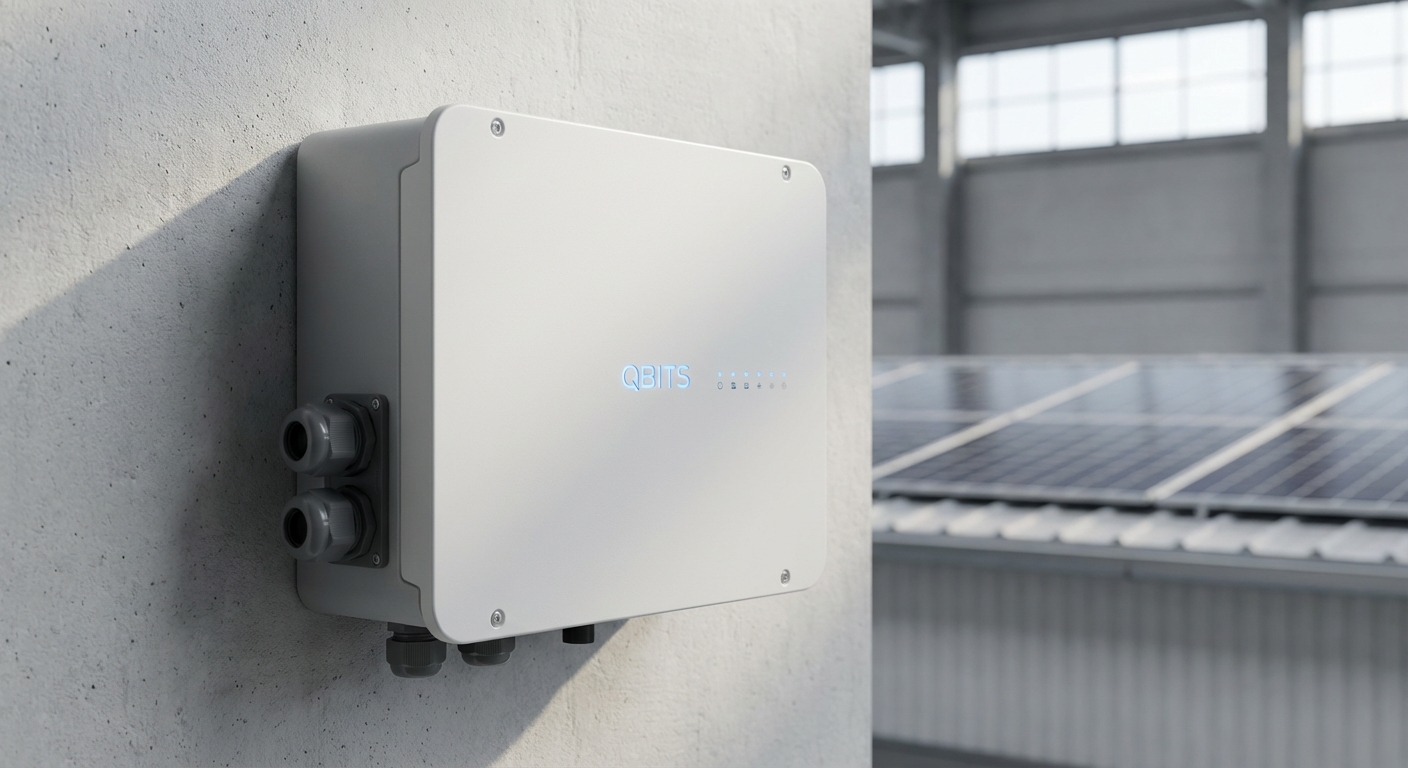
Factory-integrated DC and AC SPD systems provide coordinated protection from both solar array and grid-side surge sources. The DC SPDs protect against lightning-induced surges from the solar array, while AC SPDs guard against grid transients and switching surges. This dual protection architecture ensures comprehensive coverage regardless of surge origin, with protection coordination designed and tested as an integrated system rather than assembled from separate components.
The use of German-grade SPD components ensures consistent performance and long operational life. Qbits sources surge protection components from established European manufacturers known for quality and reliability. These industrial-grade MOVs and protection circuits undergo rigorous incoming quality inspection before integration into inverters, ensuring every unit meets the same high standards. This component quality directly translates to protection reliability, the SPDs will perform as specified when surge events occur.
Real-time surge monitoring via AI-powered WhatsApp alerts provides unprecedented visibility into protection status. The integrated monitoring system tracks SPD health and sends instant notifications if degradation or failure is detected. This proactive alerting enables immediate response to protection issues, preventing the scenario where an inverter operates with failed SPDs until the next surge event causes damage. For EPCs managing multiple installations, centralized monitoring across all sites enables efficient maintenance planning.
Every Qbits inverter undergoes 1,000+ quality tests including surge protection validation before shipment. This comprehensive testing regime includes verification of SPD ratings, protection coordination testing, and validation that all protection systems function correctly under simulated surge conditions. This testing ensures that the surge protection specified in the datasheet actually performs as claimed in the field, a level of quality assurance that budget manufacturers simply don’t provide.
The 12-year warranty coverage including surge protection demonstrates Qbits’ confidence in their integrated SPD design. This comprehensive warranty covers surge-related damage throughout the inverter’s operational life, providing EPCs and end customers with long-term protection against surge incidents. The warranty terms clearly specify coverage for lightning strikes and grid surges, eliminating the ambiguity that often complicates warranty claims with other manufacturers.
IP66 protection for outdoor surge exposure scenarios ensures the SPD components themselves remain protected from environmental degradation. The sealed enclosure prevents moisture, dust, and contaminants from reaching SPD components, maintaining protection effectiveness even in harsh rooftop environments. This environmental protection is particularly important in coastal installations where salt air can accelerate component degradation, and in dusty environments where contamination can create alternative current paths that bypass protection devices.
For solar EPCs and installers seeking reliable inverters with proven surge protection, Qbits offers a comprehensive solution engineered specifically for Indian conditions. The combination of integrated SPDs, quality components, intelligent monitoring, and comprehensive warranty coverage provides the protection quality that long-term solar installations demand. Explore the complete range of Qbits inverters to find the right solution for your next project.
Frequently Asked Questions About Solar Inverter Surge Protection
What is the difference between surge protection and overvoltage protection?
Surge protection and overvoltage protection address different electrical threats. Surge protection handles transient voltage spikes lasting microseconds to milliseconds, typically caused by lightning strikes or switching events. SPDs clamp these brief high-voltage events to safe levels. Overvoltage protection addresses sustained voltage increases lasting seconds to minutes, such as when grid voltage rises above normal operating range. Overvoltage protection typically disconnects the inverter from the grid until voltage returns to acceptable levels. Quality inverters include both protection types to handle the full range of voltage abnormalities.
How often should SPDs be replaced in solar inverters?
SPD replacement intervals depend on surge exposure and environmental conditions. In high-lightning-risk areas, inspect SPDs annually and plan for replacement every 3-5 years even without visible failure indicators. In moderate-risk areas, 5-7 year replacement intervals are typical. However, SPDs should be replaced immediately if failure indicators activate or after any known severe surge event. Inverters with integrated SPD monitoring provide data-driven replacement guidance based on actual surge exposure rather than arbitrary time intervals. Always follow manufacturer recommendations for your specific inverter model and installation environment.
Can external SPDs be added to inverters without integrated protection?
Yes, external SPDs can be added to inverters lacking integrated protection, but this approach has limitations. External SPDs must be properly rated for the voltage and current levels, installed with minimal lead lengths to maintain effectiveness, and coordinated with any existing inverter protection. The installation requires electrical expertise to ensure proper grounding and protection coordination. External SPDs also require separate enclosures and aren’t covered under inverter warranties. While external SPDs are better than no protection, they’re a compromise solution, integrated SPDs designed into the inverter from the beginning provide superior protection and reliability.
What surge protection level is recommended for monsoon-prone areas?
Monsoon-prone regions with high lightning density require enhanced surge protection specifications. Specify DC SPDs with minimum 40 kA discharge current rating (8/20 μs) and AC SPDs with minimum 60 kA rating. Type 1 SPDs provide the highest protection level and are recommended for installations in states like Kerala, Karnataka, West Bengal, and Assam where lightning frequency is highest. Ensure voltage protection levels are well below inverter component ratings, below 3,500V for DC side and 1,500V for AC side. Consider inverters with SPD monitoring to detect degradation from frequent surge exposure, and plan for more frequent SPD inspection and replacement in these high-risk environments.
How do I know if my inverter’s SPD has failed?
SPD failure detection depends on the monitoring features in your inverter. Basic inverters provide visual indicators, LED lights or mechanical flags that change color or position when the SPD fails. Check these indicators during routine maintenance visits. Advanced inverters with integrated monitoring systems send automatic alerts when SPD degradation or failure is detected, providing immediate notification without requiring site visits. If your inverter lacks failure indicators, signs of SPD failure include inverter damage after surge events, frequent nuisance tripping during storms, or visible damage to SPD components during internal inspection. For critical installations, consider upgrading to inverters with SPD monitoring capabilities to ensure continuous protection visibility.
Selecting solar inverters with proper surge protection is one of the most critical decisions EPCs make when specifying equipment for Indian installations. The combination of grid instability, high lightning density, and extreme environmental conditions demands inverters engineered with comprehensive, integrated surge protection systems. By evaluating SPD technical ratings, verifying certifications, assessing integrated system design, and avoiding common red flags, you can specify inverters that will deliver reliable performance throughout their operational life.
The investment in quality surge protection pays dividends through reduced failure rates, lower maintenance costs, valid warranty coverage, and enhanced reputation for delivering reliable solar installations. As India’s solar market continues its rapid growth, the EPCs and installers who prioritize surge protection quality will differentiate themselves through superior project performance and customer satisfaction.
Ready to specify inverters with proven surge protection for your next solar project? Qbits inverters combine factory-integrated SPDs, German-grade components, intelligent monitoring, and comprehensive 12-year warranty coverage to deliver the protection quality Indian installations demand. Contact our technical team to discuss your project requirements and discover how Qbits’ advanced surge protection can protect your installations and your reputation.
This blog post was written using thestacc.com