



Solar Inverter Depreciation & Tax Benefits Guide 2026

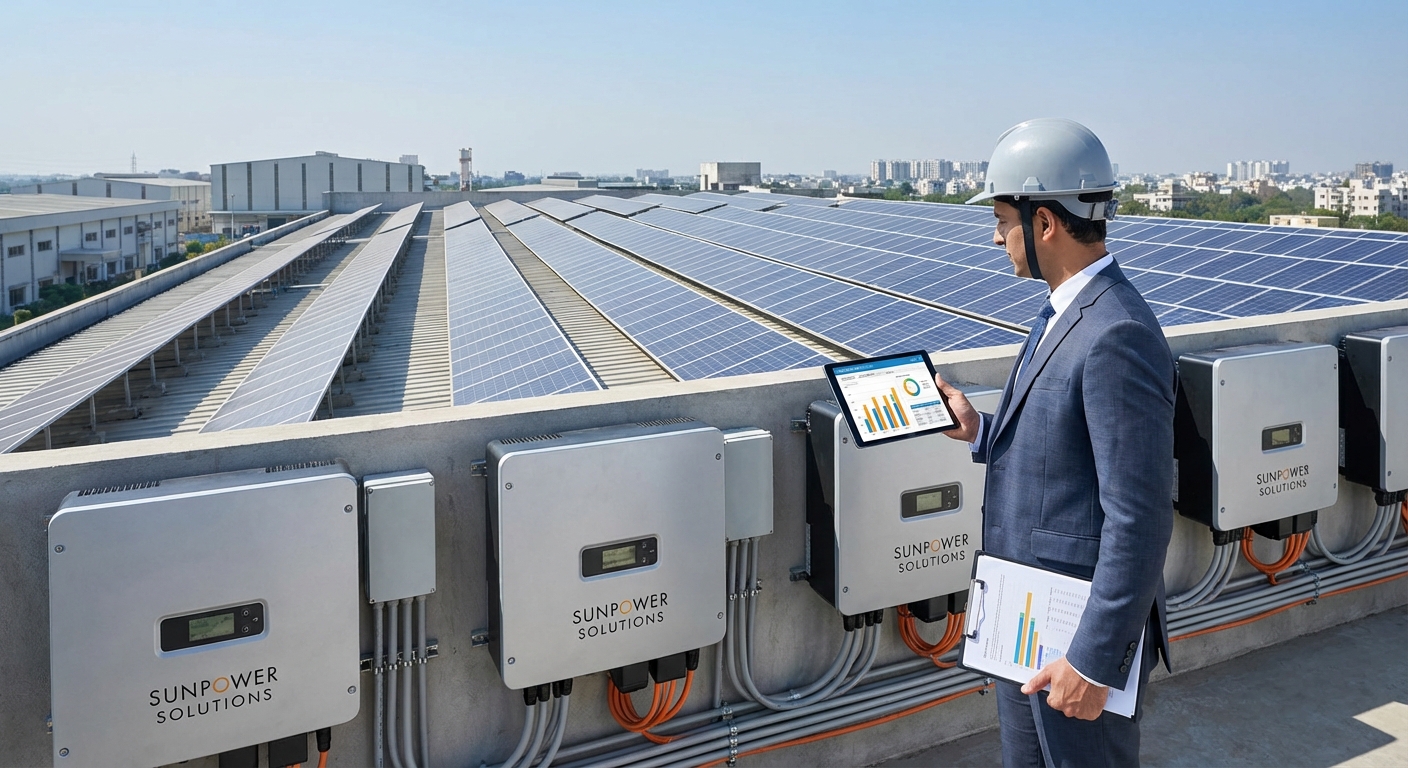
For commercial and industrial facility owners investing in solar energy, understanding inverter depreciation is critical to maximizing return on investment. Solar inverters represent a significant capital expenditure in any C&I solar project, and proper depreciation planning can unlock substantial tax benefits that dramatically improve project economics. In India’s evolving solar landscape, where businesses are increasingly adopting renewable energy to reduce operational costs and meet sustainability goals, mastering the financial lifecycle of inverter investments has become essential for EPCs, distributors, and facility owners alike.
This comprehensive guide explores solar inverter depreciation schedules, accelerated depreciation benefits under Indian tax laws, asset valuation methods, and strategic approaches to maximize tax savings on commercial and industrial solar installations. Whether you’re planning your first solar project or optimizing an existing portfolio, understanding how inverter depreciation impacts your bottom line will help you make informed decisions that enhance long-term profitability.
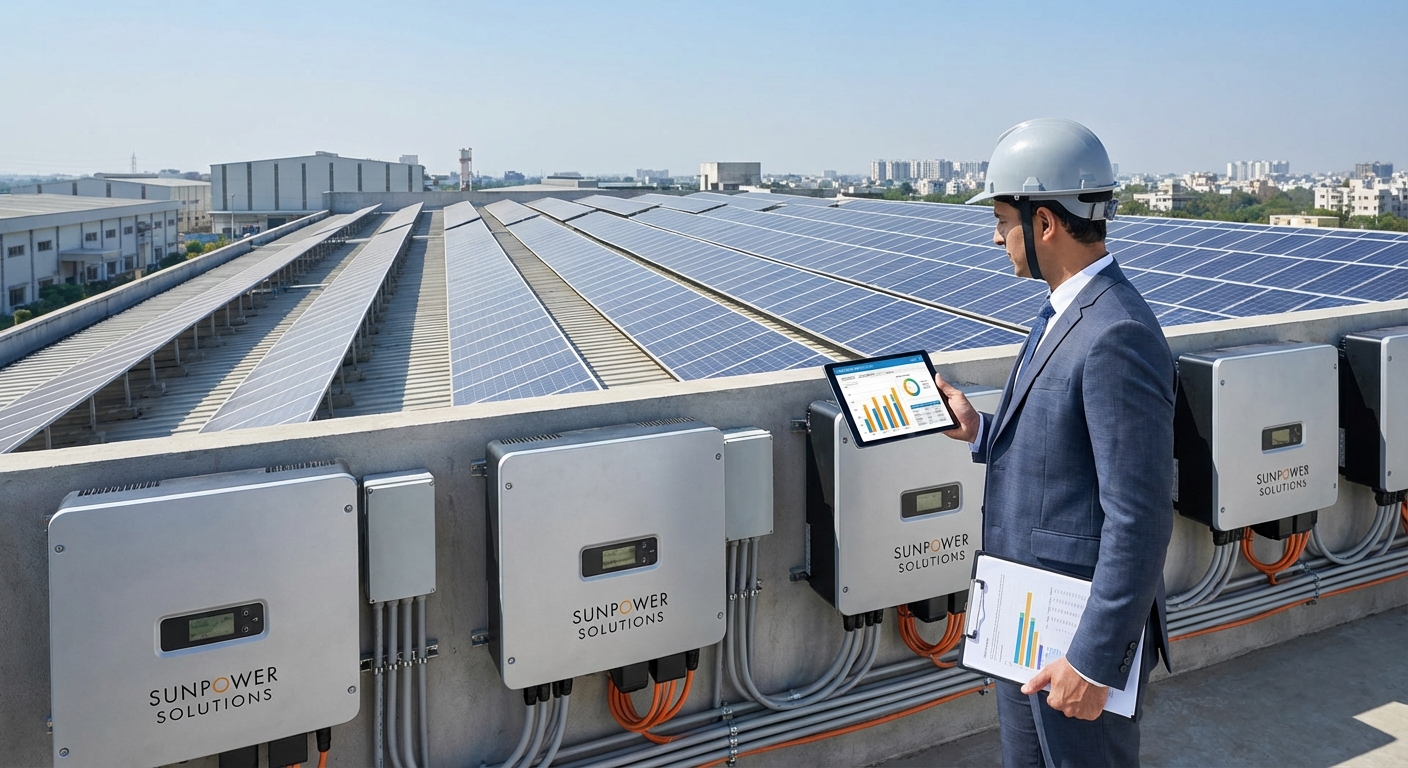
Understanding Solar Inverter Depreciation in India’s C&I Sector
Inverter depreciation refers to the systematic allocation of an inverter’s cost over its useful life for accounting and tax purposes. Unlike operational expenses that are deducted immediately, capital assets like solar inverters are depreciated over multiple years, allowing businesses to claim tax deductions annually based on the asset’s declining value.
For commercial and industrial solar projects in India, inverter depreciation serves three critical functions. First, it provides annual tax deductions that reduce taxable income, lowering the effective cost of the solar investment. Second, it reflects the actual economic reality that inverters lose value over time due to technological obsolescence and wear. Third, it enables accurate financial modeling for project ROI calculations, helping stakeholders understand true profitability over the system’s lifetime.
The importance of inverter depreciation in total cost of ownership calculations cannot be overstated. A typical commercial solar installation might have inverters representing 10-15% of total project cost. For a 500 kW rooftop installation costing ₹2.5 crore, inverters might account for ₹30-40 lakh. The depreciation benefits on this investment can reduce effective costs by 20-30% over the first few years, significantly improving payback periods and internal rate of return (IRR).
India’s tax framework for solar assets has evolved considerably to encourage renewable energy adoption. The Income Tax Act of 1961, along with various amendments and notifications from the Ministry of New and Renewable Energy (MNRE), provides specific provisions for solar equipment depreciation. Understanding these regulations is essential for selecting the right inverters and structuring projects to maximize financial benefits.
The depreciation treatment of solar inverters also varies based on several factors including inverter type (on-grid versus hybrid), project ownership structure (captive versus third-party), and the specific tax status of the investing entity. Commercial establishments, industrial facilities, and solar power developers each face different depreciation scenarios that require tailored financial planning approaches.
Depreciation Rates for Solar Inverters Under Indian Tax Laws
Under the Income Tax Act 1961, solar inverters are classified as plant and machinery, which determines their applicable depreciation rates. This classification is crucial because it establishes the legal framework for how businesses can claim tax deductions on their inverter investments over time.
As of 2026, the standard depreciation rate for solar power generating systems, including inverters, is 40% per annum under the Written Down Value (WDV) method. This rate applies to the entire solar power system when treated as an integrated asset. However, if inverters are capitalized separately from panels and other components, they still fall under the plant and machinery category with the same 40% depreciation rate.
The 40% depreciation rate represents a significant advantage compared to many other capital assets. For context, general plant and machinery typically attracts 15% depreciation, while computers and software qualify for 40%. Solar equipment’s inclusion in the higher depreciation bracket reflects government policy to incentivize renewable energy investments through favorable tax treatment.
It’s important to note that both on-grid and hybrid inverters receive the same depreciation treatment under current tax laws. Whether you install a standard on-grid inverter or a more sophisticated hybrid system with battery integration capabilities, the depreciation rate remains consistent at 40% under WDV method. This uniformity simplifies financial planning across different inverter technologies and project configurations.
The depreciation calculation begins from the date the asset is put to use, not the purchase date. For solar installations, this typically means when the system is commissioned and begins generating power. If an inverter is installed and commissioned in the middle of a financial year, proportionate depreciation is claimed for that year based on the number of months the asset was in use.
For businesses using the Straight Line Method (SLM) of depreciation instead of WDV, the applicable rate for solar power systems is typically lower, around 13.91% per annum. However, most businesses prefer WDV for solar assets because it provides higher depreciation deductions in the early years, which aligns better with the time value of money and improves project IRR calculations.
Accelerated Depreciation Benefits for Solar Inverter Investments
One of the most powerful financial incentives for commercial solar investments in India is accelerated depreciation, which allows businesses to claim significantly higher depreciation in the first year of asset operation. This provision has been a cornerstone of India’s solar policy framework, designed to improve project economics and encourage corporate renewable energy adoption.
Accelerated depreciation for solar projects allows businesses to claim 40% depreciation in the first year itself under the current tax framework. While this might seem identical to the standard rate mentioned earlier, the key difference lies in how it’s applied and the resulting cash flow benefits. Under accelerated depreciation, the full 40% can be claimed in year one regardless of when during the year the asset was commissioned, providing immediate and substantial tax relief.
To qualify for accelerated depreciation benefits on solar inverter investments, businesses must meet specific eligibility criteria. The solar power system must be owned by the business claiming depreciation (not applicable for power purchase agreement models where a third party owns the system). The business must have sufficient taxable income to absorb the depreciation benefit, as unused depreciation cannot be carried forward indefinitely in the same manner as losses. The system must be used for business purposes, not personal use.
The impact of accelerated depreciation on project IRR and payback period is substantial. Consider a commercial facility investing ₹40 lakh in high-quality inverters as part of a 500 kW solar installation. With a 40% first-year depreciation, the business can claim ₹16 lakh as depreciation expense. If the business falls in the 30% corporate tax bracket, this translates to immediate tax savings of ₹4.8 lakh in year one alone.
Let’s examine a detailed calculation example. A manufacturing facility installs a 1 MW rooftop solar system with total project cost of ₹5 crore, of which inverters account for ₹60 lakh. Under accelerated depreciation:
- Year 1: Depreciation claim = ₹60 lakh × 40% = ₹24 lakh; Tax savings at 30% rate = ₹7.2 lakh
- Year 2: Depreciation claim = (₹60 lakh – ₹24 lakh) × 40% = ₹14.4 lakh; Tax savings = ₹4.32 lakh
- Year 3: Depreciation claim = ₹8.64 lakh; Tax savings = ₹2.59 lakh
- Year 4: Depreciation claim = ₹5.18 lakh; Tax savings = ₹1.55 lakh
- Year 5: Depreciation claim = ₹3.11 lakh; Tax savings = ₹93,300
Over five years, the cumulative tax savings on just the inverter component exceeds ₹16 lakh, representing more than 26% of the initial inverter investment. When you factor in the time value of money, with the majority of savings realized in years 1-2, the effective cost reduction is even more significant.
This accelerated depreciation benefit directly improves project payback periods. A solar installation that might have a 5-year payback without considering tax benefits could see that reduced to 3.5-4 years when accelerated depreciation is properly utilized. For businesses evaluating solar investments against other capital allocation options, this dramatic improvement in early-year cash flows makes solar projects significantly more attractive from a financial perspective.
It’s worth noting that the accelerated depreciation benefit has seen policy changes over the years. While it was temporarily reduced to 40% from an earlier 80% rate, it remains a substantial incentive. Businesses planning solar investments should work with tax advisors to understand the current regulatory environment and structure their projects accordingly. The benefit is particularly valuable for profitable businesses with consistent taxable income that can fully utilize the depreciation deductions.
Asset Valuation Methods for Solar Inverter Depreciation
When calculating inverter depreciation, businesses can choose between two primary asset valuation methods: the Written Down Value (WDV) method and the Straight Line Method (SLM). Each approach has distinct characteristics that affect tax planning, financial reporting, and long-term asset management strategies.
The Written Down Value (WDV) method calculates depreciation as a fixed percentage of the asset’s book value at the beginning of each year. Under this method, the depreciation amount decreases each year as the asset’s book value declines. For solar inverters with a 40% depreciation rate, year one depreciation is calculated on the full purchase price, year two on 60% of the original value, year three on 36% of the original value, and so on.
The WDV method offers several advantages for solar inverter investments. It provides higher depreciation deductions in early years, which aligns with the time value of money principle—money saved today is worth more than money saved in the future. This front-loaded depreciation also matches the reality that inverters experience their steepest value decline in the first few years due to rapid technological advancement in the solar industry. Additionally, WDV method improves project IRR calculations, making solar investments more attractive when compared to alternative capital expenditures.
The Straight Line Method (SLM) calculates depreciation as a fixed percentage of the original asset cost each year, resulting in equal depreciation amounts throughout the asset’s life. For solar power systems under SLM, the depreciation rate is approximately 13.91% per annum, which translates to a useful life assumption of roughly 7-8 years for tax purposes.
While SLM provides predictable, consistent depreciation expenses that simplify long-term financial planning, it’s generally less favorable for solar projects than WDV. The lower annual depreciation rate means reduced tax benefits in the critical early years when project cash flows are being established. However, some businesses prefer SLM for financial reporting purposes as it presents more stable earnings patterns to stakeholders and investors.
Choosing between WDV and SLM for solar inverter assets depends on several factors. Businesses with high current profitability and tax liability typically benefit more from WDV’s front-loaded deductions. Companies prioritizing stable financial reporting and predictable expense patterns might prefer SLM. The choice also depends on overall tax planning strategy and whether the business has sufficient taxable income to absorb larger early-year deductions.
The inverter warranty period plays an interesting role in depreciation strategy. Premium inverters like those from Qbits Energy, which offer 12-year full replacement warranties, provide a unique advantage in asset valuation planning. The extended warranty period reduces the risk of unexpected replacement costs during the primary depreciation period, making financial projections more reliable. When an inverter is backed by a comprehensive warranty covering the majority of its depreciation schedule, businesses can confidently plan for the full depreciation benefit without factoring in potential mid-life replacement costs that could complicate asset accounting.
Residual value considerations are also important for long-life inverters. Under WDV method, the asset never fully depreciates to zero—there’s always a residual book value. For high-quality inverters engineered for 15-20 year operational lives, this residual value has real economic meaning. An inverter that continues operating efficiently beyond its primary depreciation period represents ongoing value that doesn’t appear in tax calculations but contributes to actual project returns. This is where inverter lifespan planning becomes crucial for comprehensive financial analysis.
Maximizing Tax Deductions on Commercial Solar Inverter Installations
Successfully claiming depreciation benefits on solar inverter investments requires careful planning, proper documentation, and strategic timing. This step-by-step approach ensures businesses capture the full tax advantages available under Indian law while maintaining compliance with Income Tax Department requirements.
Step 1: Proper Asset Capitalization
Ensure solar inverters are correctly capitalized as fixed assets in your company’s books. This requires maintaining detailed purchase records including invoices, payment documentation, and technical specifications. For projects where inverters are purchased separately from other system components, maintain distinct asset records that clearly identify the inverter cost, model, capacity, and commissioning date.
Step 2: Accurate Commissioning Documentation
The depreciation clock starts when the asset is “put to use,” which for solar inverters means the date of system commissioning. Maintain comprehensive commissioning reports that document when the inverter began operating, including timestamps, performance test results, and sign-offs from installation teams. This documentation is critical if the Income Tax Department questions the depreciation start date during audits.
Step 3: Choose the Appropriate Depreciation Method
Decide between WDV and SLM methods based on your business’s tax position and financial planning objectives. This choice must be made in the first year and generally cannot be changed for that asset category in subsequent years. Most businesses opt for WDV to maximize early-year tax benefits, but consult with your tax advisor to determine the optimal approach for your specific situation.
Step 4: Maintain Detailed Asset Registers
Create and maintain a fixed asset register that tracks each inverter’s purchase cost, commissioning date, depreciation method, accumulated depreciation, and current book value. For larger installations with multiple inverters, this register should identify each unit separately or group them appropriately based on your accounting policies. This documentation is essential for annual tax filings and audit trails.
Step 5: Coordinate with Tax Filing
Ensure depreciation claims are accurately reflected in your annual income tax returns. The depreciation amount should be claimed as a business expense in the profit and loss statement, reducing taxable income. Work with your chartered accountant to verify that the depreciation calculation follows the correct rate and method, and that all supporting documentation is available if requested by tax authorities.
Timing considerations for asset capitalization can significantly impact tax benefits. If possible, structure inverter purchases and commissioning to occur early in your financial year to maximize first-year depreciation claims. An inverter commissioned in April captures a full year’s depreciation, while one commissioned in March of the following year must wait another full year for the same benefit. For businesses with March 31 year-ends, this timing can shift tax savings by an entire year, affecting cash flows and project economics.
Common mistakes that reduce depreciation claims include failing to capitalize inverters separately when beneficial, missing commissioning documentation that delays depreciation start dates, incorrectly calculating depreciation rates or applying wrong asset categories, not maintaining adequate supporting documentation for tax audits, and failing to account for inverter replacements or upgrades in asset registers.
When structuring inverter purchases for optimal tax benefits, consider whether to bundle inverters with the complete solar system or capitalize them separately. For some businesses, separate capitalization allows more precise asset tracking and may provide flexibility in future asset disposals or replacements. Additionally, if you’re planning a phased solar installation, timing each phase’s inverter commissioning to align with your tax planning strategy can optimize the overall depreciation benefit across multiple financial years.
Working with experienced solar EPCs who understand these financial nuances is valuable. Professional installers can structure project timelines and documentation to support optimal tax planning while ensuring technical performance isn’t compromised. When evaluating inverter manufacturers, consider not just technical specifications but also the quality of documentation and support they provide for financial and tax compliance purposes.
Inverter Depreciation Impact on Long-Term ROI and Asset Management
Understanding how inverter depreciation affects total project economics requires looking beyond annual tax deductions to examine the complete financial lifecycle of your solar investment. The interplay between depreciation schedules, inverter lifespan, and actual system performance determines the true return on investment for commercial and industrial solar projects.
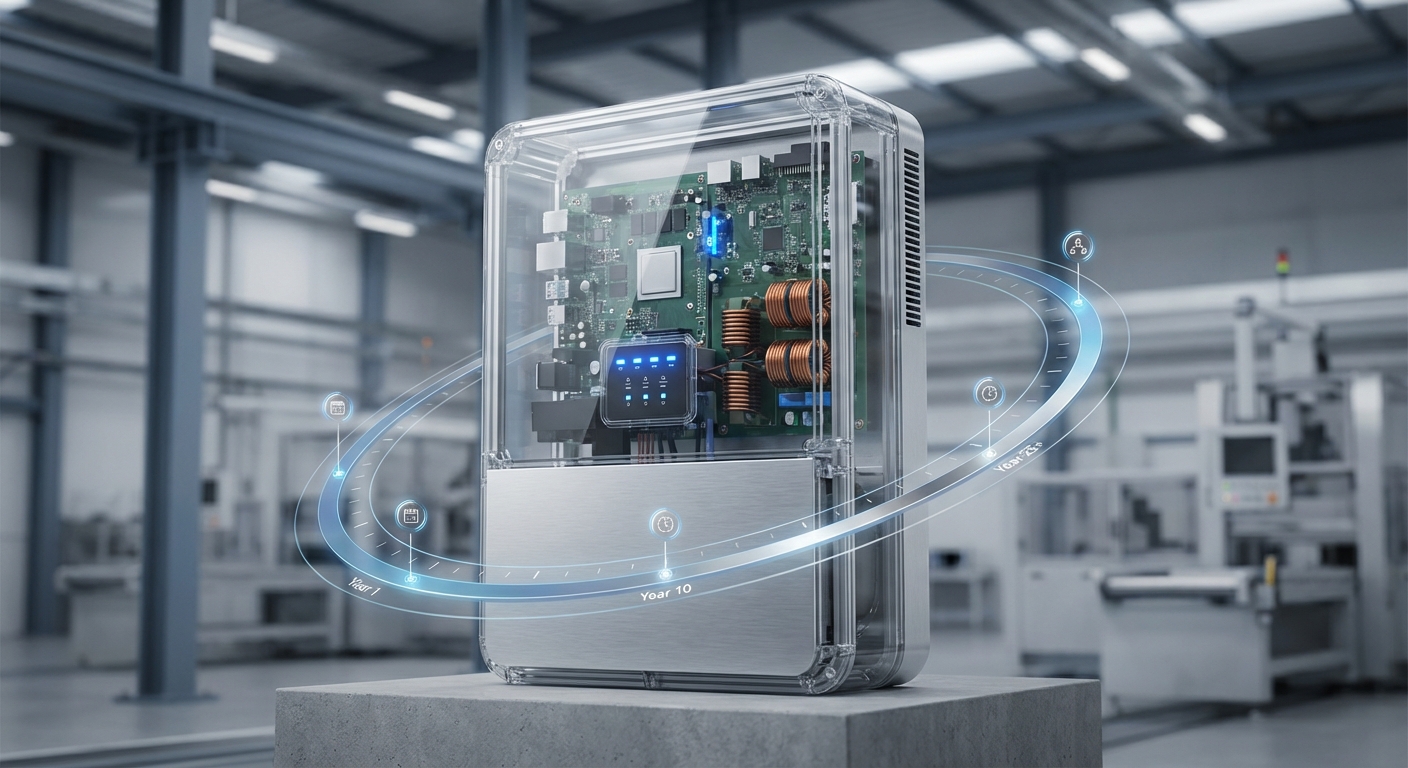
Depreciation fundamentally alters project economics by reducing the effective cost of inverter investments. When a business claims ₹24 lakh in first-year depreciation on a ₹60 lakh inverter investment and saves ₹7.2 lakh in taxes, the effective out-of-pocket cost drops to ₹52.8 lakh immediately. Over the full depreciation schedule, cumulative tax savings might reduce the effective inverter cost by 25-30%, dramatically improving project IRR and net present value (NPV) calculations.
The relationship between inverter lifespan and depreciation schedule is particularly important for long-term financial planning. Most solar inverters are designed for 10-15 year operational lives, with premium models engineered for 15-20 years. However, the depreciation schedule under WDV method front-loads deductions into the first 5-7 years. This creates an interesting dynamic where the inverter continues generating value long after its primary depreciation benefits have been realized.
Consider a high-quality inverter with a 15-year operational life. Under 40% WDV depreciation, approximately 92% of the asset’s value is depreciated within the first seven years. Yet the inverter continues operating efficiently for another 8 years, generating electricity and cost savings without corresponding depreciation deductions. This “post-depreciation value generation” is pure profit enhancement that doesn’t appear in initial ROI calculations but significantly improves actual returns.
Planning for inverter replacement and re-depreciation is essential for comprehensive asset management. When an inverter reaches end-of-life and requires replacement, the new unit can be capitalized and depreciated independently. This creates a new depreciation schedule that provides fresh tax benefits. For businesses with long-term solar commitments, strategic inverter replacement planning can maintain consistent depreciation benefits over 20-30 year horizons, continuously improving project economics.
The impact of inverter quality and warranty on asset value cannot be overstated. Premium inverters with extended warranties reduce the risk of premature failure during the primary depreciation period. If a low-quality inverter fails in year 4, the business faces unexpected replacement costs while still carrying the original asset’s book value. This creates accounting complications and reduces actual returns compared to projections. Conversely, an inverter backed by a comprehensive 12-year warranty ensures the asset performs throughout its primary depreciation schedule, making financial projections reliable and reducing risk.
This is where manufacturers like Qbits Energy, with their 12-year full replacement warranty and German-grade components, provide distinct financial advantages. The warranty period covers the critical depreciation years (years 1-7 where 92% of depreciation occurs), eliminating replacement risk during the period of maximum tax benefit. The extended warranty also supports the residual value of the asset, as a warranted inverter in year 10 has demonstrably more value than an unwarranted unit of the same age.
Premium inverters with longer warranties also improve financial outcomes through reduced maintenance costs and higher operational reliability. An inverter with 98% efficiency that maintains performance over 15 years generates more electricity and cost savings than a lower-quality unit that degrades faster. While both might have similar depreciation schedules, the actual cash flows differ significantly, affecting real ROI versus projected ROI.
For comprehensive financial planning, businesses should model multiple scenarios including optimistic (inverter performs flawlessly for 15+ years), realistic (minor maintenance required, performance within specifications), and conservative (replacement needed at year 10-12). Understanding how each scenario affects cumulative cash flows, including depreciation benefits, helps establish appropriate contingency reserves and makes project approvals more defensible to financial stakeholders.
Inverter Depreciation Strategies for Different C&I Project Types
The optimal approach to inverter depreciation varies significantly based on project type, ownership structure, and business model. Commercial and industrial solar installations come in diverse configurations, each with unique financial characteristics that affect depreciation planning and tax strategy.
Rooftop Commercial Installations
Rooftop solar systems on commercial buildings like offices, retail centers, and warehouses typically involve straightforward ownership structures where the building owner or tenant installs and owns the solar system. For these projects, inverter depreciation planning is relatively simple—the business capitalizes the inverters as fixed assets and claims depreciation against its regular business income. The key consideration is ensuring sufficient taxable income to absorb the depreciation benefit, particularly in the first year under accelerated depreciation.
For rooftop installations, inverter selection often prioritizes space efficiency and weather resistance. Premium inverters with IP66 weather protection and compact designs maximize limited rooftop space while ensuring durability in harsh conditions. The depreciation benefit should be factored into inverter selection decisions—a higher-quality inverter with better warranty coverage might have a higher upfront cost, but the combination of depreciation benefits and reduced replacement risk often makes it the more economical choice over the project lifecycle.
Ground-Mounted Industrial Solar Projects
Large-scale ground-mounted installations at industrial facilities involve higher capital investments and more complex financial structures. These projects often feature multiple inverters in parallel configurations, requiring careful asset tracking and depreciation management. Industrial facilities typically have substantial taxable income, making them ideal candidates for maximizing accelerated depreciation benefits on large inverter investments.
For ground-mounted projects, inverter depreciation planning should consider the potential for phased expansion. Many industrial facilities start with a smaller installation and expand capacity over time. Structuring each phase as a separate asset group allows businesses to optimize depreciation timing across multiple financial years, maintaining consistent tax benefits as the solar portfolio grows.
Captive vs Third-Party Solar Power Models
The ownership structure dramatically affects inverter depreciation strategy. In captive models where the business owns and operates the solar system, depreciation benefits flow directly to the business, improving project economics. In third-party models where a solar developer owns the system and sells power to the business through a power purchase agreement (PPA), the business cannot claim depreciation—that benefit belongs to the system owner.
This distinction is critical when evaluating CAPEX versus OPEX solar models. While PPA models eliminate upfront capital requirements, they also forfeit depreciation benefits. For profitable businesses with available capital and sufficient tax liability, the captive ownership model with full depreciation benefits often provides superior long-term economics despite higher initial investment.
OPEX vs CAPEX Models and Depreciation Implications
CAPEX (capital expenditure) models involve the business purchasing and owning the solar system, including inverters, as fixed assets. This structure enables full depreciation benefits and long-term asset ownership. OPEX (operational expenditure) models, including PPAs and solar leasing arrangements, treat solar costs as ongoing operational expenses rather than capital investments. While OPEX models avoid upfront costs and simplify accounting, they eliminate depreciation benefits entirely.
For businesses with strong balance sheets and tax planning objectives, CAPEX models with accelerated depreciation often provide 15-25% better returns over 15-20 year horizons compared to OPEX models. The depreciation benefit effectively reduces the cost of capital, making owned systems more economical despite higher initial investment. However, businesses with limited capital or those prioritizing balance sheet management might still prefer OPEX models despite foregoing depreciation advantages.
How Project Size Affects Depreciation Strategy
Project size influences depreciation strategy in several ways. Smaller installations (50-200 kW) typically involve single or few inverters, simplifying asset tracking and depreciation management. These projects are often financed entirely from operating cash flows, and depreciation benefits improve payback periods from 5-6 years to 4-5 years.
Larger installations (500 kW to multi-MW scale) involve substantial inverter investments that generate significant depreciation benefits. For a 2 MW installation with ₹2 crore in inverter costs, first-year depreciation of ₹80 lakh can generate ₹24 lakh in tax savings for a business in the 30% tax bracket. At this scale, depreciation benefits often make the difference between project approval and rejection, as they dramatically improve IRR and NPV calculations presented to financial decision-makers.
For very large projects, businesses might consider structuring the installation across multiple financial years to spread depreciation benefits and optimize tax planning. Rather than commissioning a 5 MW system in one year, phasing it as 2 MW in year one and 3 MW in year two can provide more consistent tax benefits and better align with capital availability and tax planning objectives.
Financial Planning Checklist: Optimizing Inverter Depreciation for Maximum Savings
Maximizing the financial benefits of inverter depreciation requires systematic planning and execution across the entire project lifecycle. This comprehensive checklist guides facility owners, EPCs, and financial planners through the critical steps for optimizing tax savings on commercial and industrial solar inverter investments.

Pre-Installation Financial Planning Steps
- Assess Tax Position: Evaluate your business’s current and projected taxable income to ensure sufficient tax liability to absorb depreciation deductions. Businesses with losses or minimal taxable income may not fully benefit from accelerated depreciation.
- Model Multiple Scenarios: Create financial models comparing WDV versus SLM depreciation methods, different inverter quality levels and warranty periods, and CAPEX versus OPEX ownership structures to identify the optimal approach for your situation.
- Determine Optimal Timing: Plan inverter commissioning dates to maximize first-year depreciation benefits, considering your financial year-end and tax planning calendar.
- Establish Budget Reserves: Set aside contingency funds for potential inverter maintenance or replacement, even with warranty coverage, to avoid unexpected impacts on cash flows during the depreciation period.
- Coordinate with Stakeholders: Align solar project planning with your finance team, tax advisors, and senior management to ensure depreciation benefits are properly incorporated into project approval processes.
Choosing the Right Inverter for Depreciation Optimization
Inverter selection should balance technical performance with financial lifecycle considerations. While depreciation rates are consistent across inverter types, the quality and longevity of your chosen inverter dramatically affects actual returns versus projected returns. Key selection criteria include warranty coverage that extends through the primary depreciation period (years 1-7), proven reliability and low failure rates to minimize replacement risk during depreciation schedule, efficiency ratings that maximize electricity generation and cost savings throughout the asset’s life, and manufacturer support for documentation and compliance requirements.
When evaluating inverter options, consider the total cost of ownership including purchase price, installation costs, expected maintenance expenses, and potential replacement costs, all adjusted for depreciation benefits. A premium inverter with a 12-year warranty might cost 15-20% more upfront than a standard model, but when you factor in depreciation benefits, reduced replacement risk, and higher efficiency, the premium option often delivers superior net present value.
Manufacturers like Qbits Energy, which combine advanced features like AI-powered monitoring with comprehensive 12-year warranties and German-grade components, provide an optimal balance for depreciation planning. The extended warranty ensures the inverter performs reliably throughout the critical depreciation years, while features like smart monitoring systems enable proactive maintenance that extends operational life beyond the depreciation schedule.
Working with Tax Advisors and Solar EPCs
Successful depreciation optimization requires collaboration between technical and financial experts. Your chartered accountant or tax advisor should review the solar project structure to confirm depreciation eligibility and optimal method selection, calculate projected tax savings under different scenarios, ensure compliance with Income Tax Act provisions and documentation requirements, and integrate solar depreciation into your overall tax planning strategy.
Your solar EPC partner should provide detailed cost breakdowns that separate inverter costs from other system components for precise asset capitalization, commissioning documentation that establishes the depreciation start date, technical specifications and warranty documents for asset registers, and guidance on inverter selection that considers both performance and financial lifecycle factors.
Monitoring and Documentation Best Practices
Maintaining comprehensive documentation throughout the inverter’s operational life protects your depreciation benefits and simplifies tax compliance. Essential documentation includes original purchase invoices and payment records, commissioning reports with dates and performance verification, warranty certificates and terms, maintenance logs and service records, and annual depreciation calculations and asset register updates.
Implement a systematic approach to tracking inverter performance and financial metrics. Modern inverters with digital monitoring capabilities make this easier by providing automated performance data that can be integrated into financial reporting systems. Regular performance monitoring also helps identify potential issues before they escalate into failures that could complicate asset accounting.
Annual Review and Adjustment Strategies
Conduct annual reviews of your solar inverter assets to ensure depreciation planning remains optimal. Review actual performance against projections to validate ROI assumptions, assess whether inverter warranties and maintenance are protecting asset value as expected, evaluate whether changes in tax laws or business circumstances warrant strategy adjustments, and plan for eventual inverter replacement and re-depreciation opportunities.
For businesses with multiple solar installations or planning expansion, maintain a portfolio view of inverter assets across all sites. This enables strategic planning for replacement cycles, technology upgrades, and depreciation optimization across the entire solar portfolio rather than managing each installation in isolation.
How to Evaluate Inverter Manufacturers Based on Financial Lifecycle
When selecting inverter suppliers, evaluate them not just on technical specifications but on their ability to support your financial planning objectives. Key evaluation criteria include warranty terms and financial stability to honor long-term commitments, documentation quality and support for tax compliance requirements, track record for reliability that validates depreciation planning assumptions, technical support and service network to minimize downtime and protect asset value, and transparency in pricing and total cost of ownership calculations.
Manufacturers with strong financial backing and established track records provide greater confidence in long-term warranty commitments. A 12-year warranty from a financially stable manufacturer backed by an established business group is more valuable than the same warranty from a newer, less-established company. This financial security directly affects the risk profile of your depreciation planning and overall project economics.
Conclusion: Maximizing Solar Inverter Depreciation for Superior Project Returns
Understanding and optimizing inverter depreciation is essential for maximizing the financial returns on commercial and industrial solar investments in India. The combination of 40% accelerated depreciation rates, strategic asset management, and careful inverter selection can reduce the effective cost of inverter investments by 25-30%, dramatically improving project IRR and payback periods.
For facility owners and EPCs planning solar projects in 2026, the key takeaways are clear. First, structure projects to maximize accelerated depreciation benefits by ensuring proper asset capitalization, timing commissioning strategically, and maintaining comprehensive documentation. Second, select high-quality inverters with extended warranties that protect asset value throughout the critical depreciation period. Third, work closely with tax advisors and experienced solar partners to navigate the complexities of Indian tax law and optimize your specific situation.
The financial advantages of proper inverter depreciation planning extend far beyond simple tax savings. By reducing effective costs and improving early-year cash flows, depreciation benefits make solar investments more attractive compared to alternative capital expenditures, enable businesses to justify larger solar installations with better long-term economics, and support corporate sustainability goals by improving the business case for renewable energy adoption.
As India’s commercial and industrial sectors increasingly embrace solar energy, understanding the complete financial lifecycle of inverter investments, including depreciation, warranty protection, and long-term performance, becomes a competitive advantage. Businesses that master these financial nuances can deploy solar capacity more aggressively, achieve better returns, and contribute to India’s renewable energy transition while strengthening their own bottom lines.
Ready to optimize your solar inverter investment with premium technology backed by comprehensive warranty protection? Explore Qbits Energy’s range of on-grid and hybrid inverters, engineered with German-grade components and AI-powered monitoring to deliver reliable performance throughout your depreciation schedule and beyond. Our 12-year full replacement warranty ensures your inverter assets maintain their value during the critical depreciation period, protecting your financial projections and maximizing ROI. Contact our team today to discuss how our inverter solutions can enhance your solar project’s financial performance through superior quality, extended warranty coverage, and comprehensive technical support.
This blog post was written using thestacc.com