



Essential vs Advanced Solar Inverter Features India 2026


Choosing the right inverter features is one of the most consequential decisions an EPC or solar installer makes in India today. With the Indian solar market expanding rapidly in 2026, the gap between a basic grid-tie inverter and a feature-rich smart inverter has never been wider — and neither has the gap in long-term project outcomes. Whether you are sizing a 5 kW residential rooftop in Ahmedabad or a 500 kW commercial installation in Pune, the inverter features you specify will determine your client’s energy yield, your O&M burden, and ultimately your reputation as an installer.
This guide breaks down essential versus advanced solar inverter features for the Indian market, helping EPCs and installers decide which capabilities genuinely justify the investment — and which projects demand them. We will compare basic functionality against premium capabilities, examine real-world ROI, and give you a practical decision framework you can use on your next project.

Why Inverter Features Matter More Than Ever for Indian EPCs
The Indian solar landscape in 2026 is more demanding than it has ever been. Panel wattages have climbed past 700W. Grid regulations from the Central Electricity Authority (CEA) have tightened. Clients are more informed and expect real-time performance data. And with project lifespans stretching to 25 years, the inverter you choose today will define your client relationship for decades.
Many EPCs still default to the cheapest inverter that meets minimum compliance requirements. This approach works — until it doesn’t. A single inverter failure in year three, a monsoon-damaged unit without adequate weather protection, or a client who cannot access performance data can cost far more in remediation and lost referrals than the savings made at procurement. Understanding which inverter features are truly essential and which advanced capabilities deliver measurable ROI is the foundation of smart inverter selection.
The framework in this guide divides inverter features into two tiers. Essential features are the baseline capabilities every grid-connected inverter in India must have. Advanced features are premium capabilities that deliver additional value, but only when matched to the right project type and client profile. Getting this match right is where experienced EPCs differentiate themselves.
For a deeper look at how to evaluate inverters systematically, see our guide on Solar Inverter Selection: 10 Critical Criteria for EPCs.
Essential Inverter Features: The Non-Negotiables for Every Project
Before evaluating advanced inverter features, every EPC must confirm that a shortlisted inverter meets the baseline requirements for the Indian market. These are the features that determine whether an inverter is legally compliant, safe, and functional, not optional upgrades.
Grid-Tie Functionality and CEA Compliance
Any on-grid inverter deployed in India must comply with CEA (Technical Standards for Connectivity) Regulations and relevant BIS/IEC standards. This means proper anti-islanding protection, voltage and frequency ride-through capability, and reactive power support. An inverter without BIS certification is not just a technical risk, it is a regulatory liability for the EPC.
Inverter Efficiency: The 97% Threshold
In Indian conditions, where ambient temperatures regularly exceed 40°C and irradiance patterns vary significantly by region, inverter efficiency directly affects annual energy yield. The industry baseline for quality inverters is now 97% CEC efficiency. Inverters below this threshold cost clients money every single day. Premium inverters like those from Qbits achieve up to 98% efficiency, which compounds meaningfully over a 12-25 year project life.
Basic Protection Functions
Every inverter must include overvoltage protection, overcurrent protection, short-circuit protection, and anti-islanding. These are not differentiators, they are table stakes. The question for EPCs is not whether these protections exist, but how robustly they are implemented and what happens when they trigger.
Low Start-Up Voltage
India’s irradiance conditions mean that morning and evening generation windows matter. An inverter with a low start-up voltage begins generating earlier in the morning and continues later in the evening, adding meaningful kWh to annual yield. This is an essential feature that is often overlooked during inverter selection.
Standard Warranty Terms
The market baseline for inverter warranties in India is 5 years, with some brands offering 7-10 years as an upgrade. Anything below 5 years should be treated as a red flag. Warranty terms directly affect project bankability and client confidence, a point we will return to in the advanced features section.
Essential vs Advanced Inverter Features: A Side-by-Side Comparison
The table below gives EPCs a clear reference for comparing what a standard inverter delivers versus what a premium inverter with advanced inverter features provides. This comparison is designed specifically for the Indian market context in 2026.
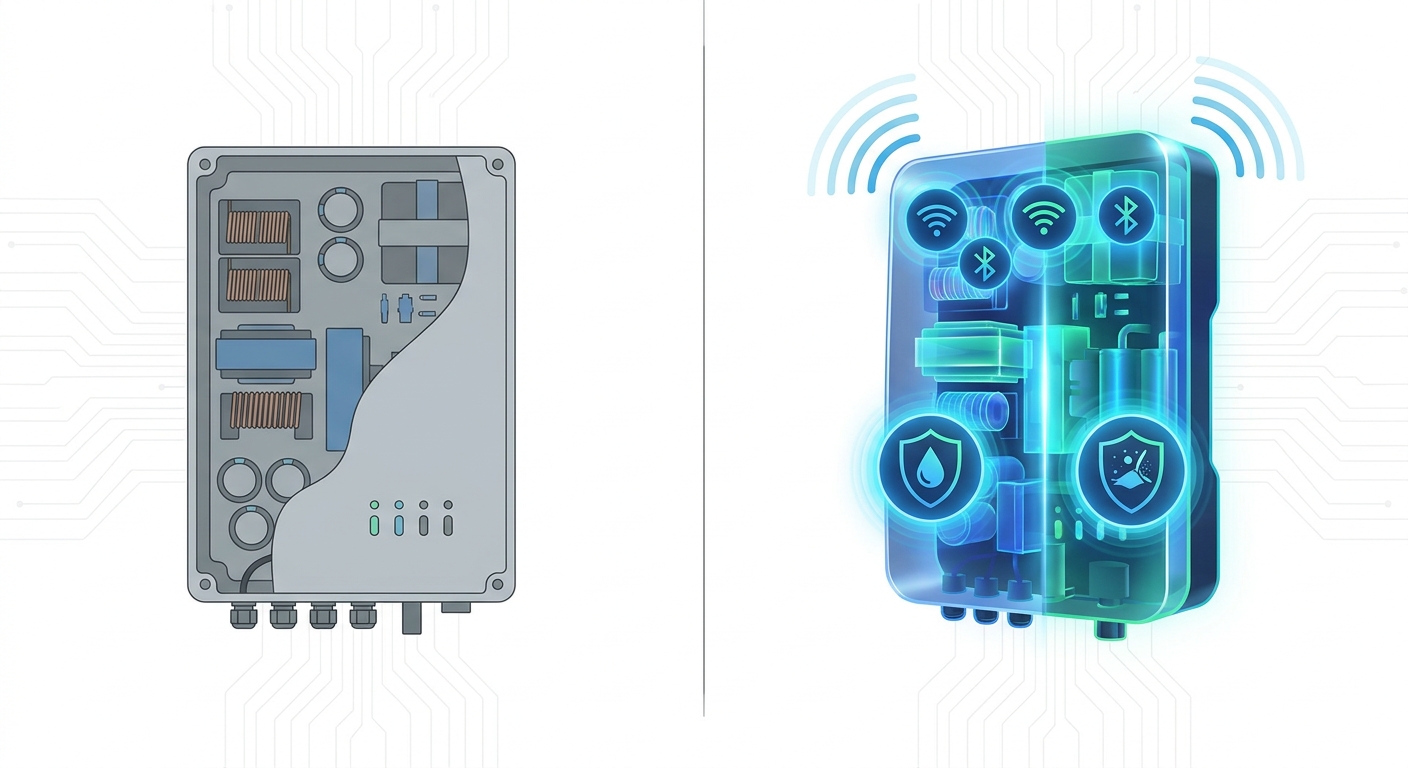
| Feature Category | Essential (Baseline) | Advanced (Premium) |
|---|---|---|
| Weather Protection | IP65 (basic dust/water resistance) | IP66 (full dust-tight, high-pressure water jets) |
| Monitoring | LED/LCD display, basic app | AI-powered monitoring, WhatsApp real-time alerts |
| Connectivity | Wi-Fi only or none | Wi-Fi + 4G + Bluetooth multi-protocol |
| Warranty | 5 years standard | 12-year full replacement warranty |
| DC Oversizing | Standard 1:1 DC/AC ratio | Up to 100% DC oversizing capability |
| Component Quality | Standard grade electronics | German-grade electronic components |
| Surge Protection | Basic internal protection | Dedicated DC & AC Surge Protection Devices (SPDs) |
| Panel Compatibility | Up to 550W panels | Up to 750W+ high-wattage panel support |
| Quality Testing | Standard factory QC | 1000+ automated quality tests per unit |
| Efficiency | 96-97% | Up to 98% |
This comparison makes clear that the gap between essential and advanced inverter features is not marginal. For EPCs managing large portfolios of installations across India, these differences accumulate into significant outcomes over time, in energy yield, maintenance costs, client satisfaction, and warranty claims.
Advanced Inverter Features That Deliver Real ROI in India
Not all advanced inverter features deliver equal value in every context. The following capabilities have the strongest ROI case for Indian installations in 2026, based on the specific challenges of the Indian operating environment.
AI-Powered Monitoring and WhatsApp Alerts
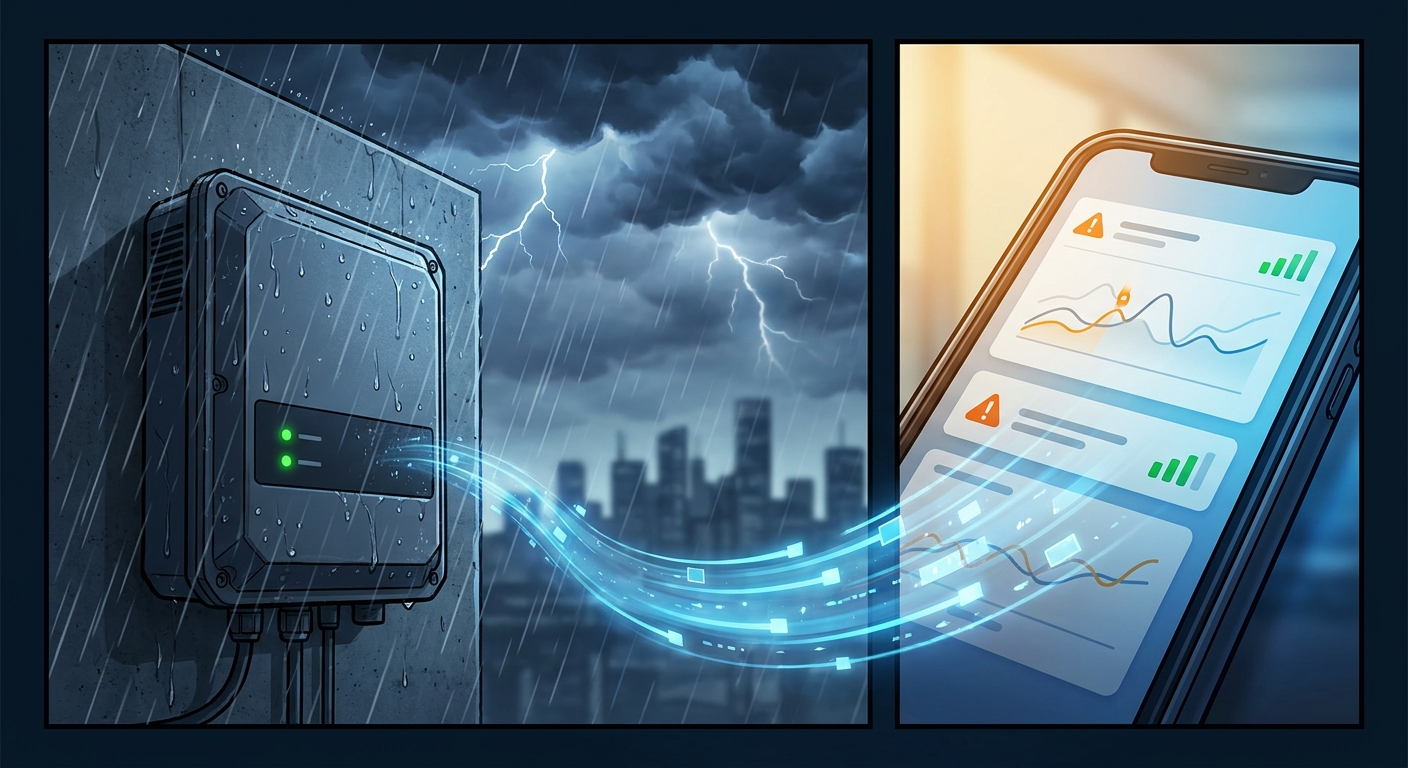
Remote monitoring is no longer a luxury for Indian EPCs, it is an operational necessity. Managing dozens or hundreds of installations without intelligent monitoring means relying on client complaints to identify underperformance. By the time a client notices reduced bills, weeks of lost generation may have already occurred.
AI-powered monitoring systems analyze generation patterns in real time and flag anomalies before they become failures. WhatsApp alerts are particularly well-suited to the Indian market, where WhatsApp penetration is near-universal among both installers and end clients. When an inverter detects a fault or underperformance condition, an instant WhatsApp notification reaches the responsible party, no app download required, no dashboard login needed.
For EPCs managing large installation portfolios, this capability directly reduces O&M costs and response times. For clients, it provides the transparency that builds long-term trust. To understand how monitoring systems compare across the Indian market, read our detailed analysis of Solar Inverter Monitoring Systems in India (2026).
IP66 Weather Protection
India’s climate is among the most demanding in the world for outdoor electronics. Rooftop inverters face dust storms in Rajasthan, salt-laden coastal air in Mumbai and Chennai, monsoon downpours across the subcontinent, and sustained heat that would degrade standard enclosures within a few years. IP65 protection, the standard on many mid-range inverters, provides basic dust and water resistance. IP66 protection goes further, providing complete dust-tight sealing and resistance to high-pressure water jets from any direction.
For rooftop installations where inverters are exposed to direct weather, IP66 is not a premium upgrade, it is the appropriate specification for Indian conditions. EPCs who specify IP65 inverters in coastal or high-rainfall regions are accepting a meaningful risk of premature failure and warranty claims.
12-Year Full Replacement Warranty
The financial case for a longer inverter warranty is straightforward. A standard 5-year warranty leaves clients exposed to replacement costs during years 6-25 of a project designed to last 25 years. A 12-year full replacement warranty changes the risk profile of the entire project.
For EPCs, a 12-year warranty is a powerful sales tool. It signals manufacturer confidence in product quality and gives clients the assurance that their investment is protected. For project financing, longer warranties improve bankability and can support better financing terms. The inverter cost premium for a 12-year warranty product is typically recovered many times over in avoided replacement costs and client retention.
Qbits offers a 12-year full replacement warranty backed by a digital warranty system, making claims straightforward and transparent. You can download the warranty documentation directly from the Qbits support portal.
DC Oversizing Capability
As panel wattages increase, the ability to oversize the DC array relative to inverter AC capacity becomes increasingly valuable. DC oversizing, deploying more panel capacity than the inverter’s nominal AC rating, allows EPCs to maximize energy harvest during low-irradiance periods (morning, evening, overcast days) without clipping significant generation at peak irradiance.
Inverters that support up to 100% DC oversizing give EPCs much greater flexibility in system design, particularly when working with high-wattage panels of 700W and above. This capability is especially valuable in regions with variable irradiance or where roof space is limited and maximizing yield per square meter is a priority.
Dedicated Surge Protection Devices (SPDs)
India’s power grid is characterized by voltage fluctuations, frequent lightning events in monsoon-affected regions, and grid instability in many rural and semi-urban areas. Standard internal protection circuits handle routine overvoltage events, but dedicated DC and AC Surge Protection Devices provide a separate layer of defense against high-energy transients that can destroy inverter electronics in milliseconds.
For EPCs, specifying inverters with dedicated SPDs reduces the risk of catastrophic failure events that are not covered under standard warranty terms. It is a relatively low-cost feature that provides disproportionate protection in the Indian grid environment.
Hybrid vs On-Grid Inverter Features: Choosing the Right Architecture
Beyond the essential versus advanced feature comparison, EPCs must also choose between on-grid and hybrid inverter architectures. This decision shapes the entire system design and has significant implications for client outcomes.
When On-Grid Inverter Features Are Sufficient
On-grid inverters are the right choice for projects where grid reliability is high and the client’s primary goal is energy cost reduction. Commercial and industrial facilities in major urban centers with stable grid supply, residential clients in well-served urban areas, and projects where battery storage is not part of the current scope all fit this profile. On-grid inverters are simpler, lower cost, and easier to maintain, and for grid-stable locations, the additional complexity of a hybrid system adds cost without proportionate benefit.
When Hybrid Inverter Features Become Essential
The case for hybrid inverter features strengthens significantly when grid reliability is poor, when the client has critical loads that cannot tolerate outages, or when time-of-use tariff optimization is a priority. Industrial facilities with sensitive equipment, commercial clients in areas with frequent load-shedding, and residential clients who want energy independence all benefit from hybrid architecture.
Hybrid inverters with battery integration capability allow clients to store excess solar generation and deploy it during grid outages or peak tariff periods. In India’s evolving energy market, where net metering policies vary by state and grid reliability differs dramatically between urban and rural areas, the flexibility of a hybrid system is increasingly valuable.
For a comprehensive analysis of inverter lifespan and the financial planning implications of architecture choice, see our Solar Inverter Lifespan: Complete Financial Planning Guide.
How to Match Inverter Features to Project Type and Client Budget
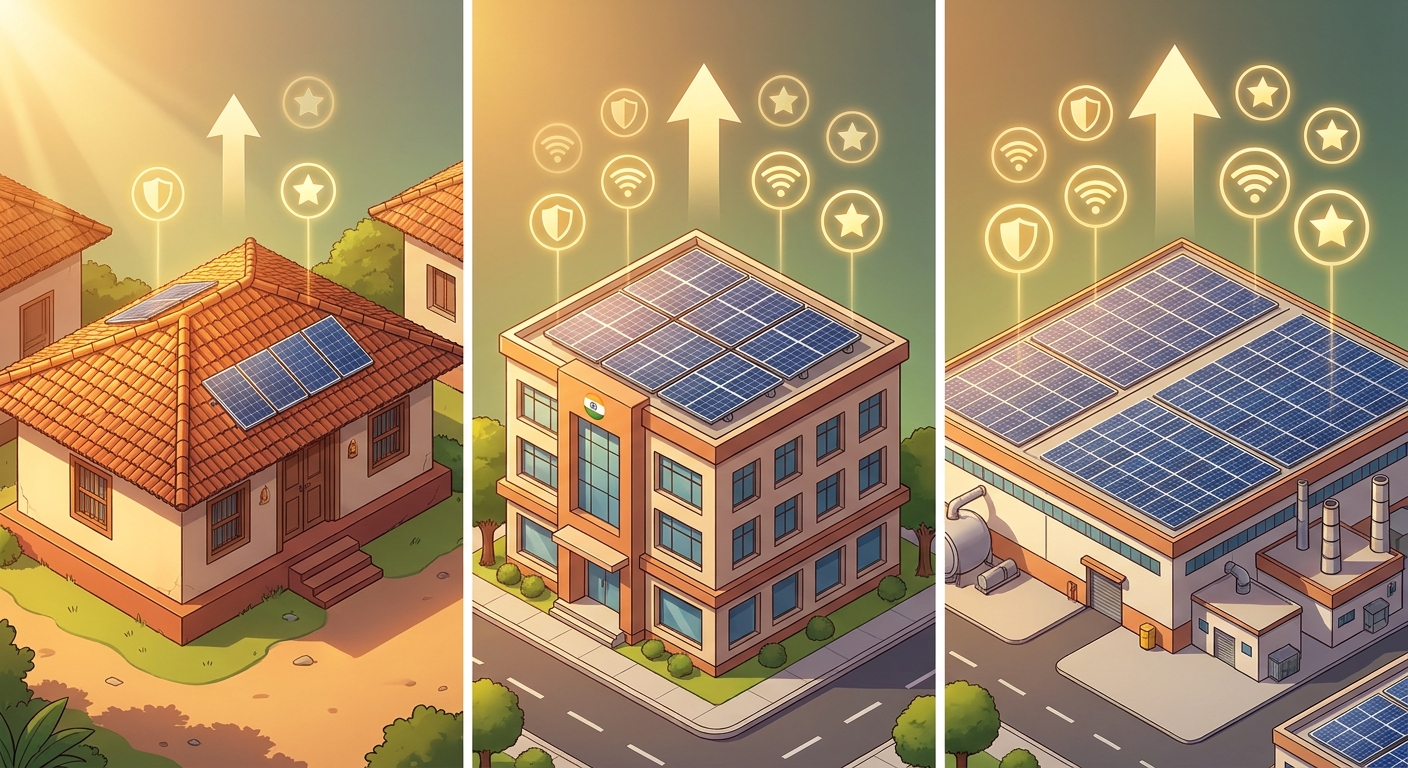
The most effective EPCs do not apply a one-size-fits-all approach to inverter features. They match the feature set to the project requirements and client profile. Here is a practical framework for making that match.
Residential Projects
For standard residential rooftop projects in urban India, the minimum viable feature set includes BIS/IEC certification, 97%+ efficiency, low start-up voltage, and at least a 5-year warranty. The upgrade case for advanced features is strong when the client is in a coastal or high-rainfall area (IP66), when the client wants remote monitoring (WhatsApp alerts), or when the project is being financed (12-year warranty improves bankability).
- Priority advanced feature for residential: WhatsApp monitoring, clients love the transparency and it reduces your support calls
- Second priority: IP66 protection for any installation outside major metro areas with controlled environments
- Third priority: 12-year warranty for financed projects or premium clients
Commercial and Industrial Projects
For C&I installations, the ROI case for advanced inverter features is much stronger. Larger systems mean larger losses from underperformance. More complex installations mean greater value from remote diagnostics. Higher client expectations mean warranty terms matter more. For C&I projects, EPCs should treat IP66 protection, AI monitoring, dedicated SPDs, and extended warranties as standard specifications, not optional upgrades.
- Priority advanced feature for C&I: AI-powered monitoring with fleet management capability
- Second priority: 12-year full replacement warranty for project bankability
- Third priority: DC oversizing capability for high-wattage panel compatibility
Budget-Constrained Projects
When client budgets are tight, EPCs face pressure to reduce inverter cost. The key is to identify which advanced features deliver the highest ROI for the specific project context and protect those, while being more flexible on features that matter less for that particular installation. In most cases, IP66 protection and a minimum 7-year warranty should be treated as non-negotiable even in budget-constrained scenarios, the cost of replacing a failed inverter in year 4 far exceeds the savings made at procurement.
Client Education: Justifying Premium Inverter Features
Many clients focus on upfront inverter cost rather than total cost of ownership. EPCs who can articulate the financial case for advanced features, in terms of avoided replacement costs, reduced O&M, improved energy yield, and better financing terms, consistently win more projects and build stronger client relationships. A simple 10-year cost comparison showing the difference between a 5-year warranty inverter with one replacement versus a 12-year warranty inverter with none is often enough to shift the conversation.
For guidance on how to structure inverter pricing conversations with clients, see our analysis of Solar Inverter Pricing Strategies for EPCs (2026).
Inverter Features Comparison: Qbits vs Leading Brands in India
Understanding how inverter features compare across leading brands helps EPCs make informed procurement decisions. The following comparison focuses on the features most relevant to Indian market conditions in 2026.
Qbits vs Sungrow
Sungrow is a globally recognized brand with a broad product range. Its inverters are well-engineered and widely deployed in India. However, Sungrow’s monitoring and support infrastructure is designed for a global audience. Qbits differentiates with WhatsApp-native monitoring tailored specifically for Indian users, a 12-year full replacement warranty (versus Sungrow’s standard terms), and India-based server infrastructure for data security and compliance. For EPCs who prioritize local support and India-specific monitoring, Qbits offers a compelling alternative.
Qbits vs Growatt
Growatt has built significant market share in India through competitive pricing and broad distribution. Its inverters serve the mass market effectively. Qbits positions itself differently: German-grade electronic components, 1000+ automated quality tests per unit, and the Heaven Group manufacturing legacy represent a premium quality tier. For EPCs whose clients prioritize longevity and component quality over lowest upfront cost, Qbits delivers a differentiated value proposition.
Qbits vs Fronius
Fronius is a premium European brand with strong engineering credentials and a loyal following among quality-focused installers. Its inverters are excellent but carry a significant price premium in the Indian market. Qbits offers comparable advanced inverter features, AI monitoring, IP66 protection, extended warranty, at a more competitive price point, with the added advantage of India-specific monitoring tools like WhatsApp alerts that Fronius does not offer natively.
Qbits vs Solis
Solis offers solid mid-range inverters with reasonable efficiency and standard warranty terms. The key differentiator for Qbits is the 12-year full replacement warranty versus Solis’s standard warranty terms, combined with India-based data servers and the AI-powered WhatsApp monitoring system. For EPCs who need to offer clients long-term protection and transparent performance data, Qbits provides a stronger package.
To explore the full landscape of inverter manufacturers serving the Indian market, read our comprehensive Solar Inverter Manufacturers in India: Complete Evaluation Guide for EPCs & Distributors (2026).
Qbits at a Glance: On-grid and hybrid solar inverters engineered with German-grade components, AI-powered WhatsApp monitoring, IP66 weather protection, 98% efficiency, up to 100% DC oversizing, and a 12-year full replacement warranty, backed by 1000+ automated quality tests per unit and BIS/IEC certification for the Indian market.
Explore the full Qbits product range at qbitsenergy.com/our-products, or follow Qbits on LinkedIn and Instagram for product updates and technical insights.
Frequently Asked Questions About Solar Inverter Features
What inverter features are mandatory for grid-connected systems in India?
Grid-connected inverters in India must comply with CEA (Technical Standards for Connectivity) Regulations and carry BIS/IEC certification. Mandatory features include anti-islanding protection, voltage and frequency ride-through capability, overvoltage and overcurrent protection, and reactive power support. Inverters without BIS certification cannot be legally deployed in grid-connected systems.
Is IP66 protection really necessary for all Indian installations?
IP66 is strongly recommended for any outdoor rooftop installation in India. The combination of monsoon rainfall, dust, heat, and coastal salt air makes IP65 protection marginal for long-term reliability. For installations in coastal regions, high-rainfall areas, or locations with significant dust exposure, IP66 should be treated as a minimum specification rather than a premium upgrade.
How does DC oversizing improve energy yield?
DC oversizing allows EPCs to install more panel capacity than the inverter’s nominal AC rating. This means the inverter operates closer to its rated output during low-irradiance periods, morning, evening, and overcast conditions, when a standard-sized array would produce well below inverter capacity. The result is higher annual energy yield, particularly in regions with variable irradiance. Inverters supporting up to 100% DC oversizing provide the greatest design flexibility for high-wattage panel configurations.
What should EPCs look for in inverter monitoring systems?
The most valuable inverter monitoring systems for Indian EPCs combine real-time performance data, fault detection and alerting, remote diagnostics, and fleet management capability. WhatsApp-based alerts are particularly effective in the Indian market due to near-universal adoption. Multi-protocol connectivity (Wi-Fi, 4G, Bluetooth) ensures monitoring works reliably across diverse installation environments, including rural sites with limited broadband access.
How does a 12-year warranty affect project financing and client confidence?
A 12-year full replacement warranty significantly improves project bankability. Lenders and financiers view longer warranties as risk mitigation, which can support better financing terms for clients. For EPCs, a 12-year warranty is a powerful differentiator in competitive bids, it demonstrates confidence in product quality and reduces the client’s long-term financial exposure. The inverter warranty term is increasingly a key criterion in commercial and industrial procurement decisions.
Are Qbits inverters suitable for high-wattage panels above 700W?
Yes. Qbits on-grid inverters support panels up to 750W and above, with up to 100% DC oversizing capability. This makes them compatible with the latest generation of high-efficiency bifacial and monocrystalline panels entering the Indian market in 2026. EPCs working with modern high-wattage panel configurations should confirm panel compatibility before specifying any inverter.
Make the Right Inverter Features Decision for Your Next Project
The difference between essential and advanced inverter features is not just a technical distinction, it is a business decision that affects your project outcomes, your client relationships, and your reputation as an EPC in India’s competitive solar market. Basic inverter features get the system connected. Advanced inverter features keep it performing, protected, and profitable for the full project life.
For residential projects, prioritize WhatsApp monitoring and IP66 protection as your first advanced feature upgrades. For commercial and industrial installations, treat AI monitoring, 12-year warranty, dedicated SPDs, and DC oversizing as standard specifications. And for any project where client confidence and long-term ROI matter, which is every project, choose an inverter manufacturer who backs their product with genuine engineering quality and long-term support.
Qbits inverters are engineered specifically for the demands of the Indian market, combining advanced inverter features, AI-powered WhatsApp monitoring, IP66 protection, 98% efficiency, German-grade components, and a 12-year full replacement warranty, with competitive pricing and India-focused support. If you are ready to specify inverters that deliver on every dimension, inquire now via WhatsApp to discuss your project requirements with the Qbits team. You can also become a Qbits channel partner to add India’s next-generation inverter to your product portfolio, or reach the Qbits support team for technical guidance on your next installation.
This blog post was written using thestacc.com