



Solar Inverter Replacement Costs in India: 2026 Budget Guide

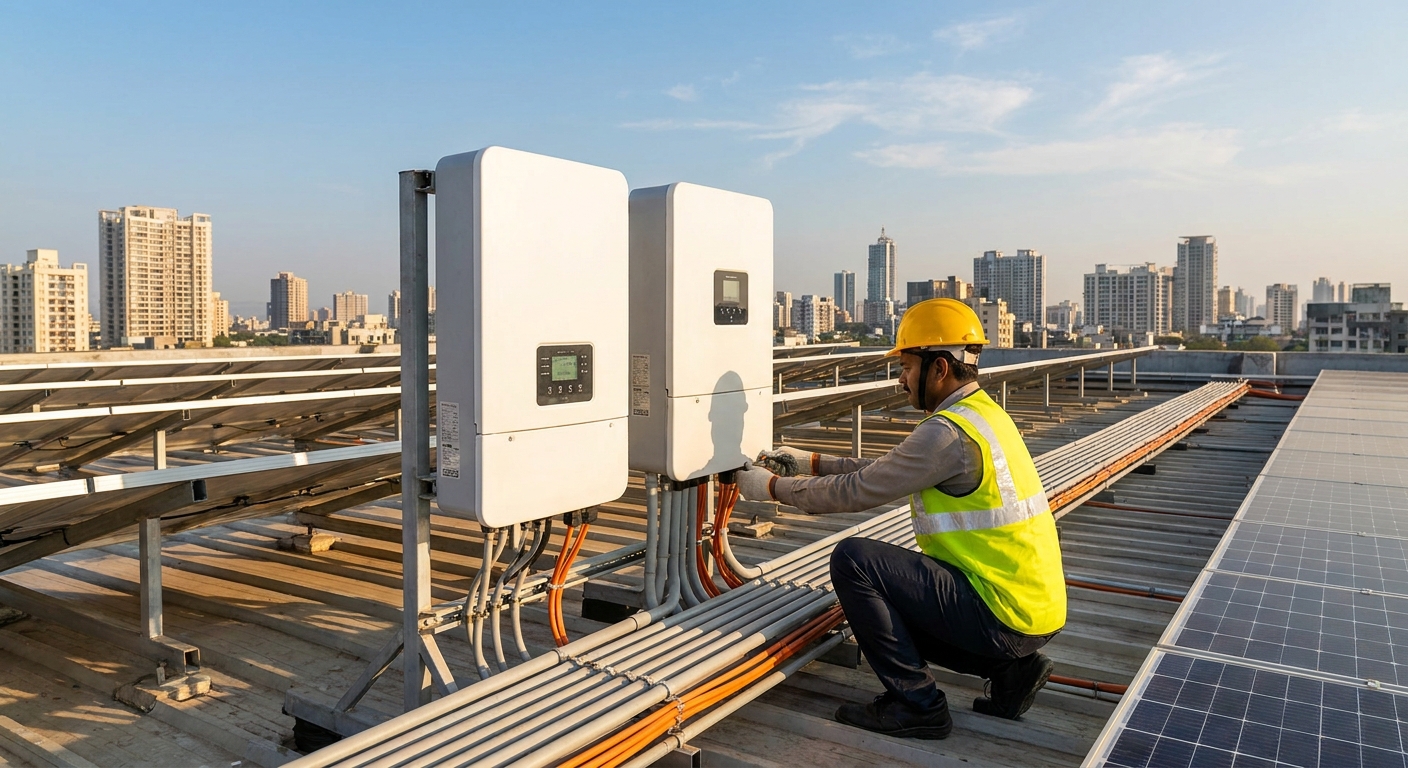
Solar inverter replacement is one of the most significant unplanned expenses in a solar project’s lifecycle. For EPCs, facility owners, and solar investors across India, failing to budget for this cost can seriously erode the financial returns of an otherwise well-planned installation. In 2026, with solar adoption accelerating across residential and commercial sectors, understanding the true cost of inverter replacement in India is no longer optional — it is essential financial planning.
This guide breaks down everything you need to know: current replacement cost ranges, the factors that drive those costs up or down, how warranty terms can save you lakhs over a 25-year system life, and practical strategies to minimize how often you face an inverter replacement in the first place.
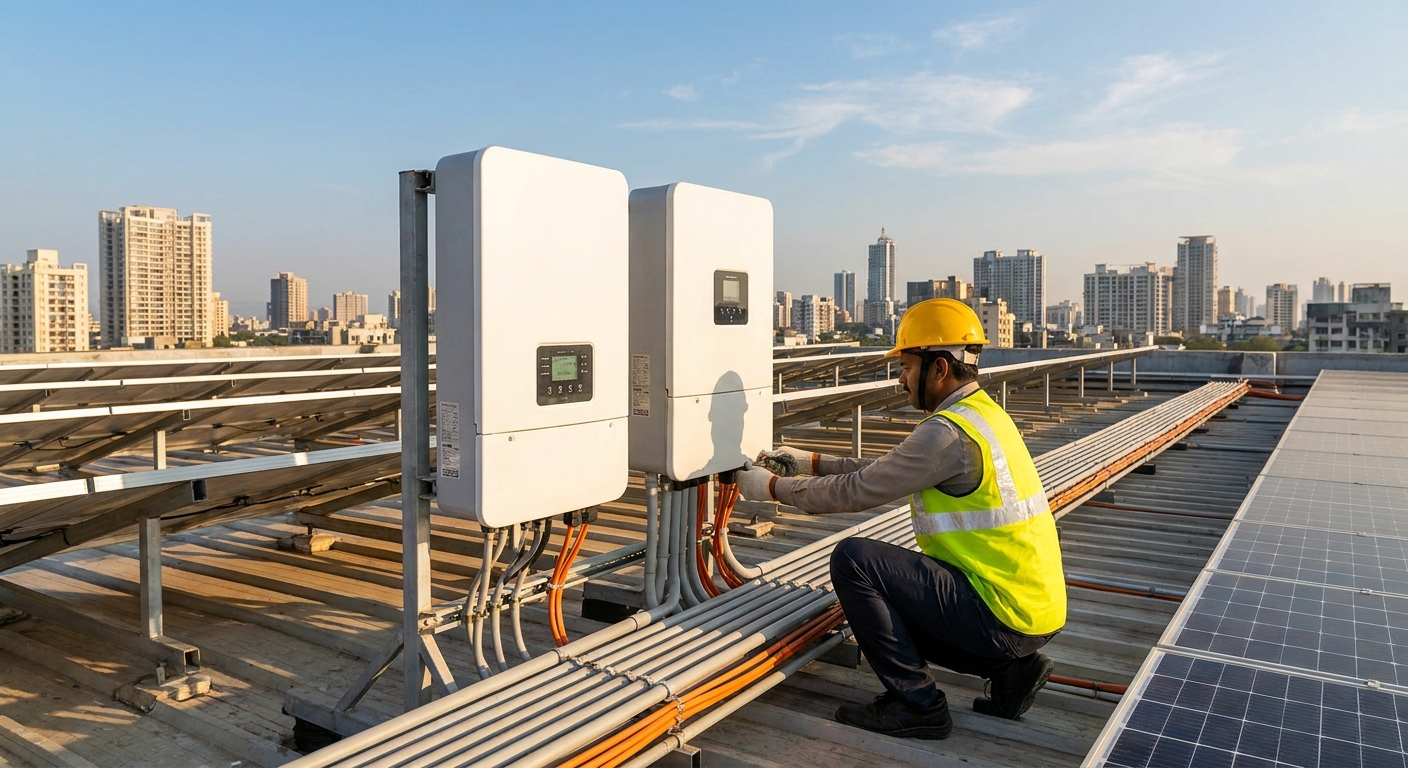
What Does Solar Inverter Replacement Actually Cost in India?
The cost of inverter replacement in India varies widely depending on inverter type, capacity, brand, and whether the unit is under warranty. Here is a realistic breakdown of what EPCs and facility owners should expect to budget in 2026.
Replacement Cost by Inverter Type and Capacity
- On-Grid Residential Inverters (1–10 kW): Equipment cost typically ranges from ₹8,000 to ₹35,000 depending on brand and capacity. Labour and installation adds ₹2,000–₹5,000.
- On-Grid Commercial Inverters (10–100 kW): Equipment costs range from ₹30,000 to ₹2,50,000. Installation complexity increases labour costs to ₹5,000–₹20,000.
- Hybrid Inverters with Battery Integration (3, 20 kW): These carry a premium, with equipment costs from ₹40,000 to ₹1,50,000 for residential-scale units. Commercial hybrid inverter replacement can exceed ₹3,00,000 for larger systems.
- Large C&I String Inverters (100 kW+): Full inverter replacement at this scale can range from ₹2,00,000 to ₹8,00,000 or more, making warranty coverage critically important.
Additional Cost Components to Budget For
The equipment price is only part of the inverter replacement cost. A complete budget must account for:
- GST (18%): Applied to inverter equipment and installation services, adding a meaningful amount to the total outlay.
- Transportation and logistics: For remote or rooftop installations, equipment delivery and crane or lift access can add ₹3,000–₹15,000.
- System downtime losses: Every day without a functioning inverter means lost generation. For a 100 kW commercial system generating ₹500–₹700 per day in savings, a week of downtime costs ₹3,500–₹5,000 in lost value.
- Compatibility upgrades: If the replacement inverter requires updated wiring, new DC isolators, or updated monitoring hardware, these add to the total cost.
- Commissioning and testing: Professional commissioning after inverter replacement is essential for warranty validity and safe operation.
Understanding the full scope of inverter replacement costs, not just the sticker price of the unit, is what separates accurate financial planning from costly surprises.
7 Key Factors That Affect Inverter Replacement Costs
Not all inverter replacement scenarios are equal. These seven factors have the greatest influence on what you will ultimately spend.
1. Inverter Capacity and Type
Larger inverters cost more to replace. A 5 kW residential on-grid inverter replacement is a very different financial event than replacing a 250 kW central inverter at an industrial facility. Hybrid inverters carry a premium over on-grid units due to their battery management circuitry and additional components.
2. Brand and Component Quality
Inverters built with German-grade electronic components and subjected to rigorous quality testing (such as 1000+ automated tests per unit) tend to have longer service lives and lower failure rates. This directly reduces the frequency of inverter replacement events over a system’s life. Budget brands may have lower upfront costs but higher long-term replacement frequency.
3. Warranty Coverage
This is the single most impactful factor on inverter replacement cost. A 12-year full replacement warranty means that if your inverter fails within that period, the manufacturer bears the full cost of the replacement unit. A standard 5-year warranty leaves you exposed for the remaining 20 years of your solar system’s life. We cover this in detail in a dedicated section below.
4. Installation Site Accessibility
Ground-mounted systems are generally easier and cheaper to service than rooftop installations. High-rise commercial rooftops, industrial facilities with restricted access, or remote rural installations all add to the labour and logistics cost of inverter replacement.
5. System Age and Compatibility
Older solar systems may use inverter communication protocols or wiring standards that are no longer common. Replacing an inverter in a 12-year-old system may require additional compatibility work, updated monitoring hardware, or even partial rewiring, all of which add to the total inverter replacement cost.
6. Spare Parts Availability and Service Network
Brands with a strong India-based service network and readily available spare parts reduce both the cost and the downtime associated with inverter replacement. Brands that rely on international supply chains for components can leave you waiting weeks for parts, compounding downtime losses.
7. Urgency and Downtime Sensitivity
For commercial and industrial facilities where solar generation directly offsets expensive grid power, every day of inverter downtime has a measurable financial cost. Urgent replacements often carry premium service charges. This is why proactive monitoring and early fault detection are so valuable, they allow planned replacements rather than emergency ones.
Repair vs Replace: How to Make the Right Decision
When an inverter fails or underperforms, the first question is always: repair or replace? The answer depends on several variables, and getting it wrong in either direction costs money.
When Repair Makes Sense
- The inverter is less than 5 years old and the fault is a known, low-cost component failure (e.g., a capacitor or fuse).
- The inverter is under warranty and the manufacturer covers repair costs.
- Repair cost is less than 30, 40% of the cost of a new equivalent inverter.
- The inverter model is still current and spare parts are readily available.
When Inverter Replacement Is the Smarter Choice
- The inverter is more than 8, 10 years old and showing multiple fault codes or declining efficiency.
- Repair costs exceed 50% of a new unit’s price.
- The inverter model is discontinued and spare parts are scarce or expensive.
- A newer inverter offers significantly better efficiency, monitoring capabilities, or compatibility with modern high-wattage panels (750W+).
- The existing inverter lacks surge protection or weather protection adequate for the installation environment.
The Warranty Factor in Repair vs Replace Decisions
Warranty status fundamentally changes this calculation. If your inverter is under a full replacement warranty, the repair vs replace decision is simple: contact the manufacturer and claim your replacement. You bear no equipment cost. This is why warranty terms deserve as much attention during inverter selection as efficiency ratings or price. For a deeper look at selection criteria, see our guide on Solar Inverter Selection: 10 Critical Criteria for EPCs.
How Warranty Terms Dramatically Change Inverter Replacement Costs
Of all the variables in inverter replacement cost planning, warranty terms have the most dramatic long-term financial impact. Yet warranty coverage is frequently underweighted during the inverter selection process, often because the difference only becomes apparent years after installation.

Standard 5-Year Warranty vs 12-Year Full Replacement Warranty
Most budget and mid-range inverter brands in India offer a standard 5-year warranty. Some offer extensions to 10 years at additional cost. Consider what this means in practice for a 25-year solar system lifecycle:
- 5-year warranty: You are covered for the first 5 years. For the remaining 20 years, every inverter replacement event is entirely at your expense.
- 10-year warranty: You are covered for 10 years, leaving 15 years of unprotected exposure.
- 12-year full replacement warranty (Qbits): You are covered for nearly half the system’s expected life. Given that inverter failures are statistically more likely in years 7, 12 as components age, this coverage window is particularly valuable.
Full Replacement vs Parts-Only Warranty
The type of warranty matters as much as its duration. A parts-only warranty covers the cost of replacement components but not labour, transportation, or installation. A full replacement warranty covers the entire cost of a new unit. For large commercial inverters where the unit itself costs ₹2,00,000 or more, the difference between these two warranty types can be enormous.
Qbits’ 12-year full replacement warranty means that if a unit fails within the warranty period, the entire inverter is replaced, not just individual components. This eliminates the ambiguity and negotiation that often accompanies warranty claims with parts-only coverage. You can download the Qbits warranty documentation to review the full terms before making your inverter selection decision.
The Real Cost Difference Over 25 Years
Let’s model a realistic scenario for a 50 kW commercial rooftop system in India:
- Inverter replacement cost (out-of-warranty): ₹1,20,000 per event (equipment + installation + GST)
- Expected replacement events over 25 years with a 5-year warranty: 2, 3 events = ₹2,40,000–₹3,60,000
- Expected replacement events over 25 years with a 12-year full replacement warranty: 1, 2 events (first replacement covered) = ₹0–₹1,20,000
- Potential savings from extended warranty coverage: ₹1,20,000–₹2,40,000 per system
For an EPC managing a portfolio of 20 commercial installations, this difference compounds to ₹24,00,000–₹48,00,000 in avoided inverter replacement costs over the project lifecycle. This is why total cost of ownership, not just upfront price, must drive inverter selection decisions.
Digital Warranty Systems and Claim Ease
A warranty is only as valuable as the ease with which you can claim it. Qbits operates a digital warranty system that simplifies the claim process for EPCs and facility owners. Rather than navigating paper-based processes or waiting for field visits to verify claims, the digital system accelerates resolution and reduces the administrative burden of inverter replacement claims. Access the Qbits support portal for warranty claim assistance and technical support.
Budgeting for Inverter Replacement Over a 25-Year Solar Lifecycle
Accurate financial modelling for solar projects requires honest accounting of inverter replacement costs across the full system life. Here is how EPCs and facility owners should approach this planning.
Typical Inverter Lifespan and Replacement Frequency
Quality solar inverters in India typically last 10, 15 years under normal operating conditions. However, Indian conditions, high ambient temperatures, monsoon humidity, voltage fluctuations, and dust, can accelerate component degradation in inverters not specifically designed for these environments. For a detailed analysis of inverter lifespan factors, see our Solar Inverter Lifespan: Complete Financial Planning Guide.
For financial modelling purposes, a conservative assumption is:
- Budget/standard inverters: 1, 2 replacement events over 25 years (every 8, 12 years)
- Quality inverters with extended warranty: 1 replacement event over 25 years (at year 12, 15), with the first replacement potentially covered under warranty
Building Replacement Costs into Project Financial Models
EPCs should include a dedicated inverter replacement reserve in all project financial models. A practical approach:
- Estimate the cost of replacing the inverter at current prices, then apply a 5, 7% annual inflation factor to project the cost at the expected replacement year.
- Divide the projected replacement cost by the number of years until replacement to calculate an annual reserve contribution.
- Present this as a line item in client financial proposals, it demonstrates transparency and builds trust.
- Factor in the warranty coverage period: if the inverter carries a 12-year full replacement warranty, the first replacement event may cost nothing, significantly improving the project’s financial profile.
Sinking Fund Approach for Facility Owners
Commercial and industrial facility owners managing their own solar assets should establish a solar maintenance sinking fund that includes inverter replacement provisions. Setting aside ₹5,000–₹15,000 per year (depending on system size) ensures that when an inverter replacement is needed, the capital is available without disrupting operations budgets.
How to Minimize Inverter Replacement Frequency
The most cost-effective inverter replacement strategy is to need it as rarely as possible. These practices directly extend inverter service life and reduce replacement frequency.
Choose Inverters Built for Indian Conditions
India’s climate presents specific challenges that generic inverters are not always designed to handle. When selecting inverters, prioritize:
- IP66 weather protection: Protects against dust ingress and water jets, essential for rooftop installations exposed to monsoon conditions and industrial dust.
- Wide operating temperature range: Inverters should be rated for the high ambient temperatures common in Indian summers, particularly in Rajasthan, Gujarat, and other high-irradiance regions.
- DC and AC Surge Protection Devices (SPDs): India’s grid is prone to voltage fluctuations and lightning-induced surges. Built-in SPDs protect the inverter’s sensitive electronics from damage that would otherwise necessitate early inverter replacement.
- Low start-up voltage: Inverters that can operate efficiently at lower irradiance levels experience less thermal stress during partial-load conditions, extending component life.
Leverage AI-Powered Monitoring for Early Fault Detection
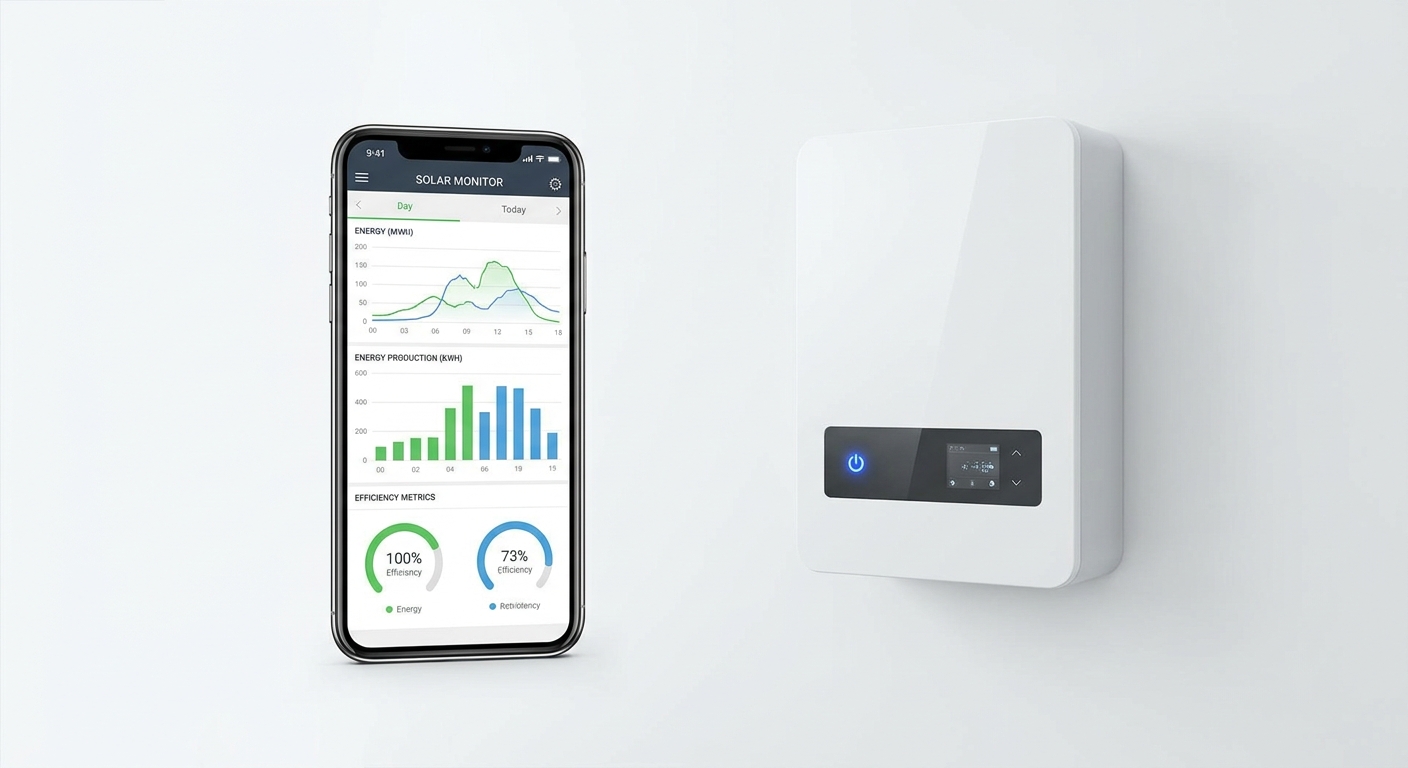
The most powerful tool for avoiding unplanned inverter replacement is real-time performance monitoring. When an inverter begins to degrade, it rarely fails catastrophically without warning. Efficiency drops, unusual error codes, and communication faults are early indicators that, if caught in time, allow for planned maintenance rather than emergency replacement.
Qbits inverters feature an AI-powered WhatsApp monitoring system that delivers real-time alerts directly to the EPC or facility owner’s phone. This means faults are detected and acted upon immediately, not discovered days later when the system owner notices their electricity bill has increased. For a comprehensive overview of monitoring technology, see our guide on Solar Inverter Monitoring Systems in India (2026).
Follow Proper Installation Practices
A significant proportion of premature inverter failures in India are installation-related. Key practices that extend inverter life include:
- Ensuring adequate ventilation around the inverter to prevent thermal buildup
- Correct cable sizing and termination to prevent resistive heating
- Proper earthing to protect against ground faults
- Avoiding direct sunlight exposure on the inverter casing where possible
- Commissioning by certified technicians who verify all parameters before system handover
Maintain a Regular Service Schedule
Annual or bi-annual maintenance visits that include cleaning, connection checks, firmware updates, and performance verification can identify developing issues before they become inverter replacement events. For EPCs, offering maintenance contracts alongside installation creates a recurring revenue stream while protecting the client’s asset.
Inverter Replacement Planning for EPCs and Facility Owners
The way EPCs and facility owners approach inverter replacement planning has a direct impact on project profitability, client satisfaction, and long-term business reputation.
How EPCs Should Factor Replacement Costs into Proposals
EPCs who present clients with a total cost of ownership (TCO) analysis, including projected inverter replacement costs, differentiate themselves from competitors who only quote upfront installation costs. This approach:
- Builds client trust through financial transparency
- Justifies the selection of higher-quality inverters with better warranty terms
- Reduces post-installation disputes when replacement costs arise
- Creates opportunities for long-term service contracts
For a detailed framework on inverter cost modelling in EPC proposals, see our guide on Solar Inverter Pricing Strategies for EPCs (2026).
Lifecycle Cost Analysis: Upfront Cost vs Total Cost of Ownership
A common mistake in inverter selection is optimizing for the lowest upfront cost rather than the lowest total cost of ownership. Consider two inverters for a 25 kW commercial installation:
- Option A: ₹60,000 upfront, 5-year warranty, expected 2 replacement events over 25 years at ₹65,000 each = Total cost: ₹1,90,000
- Option B: ₹80,000 upfront, 12-year full replacement warranty, expected 1 replacement event over 25 years at ₹85,000 (first replacement covered under warranty) = Total cost: ₹1,65,000
Option B costs ₹20,000 more upfront but saves ₹25,000 over the system’s life, while also providing superior monitoring, better component quality, and lower risk of unplanned downtime. This is the inverter replacement cost argument that EPCs should be making to their clients.
Choosing Inverter Brands That Reduce Long-Term Replacement Risk
Not all inverter brands are equal in their long-term replacement risk profile. When evaluating brands for your portfolio, consider:
- Manufacturing quality standards (BIS/IEC certification, number of quality tests per unit)
- Warranty terms: duration, full replacement vs parts-only, claim process
- India-specific design features (IP66, SPDs, wide temperature range)
- Local service network and spare parts availability
- Monitoring capabilities for proactive fault detection
- Brand stability and manufacturer longevity (backed by established groups)
For a comprehensive brand evaluation framework, see our Solar Inverter Manufacturers in India: Complete Evaluation Guide for EPCs & Distributors (2026).
Frequently Asked Questions About Solar Inverter Replacement in India
How long do solar inverters last in India?
Quality solar inverters in India typically last 10, 15 years. Inverters built with premium components, IP66 weather protection, and built-in surge protection tend to reach the upper end of this range. Indian climate conditions, heat, humidity, and voltage fluctuations, can shorten the lifespan of inverters not specifically designed for these environments. According to the Ministry of New and Renewable Energy (MNRE), solar systems are designed for 25-year lifespans, meaning most systems will require at least one inverter replacement during their operational life.
Can I replace my inverter with a different brand?
Yes, in most cases you can replace an inverter with a different brand, provided the new unit is compatible with your existing solar panel array, battery system (if applicable), and grid connection requirements. However, you should verify that the new inverter supports your panel’s voltage and current specifications, and that any monitoring systems are reconfigured accordingly. Upgrading to a newer inverter model during replacement can also improve system efficiency and add monitoring capabilities that the original unit lacked.
Does inverter replacement void my solar panel warranty?
Inverter replacement does not typically void solar panel warranties, as panels and inverters are covered under separate warranty agreements. However, it is important to ensure that the replacement inverter operates within the voltage and current parameters specified by your panel manufacturer. Using an inverter that exceeds the panel’s rated specifications could potentially affect panel warranty claims. Always consult both the panel and inverter manufacturer’s documentation before proceeding with inverter replacement.
What is the best time of year to schedule inverter replacement in India?
The optimal time for planned inverter replacement in India is during the pre-monsoon period (March, May) or the post-monsoon period (October, November). Replacing during peak summer (May, June) or monsoon (July, September) increases installation complexity and risk. Scheduling replacement during lower-irradiance months also minimizes generation losses during the downtime period. For emergency replacements, the timing is dictated by necessity, which is another reason why proactive monitoring to catch issues early is so valuable.
How do I claim a warranty replacement in India?
The warranty claim process varies by manufacturer. With Qbits, the process is handled through a digital warranty system that allows EPCs and facility owners to initiate claims online without paper-based processes. You will typically need to provide the inverter serial number, installation date, fault description, and supporting documentation (such as monitoring data or error codes). The digital system accelerates claim processing and provides status updates throughout the resolution process. Visit the Qbits support portal to initiate a warranty claim or get technical assistance.
How does inverter efficiency affect replacement decisions?
Inverter efficiency degrades gradually over time. An inverter that was 97% efficient at installation may drop to 93, 94% efficiency after 10 years. While this degradation alone rarely justifies inverter replacement, it does factor into the total cost calculation when combined with other issues. A modern inverter with 98% efficiency replacing a degraded older unit can recover meaningful generation losses, sometimes enough to partially offset the replacement cost through improved energy yield.
Plan Your Inverter Replacement Costs with Confidence
Solar inverter replacement is an inevitable part of any long-term solar investment. The difference between a costly surprise and a well-managed budget event comes down to planning, quality selection, and warranty coverage. EPCs and facility owners who factor inverter replacement costs into their financial models from day one, and who choose inverters with strong warranty protection and built-in monitoring, consistently achieve better project economics over the full 25-year system lifecycle.
Qbits’ 12-year full replacement warranty, combined with AI-powered WhatsApp monitoring, IP66 weather protection, and German-grade components, is specifically engineered to minimize both the frequency and the cost of inverter replacement for Indian solar installations. Whether you are planning a new installation or evaluating your existing portfolio’s replacement risk, Qbits provides the technical foundation and warranty protection to keep your total cost of ownership under control.
Ready to understand how Qbits can reduce your inverter replacement risk and total ownership costs? Inquire now on WhatsApp to speak directly with a Qbits technical specialist, or explore the full Qbits product range to find the right inverter for your next project. EPCs and distributors looking to add Qbits to their portfolio can apply to become a Qbits partner and access dedicated support, competitive terms, and a product line built for the Indian market.
This blog post was written using thestacc.com