



Solar Inverter Specifications Decoded: 15 Key Parameters

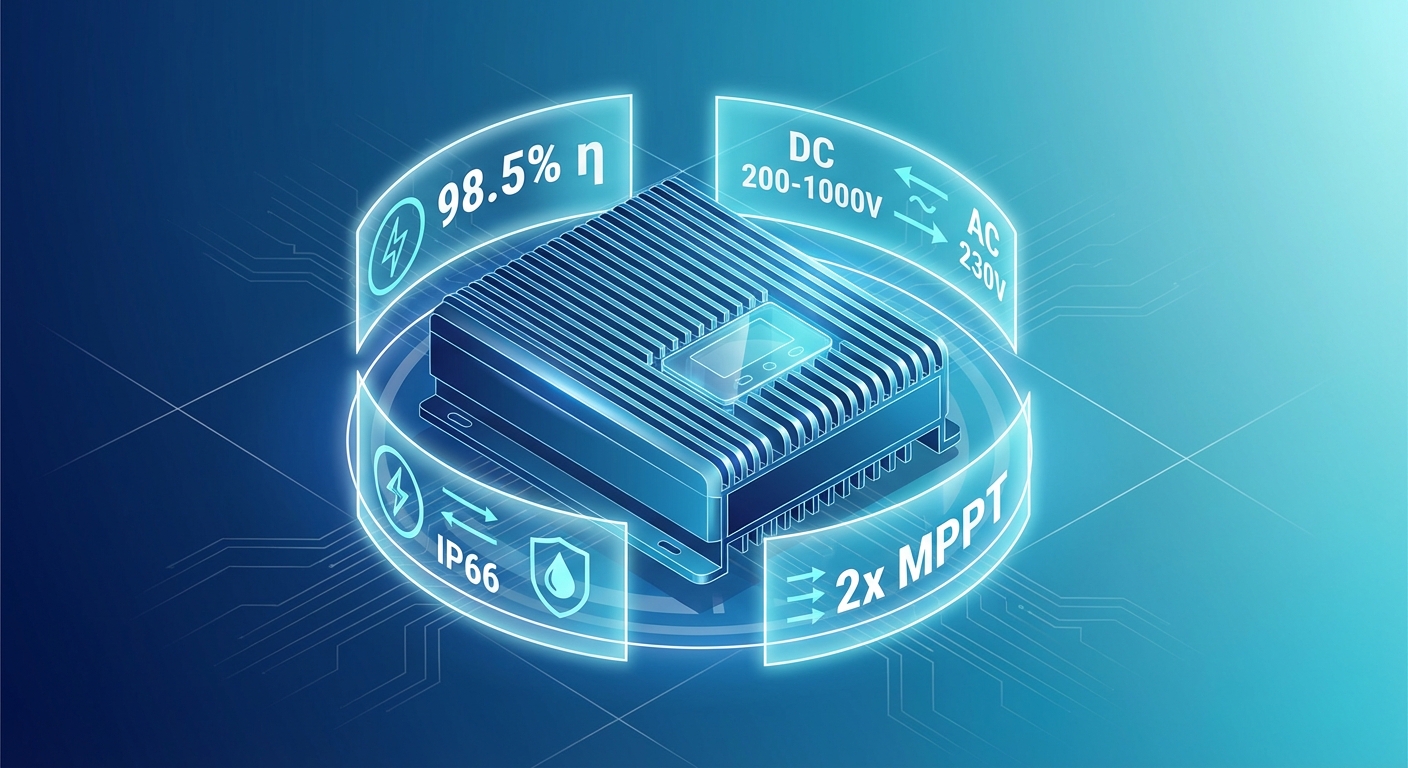
Every year, EPCs and solar installation companies in India lose thousands of rupees per project due to inverter specification mismatches. A commercial installation designed for 540W panels suddenly faces 750W modules. An inverter rated for moderate climates fails under Rajasthan’s summer heat. These aren’t hypothetical scenarios—they’re costly realities that stem from one critical gap: incomplete understanding of inverter specifications.
For solar professionals navigating India’s rapidly evolving market in 2026, technical specifications aren’t just numbers on a datasheet. They’re the difference between a system that delivers promised ROI and one that underperforms for 25 years. This comprehensive guide decodes 15 critical inverter specifications that directly impact system performance, warranty validity, and long-term profitability.
Why Understanding Inverter Specifications Matters for EPCs in India
The Indian solar market has transformed dramatically over the past three years. Panel wattages have jumped from 450W to 750W. Grid instability remains a persistent challenge across tier-2 and tier-3 cities. Extreme weather conditions—from coastal humidity in Kerala to desert heat in Gujarat—demand equipment that can withstand environmental stress while maintaining performance.
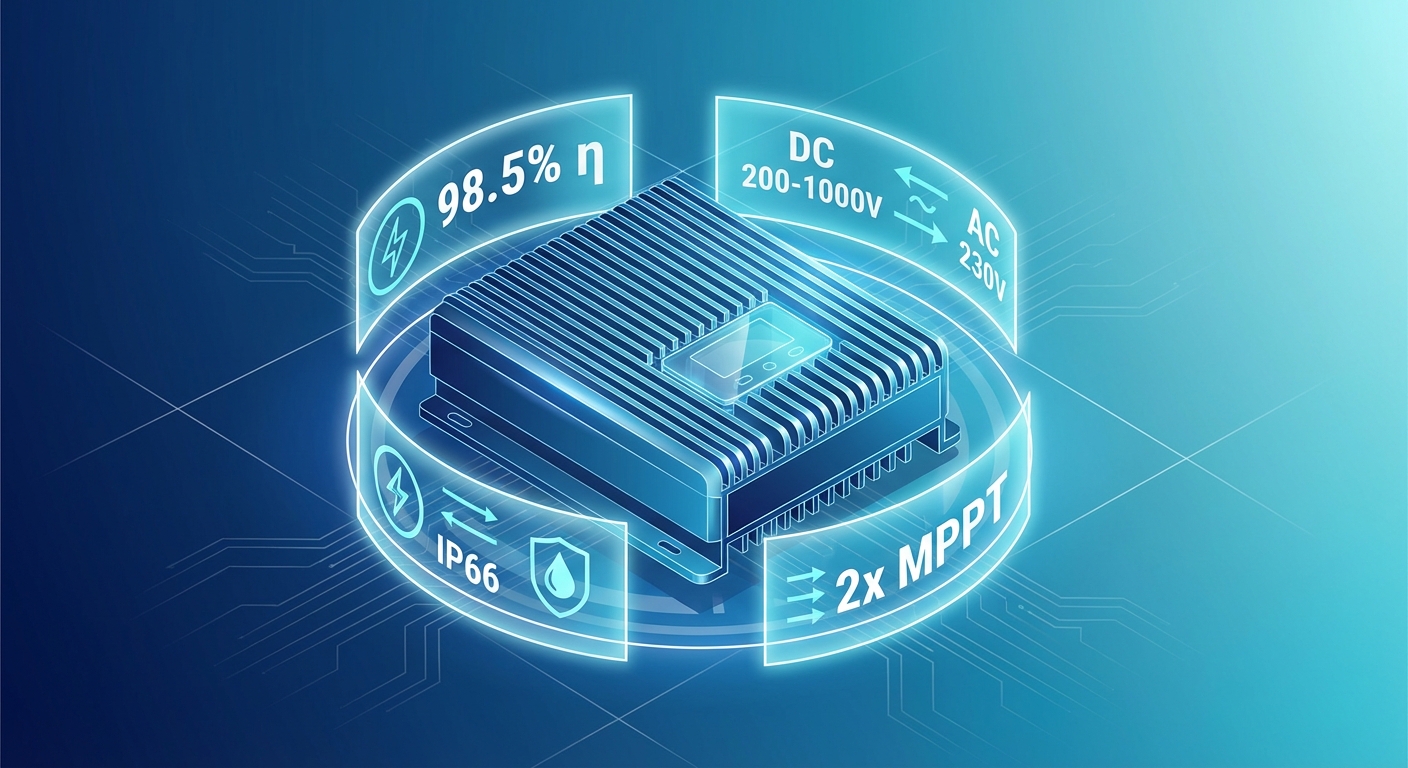
When EPCs select inverters based solely on capacity ratings and price points, they overlook specifications that determine real-world performance. Consider these common costly mistakes:
- Insufficient DC oversizing capability forces system redesigns when clients want to add more panels
- Narrow MPPT voltage ranges limit string configuration flexibility, increasing installation complexity
- Poor protection ratings lead to premature failures in harsh rooftop environments
- High THD levels cause grid rejection and compliance issues during commissioning
- Inadequate surge protection results in warranty-voiding damage during monsoon season
Understanding inverter specifications empowers EPCs to make informed decisions that protect project margins, ensure client satisfaction, and build long-term reputation. Let’s decode the 15 technical parameters that matter most.
1. DC Oversizing Capability: Maximizing Panel Capacity
DC oversizing capability defines how much solar panel capacity you can connect to an inverter beyond its rated AC output. This specification has become critical as panel wattages continue climbing in 2026.
Most quality inverters support 100% to 150% DC oversizing. A 10kW inverter with 120% oversizing can handle up to 12kW of panel capacity. This matters for three reasons:
- Future expansion flexibility: Clients can add panels without replacing the inverter
- Optimal energy harvest: Oversizing compensates for panel degradation and non-ideal conditions
- Cost efficiency: Higher DC-to-AC ratios reduce per-watt inverter costs
Real-world example: An EPC installs a 50kW system with 540W panels. Two years later, the client wants to expand. If the original inverter supports 100% DC oversizing and was initially loaded at 100%, expansion is impossible without adding another inverter. However, if the inverter was initially loaded at 80% of its oversizing limit, the client can add panels seamlessly.
When evaluating inverter specifications, verify both the maximum DC input power and the maximum input current per MPPT channel. Some manufacturers advertise high oversizing ratios but limit input current, creating a bottleneck that prevents you from actually utilizing the full DC capacity.
Modern inverters designed for India’s market should support at least 100% DC oversizing to accommodate 750W panels and future panel technology evolution. This specification directly impacts system design flexibility and long-term value for your clients.
2. Start-Up Voltage and Low-Light Performance
Start-up voltage is the minimum DC voltage required for an inverter to begin operation. This often-overlooked specification significantly impacts daily energy generation, especially during early morning and late evening hours.
Quality solar inverters feature start-up voltages between 120V to 180V. Lower start-up voltage means the inverter begins generating power earlier in the morning when panel voltage is still building, and continues operating later in the evening as sunlight fades.
Consider the financial impact: In a typical Indian installation, low start-up voltage can extend daily generation by 30 to 45 minutes—15 to 20 minutes in the morning and similar duration in the evening. Over a year, this translates to approximately 2-3% additional energy generation.
For a 100kW commercial installation generating 150,000 kWh annually, that’s an extra 3,000 to 4,500 kWh. At industrial electricity rates of ₹7-9 per unit, this specification alone delivers ₹21,000 to ₹40,000 in additional annual value.
When reviewing inverter specifications, distinguish between start-up voltage and minimum operating voltage. Start-up voltage is what gets the inverter running initially. Minimum operating voltage (often called MPPT minimum voltage) is the lowest voltage at which the inverter can continue operating once started. Both specifications matter for maximizing generation hours.
EPCs working on residential projects should prioritize low start-up voltage specifications, as these systems typically have fewer panels in series and lower string voltages compared to large commercial installations.
3. MPPT Range and Tracking Efficiency
Maximum Power Point Tracking (MPPT) is the technology that ensures your solar panels operate at their optimal voltage and current combination throughout the day. The MPPT voltage range specification defines the window within which the inverter can effectively track and extract maximum power.
Modern inverter specifications typically show MPPT ranges between 200V to 850V for residential units and up to 1000V for commercial systems. A wider MPPT range provides greater string configuration flexibility, allowing EPCs to design systems with varying numbers of panels per string.
Equally important is the number of independent MPPT channels. Inverters with multiple MPPT inputs allow you to connect strings with different orientations, tilt angles, or shading conditions without compromising overall system performance. For complex rooftop installations common in Indian commercial buildings, dual or triple MPPT channels are essential.
MPPT efficiency is another critical specification, typically rated at 99.5% or higher in quality inverters. This represents how effectively the inverter tracks the maximum power point. Even a 0.5% difference in MPPT efficiency translates to significant energy losses over the system’s lifetime.
When comparing inverter specifications, look for these MPPT-related parameters:
- MPPT voltage range: Wider is generally better for design flexibility
- Number of MPPT channels: More channels for complex installations
- MPPT efficiency rating: Should be 99.5% or higher
- MPPT scanning frequency: How often the inverter recalculates the optimal operating point
For EPCs designing systems with partial shading or multiple roof orientations, investing in inverters with superior MPPT specifications pays dividends through improved energy harvest and simplified system design.
4. Total Harmonic Distortion (THD) Levels
Total Harmonic Distortion measures the quality of the AC power your inverter feeds into the grid. High THD levels indicate that the inverter is introducing unwanted harmonics—electrical noise that can damage sensitive equipment and violate grid connection standards.
Indian grid codes and IEC standards require THD levels below 3% for grid-connected inverters, with many utilities preferring levels below 2%. This specification becomes especially critical for commercial and industrial installations where sensitive equipment like CNC machines, medical devices, or IT infrastructure operates.
Poor THD performance creates several problems:
- Grid rejection: Utility companies may refuse to approve grid connection if THD exceeds limits
- Equipment damage: High harmonics cause overheating in transformers, motors, and capacitors
- Efficiency losses: Harmonic currents waste energy as heat in cables and equipment
- Compliance failures: Projects may fail final inspection and commissioning
When evaluating inverter specifications, verify that THD ratings are measured at full load, partial load, and light load conditions. Some manufacturers only publish best-case THD figures at optimal operating points, but real-world performance varies throughout the day as solar generation fluctuates.
Quality inverters maintain THD below 2% across their entire operating range. This specification is non-negotiable for C&I installations where power quality directly impacts production processes and equipment longevity. For residential installations, THD matters less but still affects compliance with net metering regulations.
5. Protection Ratings: IP66 and Environmental Durability
The Ingress Protection (IP) rating defines how well an inverter withstands dust and water intrusion. In India’s diverse climate, from monsoon rains to desert dust storms, this specification directly determines inverter lifespan and reliability.
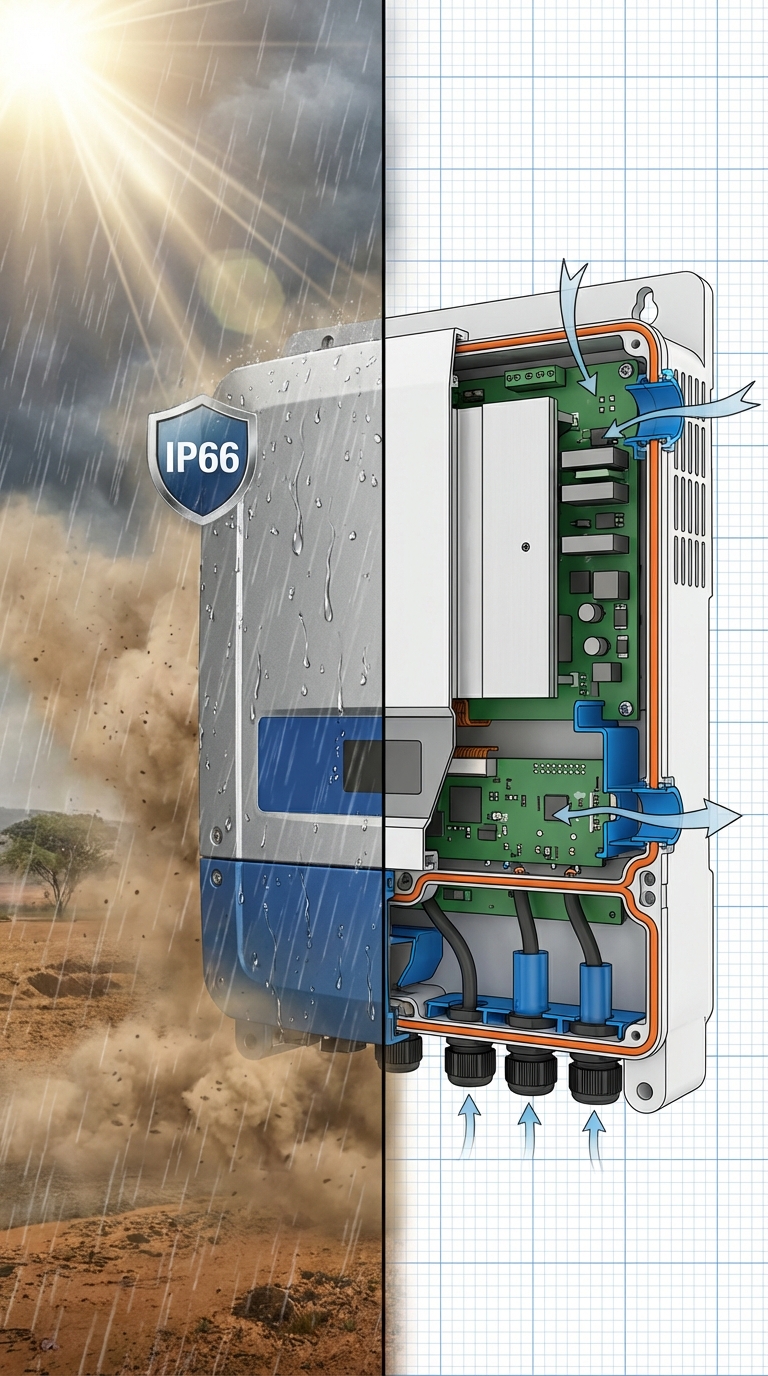
The IP rating consists of two digits. The first indicates dust protection (0-6 scale), and the second indicates water protection (0-8 scale). For rooftop solar installations in India, IP66 is the recommended minimum standard.
Here’s what IP66 means in practical terms:
- First digit (6): Complete dust-tight protection, no dust ingress even in severe conditions
- Second digit (6): Protection against powerful water jets from any direction
Why does this matter? Indian rooftop installations face extreme conditions:
- Monsoon exposure: Heavy rains with wind-driven water
- Coastal installations: Salt-laden moisture that corrodes electronics
- Desert regions: Fine dust that penetrates inadequate seals
- Urban pollution: Particulate matter that accumulates inside poorly sealed enclosures
An inverter with IP65 rating might seem similar, but that second digit difference is significant. IP65 protects against water jets, but IP66 withstands powerful jets, the difference between surviving a normal monsoon and enduring a severe storm with wind-driven rain.
When reviewing inverter specifications, also check the operating temperature range. Quality inverters should operate reliably from -25°C to +60°C ambient temperature. Indian rooftop temperatures regularly exceed 50°C during summer months, especially in northern and western regions.
EPCs should prioritize IP66-rated inverters for all outdoor installations. The marginal cost difference is negligible compared to the expense of premature failures, warranty claims, and client dissatisfaction caused by inadequate environmental protection.
6. Surge Protection Devices (SPD) – DC and AC
Surge Protection Devices protect inverters from voltage spikes caused by lightning strikes, grid fluctuations, and switching transients. In India, where grid instability and lightning are common, SPD specifications are critical for equipment longevity.
Quality inverter specifications include both DC-side and AC-side surge protection, typically classified as Type II SPDs. Here’s what to look for:
DC-side SPD specifications:
- Protection voltage rating (typically 1000V or 1500V systems)
- Maximum discharge current (should be 20kA or higher per polarity)
- Response time (nanoseconds matter for semiconductor protection)
- Number of protection stages (multi-stage protection is superior)
AC-side SPD specifications:
- Protection for all phases (L-N, L-L, and L-PE)
- Maximum discharge current (typically 20-40kA)
- Voltage protection level (should be below equipment withstand voltage)
- Coordination with external SPDs if installed
The financial impact of inadequate surge protection is substantial. A single lightning-induced surge can destroy an inverter’s power electronics, resulting in replacement costs of ₹50,000 to ₹5,00,000 depending on system size. More importantly, many manufacturers void warranties if damage is attributed to inadequate surge protection.
When comparing inverter specifications, verify whether SPDs are integrated or require external installation. Integrated SPDs simplify installation and ensure proper coordination between protection stages. External SPDs add cost and complexity but may be necessary for high-risk locations.
For installations in lightning-prone regions, particularly Kerala, Karnataka, and northeastern states, EPCs should specify inverters with robust integrated SPD specifications and consider supplementary external protection for added security. This investment protects both equipment and project profitability.
7. Efficiency Ratings: Peak, Euro, and CEC Efficiency
Efficiency specifications determine how much DC power from your solar panels actually becomes usable AC power. Even small efficiency differences compound into significant energy and revenue losses over a system’s 25-year lifespan.
Modern inverter specifications list several efficiency metrics:
Peak efficiency represents the inverter’s best performance at optimal operating conditions, typically 98% or higher for quality units. However, inverters rarely operate at peak efficiency throughout the day.
European (Euro) efficiency is a weighted average that better represents real-world performance. It accounts for varying solar irradiance levels throughout the day, with the formula: Euro efficiency = 0.03×η5% + 0.06×η10% + 0.13×η20% + 0.10×η30% + 0.48×η50% + 0.20×η100%.
CEC efficiency (California Energy Commission) uses a different weighting formula more representative of sunny climates, similar to Indian conditions.
For EPCs evaluating inverter specifications in India, Euro or CEC efficiency ratings provide more realistic performance expectations than peak efficiency alone. Quality inverters should achieve 97.5% to 98% weighted efficiency.
Let’s quantify the financial impact: Consider two 100kW inverters for a commercial installation generating 150,000 kWh annually:
- Inverter A: 97.5% Euro efficiency → 146,250 kWh annual AC output
- Inverter B: 98.0% Euro efficiency → 147,000 kWh annual AC output
The 0.5% efficiency difference results in 750 kWh additional annual generation. At ₹8 per unit, that’s ₹6,000 extra revenue annually, or ₹1,50,000 over 25 years. Multiply this across multiple projects, and efficiency specifications directly impact your clients’ ROI and your reputation as an EPC.
When reviewing inverter specifications, also check efficiency curves across the operating range. Some inverters maintain high efficiency from 20% to 100% load, while others show significant efficiency drops at partial load, common during morning, evening, and cloudy conditions.
8. Operating Temperature Range and Derating
Operating temperature specifications define the ambient temperature range within which an inverter functions reliably. Equally important are derating curves that show how inverter output reduces at elevated temperatures.
Standard inverter specifications list operating ranges like -25°C to +60°C, but the critical detail is the derating temperature, the point at which the inverter begins reducing output to prevent overheating.
Most inverters maintain full rated output up to 45°C or 50°C ambient temperature. Above this threshold, output derates linearly, typically 1% to 2% per degree Celsius. This specification has significant implications for Indian installations where rooftop temperatures routinely exceed 50°C during summer months.
Consider a 50kW inverter installed in Ahmedabad where summer rooftop temperatures reach 55°C:
- If derating begins at 45°C with 1% reduction per degree, the inverter operates at 90% capacity (10% derating) during peak summer hours
- This 10% capacity reduction during the highest generation period significantly impacts daily energy yield
- Over summer months, this can reduce total generation by 3-5%
When evaluating inverter specifications, look for these temperature-related parameters:
- Operating temperature range: Should extend to at least +60°C
- Derating start temperature: Higher is better (50°C or above ideal)
- Derating curve: Gentler slopes (lower percentage per degree) are preferable
- Cooling method: Natural convection vs. forced fan cooling
Inverters with natural convection cooling (no fans) offer reliability advantages, no moving parts to fail, but may have more aggressive derating curves. Fan-cooled inverters maintain performance at higher temperatures but introduce a potential failure point and maintenance requirement.
For installations in hot climates, EPCs should factor temperature derating into system sizing calculations. An inverter that looks adequately sized on paper may underperform during peak generation hours if temperature specifications aren’t carefully evaluated.
9. Grid Support Functions and Smart Grid Readiness
Modern inverter specifications include grid support functions that help stabilize the electrical grid, increasingly important as solar penetration grows across India. These specifications affect both regulatory compliance and future-proofing your installations.
Key grid support specifications include:
Reactive power control: The ability to provide or absorb reactive power (measured in kVAR) helps maintain grid voltage stability. Quality inverters offer reactive power control with power factors from 0.8 leading to 0.8 lagging, or even wider ranges. Some advanced units provide reactive power at night (Q at night function) using grid power to support local voltage regulation.
Frequency and voltage ride-through: These specifications define how the inverter responds to grid disturbances. Indian grid codes require inverters to remain connected during minor frequency and voltage deviations rather than immediately disconnecting. Look for specifications showing:
- Low voltage ride-through (LVRT) capability
- High voltage ride-through (HVRT) capability
- Frequency tolerance ranges (typically 47.5-51.5 Hz for India)
- Ride-through duration specifications
Export limitation and zero-export functionality: For installations where net metering isn’t available or clients want to minimize grid export, these specifications allow precise control of power flow. Advanced inverters can limit export to a specific percentage or implement complete zero-export operation.
Grid code compliance: Verify that inverter specifications explicitly state compliance with Indian grid codes and relevant CEA (Central Electricity Authority) regulations. This affects project approval and commissioning.
As India moves toward smart grid infrastructure, inverters with advanced grid support specifications will become mandatory rather than optional. EPCs should prioritize these features to future-proof installations and avoid costly retrofits when regulations evolve.
For commercial installations, grid support functions can also provide revenue opportunities through ancillary services markets as these develop in India over the coming years.
10. Communication Protocols and Monitoring Capabilities
Communication and monitoring specifications determine how effectively you can track system performance, diagnose issues, and provide ongoing support to clients. In 2026, these capabilities are essential for professional solar installations.
Modern inverter specifications should include multiple communication options:
Connectivity protocols:
- Wi-Fi: Standard for residential installations with existing internet
- 4G/LTE: Essential for remote installations without reliable Wi-Fi
- Bluetooth: Useful for local commissioning and troubleshooting
- RS485/Modbus: Industry standard for commercial installations and fleet management
- Ethernet: Reliable wired connection for critical installations
When evaluating inverter specifications, verify the monitoring platform capabilities:
- Data granularity: Real-time data vs. 5-minute or 15-minute intervals
- Historical data retention: How long is performance data stored?
- Alert mechanisms: Email, SMS, push notifications, or WhatsApp integration
- Multi-site management: Can EPCs monitor all installations from a single dashboard?
- API access: Ability to integrate with third-party monitoring systems
Advanced monitoring specifications include diagnostic capabilities that go beyond basic performance tracking. Look for inverters that provide:
- String-level monitoring to identify underperforming panels
- Fault code libraries with troubleshooting guidance
- Performance ratio calculations and benchmarking
- Predictive maintenance alerts based on operating patterns
For EPCs, robust monitoring specifications reduce service calls, enable proactive maintenance, and demonstrate professionalism to clients. The ability to identify and resolve issues remotely saves time and travel costs while improving client satisfaction.
Data security is another critical specification, especially for commercial installations. Verify where monitoring data is stored (Indian servers preferred for data sovereignty), encryption standards, and access control mechanisms. For more details on monitoring capabilities, see our comprehensive guide on solar inverter monitoring systems in India.
11. Warranty Specifications: What the Fine Print Really Means
Warranty specifications are among the most important, and most misunderstood, parameters EPCs evaluate. The difference between a standard warranty and a comprehensive warranty can mean thousands of rupees in unexpected costs.
When reviewing inverter specifications, examine these warranty parameters:
Warranty duration: Standard warranties range from 5 to 10 years, with premium manufacturers offering 12-year warranties. Longer warranties indicate manufacturer confidence in product reliability and provide better long-term value for clients.
Warranty type: This is where specifications matter most:
- Full replacement warranty: Manufacturer replaces defective units entirely, no repair attempts, no refurbished parts
- Repair warranty: Manufacturer repairs defective units, which may involve refurbished components and longer downtime
- Pro-rated warranty: Coverage decreases over time, with clients paying increasing percentages for replacements
Full replacement warranties are significantly more valuable than repair warranties. A failed inverter under repair warranty might take weeks to fix, resulting in lost generation revenue. Full replacement typically means faster resolution and new equipment.
Warranty conditions: The fine print in warranty specifications often includes exclusions that void coverage:
- Installation by non-certified technicians
- Operating conditions outside specified parameters
- Damage from inadequate surge protection
- Modifications or repairs by unauthorized personnel
- Failure to register the warranty within specified timeframes
Modern warranty specifications increasingly include digital warranty systems that streamline registration and claims. Look for manufacturers offering online warranty registration, digital documentation, and transparent claim processes.
For EPCs, warranty specifications directly impact project risk and long-term service obligations. A 12-year full replacement warranty from a reputable manufacturer reduces your exposure to callback costs and client complaints. When comparing inverter specifications across brands, factor warranty value into total cost of ownership calculations.
The Indian market in 2026 sees leading manufacturers offering 12-year full replacement warranties backed by digital systems, setting a new benchmark for quality and customer support. This specification should be a key differentiator in your inverter selection process.
12. Certification Standards: BIS, IEC, and Compliance
Certification specifications determine whether an inverter can legally be installed in India and whether projects qualify for subsidies, net metering, and utility approvals. These aren’t optional, they’re mandatory for professional installations.
BIS certification (Bureau of Indian Standards): Mandatory for all inverters sold in India under IS 61683:2013 standard. Verify that inverter specifications explicitly state BIS certification with registration numbers. Installing non-BIS certified equipment can result in project rejection, subsidy denial, and legal liability.
IEC 62109 (Safety standards): International safety standard for power converters in photovoltaic systems. This specification covers electrical safety, insulation, protection against electric shock, and fire hazards. Quality inverters comply with IEC 62109-1 (general requirements) and IEC 62109-2 (specific requirements for inverters).
IEC 61727 (Grid interconnection): Defines requirements for grid-connected inverters including power quality, islanding protection, and grid monitoring. This specification ensures inverters safely disconnect during grid failures and maintain acceptable power quality.
CE marking: While not mandatory for India, CE certification indicates compliance with European safety and electromagnetic compatibility standards, a good indicator of overall quality.
Additional certification specifications to verify:
- ISO 9001: Quality management system certification for manufacturing
- EMC compliance: Electromagnetic compatibility standards (IEC 61000 series)
- Environmental certifications: RoHS compliance for hazardous substance restrictions
For projects seeking government subsidies or participating in schemes like PM-KUSUM, specific certification requirements may apply. Verify that inverter specifications meet all applicable standards before procurement.
EPCs should maintain copies of all certification documents for each inverter model used. These documents are required during project commissioning, subsidy applications, and utility approvals. Manufacturers who provide easy access to certification documentation demonstrate professionalism and transparency.
13. Physical Specifications: Size, Weight, and Installation
Physical specifications affect installation complexity, site requirements, and long-term accessibility. While often overlooked in favor of electrical parameters, these specifications have practical implications for every project.
Dimensions and mounting: Inverter specifications should clearly state dimensions (height, width, depth) and mounting requirements. Wall-mounted inverters need adequate wall space with proper structural support. Verify mounting bracket specifications and whether they’re included or require separate purchase.
Weight considerations: Inverter weight ranges from 10-15 kg for residential units to 50+ kg for large commercial inverters. This affects:
- Wall structural requirements (especially for older buildings)
- Installation labor and equipment needs
- Accessibility for future maintenance or replacement
Cable entry and wire management: Quality inverter specifications include multiple cable entry points (top, bottom, or side entry) for installation flexibility. Look for specifications showing:
- Cable entry gland sizes and types
- Maximum cable diameter accommodation
- Wire management features inside the enclosure
- Terminal block specifications and torque requirements
Display and user interface: Inverter specifications should describe the display type (LCD, LED, or none), information shown, and button/interface layout. Quality displays show:
- Real-time generation data
- Daily/monthly/lifetime energy production
- Operating status and fault codes
- Grid parameters (voltage, frequency)
Installation clearances: Specifications must state required clearances for ventilation and heat dissipation, typically 30-50 cm on sides and top. Inadequate clearance leads to overheating, derating, and premature failure.
For EPCs, physical specifications affect installation time and labor costs. Inverters with thoughtful mechanical design, easy mounting, accessible terminals, clear labeling, reduce installation time and errors. When comparing specifications, consider the total installation experience, not just electrical performance.
14. Hybrid Inverter-Specific Parameters
Hybrid inverters combine grid-tied and battery backup functionality, requiring additional specifications beyond standard grid-tied units. For EPCs offering backup solutions, understanding these parameters is essential.
Battery voltage range and chemistry compatibility: Hybrid inverter specifications must state compatible battery voltages (typically 48V, 96V, or higher) and supported battery chemistries:
- Lithium-ion (LiFePO4, NMC, NCA)
- Lead-acid (flooded, AGM, gel)
- Emerging technologies (sodium-ion, etc.)
Verify that the inverter’s battery management specifications match your intended battery system. Incompatible voltage ranges or chemistry settings can damage batteries or void warranties.
Charge and discharge specifications: Key parameters include:
- Maximum charge current: Determines how quickly batteries recharge
- Maximum discharge current: Affects backup power capacity
- Charge efficiency: Percentage of solar/grid power that reaches batteries
- Discharge efficiency: Percentage of battery power delivered to loads
Backup switching time: Critical specification for sensitive loads. Quality hybrid inverters switch to battery backup in under 10 milliseconds, fast enough to keep computers and electronics running. Slower switching times (20-50 ms) may cause brief interruptions.
Battery management system (BMS) integration: Specifications should describe communication protocols with battery BMS systems (typically CAN bus or RS485). Proper BMS integration enables:
- Accurate state-of-charge monitoring
- Cell balancing coordination
- Temperature-based charge control
- Battery health diagnostics
Operating modes: Hybrid inverter specifications should clearly define available operating modes:
- Grid-tied mode: Solar to grid/loads, no battery
- Self-consumption mode: Solar to loads first, excess to battery, then grid
- Backup mode: Battery powers critical loads during outages
- Off-grid mode: Complete independence from grid
- Time-of-use optimization: Charge/discharge based on electricity rates
For commercial installations, hybrid inverter specifications should include peak shaving capabilities, using battery discharge to reduce demand charges during high-consumption periods.
When evaluating hybrid inverter specifications, consider the total system design including battery capacity, backup load requirements, and client usage patterns. For more guidance on hybrid systems, refer to our article on solar inverter selection criteria for EPCs.
15. Quality Testing and Manufacturing Standards
Manufacturing quality specifications reveal how thoroughly inverters are tested before leaving the factory. These specifications directly correlate with field reliability and long-term performance.
Quality testing specifications to verify:
Number of quality tests: Leading manufacturers perform 1000+ automated tests on every unit. These specifications should detail:
- Electrical parameter testing (voltage, current, efficiency)
- Safety testing (insulation resistance, ground continuity)
- Functional testing (MPPT performance, grid synchronization)
- Environmental testing (temperature cycling, humidity exposure)
- Burn-in testing (extended operation under load)
Component grade specifications: Quality inverters use premium components from reputable suppliers. Look for specifications mentioning:
- German-grade or Japanese-grade electronics: Indicates high-quality capacitors, inductors, and semiconductors
- Industrial-grade components: Rated for extended temperature ranges and longer lifespans
- Tier-1 supplier sourcing: Components from established manufacturers rather than generic suppliers
Burn-in testing specifications: Quality manufacturers subject inverters to extended operation at elevated temperatures before shipping. This specification, often 24 to 48 hours of continuous operation, identifies infant mortality failures before units reach customers.
Manufacturing certifications: Verify that specifications include:
- ISO 9001: Quality management system certification
- ISO 14001: Environmental management certification
- Clean room specifications: For sensitive electronics assembly
- Automated production lines: Reduces human error and ensures consistency
Traceability specifications: Quality manufacturers maintain complete traceability for every unit:
- Serial number tracking through production
- Component batch documentation
- Test result records for each unit
- Quality control sign-offs at each production stage
For EPCs, manufacturing quality specifications provide confidence in long-term reliability. An inverter that passes 1000+ quality tests is far less likely to fail in the field than one with minimal testing. This translates to fewer service calls, lower warranty costs, and better client satisfaction.
When comparing inverter specifications, don’t hesitate to request factory audit reports, quality certifications, and detailed testing procedures. Manufacturers who transparently share these specifications demonstrate commitment to quality and customer success.
How to Compare Inverter Specifications Across Brands
With 15 technical parameters to evaluate, comparing inverter specifications across multiple brands can be overwhelming. Here’s a systematic approach EPCs can use to make informed decisions.
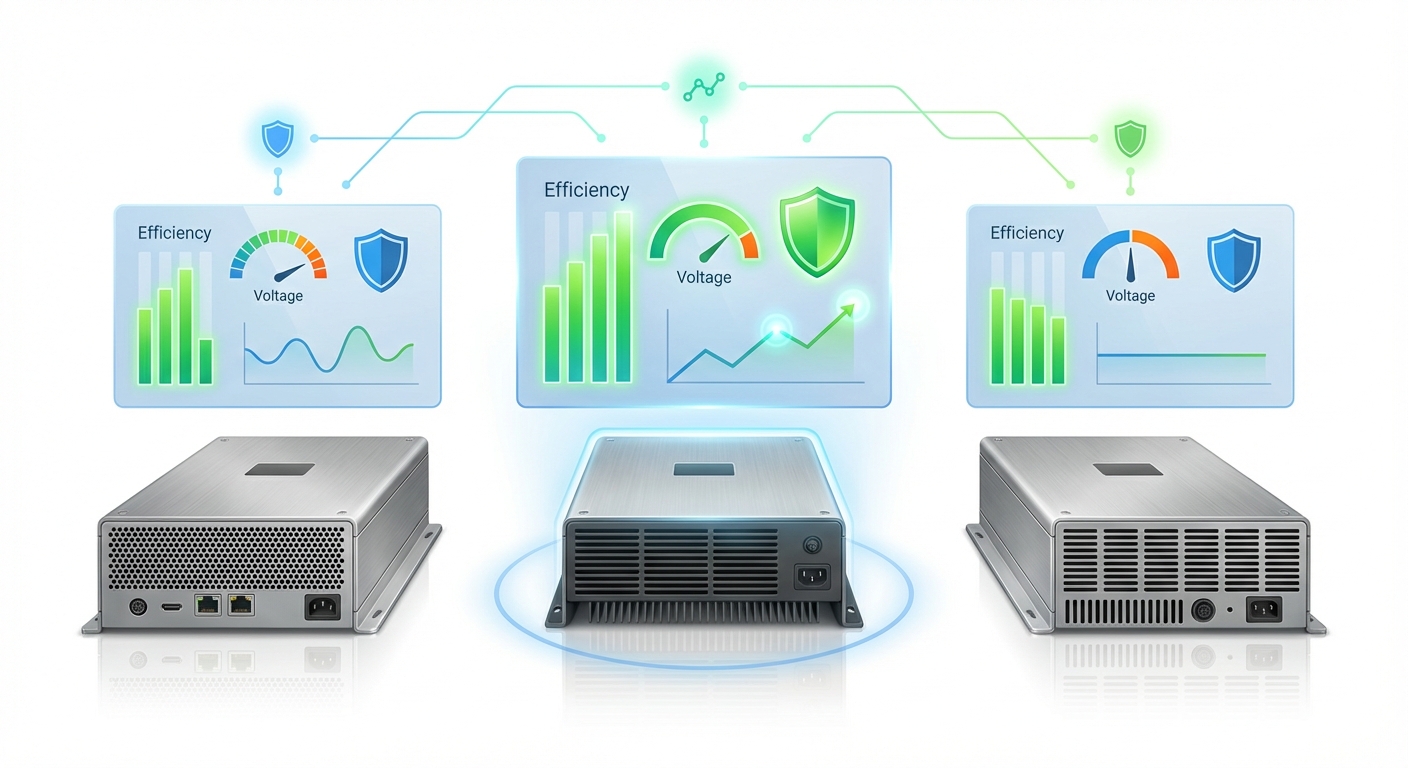
Create a specification comparison matrix: Build a spreadsheet with inverter models as columns and specifications as rows. Include all 15 parameters discussed in this guide plus any project-specific requirements. This visual comparison quickly reveals strengths and weaknesses of each option.
Weight specifications based on project requirements: Not all specifications matter equally for every project. Assign importance weights based on installation context:
For residential installations, prioritize:
- Start-up voltage (extended generation hours)
- Monitoring capabilities (client engagement)
- Warranty specifications (long-term protection)
- Physical size (limited installation space)
For commercial installations, prioritize:
- Efficiency ratings (ROI impact)
- THD levels (power quality requirements)
- Grid support functions (utility compliance)
- Temperature derating (high-temperature performance)
For harsh environment installations, prioritize:
- IP protection ratings (environmental durability)
- Surge protection specifications (lightning/grid protection)
- Operating temperature range (extreme conditions)
- Component quality (long-term reliability)
Identify specification red flags: Watch for warning signs in specification sheets:
- Missing specifications: If critical parameters aren’t listed, assume worst-case values
- Vague language: “Up to 98% efficiency” without detailed curves suggests poor performance
- Unrealistic claims: Specifications that significantly exceed industry norms warrant skepticism
- Limited warranty details: Lack of clear warranty terms indicates potential issues
- No certification documentation: Absence of BIS/IEC certification is a deal-breaker
Questions to ask manufacturers during technical evaluation:
- Can you provide detailed efficiency curves across the full operating range?
- What is the MTBF (Mean Time Between Failures) specification for this model?
- How many units of this model are currently operating in India?
- What is your average warranty claim rate for this product?
- Can you provide references from EPCs using this inverter in similar applications?
- What is your typical warranty claim resolution time?
- Do you maintain adequate spare parts inventory in India?
- What technical support do you provide during installation and commissioning?
Balance specifications with total cost of ownership: The lowest upfront cost rarely delivers the best long-term value. Calculate total cost of ownership including:
- Initial purchase price
- Installation labor (easier installation reduces costs)
- Energy losses from efficiency differences
- Expected maintenance and service costs
- Warranty coverage value
- Replacement probability and costs
An inverter with superior specifications might cost 10-15% more upfront but deliver 20-30% better total value over its lifetime through higher efficiency, longer warranty, and greater reliability.
For comprehensive guidance on inverter selection beyond just specifications, see our detailed article on 10 critical criteria for EPC inverter selection.
Qbits Inverter Specifications: Engineering for Indian Conditions
Understanding inverter specifications in theory is valuable, but seeing how these parameters come together in a real product provides practical context. Qbits inverters are engineered specifically for Indian market conditions with specifications that address the challenges EPCs face daily.
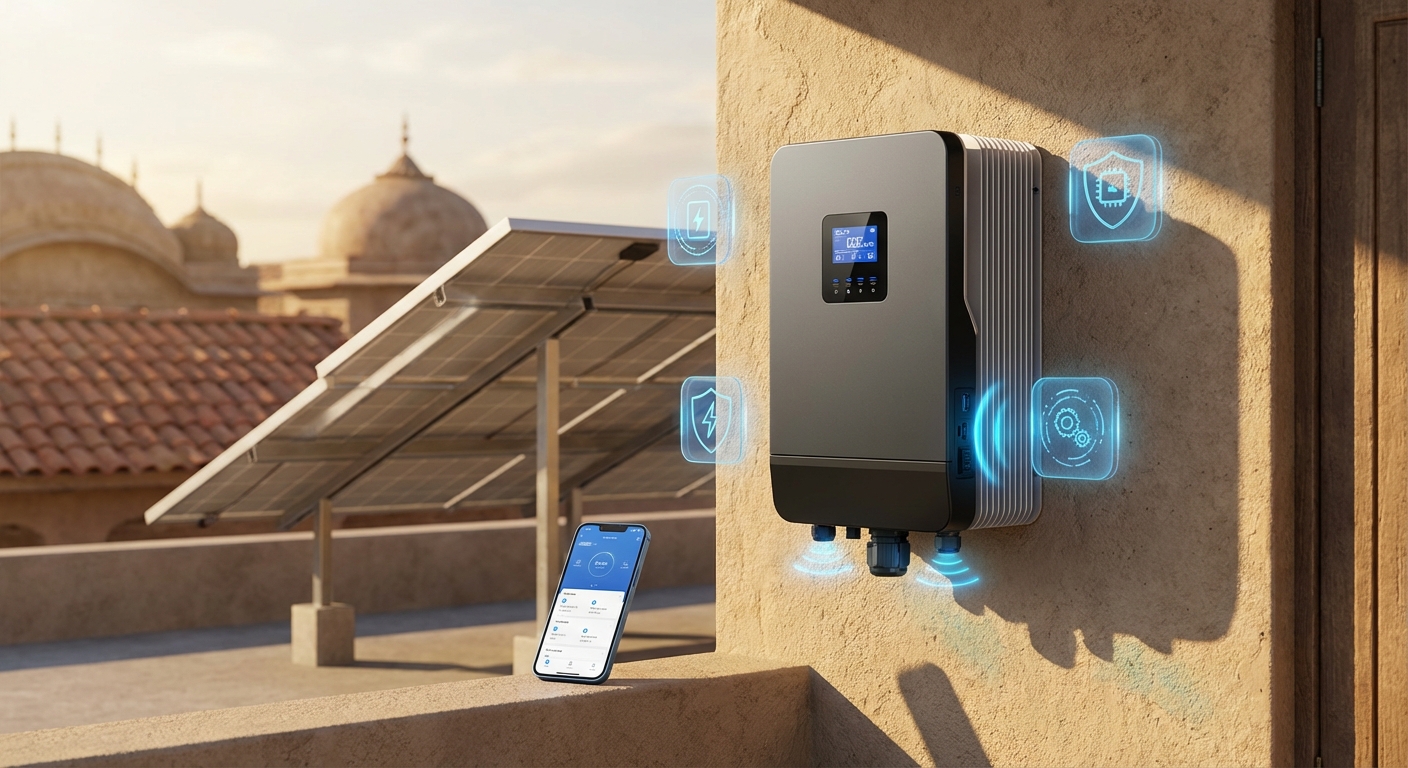
DC oversizing capability: Qbits inverters support up to 100% DC oversizing, enabling EPCs to design systems with modern 750W panels without capacity constraints. This specification provides the flexibility to maximize rooftop utilization and accommodate future panel upgrades.
Low start-up voltage: With start-up voltage specifications optimized for extended generation hours, Qbits inverters begin producing power earlier in the morning and continue later in the evening, directly increasing daily energy yield and client ROI.
IP66 weather protection: Engineered for harsh Indian rooftop environments, the IP66 protection rating ensures complete dust-tight and water-jet resistant operation. From monsoon rains in Kerala to dust storms in Rajasthan, these inverters withstand conditions that compromise lesser-protected equipment.
Efficiency specifications: Qbits inverters achieve 98% peak efficiency with high weighted efficiency across the operating range. This specification translates to minimal energy losses and maximum generation for your clients throughout the system’s lifetime.
Component quality: Built with German-grade electronic components, Qbits inverters meet specifications for long-term reliability and performance stability. Every unit undergoes 1000+ automated quality tests before shipping, a manufacturing specification that ensures field reliability.
Warranty specifications: Qbits offers a 12-year full replacement warranty backed by a digital warranty system. This specification demonstrates manufacturer confidence and provides EPCs with long-term protection that reduces project risk and service obligations.
Monitoring capabilities: The AI-powered WhatsApp monitoring system represents advanced communication specifications tailored for Indian users. Real-time alerts, performance tracking, and diagnostic information arrive via WhatsApp, the platform your clients already use daily. Additional connectivity options include Wi-Fi, 4G, and Bluetooth for comprehensive monitoring flexibility.
Surge protection: Integrated DC and AC surge protection devices meet specifications for Indian grid conditions, protecting against voltage fluctuations and lightning-induced surges common across the country.
Certification compliance: All Qbits inverters carry BIS certification and comply with IEC standards, meeting mandatory specifications for legal installation and project approvals across India.
These specifications aren’t just numbers on a datasheet. They represent engineering decisions made specifically for the challenges EPCs face in the Indian market, from extreme weather to grid instability to the need for accessible monitoring systems.
Backed by the Heaven Group legacy, Qbits combines precision engineering with intelligent performance to deliver inverter specifications that translate into real-world reliability and client satisfaction. To explore detailed specifications for specific models, visit the Qbits product page.
Making Informed Inverter Specifications Decisions for Your Projects
The 15 technical parameters covered in this guide represent the foundation of informed inverter selection. For EPCs and solar professionals, understanding these inverter specifications transforms procurement from a price-driven commodity decision into a strategic choice that impacts project success, client satisfaction, and long-term profitability.
As you evaluate inverters for your next project, remember that specifications work together as a system. An inverter with excellent efficiency but poor surge protection will fail prematurely. A unit with robust environmental protection but inadequate monitoring capabilities creates service challenges. The best inverters balance all specifications to deliver comprehensive performance.
Prioritize specifications based on installation context: Residential projects demand different specification priorities than commercial installations. Coastal environments require different protection specifications than inland locations. Match inverter specifications to your specific project requirements rather than applying a one-size-fits-all approach.
Consider long-term ROI over upfront cost: Superior inverter specifications deliver value through higher efficiency, longer warranties, reduced maintenance, and greater reliability. Calculate total cost of ownership over the system’s 25-year lifespan rather than focusing solely on initial purchase price. For detailed ROI analysis, see our guide on solar inverter lifespan and financial planning.
Work with manufacturers who provide transparent specifications: Quality manufacturers openly share detailed specifications, test data, certification documents, and performance curves. Transparency in specifications indicates confidence in product quality and commitment to customer success.
Stay current with evolving specifications: The solar industry advances rapidly. Panel wattages increase, grid codes evolve, and new technologies emerge. Partner with manufacturers who continuously update specifications to match market evolution rather than selling outdated technology.
Understanding inverter specifications empowers you to make decisions that protect your reputation, satisfy your clients, and build sustainable business success. Every specification, from DC oversizing to warranty terms, represents a choice that impacts real-world performance and long-term value.
Ready to specify inverters that deliver reliable performance for your projects? Connect with Qbits technical team to discuss your specific requirements and receive detailed specification guidance tailored to your installation needs. For EPCs and distributors interested in partnering with a manufacturer committed to transparent specifications and quality engineering, explore partnership opportunities with Qbits.
The right inverter specifications make the difference between a solar installation that meets expectations and one that exceeds them for 25 years. Choose specifications wisely, and your projects will deliver the performance, reliability, and ROI that build lasting client relationships and industry reputation.
This blog post was written using thestacc.com