



Solar Inverter Pricing Strategies for EPCs (2026)


In India’s rapidly expanding solar market, inverter pricing has become one of the most critical competitive factors for EPCs and distributors. With project margins under constant pressure and customers increasingly price-sensitive, developing a strategic approach to inverter pricing can mean the difference between winning profitable contracts and losing bids to competitors. The challenge isn’t simply offering the lowest price—it’s about structuring your pricing to reflect true value while maintaining healthy margins that sustain your business long-term.
As we move through 2026, the solar inverter landscape in India has evolved significantly. Advanced features like AI-powered monitoring, extended warranty periods, and German-grade components have created distinct quality tiers that demand sophisticated pricing strategies. For EPCs and distributors, understanding how to price these different value propositions—from budget-conscious residential projects to large-scale C&I installations—is essential for sustainable growth in this competitive market.
This comprehensive guide walks you through proven inverter pricing strategies specifically designed for the Indian solar market. You’ll learn how to calculate markups that protect your margins, structure volume discounts that drive sales without eroding profitability, justify premium pricing for high-quality inverters, and develop competitive bidding approaches that win projects while maintaining financial health.

Understanding the Solar Inverter Pricing Landscape in India (2026)
The Indian solar inverter market in 2026 presents a complex pricing environment shaped by multiple factors. At the entry level, basic on-grid inverters for residential installations typically range from ₹4,000 to ₹8,000 per kW, while premium models with advanced features command ₹10,000 to ₹15,000 per kW. Commercial and industrial inverters show even wider variation, with pricing influenced by capacity, efficiency ratings, and integrated monitoring capabilities.
Component quality represents one of the most significant pricing differentiators. Inverters built with German-grade electronic components and subjected to rigorous quality testing naturally carry higher base costs than mass-market alternatives. However, these quality investments translate directly into longer operational life, reduced failure rates, and lower total cost of ownership—factors that justify premium pricing when properly communicated to customers.
Warranty duration has emerged as a critical pricing factor in the current market. Standard 5-year warranties are being challenged by manufacturers offering 10-year and even 12-year full replacement warranties. The extended warranty coverage adds 8-12% to base manufacturing costs but provides substantial competitive differentiation and customer peace of mind. For EPCs, understanding these warranty cost implications is essential when evaluating supplier pricing and setting your own margins.
Technology features significantly impact inverter pricing structures. Basic models offer simple grid connectivity, while advanced inverters integrate AI-powered monitoring, IP66 weather protection, DC and AC surge protection devices, and smart connectivity through Wi-Fi, 4G, and Bluetooth. These features can add 15-25% to base costs but deliver measurable value through reduced maintenance requirements, remote troubleshooting capabilities, and enhanced system performance monitoring.
The competitive landscape in India includes both international brands and domestic manufacturers, each with distinct pricing strategies. Global players like Sungrow and Fronius typically position at premium price points, while emerging Indian manufacturers focus on value-based pricing that balances quality with market accessibility. Understanding where your product portfolio fits within this spectrum is fundamental to developing effective pricing strategies.
1. Cost Structure Analysis: Breaking Down Inverter Pricing Components
Effective inverter pricing begins with a thorough understanding of your cost structure. Every pricing decision should start from a clear baseline of what the product actually costs you, including all direct and indirect expenses. For EPCs and distributors, this means looking beyond the simple purchase price from manufacturers to understand the complete cost picture.
Understanding Base Cost Variables
Manufacturing costs vary significantly based on component selection and quality standards. Inverters using premium components, such as German-grade capacitors, high-efficiency transformers, and advanced microprocessors, typically cost 20-30% more to produce than standard models. However, these components deliver measurably better performance: 98% efficiency ratings, lower heat generation, and extended operational lifespans that can reach 15-20 years versus 8-12 years for budget alternatives.
Quality assurance and testing protocols add another layer to cost structures. Manufacturers conducting comprehensive testing, such as the 1000+ automated quality tests performed on premium inverters, incur higher per-unit costs but deliver significantly lower field failure rates. For EPCs, this translates to fewer warranty claims, reduced service calls, and stronger customer satisfaction. When evaluating supplier pricing, always inquire about testing protocols and quality standards.
Certification and compliance costs represent mandatory expenses that vary by market segment. BIS certification for the Indian market, IEC compliance for international standards, and specialized certifications for grid connectivity all add to base costs. These typically account for 3-5% of total manufacturing costs but are non-negotiable for legal market access.
Warranty Cost Considerations
Warranty provisions represent one of the most misunderstood elements of inverter pricing. A 12-year full replacement warranty isn’t simply a marketing promise, it’s a financial commitment that must be factored into pricing structures. Manufacturers typically allocate 6-10% of product cost to warranty reserves for extended coverage periods, compared to 2-4% for standard 5-year warranties.
The type of warranty coverage dramatically affects cost allocation. Full replacement warranties, where the manufacturer provides a complete new unit for any failure, cost significantly more to support than repair-based warranties. However, they offer substantial value to EPCs by eliminating service labor costs, reducing customer downtime, and simplifying warranty claim processes through digital warranty systems that streamline documentation and approval.
When pricing your inverter offerings, factor in the warranty value as a distinct line item in your value proposition. A 12-year warranty effectively reduces the customer’s total cost of ownership by eliminating replacement expenses for over a decade. This can justify a 10-15% price premium over competitors offering standard warranty terms, especially when selling to commercial customers focused on long-term ROI calculations.
2. Markup Calculation Strategies for Different Project Types
Calculating appropriate markups requires balancing competitive positioning with margin protection. The key is developing differentiated markup strategies for various project types, customer segments, and competitive scenarios rather than applying a one-size-fits-all percentage across your entire product portfolio.
Residential Project Pricing Models
For residential solar installations, EPCs typically work with markup ranges of 25-40% on inverter costs. This range accounts for several factors: sales and marketing expenses to reach homeowners, technical consultation and system design services, installation support and coordination, and post-installation customer service. In competitive markets, markups may compress toward the lower end of this range, making it essential to control operational costs and maximize efficiency.
Service and support costs deserve special attention in residential pricing. Unlike C&I customers with dedicated facility management teams, residential customers often require more hand-holding, site visits for troubleshooting, and ongoing education about system operation. Budget 8-12% of your markup specifically for these support activities. Advanced features like AI-powered WhatsApp monitoring can significantly reduce these costs by enabling remote diagnostics and reducing unnecessary site visits.
Installation complexity factors should adjust your markup calculations. Rooftop installations with difficult access, older electrical systems requiring upgrades, or locations with harsh weather exposure requiring additional protection measures all justify markup increases of 5-10%. Conversely, straightforward installations in new construction with modern electrical infrastructure may support lower markups to win competitive bids.
Commercial & Industrial Pricing Approaches
C&I projects typically operate on tighter markup percentages, 15-30%—but deliver higher absolute margins due to larger project values. The key to profitable C&I pricing lies in volume efficiency and reduced per-unit service costs. A 100 kW commercial installation requires similar sales effort to a 5 kW residential project but generates substantially higher revenue.
Volume discount structures for C&I projects should be carefully calibrated. A common approach uses tiered discounts: standard pricing for projects under 50 kW, 5-8% discount for 50-100 kW systems, 10-15% discount for 100-250 kW installations, and negotiated pricing for projects exceeding 250 kW. These discounts come from your markup, not your base margin, so structure them to maintain minimum profitability thresholds.
Long-term service contracts represent an opportunity to protect margins in competitive C&I bidding. If you need to reduce inverter pricing to win a project, consider bundling a comprehensive annual maintenance contract at standard rates. This approach maintains overall project profitability while meeting the customer’s budget constraints on capital equipment costs. For more insights on selecting the right inverters for different project types, review our guide on solar inverter selection criteria for EPCs.
3. Volume Discount Structures That Protect Margins
Volume discounts serve as powerful sales tools, but poorly structured discount programs can devastate profitability. The goal is creating incentive structures that drive larger orders and customer loyalty while maintaining healthy margins across all transaction sizes.
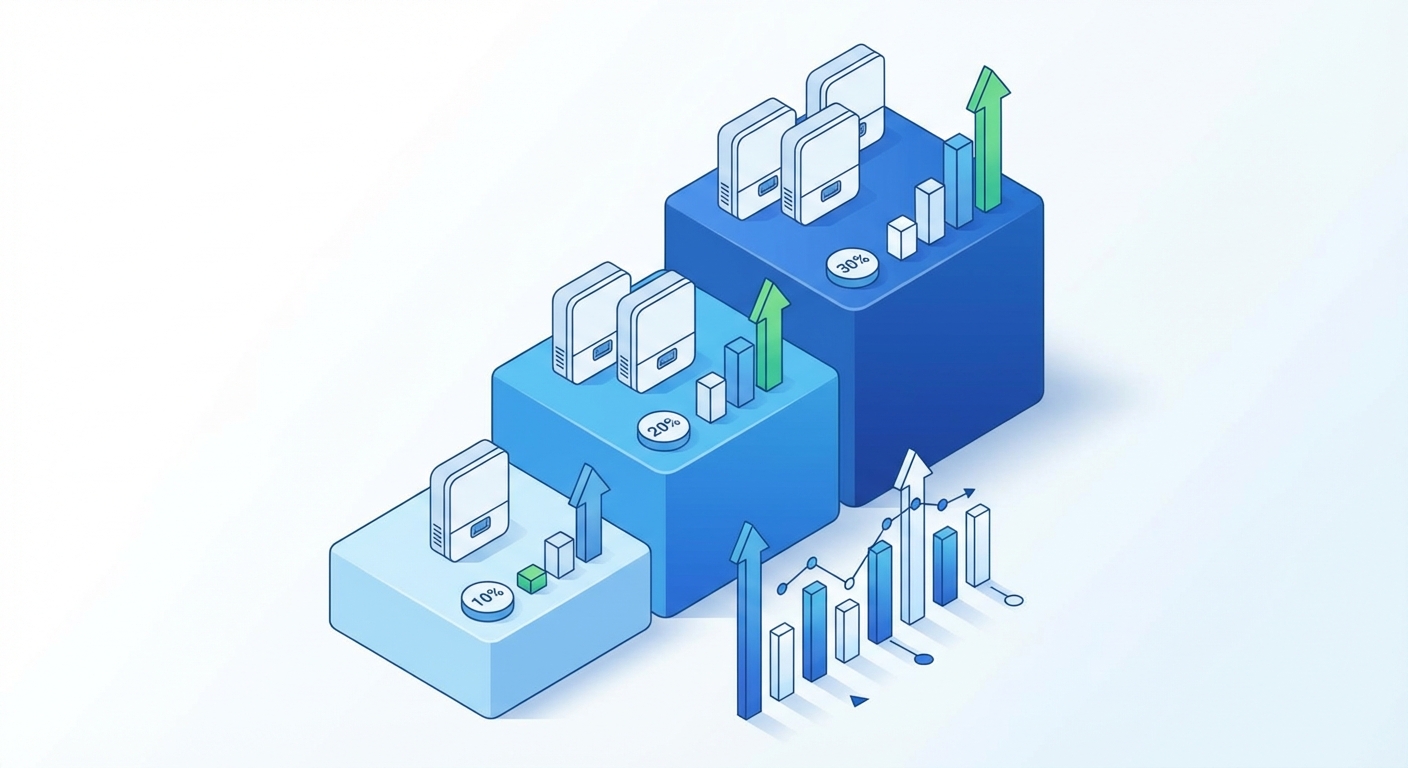
Effective tiered discount frameworks typically use three to five volume levels. A practical structure for distributors might look like this: orders of 1-10 units receive standard pricing, 11-25 units receive 5% discount, 26-50 units receive 8% discount, 51-100 units receive 12% discount, and orders exceeding 100 units receive 15% discount plus negotiated terms. These percentages should be calculated from your markup, ensuring base margins remain protected.
Minimum order quantities (MOQs) for discount eligibility prevent margin erosion on small transactions. Set your first discount tier at a volume that represents meaningful business, typically the equivalent of 2-3 average residential projects or one small commercial installation. This ensures discounts reward substantial commitments rather than becoming expected on every transaction.
Annual commitment-based pricing models offer an alternative to per-order discounts. Under this approach, distributors or large EPCs commit to purchasing a specified annual volume in exchange for preferential pricing across all orders throughout the year. For example, a commitment to purchase 500 units annually might unlock a 12% discount on all purchases, regardless of individual order size. This model provides manufacturers with demand predictability while giving channel partners consistent pricing advantages.
Channel partner pricing versus direct customer pricing requires careful management to avoid channel conflict. Establish clear policies: distributors receive standard volume discounts plus an additional 5-8% channel margin, but they must maintain minimum stock levels and provide regional service coverage. Direct customers receive standard volume pricing without the channel margin. This structure protects distributor relationships while allowing direct sales for large projects.
When structuring discounts, always calculate the impact on absolute margin, not just percentage. A 15% discount on a ₹10,000 inverter costs you ₹1,500 in revenue. If your base margin is 30% (₹3,000), that discount consumes half your margin. Ensure volume increases compensate for margin compression, a 15% discount should drive at least 50% more volume to maintain total margin dollars.
4. Value-Based Inverter Pricing: Justifying Premium Products
Value-based pricing shifts the conversation from cost to worth. Instead of competing primarily on price, this approach emphasizes the measurable financial benefits customers receive from premium inverters, benefits that far exceed the price differential over the system’s operational life.
Calculating Total Cost of Ownership (TCO)
Total cost of ownership analysis provides the foundation for value-based inverter pricing discussions. Consider a residential installation comparing a ₹45,000 budget inverter with a 5-year warranty against a ₹60,000 premium inverter with a 12-year warranty and 98% efficiency. The upfront difference is ₹15,000, but the TCO calculation tells a different story.
Over a 12-year period, the budget inverter will likely require replacement once (₹45,000) plus installation costs (₹5,000), totaling ₹95,000. The premium inverter costs ₹60,000 with no replacement needed. The efficiency difference, 96% versus 98%—translates to approximately 2% more energy production annually. On a 5 kW system generating ₹40,000 worth of electricity annually, that’s ₹800 per year or ₹9,600 over 12 years. The premium inverter delivers ₹44,600 in total savings (₹35,000 replacement cost avoided plus ₹9,600 in additional energy production).
Maintenance and monitoring cost savings add another dimension to TCO calculations. Inverters with AI-powered monitoring systems and remote diagnostics reduce service call requirements by 40-60% compared to basic models requiring on-site troubleshooting. For EPCs, this translates to significant labor cost savings. For end customers, it means less downtime and more consistent energy production. Quantify these savings in your pricing presentations, they’re real money that justifies premium pricing.
Warranty replacement value quantification should be explicit in your value proposition. A 12-year full replacement warranty has calculable worth: the probability of inverter failure over 12 years multiplied by replacement cost. Industry data suggests 15-20% of budget inverters fail within 10 years, while premium models with rigorous quality testing show failure rates below 5%. This risk mitigation alone justifies significant price premiums for risk-averse commercial customers.
Communicating Premium Value to Customers
Translating features into financial benefits requires structured communication. Don’t simply list specifications, connect each feature to a specific cost saving or risk reduction. IP66 weather protection doesn’t just mean “weatherproof”—it means avoiding the ₹8,000-12,000 cost of premature replacement due to moisture damage in coastal or high-humidity regions. German-grade components don’t just sound premium, they deliver 30-40% longer operational life, deferring replacement costs by years.
Competitive differentiation messaging should focus on measurable outcomes rather than technical specifications. Instead of “98% efficiency,” communicate “generates ₹800 more electricity annually than 96% efficient competitors.” Instead of “1000+ quality tests,” explain “field failure rate below 2% versus industry average of 8-12%.” These outcome-focused messages resonate with customers making financial decisions.
Risk mitigation represents a powerful value proposition for commercial customers. Large C&I installations represent substantial capital investments—₹30-50 lakhs or more. Equipment failure can halt production, disrupt operations, and require emergency repairs at premium costs. Premium inverters with extended warranties, proven reliability, and comprehensive monitoring systems reduce these risks significantly. For risk-averse facility managers and CFOs, this peace of mind justifies premium pricing even when TCO calculations are close. Learn more about maximizing inverter lifespan and financial planning in our complete financial planning guide.
5. Competitive Bidding Strategies for EPC Projects
Competitive bidding environments test your pricing strategy’s resilience. The temptation to slash prices to win projects can be overwhelming, but sustainable EPC businesses require disciplined approaches that balance competitiveness with profitability.
Analyzing competitor pricing without racing to the bottom starts with understanding your true competitive position. Gather intelligence on competitor offerings: what inverter brands they use, warranty terms they provide, monitoring capabilities they include, and service levels they commit to. Often, competitors with lower pricing are cutting corners, shorter warranties, budget components, minimal post-installation support. Identify these gaps and emphasize them in your proposals.
Knowing when to compete on price versus value requires customer segmentation. Price-sensitive customers focused solely on lowest upfront cost are poor fits for premium inverter offerings. Target customers who understand lifecycle value: experienced facility managers, financially sophisticated business owners, and organizations with long-term facility planning horizons. These customers appreciate value-based proposals and will pay premiums for demonstrable benefits.
Strategic loss-leader approaches can make sense for market entry or strategic account development, but use them sparingly and deliberately. If you’re entering a new geographic market or targeting a prestigious customer that could generate referrals, accepting a project at reduced margins may be justified. However, set clear criteria: the project must offer strategic value beyond immediate profit, you must have capacity to absorb the margin reduction, and you need a plan to return to standard pricing on future projects.
Bundling strategies create differentiation that’s difficult for competitors to match on price alone. Instead of quoting just inverters, bundle comprehensive packages: inverter plus extended warranty plus AI-powered monitoring plus annual maintenance contract plus priority service response. This integrated offering delivers clear value while making direct price comparisons more difficult. Customers comparing your ₹65,000 bundled package against a competitor’s ₹50,000 inverter-only quote must evaluate the worth of included services, a conversation that favors value over price.
Negotiation tactics that preserve margins include anchoring high, offering structured concessions, and trading value for price. Start proposals at standard pricing with full value articulation. If customers request discounts, offer tiered options: a 5% discount for payment within 15 days, 8% discount for a two-year service contract commitment, or 10% discount for a multi-site rollout commitment. This approach maintains margins while giving customers perceived wins through conditional discounts.
6. Pricing Models for On-Grid vs Hybrid Inverter Projects
On-grid and hybrid inverters serve different customer needs and command distinct pricing strategies. Understanding these differences enables more effective market segmentation and pricing optimization.

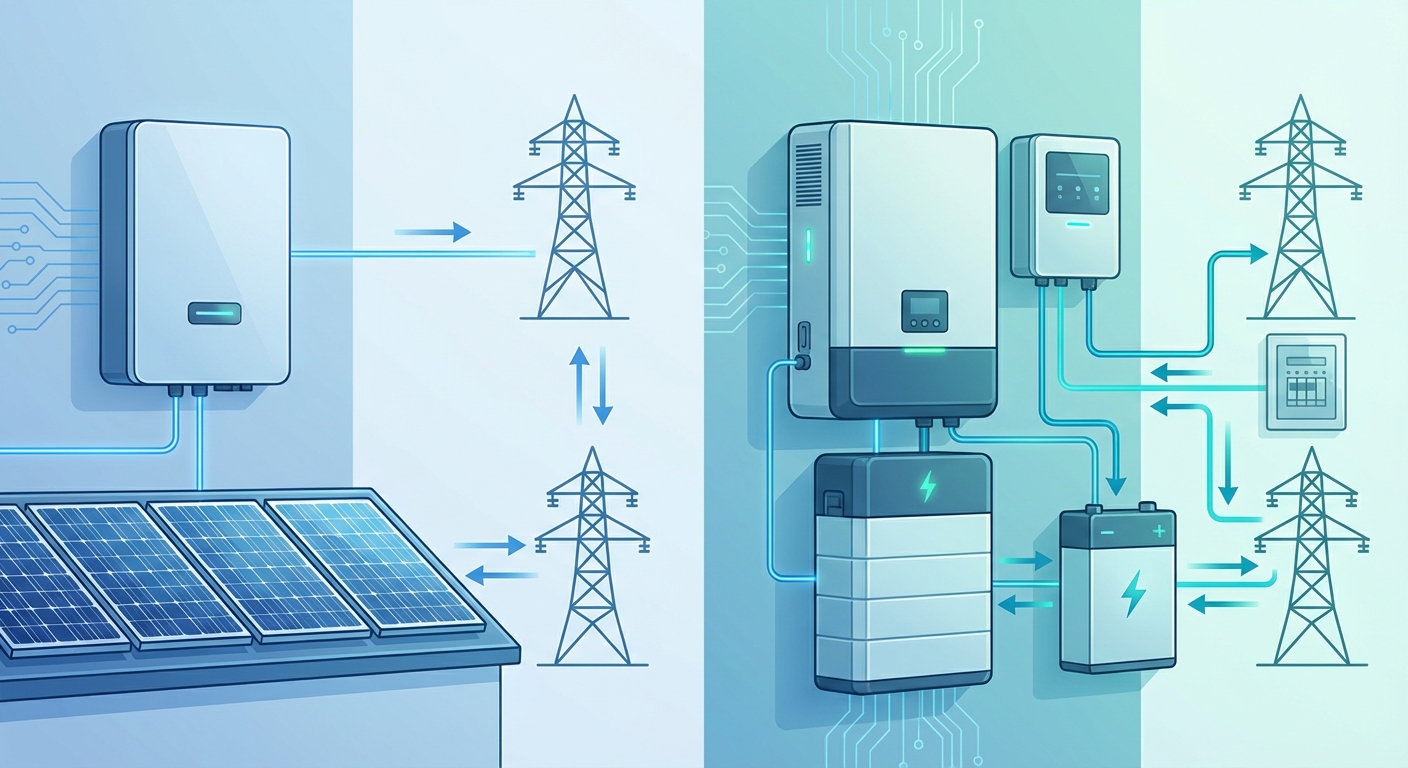
Price differentiation between on-grid and hybrid systems typically ranges from 30-50%, with hybrid inverters commanding premium pricing due to additional functionality. A 5 kW on-grid inverter might retail for ₹50,000-60,000, while a comparable hybrid model ranges from ₹75,000-90,000. This differential reflects the additional components required for battery management, more sophisticated power electronics, and enhanced control systems.
Battery integration cost considerations complicate hybrid inverter pricing. While the inverter itself costs more, customers also face substantial battery expenses, often 2-3 times the inverter cost. This creates pricing psychology challenges: customers experiencing sticker shock at total system costs may pressure you to reduce inverter pricing to fit budgets. Resist this pressure by emphasizing the inverter’s role in maximizing battery life and system performance. A premium hybrid inverter with sophisticated battery management can extend battery life by 20-30%, saving thousands in replacement costs.
Future-proofing value represents a powerful pricing argument for hybrid inverters. Many customers initially install on-grid systems but later wish to add battery backup as electricity costs rise or grid reliability concerns increase. Retrofitting battery capability often requires complete inverter replacement. Hybrid inverters eliminate this risk, providing battery-ready capability even if customers don’t immediately install batteries. This optionality has calculable value, the cost of future inverter replacement avoided, that justifies premium pricing even for customers not initially purchasing batteries.
Market positioning for different inverter types should target distinct customer segments. On-grid inverters appeal to cost-conscious customers in areas with reliable grid power, primarily focused on reducing electricity bills through solar generation. Hybrid inverters target customers valuing energy independence, those in areas with unreliable grid power, and forward-thinking buyers planning for future battery integration. Tailor your pricing and messaging to these different value propositions.
Customer segment targeting based on inverter type enables pricing optimization. Residential customers in urban areas with stable grids are prime on-grid candidates, emphasize competitive pricing and quick ROI. Commercial customers in industrial areas with power quality issues or frequent outages are ideal hybrid prospects, emphasize reliability, business continuity, and total cost of ownership. This segmentation allows premium pricing for hybrid solutions where value is highest while maintaining competitive on-grid pricing for price-sensitive segments.
7. Dynamic Pricing Strategies for Market Conditions
Static pricing in a dynamic market leaves money on the table or costs you competitive opportunities. Effective inverter pricing strategies incorporate flexibility to respond to changing market conditions while maintaining strategic consistency.
Seasonal pricing adjustments in the solar industry reflect demand patterns and project cycles. In India, solar installations typically peak during October through March when weather conditions favor construction and customers rush to complete projects before fiscal year-end. During these peak periods, maintain standard pricing, demand supports full margins. During slower summer months (April through August), consider modest promotional pricing (5-8% discounts) to maintain sales velocity and cash flow. Clearly communicate these as limited-time offers to avoid permanently resetting customer price expectations.
Responding to component cost fluctuations requires agile pricing management. Global semiconductor shortages, currency fluctuations affecting imported components, and commodity price changes all impact inverter costs. Establish pricing review cycles, quarterly at minimum, to assess cost trends and adjust pricing accordingly. When costs increase, communicate transparently with customers about market conditions driving changes. When costs decrease, consider maintaining pricing to improve margins rather than automatically passing savings through to customers.
Promotional pricing without devaluing your brand demands careful execution. Avoid blanket discounts that train customers to wait for sales. Instead, use targeted promotions: discounts for first-time customers to drive trial, loyalty discounts for repeat buyers, or bundle promotions that maintain per-unit pricing while offering package value. Always set clear end dates and eligibility criteria to preserve promotional urgency and prevent permanent price erosion.
Early payment discount structures provide a win-win pricing tool. Offering 2-3% discounts for payment within 15 days or 5% for advance payment improves cash flow while giving customers tangible savings. These discounts cost less than typical financing charges, making them profitable even as they reduce headline pricing. Structure them as optional benefits rather than standard terms to maintain pricing integrity.
Project milestone-based payment and pricing arrangements suit large C&I installations. Instead of requiring full payment on delivery, structure payments around project milestones: 30% on order confirmation, 40% on delivery, 30% on successful commissioning. This approach reduces customer cash flow pressure, making your pricing more competitive, while providing you with progress payments that fund project execution. Consider modest pricing premiums (3-5%) for milestone payment terms to compensate for extended payment cycles.
8. Technology and Monitoring Features in Inverter Pricing
Advanced technology features represent significant value differentiators that justify premium inverter pricing, but only when properly positioned and quantified for customers.
Pricing premiums for AI-powered monitoring systems typically add 8-12% to base inverter costs but deliver multiples of that value through operational benefits. AI-powered monitoring enables predictive maintenance, identifying potential issues before they cause failures. This capability reduces unplanned downtime by 60-70% and extends equipment life by optimizing operating parameters. For commercial installations where downtime costs ₹5,000-10,000 per day in lost production, this monitoring capability pays for itself within months.
WhatsApp monitoring value proposition resonates particularly well in the Indian market where WhatsApp penetration exceeds 400 million users. Unlike proprietary apps requiring downloads and account setup, WhatsApp monitoring delivers system alerts, performance data, and troubleshooting guidance through a platform customers already use daily. This accessibility dramatically improves system oversight and reduces the time between issue detection and resolution. For EPCs, it means fewer emergency service calls and more proactive maintenance scheduling, quantifiable cost savings that justify premium pricing.
Smart connectivity features including Wi-Fi, 4G, and Bluetooth enable comprehensive remote system management. These capabilities reduce site visit requirements by 40-50%, saving EPCs substantial labor and travel costs. For a typical EPC managing 100+ installations, this translates to 50-75 fewer site visits annually, savings of ₹2-3 lakhs in labor costs alone. When selling to EPCs and distributors, emphasize these operational cost reductions as direct margin improvements that offset premium inverter pricing.
Advanced features reduce operational costs for EPCs through multiple mechanisms: remote diagnostics eliminate unnecessary site visits, automated performance monitoring identifies optimization opportunities, predictive maintenance prevents costly emergency repairs, and comprehensive data logging simplifies warranty claims and customer reporting. Calculate these savings explicitly in your proposals, they represent real money that flows directly to EPC bottom lines. To understand how monitoring systems deliver these benefits, explore our detailed guide on solar inverter monitoring systems in India.
Demonstrating ROI of monitoring technology to customers requires concrete examples. Present case studies showing reduced downtime, faster issue resolution, and extended equipment life. Provide calculators that estimate savings based on installation size and customer type. Offer trial periods where customers can experience monitoring benefits firsthand before committing to premium pricing. These proof points transform monitoring from a nice-to-have feature into a must-have capability that justifies premium inverter pricing.
Implementing Your Inverter Pricing Strategy: Action Plan for EPCs
Developing a comprehensive pricing strategy is only valuable if you implement it effectively across your organization. This requires systematic processes, team training, and ongoing optimization.
Step-by-step pricing strategy development begins with data gathering. Compile your complete cost structure including product costs, operational expenses, service and support costs, and desired margin targets. Analyze your competitive landscape: who are your primary competitors, what pricing levels do they maintain, and what value propositions do they emphasize? Segment your customer base by project type, size, and value sensitivity. With this foundation, develop pricing matrices that specify standard pricing, discount eligibility, and approval requirements for each customer segment and project type.
Tools and calculators for pricing decisions streamline proposal development and ensure consistency. Create spreadsheet-based pricing calculators that incorporate your cost structure, standard markups, volume discount tiers, and competitive positioning. These tools should allow sales teams to quickly generate accurate quotes while maintaining margin discipline. Include TCO calculators that demonstrate long-term value for premium products, helping sales teams justify pricing during customer negotiations.
Regular pricing review and adjustment processes prevent your strategy from becoming outdated. Schedule quarterly pricing reviews examining: cost trends from suppliers, competitive pricing intelligence, win/loss analysis of recent bids, margin performance by product line and customer segment, and market condition changes. Use these reviews to make data-driven pricing adjustments that maintain competitiveness while protecting profitability.
Training sales teams on value-based selling is critical for premium pricing success. Technical salespeople often default to feature-based selling, listing specifications without connecting them to customer value. Invest in training that teaches: how to calculate and present TCO analysis, techniques for quantifying operational cost savings, methods for identifying customer pain points that premium features address, and negotiation tactics that preserve margins while giving customers perceived wins. Role-play common pricing objections and practice value-based responses.
Measuring pricing strategy effectiveness requires tracking key metrics: average selling price by product category, margin percentage and absolute margin by project type, discount frequency and average discount percentage, win rate on competitive bids, and customer acquisition cost. Monitor these metrics monthly and investigate significant variances. High win rates with low margins suggest pricing is too aggressive. Low win rates with high margins indicate pricing is too high or value communication is ineffective. Use these insights to continuously refine your approach.
The solar inverter market in India continues to evolve rapidly, with new technologies, changing customer expectations, and intensifying competition. EPCs and distributors who develop sophisticated, value-based pricing strategies will thrive in this environment, winning profitable projects while building sustainable businesses. Those who compete solely on price will find themselves in a race to the bottom that benefits no one except the most price-sensitive customers.
Your inverter pricing strategy should reflect the true value you deliver: not just hardware, but comprehensive solutions that include quality products, expert support, advanced monitoring capabilities, and long-term partnership. When you price based on this complete value proposition and communicate it effectively to customers, you create differentiation that transcends simple cost comparisons.
As you implement these pricing strategies, remember that the goal isn’t maximizing price on every transaction, it’s optimizing the balance between competitiveness and profitability across your entire business. Some projects will command premium pricing because customers value quality and service. Others will require competitive pricing to win strategic accounts or enter new markets. The key is making these decisions deliberately, based on clear criteria and strategic objectives, rather than reactively responding to every competitive pressure.
For EPCs and distributors ready to elevate their inverter pricing strategies and partner with a manufacturer that supports value-based selling through premium products and comprehensive support, Qbits Energy offers the complete package. With 12-year full replacement warranties, AI-powered WhatsApp monitoring, German-grade components, and 98% efficiency, Qbits inverters provide the quality foundation that justifies premium positioning. Our digital warranty system, comprehensive technical support, and channel partner programs are designed to help you win profitable projects while delivering exceptional value to your customers. Explore our complete product range to see how Qbits inverters can strengthen your competitive position, or contact our team to discuss pricing strategies and partnership opportunities that drive sustainable growth for your solar business.
The future of solar in India is bright, and EPCs who master strategic inverter pricing will capture the greatest share of this expanding opportunity. Start implementing these strategies today, measure your results, and continuously refine your approach. Your pricing strategy isn’t just about numbers on a quote, it’s about positioning your business for long-term success in one of the world’s fastest-growing solar markets.
This blog post was written using thestacc.com