



Hybrid Solar Inverters in India: Complete Buyer’s Guide for 2026

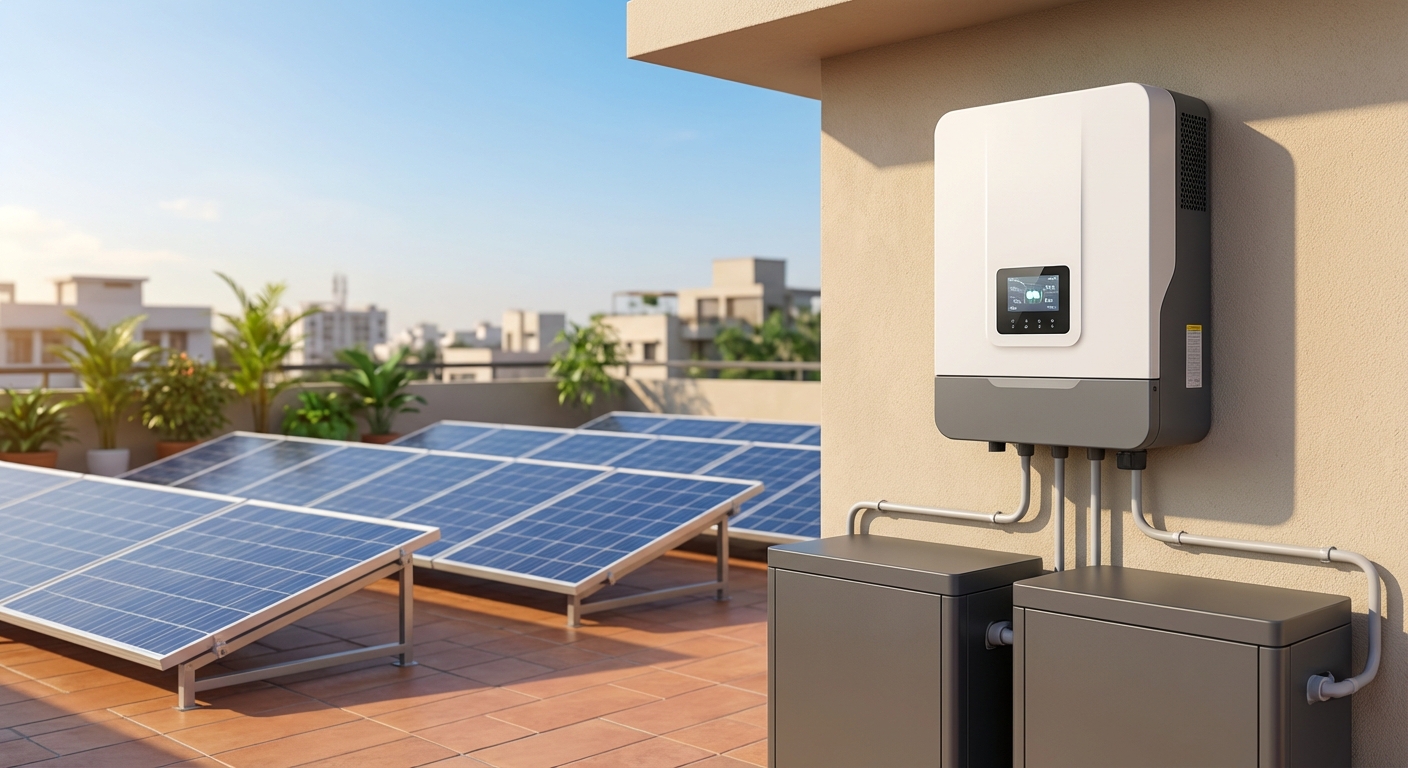
As India accelerates toward its ambitious renewable energy targets, solar installations across residential, commercial, and industrial sectors are experiencing unprecedented growth. At the heart of this transformation lies a critical decision that solar installers, EPCs, and facility owners must make: choosing the right inverter technology. While on-grid inverters have dominated the market for years, hybrid inverters in India are rapidly emerging as the intelligent choice for installations that demand reliability, flexibility, and future-proof performance.
Hybrid solar inverters represent the evolution of solar technology, combining the grid-tied functionality of traditional on-grid inverters with the energy independence of battery storage systems. For India’s unique power infrastructure—characterized by grid instability, frequent outages, and voltage fluctuations—hybrid inverters offer a compelling solution that addresses both immediate operational needs and long-term energy security.
This comprehensive buyer’s guide explores everything solar professionals and facility owners need to know about selecting, sizing, and implementing hybrid inverter systems specifically for Indian installations. From understanding core functionality to navigating technical specifications, warranty considerations, and ROI calculations, we’ll equip you with the knowledge to make informed decisions that deliver lasting value for your solar projects.
Understanding Hybrid Solar Inverters: The Foundation of Modern Solar Systems
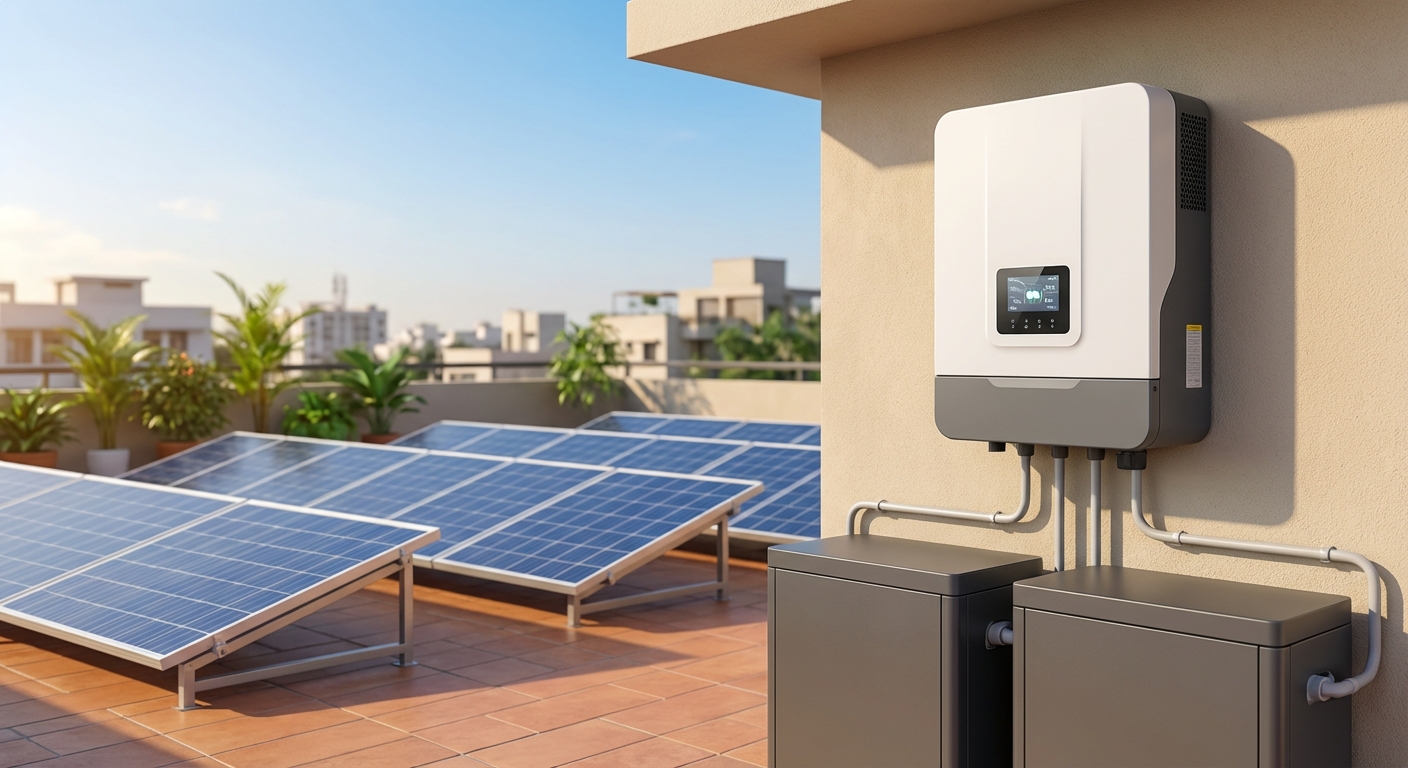
A hybrid solar inverter is an advanced power conversion device that manages energy flow between solar panels, batteries, the electrical grid, and connected loads. Unlike conventional on-grid inverters that can only convert DC solar power to AC for immediate consumption or grid export, hybrid inverters incorporate sophisticated battery management capabilities that enable energy storage and intelligent power routing.
The core functionality of hybrid inverters revolves around three primary operational modes:
- Solar-to-Load Mode: During daylight hours, the inverter converts solar DC power to AC electricity, prioritizing direct consumption by connected loads for maximum efficiency
- Solar-to-Battery Mode: Excess solar generation beyond immediate consumption is directed to charge battery storage, maximizing self-consumption and energy independence
- Battery-to-Load Mode: During grid outages or evening hours, stored battery energy powers critical loads, ensuring uninterrupted operation
- Grid-Interactive Mode: The system seamlessly synchronizes with the utility grid, enabling net metering, grid support, and backup power transitions
What distinguishes hybrid inverters from traditional on-grid and off-grid systems is their intelligent energy management. While on-grid inverters shut down during power outages (due to anti-islanding safety requirements), and off-grid inverters operate independently without grid connectivity, hybrid inverters offer the best of both worlds—grid connectivity when available and autonomous operation during outages.
For India’s solar market, this flexibility is transformative. Solar installers can design systems that provide immediate value through grid-tied solar generation while offering the option to add battery storage immediately or in future phases. This modular approach reduces initial investment barriers while future-proofing installations against evolving energy needs and grid conditions.
The working principle centers on advanced power electronics and intelligent control algorithms. Modern hybrid inverters employ multiple Maximum Power Point Tracking (MPPT) channels to optimize solar harvest, sophisticated battery charging algorithms to extend battery lifespan, and real-time monitoring systems that provide unprecedented visibility into system performance. Leading manufacturers like Qbits Energy integrate AI-powered monitoring that delivers insights via WhatsApp, making system management accessible even for installations in remote locations.
Why Hybrid Inverters Are Ideal for India’s Power Grid Conditions
India’s electrical grid infrastructure presents unique challenges that make hybrid inverters particularly valuable for solar installations. Understanding these conditions is essential for solar EPCs and facility owners evaluating inverter technologies.
Grid Instability and Voltage Fluctuations: Many regions across India experience significant voltage variations, with fluctuations ranging from -15% to +10% of nominal voltage. These variations can damage sensitive equipment and reduce the lifespan of conventional inverters. Hybrid inverters with robust input voltage ranges and advanced protection mechanisms can handle these fluctuations while maintaining stable output power. Quality hybrid inverters incorporate DC and AC surge protection devices (SPDs) that safeguard both the solar array and connected loads.
Frequent Power Outages: Despite improvements in grid reliability, power cuts remain common in tier 2 and tier 3 cities, as well as industrial areas during peak demand periods. For commercial and industrial facilities, even brief outages can result in production losses, data corruption, and equipment damage. Hybrid inverters with battery backup provide seamless transition to stored energy during grid failures, ensuring business continuity without the noise, emissions, and fuel costs associated with diesel generators.
Peak Demand Management: India’s time-of-day tariff structures impose higher electricity rates during peak consumption hours. Hybrid inverters enable intelligent load shifting—storing solar energy during the day and deploying it during expensive peak periods. This capability can significantly reduce electricity bills for commercial facilities, improving the overall ROI of solar investments.
Net Metering Compatibility: As net metering policies evolve across Indian states, hybrid inverters offer the flexibility to participate in grid export programs while maintaining backup power capability. This dual functionality ensures installations can adapt to changing regulatory frameworks without requiring equipment replacement.
Future-Proofing Against Grid Evolution: As India’s grid modernizes with smart grid technologies and dynamic pricing, hybrid inverters position installations to leverage these advancements. The intelligent energy management capabilities of hybrid systems align perfectly with the grid of the future, where bidirectional power flow and demand response will become standard.
Key Benefits of Hybrid Solar Inverters for Indian Installations
For solar installers, EPCs, and facility owners evaluating hybrid inverter technology, understanding the tangible benefits is crucial for project planning and client communication. Hybrid inverters deliver value across multiple dimensions:
Energy Independence and Backup Power: The most immediate benefit is uninterrupted power supply during grid outages. For commercial facilities, this translates to eliminated downtime costs. For residential installations, it means comfort and security during power cuts. Unlike diesel generators that require fuel, maintenance, and produce emissions, battery-backed hybrid systems provide clean, silent, automatic backup power.
Maximized Solar Energy Utilization: On-grid systems without storage can only use solar energy as it’s generated, with excess power exported to the grid (often at lower rates than retail electricity prices). Hybrid systems with battery storage capture excess solar generation for later use, dramatically increasing self-consumption rates from typical 30-40% with on-grid systems to 70-90% with properly sized hybrid systems. This maximized utilization accelerates payback periods and improves lifetime ROI.
Protection Against Rising Electricity Tariffs: India’s electricity tariffs have increased consistently over the past decade, with commercial and industrial rates rising 5-8% annually in many states. By storing solar energy and reducing grid dependency, hybrid systems provide a hedge against future tariff increases. The value of stored solar energy appreciates as grid electricity becomes more expensive, making hybrid systems increasingly valuable over their 25+ year operational life.
Reduced Diesel Generator Dependency: Many commercial and industrial facilities maintain diesel generators for backup power, incurring fuel costs, maintenance expenses, and dealing with noise and emissions. Hybrid solar systems with adequate battery capacity can eliminate or significantly reduce generator runtime, delivering immediate operational cost savings while supporting corporate sustainability goals.
Flexibility for Phased Investment: Quality hybrid inverters support battery addition at any time, allowing facility owners to start with a grid-tied system and add storage as budgets allow or as energy needs evolve. This flexibility reduces initial capital requirements while preserving the option to enhance system capabilities. For solar installers and distributors, this creates opportunities for ongoing customer engagement and additional revenue streams.
Enhanced System Monitoring and Control: Modern hybrid inverters incorporate advanced monitoring capabilities that provide real-time visibility into solar generation, battery status, grid conditions, and consumption patterns. Systems like Qbits Energy’s AI-powered WhatsApp monitoring deliver alerts and performance data directly to smartphones, enabling proactive maintenance and rapid troubleshooting. This level of insight is invaluable for EPCs managing multiple installations and facility managers optimizing energy consumption.
Hybrid Inverter Sizing: Residential vs Commercial & Industrial Applications
Proper sizing is critical for hybrid inverter performance, reliability, and ROI. The sizing methodology differs significantly between residential and commercial/industrial applications, requiring careful analysis of load profiles, consumption patterns, and backup requirements.
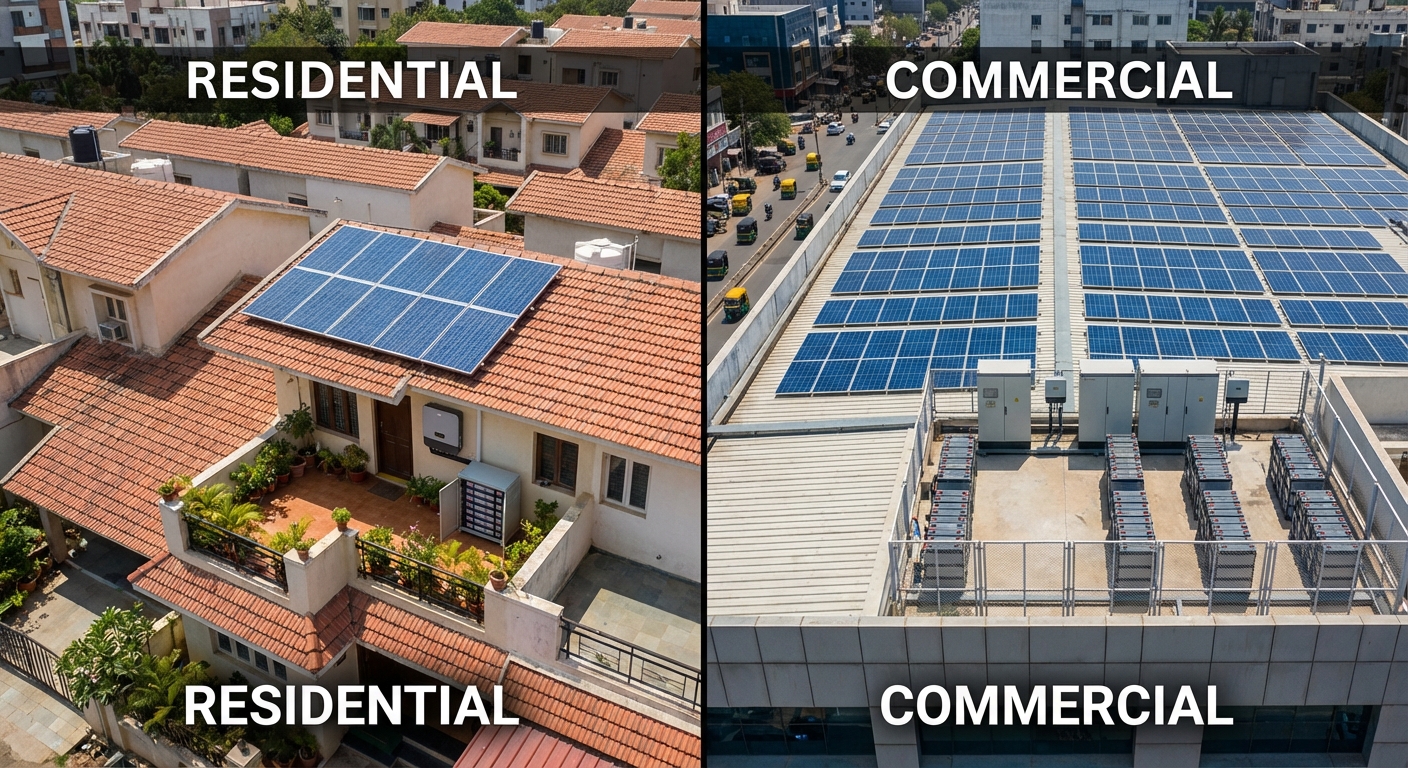
Residential Hybrid Inverter Sizing (1kW to 10kW)
For residential installations, hybrid inverter sizing begins with understanding household consumption patterns and backup power requirements. A typical Indian household consumes 200-500 kWh monthly, with peak loads ranging from 2-5 kW during evening hours when air conditioning, cooking appliances, and lighting operate simultaneously.
Load Analysis: Start by identifying critical loads that require backup power during outages—typically lighting, fans, refrigeration, internet connectivity, and select appliances. Non-critical loads like water heaters and washing machines can be excluded from backup calculations. For a typical 3-4 bedroom home, critical loads usually total 2-3 kW.
Inverter Capacity Selection: Choose an inverter rated at least 20-25% above peak critical load to accommodate surge currents when motors and compressors start. For a 3 kW critical load, a 3.5-4 kW hybrid inverter provides appropriate headroom. Modern hybrid inverters from manufacturers like Qbits Energy support up to 100% DC oversizing, allowing connection of larger solar arrays (e.g., 6-8 kW of panels on a 4 kW inverter) to maximize energy harvest during morning and evening hours when sun angles are less optimal.
Battery Capacity Calculation: Battery sizing depends on desired backup duration and depth of discharge (DoD) limitations. For 4-6 hours of backup at 3 kW load, you need approximately 12-18 kWh of usable battery capacity. With lithium-ion batteries offering 80-90% DoD, this translates to 15-20 kWh of total battery capacity. Lead-acid batteries with 50% DoD would require 24-36 kWh total capacity.
Solar Array Sizing: Size the solar array to meet daily consumption plus battery charging requirements. A household consuming 15 kWh daily with 5 kWh battery charging needs would require approximately 5-6 kW of solar panels, accounting for system losses and India’s average 4-5 peak sun hours.
Commercial & Industrial Hybrid Inverter Sizing (10kW to 100kW+)
C&I installations require more sophisticated analysis due to complex load profiles, three-phase power requirements, and larger scale considerations.
Detailed Load Profiling: Conduct comprehensive load analysis using electricity bills and demand data to understand consumption patterns across different times of day and seasons. Identify base loads, peak demands, and critical equipment that requires uninterrupted power. Many C&I facilities have loads ranging from 50-500 kW with significant variation between day and night operations.
Three-Phase System Design: Most C&I installations require three-phase hybrid inverters or multiple single-phase units configured for three-phase output. Ensure balanced loading across phases and select inverters with appropriate phase balancing capabilities. For large installations, multiple inverters provide redundancy and improved system reliability.
Battery Capacity for C&I: C&I battery sizing must balance backup duration requirements with capital costs. Rather than sizing for full facility backup, many installations focus on critical loads (servers, security systems, essential production equipment) or peak shaving applications. A 100 kW facility might install 50-100 kWh of battery capacity for 1-2 hours of critical load backup or peak demand reduction.
Scalability and Future Expansion: Design C&I systems with expansion capability. Modular inverter architectures allow capacity additions as facility energy needs grow. Select hybrid inverters that support parallel operation and can integrate with existing systems. This approach minimizes disruption and protects initial investments.
Panel Compatibility: Modern high-wattage solar panels (550W to 750W) offer improved efficiency and reduced installation costs. Ensure selected hybrid inverters support these panel specifications with appropriate voltage ranges and MPPT capabilities. Qbits Energy’s hybrid inverters support up to 750W panels, enabling installations to leverage the latest solar technology for maximum energy harvest.
Critical Features to Look for in Hybrid Inverters for India
Selecting the right hybrid inverter requires evaluating multiple technical specifications and features. For India’s challenging environmental conditions and grid characteristics, certain features are non-negotiable for reliable long-term performance.
Weather Protection and Durability Standards
IP66 Rating: India’s rooftop installations face extreme weather—monsoon rains, dust storms, high humidity, and intense heat. An IP66 rating ensures complete protection against dust ingress and powerful water jets from any direction. This level of protection is essential for inverters installed in exposed rooftop locations. Qbits Energy’s hybrid inverters feature IP66 weather protection, ensuring reliable operation even in harsh coastal and industrial environments.
Temperature Tolerance: Indian summers regularly see ambient temperatures exceeding 45°C, with rooftop surface temperatures reaching 60-70°C. Quality hybrid inverters must operate reliably across wide temperature ranges (-25°C to +60°C) with appropriate derating curves. Look for inverters with intelligent thermal management and adequate ventilation design.
Corrosion Resistance: Coastal installations and industrial areas with high pollution require inverters with corrosion-resistant enclosures and conformal coating on electronic components. This protection extends equipment lifespan and reduces maintenance requirements in challenging environments.
Efficiency and Performance Specifications
Conversion Efficiency: High efficiency directly impacts energy yield and system ROI. Look for hybrid inverters with peak efficiency of 97-98% and weighted efficiency (European or CEC efficiency) above 96%. Every percentage point of efficiency translates to significant energy gains over the system’s 25-year lifespan. Qbits Energy’s hybrid inverters achieve 98% efficiency, maximizing energy harvest and accelerating payback periods.
Low Start-Up Voltage: India’s morning and evening sun conditions require inverters that begin operation at low solar voltages to maximize daily energy production. Look for start-up voltages below 150V for residential systems, enabling earlier morning start and later evening operation.
MPPT Efficiency: Maximum Power Point Tracking efficiency above 99.5% ensures optimal solar harvest across varying irradiance and temperature conditions. Multiple MPPT channels allow independent optimization of different panel strings, valuable for installations with multiple roof orientations or partial shading.
Battery Charging Efficiency: Efficient battery charging minimizes energy losses during storage cycles. Look for charging efficiency above 95% and intelligent charging algorithms that optimize battery lifespan through appropriate voltage and current profiles.
Protection and Safety Features
Surge Protection Devices (SPDs): India’s grid conditions and lightning activity require robust surge protection. Quality hybrid inverters incorporate both DC-side and AC-side SPDs rated for appropriate surge currents (typically 20-40 kA). These protection devices safeguard expensive solar panels, batteries, and connected loads from voltage spikes and lightning-induced surges.
Anti-Islanding Protection: When grid power fails, inverters must disconnect from the grid within milliseconds to protect utility workers. Verify that hybrid inverters meet BIS/IEC anti-islanding standards while maintaining seamless transition to battery backup mode for connected loads.
Comprehensive Protection Suite: Essential protections include over-voltage and under-voltage protection, over-current and short-circuit protection, over-temperature protection, ground fault detection, and reverse polarity protection. These features prevent equipment damage and ensure safe operation across all conditions.
BIS/IEC Certification: Ensure hybrid inverters carry appropriate Bureau of Indian Standards (BIS) certification and comply with IEC 62109 safety standards. These certifications verify that equipment meets Indian regulatory requirements and international safety benchmarks.
Smart Monitoring and Connectivity
Modern hybrid inverters are intelligent devices that provide unprecedented visibility into system performance and enable proactive maintenance.
AI-Powered Monitoring: Advanced monitoring systems use artificial intelligence to analyze performance data, detect anomalies, and predict maintenance needs. Qbits Energy’s AI-powered WhatsApp monitoring system delivers real-time alerts, performance reports, and troubleshooting guidance directly to smartphones—a game-changing feature for installers managing multiple sites and facility owners monitoring system performance.
Multiple Connectivity Options: Look for hybrid inverters offering Wi-Fi, 4G cellular, and Bluetooth connectivity. This redundancy ensures reliable data transmission even in locations with limited internet connectivity. Cloud-based monitoring platforms enable remote access from anywhere, while local connectivity allows on-site commissioning and troubleshooting.
Comprehensive Data Logging: Quality monitoring systems track solar generation, battery charge/discharge cycles, grid import/export, consumption patterns, and system efficiency. Historical data enables performance analysis, warranty claims, and system optimization. Ensure data is stored on India-based servers for data security and regulatory compliance.
Remote Troubleshooting: Advanced monitoring enables remote diagnosis of system issues, reducing site visit requirements and accelerating problem resolution. For EPCs managing distributed installations, this capability significantly reduces operational costs and improves customer satisfaction.
Battery Integration: Types, Compatibility, and Best Practices
The battery subsystem is critical to hybrid inverter performance, requiring careful selection and integration for optimal results.
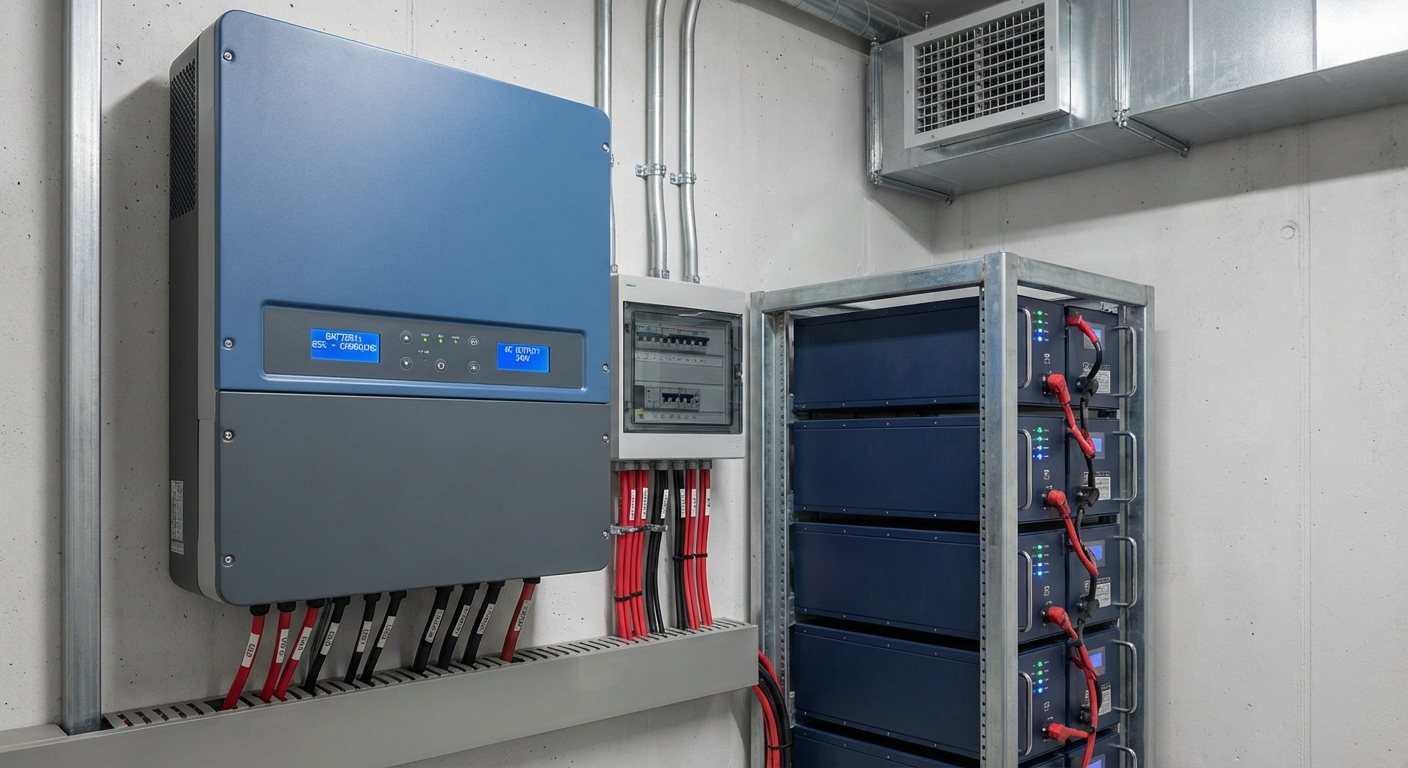
Battery Technology Selection
Lithium-Ion Batteries: Lithium iron phosphate (LiFePO4) batteries are increasingly popular for hybrid systems due to superior performance characteristics. They offer 80-90% usable depth of discharge, 4,000-6,000 cycle lifespans, compact size, and minimal maintenance. While initial costs are higher than lead-acid, the longer lifespan and better performance deliver superior lifetime value. Lithium batteries are ideal for daily cycling applications and space-constrained installations.
Lead-Acid Batteries: Tubular lead-acid batteries remain common in India due to lower upfront costs and established supply chains. However, they’re limited to 50% depth of discharge, offer 1,500-2,000 cycles, require regular maintenance, and occupy more space. Lead-acid batteries are suitable for backup-focused applications with infrequent cycling but less optimal for daily energy storage and peak shaving.
Battery Sizing and Configuration
Voltage Matching: Ensure battery bank voltage matches inverter specifications. Common configurations include 48V for residential systems and 96V, 192V, or higher for commercial installations. Mismatched voltages reduce efficiency and can damage equipment.
Capacity Calculations: Size battery capacity based on backup duration requirements, daily cycling needs, and depth of discharge limitations. Account for temperature derating—battery capacity decreases in high temperatures common in India. Include 20-30% capacity margin to accommodate degradation over the battery’s lifespan.
Charging Algorithms: Quality hybrid inverters employ sophisticated charging algorithms tailored to battery chemistry. Look for multi-stage charging (bulk, absorption, float) with temperature compensation. Proper charging extends battery lifespan and maintains performance. Verify that the hybrid inverter supports your chosen battery technology with appropriate charging profiles.
Battery Management and Safety
Battery Management System (BMS): Lithium batteries require integrated BMS for cell balancing, temperature monitoring, and protection against overcharge/over-discharge. Ensure the hybrid inverter communicates properly with the BMS for coordinated operation. Quality BMS integration prevents premature battery failure and safety issues.
Scalability and Modularity: Select battery systems that support capacity expansion. Modular battery architectures allow adding capacity as needs grow without replacing existing equipment. This flexibility is valuable for installations where energy requirements may increase or where phased investment is preferred.
Safety Considerations: Battery installations require proper ventilation (especially for lead-acid), appropriate enclosures, fire suppression considerations, and compliance with electrical codes. Lithium batteries should include thermal runaway protection and be installed away from high-temperature areas. Follow manufacturer guidelines for battery placement and ensure adequate clearances for maintenance access.
Warranty and After-Sales Support: What Indian Buyers Should Expect
Warranty terms and manufacturer support are critical factors in hybrid inverter selection, directly impacting total cost of ownership and long-term reliability.
Industry Standard vs Premium Warranties: Standard hybrid inverter warranties in India range from 5-7 years, with some manufacturers offering extended warranties at additional cost. However, leading manufacturers like Qbits Energy provide 12-year full replacement warranties as standard—nearly double the industry norm. This extended coverage reflects confidence in product quality and provides significant value protection for solar investments.
Full Replacement vs Repair Warranties: Understand warranty terms carefully. Full replacement warranties provide new equipment if failures occur, while repair warranties may involve refurbished components or lengthy repair processes. Full replacement warranties minimize downtime and ensure consistent system performance throughout the warranty period.
Digital Warranty Systems: Modern warranty management should be seamless and transparent. Look for manufacturers offering digital warranty registration, online claim processes, and clear documentation. Qbits Energy’s digital warranty system streamlines registration and claims, reducing administrative burden for installers and providing peace of mind for facility owners.
Manufacturer Support Networks: Evaluate the manufacturer’s service infrastructure across India. Strong support networks with regional service centers, trained technicians, and spare parts availability ensure rapid response when issues arise. For EPCs working across multiple states, nationwide support coverage is essential.
Quality Testing Standards: Premium manufacturers implement rigorous quality control processes. Qbits Energy subjects every hybrid inverter to 1,000+ automated quality tests before shipment, ensuring that equipment meets stringent performance and reliability standards. This comprehensive testing reduces field failures and warranty claims, benefiting both installers and end users.
Component Quality: The quality of internal components directly impacts inverter lifespan and reliability. German-grade electronic components used by manufacturers like Qbits Energy offer superior performance and longevity compared to standard components, justifying premium positioning and extended warranties. When evaluating hybrid inverters, inquire about component sourcing and quality standards.
On-Grid vs Hybrid: Making the Right Choice for Your Project
Choosing between on-grid and hybrid inverter technology requires careful analysis of project requirements, site conditions, and client priorities.
When On-Grid Inverters Are Appropriate
On-grid inverters remain the optimal choice for installations where:
- Grid reliability is excellent: Locations with stable power supply and minimal outages don’t require backup capability
- Budget constraints are primary: On-grid systems have lower initial costs due to eliminated battery expenses
- Net metering is favorable: Regions with 1:1 net metering and no time-of-day tariffs maximize on-grid system value
- Backup power exists: Facilities with existing diesel generators or UPS systems may not need battery backup
- Simplicity is preferred: On-grid systems have fewer components and simpler maintenance requirements
When Hybrid Inverters Deliver Superior Value
Hybrid inverters are the better investment when:
- Grid reliability is poor: Frequent outages make backup power essential for business continuity or comfort
- Time-of-day tariffs apply: Peak demand charges and variable electricity rates enable load shifting benefits
- Energy independence is valued: Clients prioritize self-sufficiency and reduced grid dependency
- Future battery addition is likely: Even without immediate battery installation, hybrid inverters preserve the option
- Critical loads exist: Facilities with sensitive equipment or essential operations require uninterrupted power
- Diesel generator replacement is desired: Hybrid systems eliminate fuel costs and emissions from backup generators
Cost-Benefit Analysis Framework
Conduct thorough financial analysis comparing on-grid and hybrid options:
Initial Investment: Hybrid systems cost 30-50% more than equivalent on-grid systems when including batteries. However, this premium decreases as battery costs decline and may be offset by eliminated generator expenses.
Operational Savings: Calculate savings from increased self-consumption, peak demand reduction, and eliminated diesel generator costs. For facilities with time-of-day tariffs, hybrid systems can reduce electricity costs by 40-60% compared to grid-only consumption.
Downtime Costs: For commercial facilities, quantify the cost of power outages—lost production, spoiled inventory, data loss, customer dissatisfaction. Even infrequent outages can justify hybrid system investment when downtime costs are high.
Payback Period: On-grid systems typically achieve 3-5 year payback periods in India. Hybrid systems with batteries extend payback to 5-8 years, but this improves significantly when factoring in backup value and diesel generator elimination.
Lifetime ROI: Over 25-year system lifespans, hybrid systems often deliver superior returns when grid electricity costs rise and battery replacement costs decline. The flexibility and resilience of hybrid systems provide value that pure financial analysis may underestimate.
Top Hybrid Inverter Manufacturers in India: What Sets Them Apart
India’s hybrid inverter market includes both international brands and domestic manufacturers, each with distinct positioning and value propositions.
The Competitive Landscape: Global players bring international experience and established reputations, while Indian manufacturers offer localized support, India-specific design considerations, and competitive pricing. For solar installers and EPCs, selecting the right manufacturer partner impacts project success, customer satisfaction, and long-term profitability.
Qbits Energy’s Differentiated Approach: As India’s next-generation solar inverter manufacturer, Qbits Energy combines several unique advantages that address the specific needs of Indian installations:
- AI-Powered WhatsApp Monitoring: Unlike conventional monitoring platforms requiring separate apps or web portals, Qbits delivers system insights, alerts, and performance data directly via WhatsApp—the communication platform already used by millions of Indians. This innovation makes advanced monitoring accessible and actionable for installers and facility owners alike.
- German-Grade Components: While many manufacturers use standard components, Qbits incorporates German-grade electronic components that deliver superior reliability and longevity, particularly important for India’s challenging environmental conditions.
- 12-Year Full Replacement Warranty: Qbits’ industry-leading warranty demonstrates confidence in product quality and provides exceptional value protection—nearly double the standard 5-7 year warranties offered by most competitors.
- Heaven Group Legacy: Backed by the established Heaven Group with proven manufacturing excellence, Qbits combines startup innovation with established business stability and resources.
- India-Focused Design: Rather than adapting international products, Qbits designs hybrid inverters specifically for Indian grid conditions, weather challenges, and user preferences, resulting in optimized performance and reliability.
- Comprehensive Testing: Every unit undergoes 1,000+ automated quality tests, ensuring consistent performance and minimizing field failures that create warranty claims and customer dissatisfaction.
Evaluation Criteria for Manufacturer Selection: When comparing hybrid inverter manufacturers, solar professionals should assess:
- Warranty terms and claim processes
- Service network coverage and response times
- Monitoring platform capabilities and accessibility
- Component quality and manufacturing standards
- India-specific certifications (BIS) and compliance
- Technical support quality and availability
- Product range and scalability options
- Channel partner programs and support
For distributors and channel partners evaluating manufacturer relationships, Qbits Energy offers comprehensive support including technical training, marketing resources, and partnership programs designed to support business growth in India’s expanding solar market.
Installation Best Practices for Hybrid Inverters in India
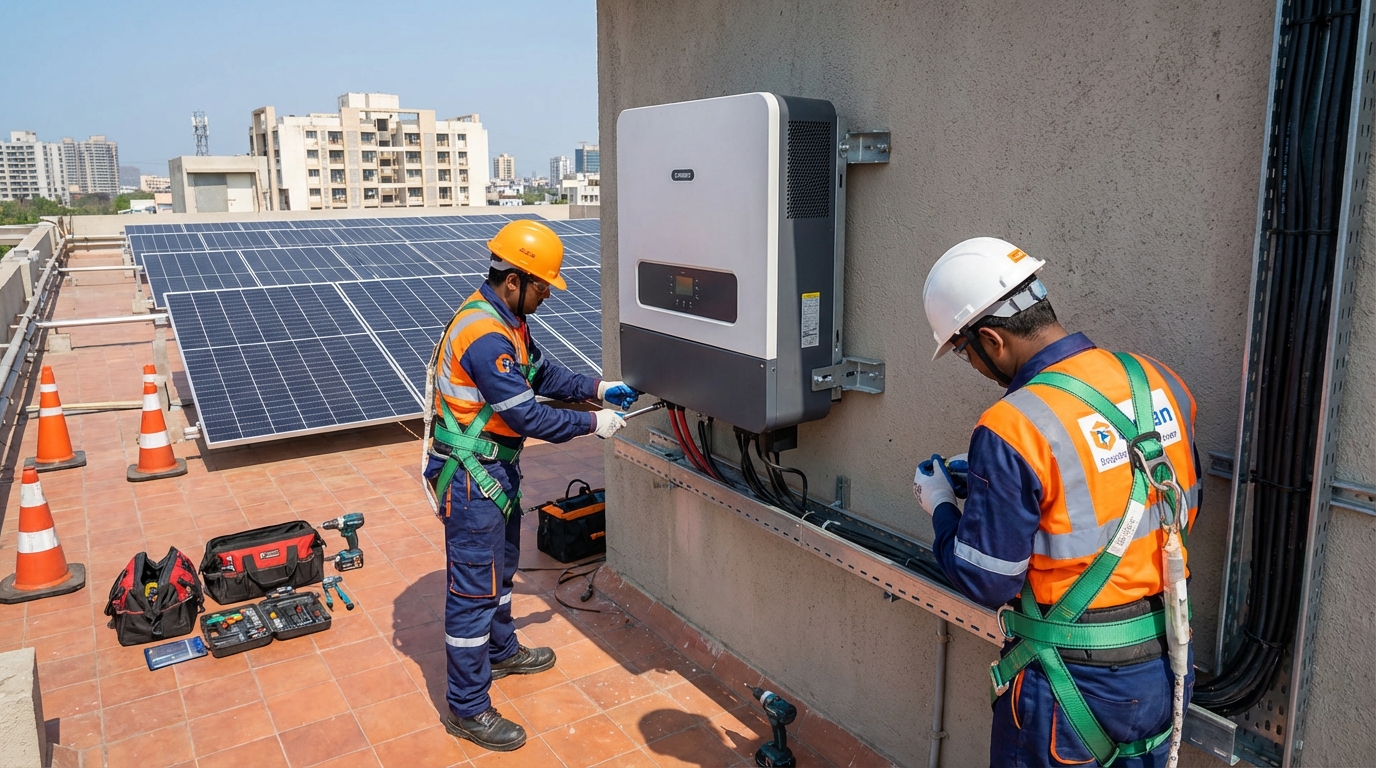
Proper installation is critical for hybrid inverter performance, safety, and longevity. Following best practices ensures optimal system operation and minimizes warranty issues.
Site Assessment and Planning
Location Selection: Install hybrid inverters in shaded, well-ventilated locations protected from direct sunlight and rain. Ideal locations include covered areas on rooftops, dedicated equipment rooms, or weather-protected wall mounts. Avoid locations with high ambient temperatures, as excessive heat reduces inverter efficiency and lifespan.
Ventilation Requirements: Ensure adequate clearance around the inverter for cooling airflow—typically 30-50cm on all sides. Hybrid inverters generate heat during operation, and proper ventilation prevents thermal derating and extends component life. For enclosed installations, consider forced ventilation or air conditioning in high-temperature environments.
Structural Considerations: Verify that mounting surfaces can support inverter weight plus any integrated or adjacent battery systems. Use appropriate mounting hardware rated for the installation environment. For rooftop installations, ensure mounting doesn’t compromise roof waterproofing.
Electrical Installation Standards
Cable Sizing: Use appropriately sized cables for DC and AC connections based on current ratings and cable run lengths. Undersized cables cause voltage drops, efficiency losses, and potential fire hazards. Follow manufacturer specifications and local electrical codes. Use UV-resistant cables for outdoor DC runs and ensure proper cable management to prevent damage.
Grounding and Earthing: Implement proper grounding for the solar array, inverter, and battery system according to BIS standards. Quality grounding protects against lightning strikes, reduces electrical noise, and ensures safe operation. Use corrosion-resistant grounding materials suitable for local soil conditions.
Protection Devices: Install appropriate circuit breakers, isolators, and surge protection devices on both DC and AC sides. These devices enable safe maintenance and protect against faults. Ensure all protection devices are rated for DC or AC applications as appropriate—standard AC breakers are not suitable for DC circuits.
Battery Installation Guidelines
Battery Placement: Install batteries in cool, dry, well-ventilated locations away from direct sunlight and heat sources. For lead-acid batteries, ensure adequate ventilation to disperse hydrogen gas generated during charging. Lithium batteries should be installed in temperature-controlled environments when possible, as extreme heat accelerates degradation.
Connection Protocols: Follow manufacturer specifications for battery bank configuration—series and parallel connections must match inverter voltage and current requirements. Use appropriate cable sizes and torque specifications for battery terminals. Improper connections cause imbalanced charging, reduced performance, and safety hazards.
Safety Measures: Implement appropriate safety measures including battery enclosures, warning labels, fire extinguishers rated for electrical fires, and emergency shutdown procedures. Train facility personnel on battery safety and emergency response.
Commissioning and Testing
Pre-Commissioning Checks: Before energizing the system, verify all connections, check polarity, measure insulation resistance, and confirm protection device ratings. Review installation against manufacturer guidelines and electrical codes.
System Configuration: Configure inverter settings including battery type, charging parameters, grid voltage ranges, and backup priorities. Set up monitoring connectivity and verify data transmission. Incorrect configuration can reduce performance or damage batteries.
Performance Testing: Test system operation across all modes—solar generation, battery charging, grid interaction, and backup operation. Verify seamless transitions between modes and confirm protection features function correctly. Document baseline performance for future reference.
Customer Training: Provide facility owners or operators with training on system operation, monitoring platform usage, and basic troubleshooting. Clear documentation and training reduce support calls and improve customer satisfaction.
Common Installation Mistakes to Avoid
- Inadequate ventilation: Causes thermal derating and reduced lifespan
- Undersized cables: Results in voltage drops and efficiency losses
- Poor grounding: Creates safety hazards and equipment damage risk
- Incorrect battery configuration: Leads to imbalanced charging and premature failure
- Skipped commissioning tests: Allows undetected issues that cause later problems
- Inadequate documentation: Complicates troubleshooting and warranty claims
For comprehensive installation support and technical guidance, Qbits Energy provides detailed installation manuals, technical training, and dedicated support for installers and EPCs.
Troubleshooting Common Hybrid Inverter Issues
Understanding common issues and their solutions enables faster problem resolution and minimizes system downtime.
Battery Not Charging Properly
Symptoms: Battery charge level not increasing despite solar generation, slow charging, or charging stopping prematurely.
Common Causes:
- Incorrect battery type settings in inverter configuration
- Battery bank voltage mismatch with inverter specifications
- Damaged battery cells or BMS issues
- Insufficient solar generation for loads and charging
- Temperature-related charging limitations
Solutions: Verify inverter battery settings match actual battery type and specifications. Check battery voltage and individual cell voltages for imbalances. Review solar generation and consumption patterns to ensure adequate surplus for charging. For temperature issues, improve battery ventilation or cooling.
Grid Synchronization Issues
Symptoms: Inverter not connecting to grid, frequent disconnections, or error messages related to grid parameters.
Common Causes:
- Grid voltage or frequency outside inverter acceptable ranges
- Incorrect grid type settings (single-phase vs three-phase)
- Faulty grid relay or contactor
- Poor grid quality with excessive harmonics or voltage fluctuations
Solutions: Measure actual grid voltage and frequency to verify they’re within inverter specifications. Adjust inverter grid protection settings if local grid conditions require wider tolerances (consult manufacturer before modifying). For persistent grid quality issues, consider installing grid conditioning equipment or operating in off-grid mode with battery backup.
Monitoring Connectivity Problems
Symptoms: No data transmission to monitoring platform, intermittent connectivity, or outdated data.
Common Causes:
- Wi-Fi signal strength issues in inverter location
- Incorrect network credentials or configuration
- 4G SIM card issues (inactive, no data balance, poor signal)
- Monitoring platform server issues
- Inverter communication module failure
Solutions: Check Wi-Fi signal strength at inverter location and consider Wi-Fi extenders if weak. Verify network credentials and reconfigure if necessary. For 4G connectivity, confirm SIM card is active with adequate data balance and good signal strength. Test alternative connectivity methods (Wi-Fi, 4G, Bluetooth) to isolate the issue. Qbits Energy’s multi-channel connectivity (Wi-Fi, 4G, Bluetooth) provides redundancy that minimizes monitoring disruptions.
Error Codes and Diagnostics
Modern hybrid inverters display error codes that indicate specific issues. Consult manufacturer documentation for error code meanings and recommended actions. Common error categories include:
- Grid-related errors: Over/under voltage, over/under frequency, grid loss
- DC-related errors: Over voltage, insulation resistance low, PV reverse polarity
- Battery-related errors: Over/under voltage, over temperature, BMS communication failure
- Internal errors: Over temperature, fan failure, communication errors
Many errors are temporary and resolve automatically when conditions normalize. Persistent errors require investigation and may indicate equipment issues requiring manufacturer support.
When to Contact Manufacturer Support
Contact manufacturer technical support when:
- Error codes persist after basic troubleshooting
- Physical damage or component failure is suspected
- System performance significantly deviates from expectations
- Warranty claims need to be initiated
- Complex configuration changes are required
Quality manufacturers provide responsive technical support with knowledgeable staff who can diagnose issues remotely using monitoring data. Qbits Energy’s support team offers comprehensive assistance for troubleshooting and technical guidance.
Preventive Maintenance Tips
Regular maintenance minimizes issues and extends system lifespan:
- Clean inverter air filters and vents quarterly to maintain cooling efficiency
- Inspect cable connections annually for corrosion or looseness
- Monitor system performance data for gradual degradation trends
- Test battery backup operation quarterly to verify functionality
- Keep inverter firmware updated with manufacturer releases
- Maintain vegetation clearance around ground-mounted equipment
- Document all maintenance activities for warranty and troubleshooting reference
Frequently Asked Questions About Hybrid Inverters in India
What is the typical lifespan of a hybrid inverter?
Quality hybrid inverters typically last 15-20 years with proper installation and maintenance. However, warranty periods are usually shorter—5-7 years for standard warranties, with premium manufacturers like Qbits Energy offering 12-year full replacement warranties. Component quality significantly impacts lifespan, with German-grade components offering superior longevity compared to standard components. Environmental factors also play a role—inverters in harsh conditions (extreme heat, coastal corrosion, heavy dust) may experience shorter lifespans without adequate protection like IP66 weather rating.
Can I add batteries to my hybrid inverter later?
Yes, one of the key advantages of hybrid inverters is the flexibility to add battery storage after initial installation. This allows starting with a grid-tied system to minimize upfront costs, then adding batteries when budget allows or when backup power becomes necessary. However, ensure your hybrid inverter supports battery addition and verify compatibility with your chosen battery technology. Some inverters require specific battery brands or types, while others offer broader compatibility. Plan cable routing and space allocation during initial installation to simplify future battery integration.
How much battery capacity do I need for my installation?
Battery capacity requirements depend on several factors: backup duration needed, critical load size, battery depth of discharge, and whether batteries will be used for daily cycling or backup only. For residential backup applications, calculate critical loads (typically 2-4 kW) multiplied by desired backup hours (4-8 hours), then divide by usable depth of discharge (80-90% for lithium, 50% for lead-acid). For example, 3 kW load for 6 hours with lithium batteries requires approximately 20-22 kWh total capacity. For commercial applications focused on peak shaving, analyze consumption patterns and time-of-day tariff structures to optimize battery sizing for maximum savings.
Are hybrid inverters compatible with net metering?
Yes, quality hybrid inverters fully support net metering programs while maintaining battery backup capability. The inverter can be configured to prioritize self-consumption, export excess generation to the grid, and charge batteries according to your preferences and local net metering policies. However, net metering regulations vary by state in India, and some utilities have specific requirements for inverter features and certifications. Verify that your chosen hybrid inverter meets local utility requirements and obtain necessary approvals before installation. The flexibility of hybrid systems allows adapting to changing net metering policies without equipment replacement.
What is the typical ROI for hybrid solar systems in India?
ROI for hybrid systems varies based on multiple factors including system size, local electricity tariffs, grid reliability, battery costs, and available incentives. On-grid systems without batteries typically achieve 3-5 year payback periods in India. Hybrid systems with batteries extend payback to 5-8 years due to higher initial costs. However, ROI improves significantly when factoring in backup power value, diesel generator elimination, and peak demand charge reduction. For commercial facilities with time-of-day tariffs and high downtime costs, hybrid systems often deliver superior lifetime returns despite longer payback periods. As battery costs continue declining and grid electricity tariffs rise, hybrid system economics improve steadily.
How do hybrid inverters perform during monsoon season?
Quality hybrid inverters with appropriate weather protection (IP66 rating) perform reliably during monsoon conditions. The IP66 rating ensures complete protection against heavy rain and moisture ingress. However, solar generation decreases during cloudy monsoon days, reducing battery charging and potentially requiring more grid consumption. Systems should be sized accounting for seasonal generation variations. The battery backup capability of hybrid systems is particularly valuable during monsoons when grid outages are more common due to weather-related infrastructure issues. Proper installation with adequate drainage and ventilation prevents moisture-related problems. Coastal installations should use inverters with corrosion-resistant enclosures to withstand high humidity and salt air exposure.
Making the Right Choice for Your Solar Investment
Selecting the right hybrid inverter for Indian installations requires balancing technical specifications, manufacturer reputation, warranty protection, and total cost of ownership. As India’s solar market matures and grid conditions evolve, hybrid inverters represent the intelligent choice for installations that demand reliability, flexibility, and future-proof performance.
For solar installers and EPCs, partnering with manufacturers who understand India’s unique challenges and provide comprehensive support is essential for project success and customer satisfaction. Quality hybrid inverters with features like IP66 weather protection, AI-powered monitoring, robust warranties, and India-focused design deliver the performance and reliability that build reputation and drive repeat business.
For facility owners and solar investors, hybrid inverters provide energy security, operational savings, and protection against grid instability and rising electricity costs. The flexibility to start with grid-tied operation and add battery storage as needs evolve makes hybrid technology accessible while preserving options for enhanced capabilities.
Qbits Energy’s hybrid inverters combine German-grade component quality, AI-powered WhatsApp monitoring, industry-leading 12-year warranties, and India-specific design to deliver exceptional value for residential and commercial installations. Backed by the Heaven Group legacy and comprehensive support infrastructure, Qbits represents the next generation of solar inverter technology engineered specifically for Indian conditions.
Whether you’re a solar professional evaluating inverter options for your next project or a facility owner planning a solar investment, understanding the capabilities, specifications, and selection criteria for hybrid inverters empowers informed decisions that deliver lasting value. To explore Qbits Energy’s hybrid inverter solutions and discuss your specific requirements, contact our team or learn more about our products.
For distributors and channel partners interested in adding India’s next-generation solar inverters to your portfolio, explore our partnership opportunities and discover how Qbits Energy can support your business growth in India’s expanding solar market.