



Which one is best? On Grid, Off Grid, or Hybrid Inverter?

While solar panels catch the sun, the inverter is the brain of the operation. It converts the Direct Current (DC) from your panels into the Alternating Current (AC) used by your home appliances. Choosing the right inverter type determines how your home interacts with the utility grid and how you handle power outages. Mainly, there are three types of inverters: 1) On-Grid Inverters, 2) Off-Grid Inverters, 3) Hybrid Inverters
1. On-Grid Inverters (Grid-Tied)
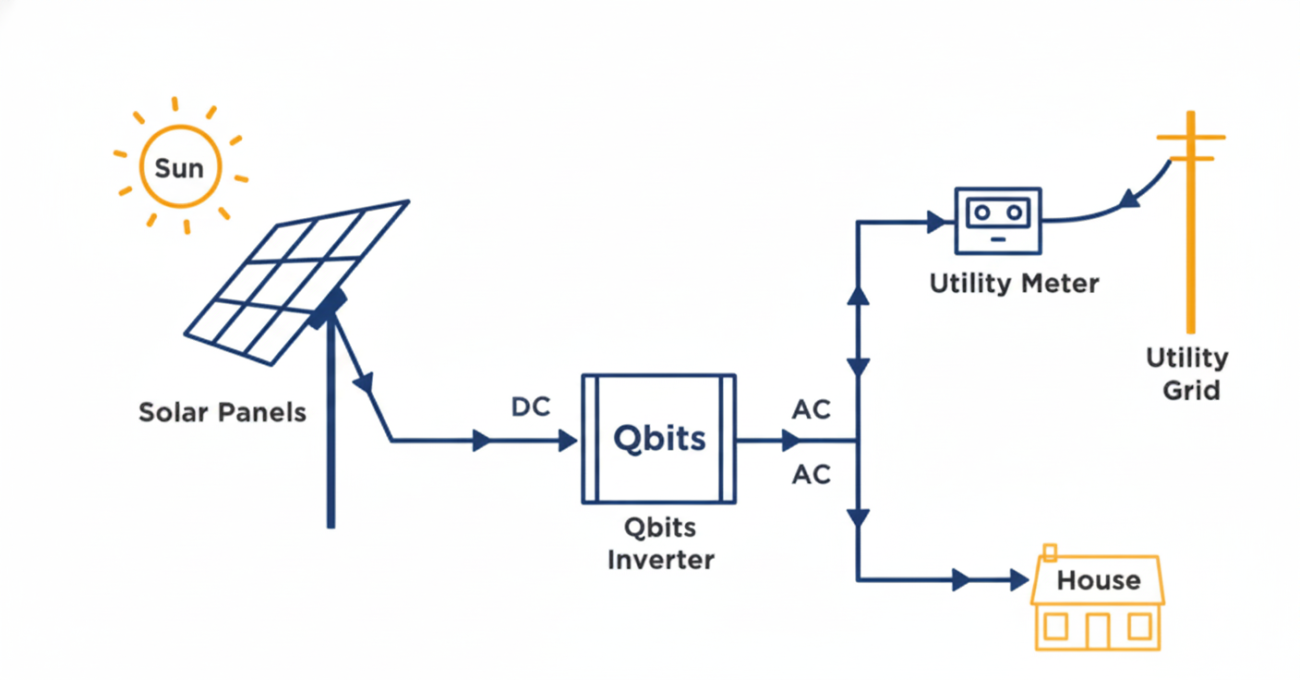
These are the most popular and cost-effective inverters for urban homes. They are designed to work in perfect sync with the utility grid.
How it works: The inverter takes solar energy and feeds it directly into your home. If you have extra, it “pushes” that power back into the grid. It requires a grid signal to function; if the grid goes down, the inverter shuts off instantly (a safety feature called “anti-islanding”).
- The Pros:
- Most Affordable: Simplest technology and no battery requirement make this the cheapest option.
- Efficiency: Very high efficiency (often 97%+) because there is no energy loss from charging/discharging batteries.
- Net Metering: Perfect for earning credits on your electricity bill.
- The Cons:
- No Backup: If there is a power cut, your solar system stops working entirely, even if the sun is out.
2. Off-Grid Inverters (Standalone)
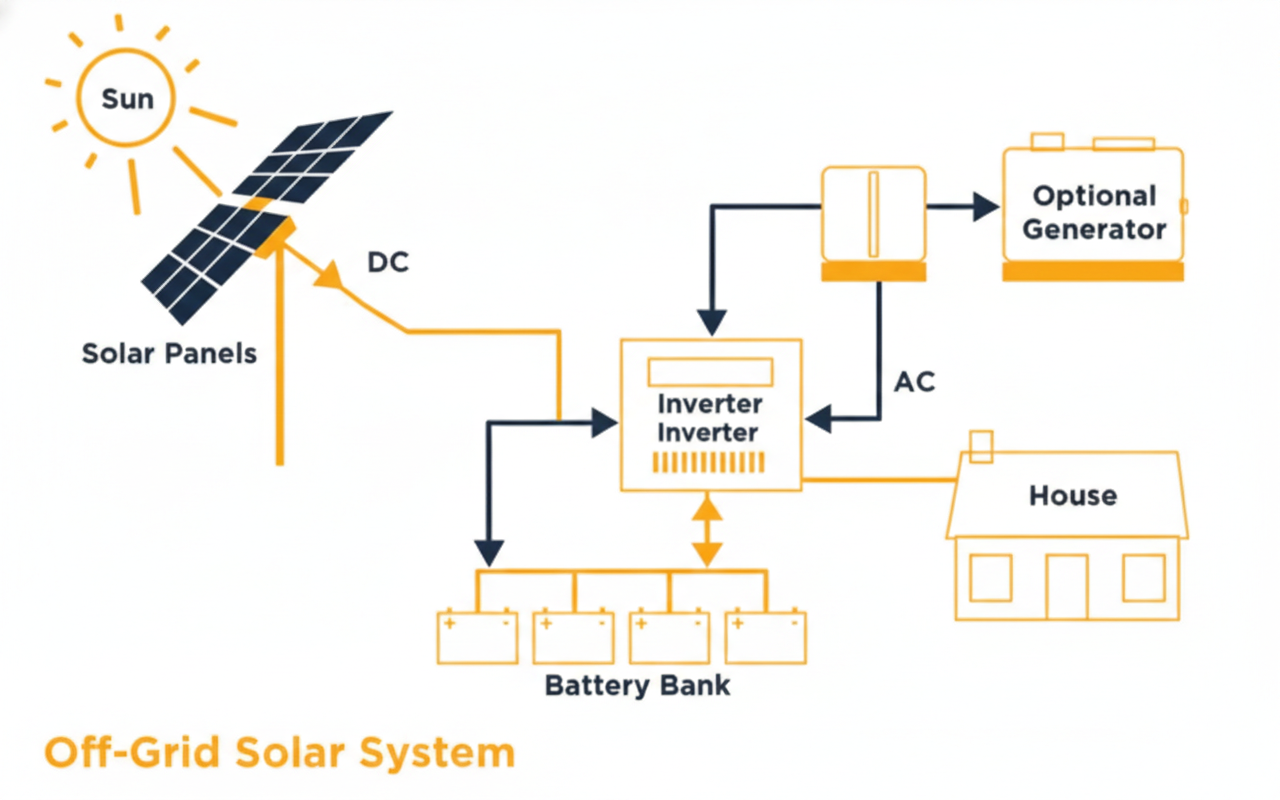
Designed for complete independence, these inverters are the sole power source for a property.
How it works: These inverters are connected to a battery bank rather than the grid. They pull DC power from the batteries and convert it to AC for your home. They usually include a “charge controller” to manage how the solar panels charge the batteries.
- The Pros:
- Energy Independence: You are your own power company. Ideal for remote locations.
- Reliable Backup: You are never affected by grid failures or neighborhood blackouts.
- The Cons:
- Expensive: Requires a large battery bank and heavy-duty components.
- No Safety Net: If your batteries run out and there is no sun, you have no power unless you have a backup generator.
3. Hybrid Inverters (Grid-Interactive)
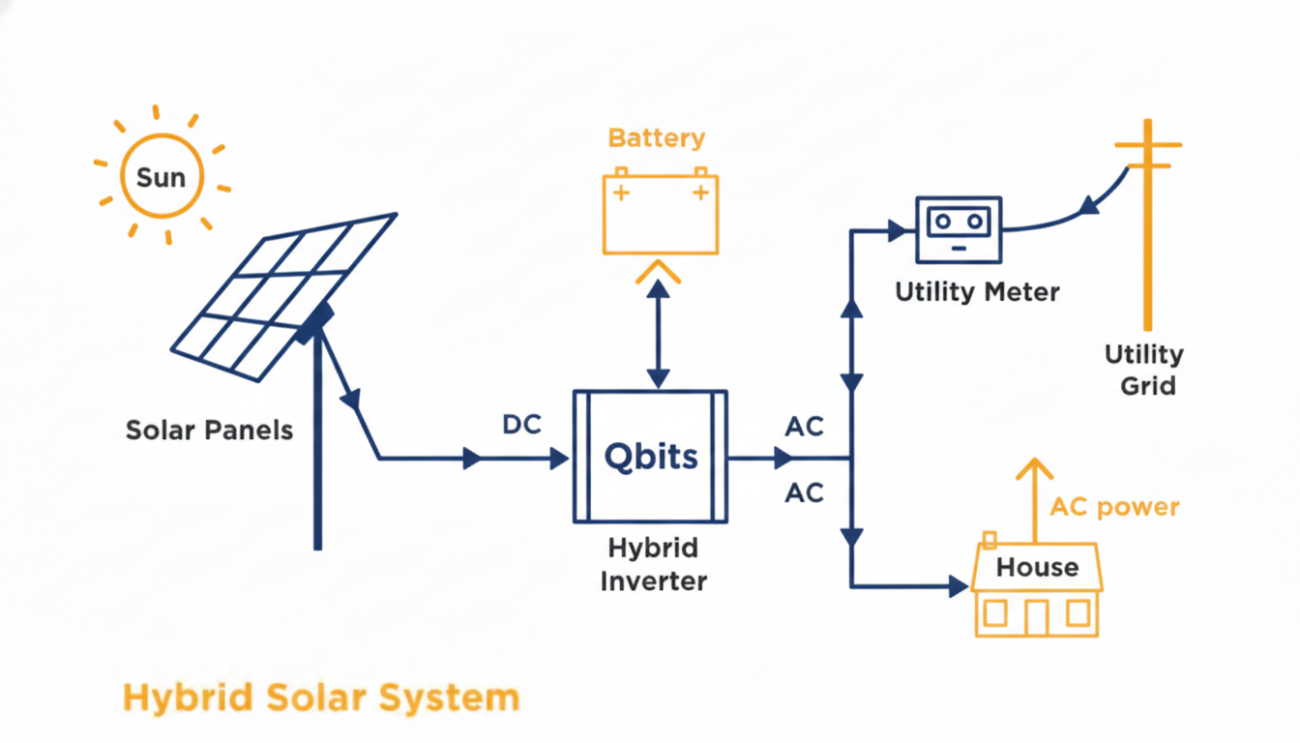
A hybrid inverter is a “smart” unit that combines the features of on-grid and off-grid inverters into one.
How it works: It can stay connected to the grid (like an on-grid inverter) but also has a connection for a battery (like an off-grid inverter). It intelligently chooses where to get power: from the sun, the battery, or the grid.
- The Pros:
- The Ultimate Backup: Keeps your lights on during a blackout by switching to battery mode in milliseconds.
- Smart Savings: You can store energy when it’s cheap (or free from the sun) and use it during “peak hours” when the grid is expensive.
- Future-Ready: You can install the inverter now and add batteries later when your budget allows.
- The Cons:
- Complex & Costly: The hardware is more expensive than a standard on-grid inverter, and installation requires more expertise.
Comparison Table
| Feature | On-Grid Inverter | Off-Grid Inverter | Hybrid Inverter |
| Grid Connection | Mandatory | None | Optional / Both |
| Battery Needed | No | Yes | Recommended |
| Power During Outage | No | Yes | Yes |
| Net Metering | Yes | No | Yes |
| Best For | Saving money on bills | Remote locations | Backup + Savings |
Which Inverter is Right for You?
- Choose On-Grid if your main goal is to lower your monthly bill and your area has a very stable power supply.
- Choose Off-Grid if you are building in a remote area or want to be 100% self-sufficient.
- Choose Hybrid if you want the financial benefits of the grid but also need the peace of mind that comes with backup power during outages.
Choose the Inverter That Thinks for You!
Selecting the right inverter type is the first step, but choosing the right brand is what ensures your peace of mind for the next 20 years. At Qbits, we have engineered our inverters specifically for the Indian climate and grid conditions.
Why India is switching to Qbits:
- The “German-Grade” Promise: Built with top-tier components designed for a 20-year life, handling temperatures up to 90°—because Indian summers are no joke!
- Smartness on your WhatsApp: No complicated apps needed. Get your daily generation reports and instant fault alerts right on your WhatsApp.
- Military-Grade Security: Your data stays in India. We are 100% Hosted in India to ensure your home’s energy data is always secure.
- Unmatched Support: With a 12-Year Full Warranty and a “No-Questions-Asked” replacement policy, we stand by you longer than anyone else in the industry..
Ready to make your rooftop “Atmanirbhar”?
Don’t let an EPC make the choice for you. Demand the reliability of Qbits and secure your family’s energy future today.