



Solar Inverter Manufacturers in India: Complete Evaluation Guide for EPCs & Distributors (2026)

Selecting the right solar inverter manufacturer is one of the most critical decisions that solar EPCs, installers, and distributors make. In India’s rapidly evolving solar market, where installations are projected to exceed 50 GW annually by 2026, the choice of inverter manufacturers India directly impacts project success, customer satisfaction, and long-term profitability. With dozens of domestic and international brands competing for market share, understanding how to evaluate manufacturing capabilities, quality standards, and after-sales support has never been more important.
This comprehensive guide provides solar industry professionals with a structured framework for assessing and selecting inverter manufacturers in India. Whether you’re an EPC company managing large-scale commercial projects, a distributor building your product portfolio, or an installer seeking reliable partners, this evaluation methodology will help you make informed decisions that protect your business interests and deliver value to your customers.
Understanding the Indian Solar Inverter Manufacturing Landscape in 2026
The Indian solar inverter market has undergone significant transformation over the past five years. The government’s Make in India initiative, combined with Production Linked Incentive (PLI) schemes, has catalyzed domestic manufacturing capabilities. Today, India hosts a mix of established international brands with local assembly operations, pure-play Indian manufacturers, and emerging technology-focused companies bringing innovation to the market.
The market dynamics in 2026 reflect several key trends that EPCs and distributors must understand. First, there’s been a marked shift toward hybrid inverter India solutions as battery storage becomes more economically viable. Second, the rise of high-wattage solar panels (750W and above) has forced manufacturers to upgrade their product specifications to handle increased DC oversizing. Third, digitalization and AI-powered monitoring have become table stakes rather than premium features.
For solar professionals, manufacturer selection carries implications beyond product specifications. Your choice affects warranty claim experiences, technical support responsiveness, spare parts availability, and ultimately, your reputation with end customers. A manufacturer’s failure to honor warranties or provide timely service can damage relationships you’ve spent years building. Conversely, partnering with reliable manufacturers creates competitive advantages through superior customer experiences and reduced operational headaches.
The regulatory environment also plays a crucial role. BIS certification has become mandatory for grid-connected inverters, and enforcement has tightened considerably. Manufacturers without proper certifications face market access challenges, and distributors carrying non-compliant products risk legal exposure. Understanding which manufacturers maintain rigorous compliance standards protects your business from regulatory risks.
Critical Manufacturing Capabilities to Evaluate
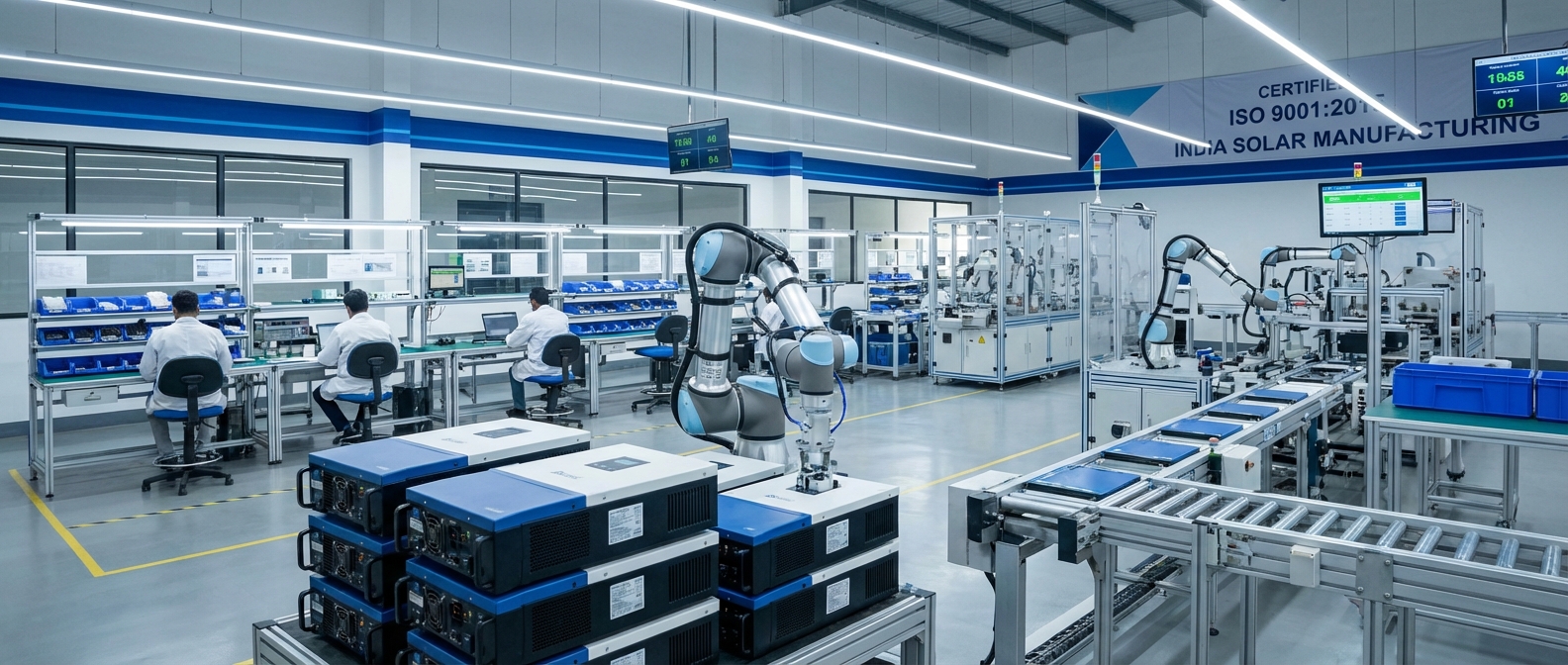
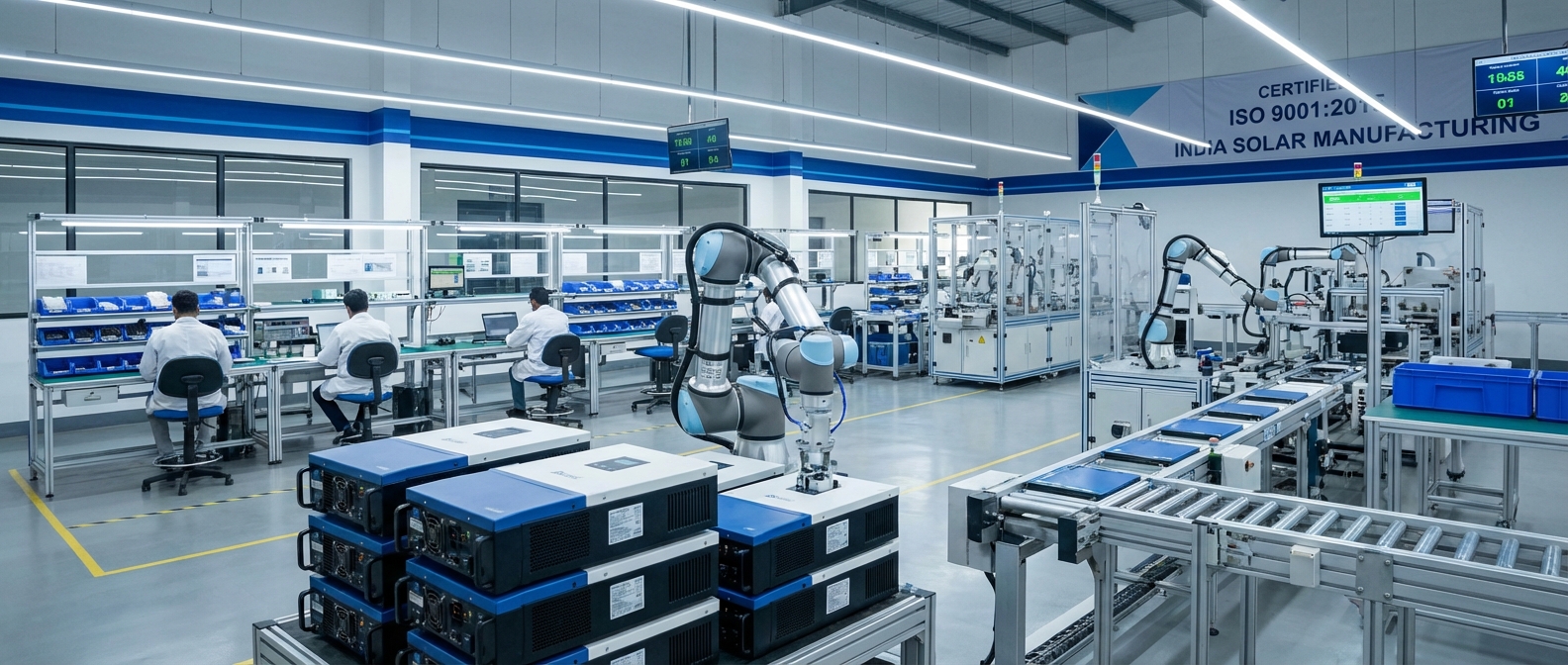
When assessing inverter manufacturers India, production capabilities reveal much about a company’s ability to deliver consistent quality and scale with your business growth. Start by understanding whether the manufacturer operates in-house production facilities or relies on contract manufacturing. While both models can work, in-house manufacturing typically provides better quality control and faster response to technical issues.
Production capacity matters significantly for EPCs planning large projects. Can the manufacturer supply 500 units within your project timeline? What’s their current capacity utilization, and do they have expansion plans? Manufacturers operating at 95% capacity may struggle to meet surge demand, potentially delaying your projects. Ask about their order fulfillment track record and typical lead times during peak season (October through March in India).
Quality control processes separate exceptional manufacturers from mediocre ones. Leading manufacturers implement automated testing protocols, running hundreds or even thousands of tests per unit. For example, manufacturers conducting 1000+ automated quality tests per inverter demonstrate commitment to reliability that translates into lower field failure rates. Request details about their testing procedures, including burn-in testing duration, thermal cycling tests, and voltage surge simulation.
Component Quality: German-Grade vs Standard Components
The phrase “German-grade components” appears frequently in marketing materials, but what does it actually mean? Genuine German-grade electronic components come from manufacturers like Infineon, WIMA, or Vishay, known for stringent quality standards and superior temperature tolerance. These components typically offer 20-30% longer operational lifespans and better performance stability across temperature variations compared to standard-grade alternatives.
For EPCs and distributors, component quality directly impacts inverter lifespan and warranty claim rates. Inverters built with premium components maintain efficiency ratings longer and experience fewer failures in harsh Indian conditions. While German-grade components add 8-12% to manufacturing costs, they reduce warranty claims by 30-40% based on industry data, creating net positive economics for manufacturers who can honor longer warranty periods.
How do you verify component quality claims? Request Bill of Materials (BOM) documentation during due diligence. Reputable manufacturers willingly share component sourcing information with serious business partners. Look for specific component model numbers and manufacturer names rather than vague descriptions. Additionally, examine the inverter’s internal construction during factory visits. Premium components are visually distinguishable by build quality, labeling, and assembly precision.
Temperature tolerance becomes critical in India’s diverse climate zones. Standard components may be rated for 85°C operating temperatures, while German-grade components often handle 105°C or higher. In Rajasthan’s summer heat or on black rooftops in Gujarat, this difference determines whether your inverters maintain performance or experience thermal derating and premature failure.
Essential Quality Certifications and Compliance Standards
Certifications provide objective validation of manufacturer claims, but not all certifications carry equal weight. For solar inverters India, BIS (Bureau of Indian Standards) certification is mandatory for grid-connected inverters. The relevant standard, IS 61683, covers performance characteristics and safety requirements. Verify that manufacturers hold current BIS licenses by checking the BIS website or requesting license documentation.
IEC (International Electrotechnical Commission) standards represent global benchmarks for inverter quality. Key standards include IEC 62109 for safety requirements and IEC 61683 for performance testing. Manufacturers certified to these standards have undergone rigorous third-party testing. However, distinguish between manufacturers who claim “compliance” versus those holding actual certification certificates from accredited testing laboratories.
IP ratings indicate protection against dust and water ingress, critical for rooftop installations exposed to monsoons and dust storms. IP65 provides good protection, but IP66 offers superior defense against powerful water jets and complete dust sealing. For installations in coastal areas with salt-laden air or dusty industrial zones, IP66-rated inverters significantly outlast lower-rated alternatives. Don’t accept vague claims about “weatherproof” construction; demand specific IP ratings with test certificates.
Surge protection certifications validate the inverter’s ability to withstand voltage spikes common in Indian grid conditions. Look for manufacturers incorporating both AC and DC Surge Protection Devices (SPDs) with documented protection ratings. Lightning-induced surges and grid instability cause significant inverter failures in India; proper surge protection reduces these risks substantially.
Red flags in certification claims include expired certificates, certifications from non-accredited bodies, or reluctance to provide documentation. Some manufacturers display certificates for older product models while selling newer versions without proper certification. Always verify that certifications apply to the specific model and version you’re considering.
Warranty Infrastructure: Beyond the Paper Promise
Warranty terms look impressive on paper, but execution determines their real value. The Indian solar market has seen manufacturers offering 5-year, 10-year, and even 12-year warranties, but inverter warranty value depends entirely on the manufacturer’s ability and willingness to honor claims efficiently.
Distinguish between full replacement warranties and repair warranties. Full replacement warranties commit the manufacturer to replacing defective units entirely, minimizing downtime and service complexity. Repair warranties may involve multiple service visits, extended downtime, and disputes over whether issues qualify for coverage. For EPCs managing customer relationships, full replacement warranties provide cleaner resolution paths and better customer experiences.
Digital warranty systems represent a significant advancement over traditional paper-based processes. Manufacturers offering digital warranty registration, online claim submission, and transparent claim tracking reduce administrative burden and accelerate resolution. These systems also prevent warranty fraud and disputes over registration dates. When evaluating manufacturers, test their warranty system by walking through the registration and claim process.
Service center networks determine warranty execution speed. A manufacturer offering a 12-year warranty means little if their nearest service center is 500 kilometers away. Map the manufacturer’s service presence against your primary operating regions. How many service centers do they operate in Maharashtra, Gujarat, Rajasthan, Tamil Nadu, or your key markets? What are their committed response times for warranty claims?
Warranty claim turnaround time separates good manufacturers from great ones. Industry-leading manufacturers commit to 48-72 hour replacement for defective units, while others may take weeks. Ask existing partners about their actual warranty experience, not just policy documents. High claim rejection rates or slow processing indicate potential future headaches.
Financial stability underpins warranty credibility. A 12-year warranty from a financially unstable manufacturer offers false security. Research the manufacturer’s backing, whether through established parent companies, strong balance sheets, or group affiliations. Companies backed by established industrial groups demonstrate greater ability to honor long-term commitments. For instance, manufacturers with legacy industrial group backing combine innovation with financial stability to support extended warranty periods.
After-Sales Service Network Evaluation
After-sales service infrastructure determines your operational efficiency and customer satisfaction levels. Geographic coverage across Indian states directly impacts your ability to serve customers effectively. Manufacturers with service presence in tier-2 and tier-3 cities provide competitive advantages for EPCs operating beyond metro markets.
Response time commitments should be documented in partner agreements. What’s the guaranteed response time for technical support calls? How quickly can a technician reach a site in Jaipur, Coimbatore, or Bhubaneswar? Leading manufacturers commit to 24-48 hour on-site response in major markets and 72-96 hours in remote locations. Verify these commitments by speaking with existing partners about actual experiences.
Spare parts availability prevents extended downtime. Manufacturers maintaining regional spare parts inventory can resolve issues in days rather than weeks. Ask about their inventory management system, stock levels for critical components, and typical parts delivery timelines. Manufacturers importing all spare parts from overseas face customs delays that extend service times significantly.
Technical support channels should match how your team actually works. Phone support remains important, but WhatsApp-based technical support has become increasingly valuable in India, allowing technicians to share photos, videos, and diagnostic data instantly. Manufacturers offering multi-channel support (phone, WhatsApp, email, online portal) provide flexibility for different situations and user preferences.
Training programs for installer partners build your team’s capabilities and reduce support dependencies. Comprehensive manufacturers offer regular training sessions covering installation best practices, troubleshooting procedures, and new product features. Certification programs validate your team’s expertise and can become marketing differentiators. Evaluate the manufacturer’s training calendar, content quality, and accessibility across regions.
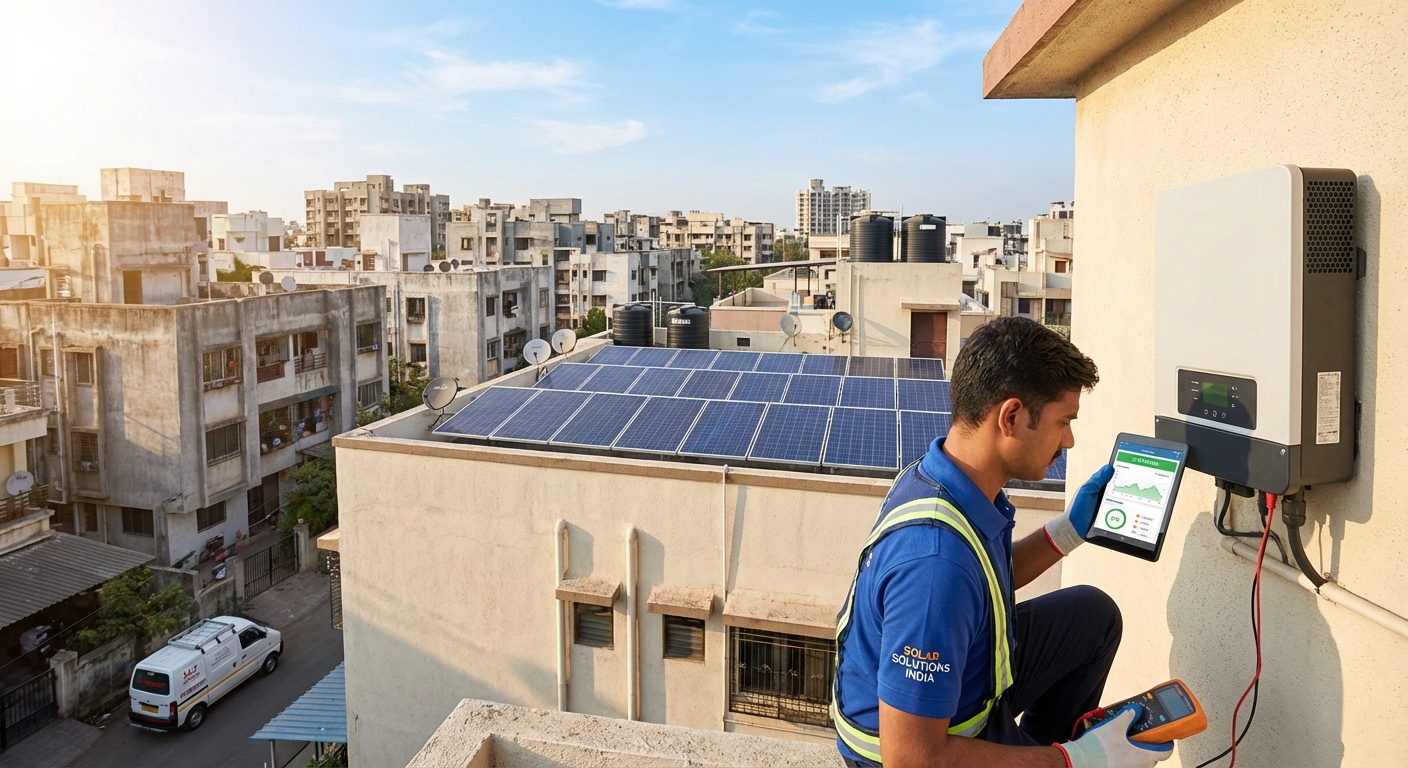
Remote monitoring and diagnostics capabilities enable proactive support. Manufacturers with AI-powered monitoring systems can identify potential issues before they cause failures, alerting you and the customer simultaneously. This predictive approach transforms service from reactive problem-solving to proactive maintenance, improving system uptime and customer satisfaction.
Technical Specifications That Matter for Indian Conditions
While marketing materials emphasize peak efficiency ratings, real-world performance in Indian conditions depends on specifications often buried in technical datasheets. Inverter efficiency matters, but European efficiency ratings (based on European irradiance patterns) don’t perfectly reflect Indian performance. Look for manufacturers providing efficiency curves across the full operating range, particularly at partial loads where inverters spend significant operating time.
Operating temperature ranges reveal suitability for Indian climates. Inverters rated for -25°C to +60°C ambient temperature handle most Indian conditions, but installations in Rajasthan or on dark rooftops may exceed these limits. Premium inverters maintain full power output to 50°C and implement thermal derating only at higher temperatures, while budget models may begin derating at 45°C, reducing energy generation during peak summer months.
Voltage fluctuation tolerance addresses India’s grid stability challenges. Rural and semi-urban areas experience significant voltage variations, and inverters must continue operating safely across wide voltage ranges. Look for wide input voltage windows (typically 140V to 270V for single-phase) and fast response to grid disturbances. Inverters with poor voltage tolerance trip frequently, frustrating customers and generating service calls.
DC oversizing capabilities have become critical as panel wattages increase. Modern 550W to 750W panels require inverters supporting 130% to 150% DC oversizing to optimize system design flexibility. Manufacturers supporting higher DC oversizing ratios enable better system economics by maximizing panel utilization without oversizing inverter capacity unnecessarily. Verify both the maximum DC input voltage and current ratings to ensure compatibility with high-wattage panel configurations.
Surge protection through integrated AC and DC SPDs protects against India’s frequent lightning strikes and grid instabilities. Inverters with built-in SPDs rated for 20kA or higher provide robust protection, while those requiring external SPDs add installation complexity and cost. Evaluate the surge protection specifications and whether they’re included as standard features or optional add-ons.
Start-up voltage and low-light performance affect energy generation during early morning, late evening, and cloudy conditions. Inverters with low start-up voltages (as low as 80V for some models) begin generating earlier and continue later, capturing additional energy. In monsoon-heavy regions, this capability adds meaningful annual generation.
Climate Zone Considerations Across India
India’s diverse climate zones demand different inverter characteristics. In hot and dry regions like Rajasthan and Gujarat, temperature tolerance and dust protection dominate. Inverters must maintain performance in 50°C+ ambient temperatures and resist fine dust infiltration. IP66 ratings and robust thermal management become essential.
Humid coastal areas including Kerala, Tamil Nadu’s coast, and Maharashtra’s Konkan region present corrosion challenges. Salt-laden air accelerates corrosion of electronic components and enclosures. Manufacturers using conformal coating on circuit boards and corrosion-resistant enclosure materials deliver better longevity in these environments. Ask specifically about coastal installation experience and any special requirements.
High-altitude installations in Himachal Pradesh, Uttarakhand, and mountainous regions face extreme temperature variations and reduced air density affecting cooling. Inverters must handle cold starts at sub-zero temperatures while managing heat dissipation in thinner air. Verify altitude derating specifications and cold-weather performance data.
Dust-prone areas across central India and industrial zones require superior ingress protection. IP65 provides basic protection, but IP66 offers significantly better defense against dust accumulation that can cause overheating and component degradation. For installations near cement plants, mining operations, or agricultural areas, IP66 rating is not optional.
Monsoon performance and water ingress protection matter across most of India. Even with IP66 ratings, installation quality affects water protection. Manufacturers providing clear installation guidelines for cable entry, conduit sealing, and mounting orientation help prevent water-related failures during heavy monsoons.
Indian vs International Manufacturers: Strategic Considerations
The choice between Indian and international inverter manufacturers India involves multiple strategic factors beyond product specifications. Indian manufacturers offer distinct advantages in local support infrastructure, faster service response, and regulatory alignment. They understand Indian grid conditions, customer preferences, and installation practices intimately. Service networks typically extend deeper into tier-2 and tier-3 cities, and communication with technical support teams avoids language barriers and time zone complications.
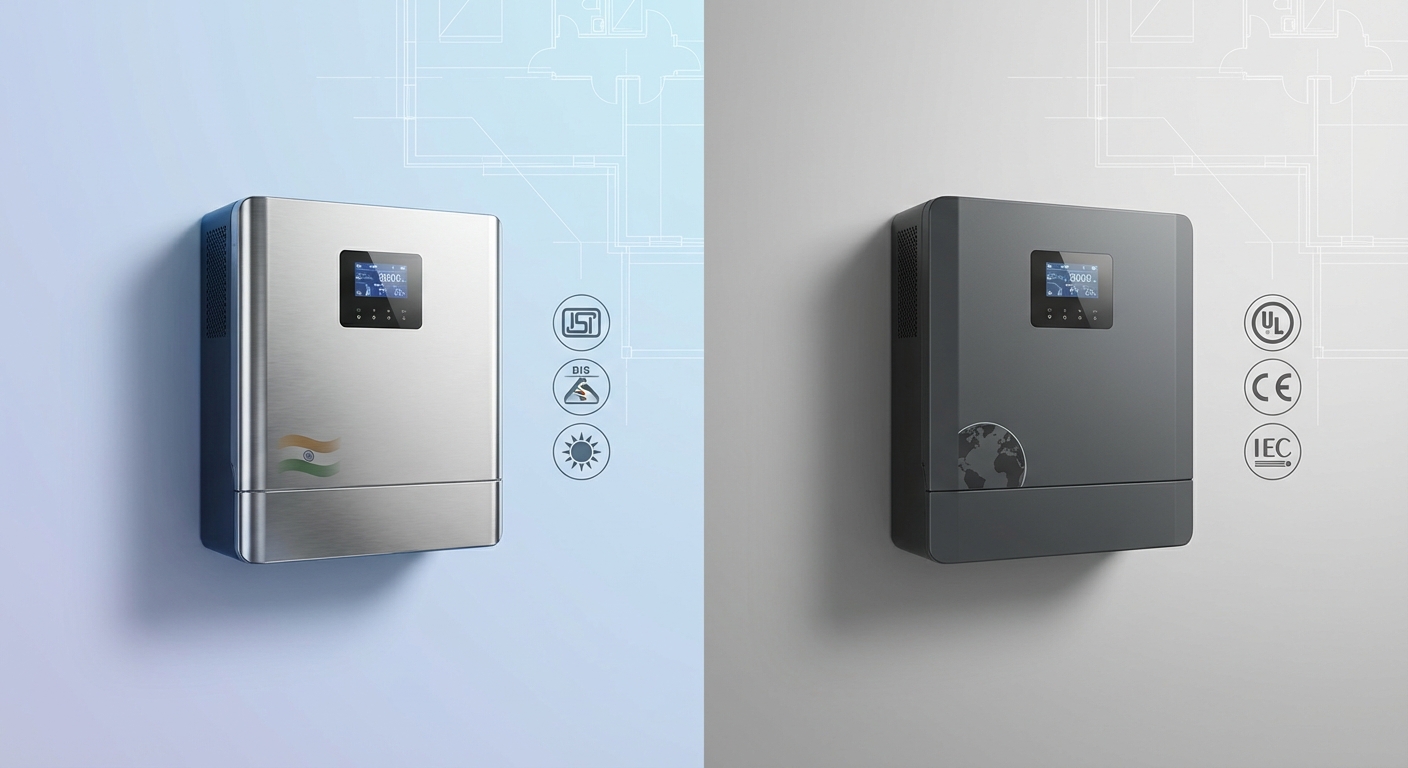
International brands bring established track records, extensive global R&D resources, and proven reliability across diverse markets. Their longer operational histories provide confidence in long-term business continuity. However, service networks may concentrate in major metros, and spare parts often require imports, extending service times. Technical support may route through international call centers less familiar with India-specific challenges.
Pricing and import duty implications significantly affect economics. International brands typically carry 15-25% price premiums reflecting import duties, shipping costs, and brand positioning. For price-sensitive residential projects, this premium may be difficult to justify. For large commercial installations where reliability and brand recognition matter more, the premium may be acceptable. Indian manufacturers offer competitive pricing while increasingly matching international quality standards through technology partnerships and advanced manufacturing processes.
Data security and server location have emerged as considerations for EPCs managing sensitive commercial installations. Some international manufacturers route monitoring data through overseas servers, raising data sovereignty concerns for government projects and security-conscious commercial clients. Indian manufacturers hosting data on India-based servers address these concerns while ensuring faster data access and compliance with evolving data localization regulations.
Customization capabilities for Indian market needs favor domestic manufacturers. They can adapt products for specific Indian requirements more quickly than international brands navigating global product roadmaps. Need support for a specific battery brand popular in India? Require integration with local monitoring platforms? Indian manufacturers typically respond more flexibly to market-specific requests.
Long-term availability and business continuity considerations cut both ways. Established international brands demonstrate decades of operational history, but they may exit the Indian market if it underperforms corporate expectations. Indian manufacturers with strong domestic market focus and local group backing demonstrate commitment to the market but may lack the same historical track record. Evaluate both current commitment and long-term viability indicators.
Currency fluctuation risks affect international brands more significantly. Rupee depreciation against the dollar or euro translates into price increases for imported products, creating budgeting uncertainty for multi-year projects. Indian manufacturers with predominantly domestic supply chains offer more stable pricing, though they’re not entirely immune to currency impacts on imported components.
Smart Monitoring and Digital Capabilities
Remote monitoring has evolved from a premium feature to an essential capability for EPCs managing multiple installations. AI-powered monitoring systems provide predictive maintenance capabilities, identifying potential issues before they cause failures. For distributors and EPCs, these systems reduce service costs, improve customer satisfaction, and create opportunities for value-added monitoring services.

Communication protocols determine monitoring reliability and flexibility. Wi-Fi connectivity works well for residential installations with reliable internet, but 4G connectivity provides backup for areas with unstable broadband. Bluetooth enables local monitoring and configuration without internet dependency. Leading manufacturers offer multiple connectivity options, allowing installers to choose the best approach for each site.
Mobile app and WhatsApp integration specifically address Indian user preferences. While dedicated mobile apps provide comprehensive functionality, WhatsApp-based monitoring and alerts meet users where they already spend time. Customers receive performance updates, fault alerts, and generation reports directly in WhatsApp, increasing engagement without requiring separate app downloads. For EPCs, WhatsApp-based technical support streamlines communication with manufacturer support teams.
Data analytics and performance reporting capabilities enable EPCs to demonstrate value to customers and identify optimization opportunities. Systems providing detailed analytics on generation patterns, efficiency trends, and comparative performance help justify premium pricing and build customer relationships. Look for manufacturers offering customizable reporting, API access for integration with your systems, and historical data retention.
Alert systems for fault detection should be intelligent and actionable. Systems generating excessive false alarms create alert fatigue, while those missing genuine issues fail their purpose. AI-powered systems learn normal performance patterns and distinguish between genuine faults and temporary conditions like shading or weather events. Evaluate the alert logic, customization options, and escalation procedures.
Integration with third-party monitoring platforms matters for EPCs using centralized monitoring systems across multiple inverter brands. Manufacturers supporting standard protocols like Modbus or providing API access enable seamless integration. Proprietary closed systems lock you into single-vendor monitoring, limiting flexibility as your business grows.
Assessing Manufacturer Reliability and Financial Stability
Beyond product specifications, manufacturer reliability determines your long-term partnership success. Company background and legacy provide context for evaluating stability. Manufacturers backed by established industrial groups bring financial strength and operational experience, even if the solar inverter division is relatively new. Startups with innovative technology but limited backing carry higher risk, though they may offer competitive advantages in specific areas.
Years in business and track record matter, but interpret them contextually. A manufacturer with 15 years in solar inverters demonstrates staying power, but a newer entrant backed by a 50-year industrial group may be equally reliable. Look for consistent market presence, not just longevity. Has the company maintained continuous operations, or have there been ownership changes, restructurings, or market exits and re-entries?
Installed base and customer references provide real-world validation. Request references from EPCs and distributors similar to your business. How many installations has the manufacturer completed in your target market segments? Can they provide site visit opportunities to see their products in operation? Manufacturers confident in their products readily connect prospects with satisfied customers.
Financial health indicators include credit ratings, published financial statements (for listed companies), and payment terms offered. Manufacturers requiring 100% advance payment may face cash flow challenges, while those offering reasonable credit terms demonstrate financial stability. For large partnerships, consider requesting financial disclosures as part of due diligence.
Market reputation and industry standing emerge through industry associations, awards, and peer recognition. Membership in organizations like the National Solar Energy Federation of India (NSEFI) or participation in industry events indicates market engagement. However, distinguish between genuine industry recognition and purchased awards or self-promotional claims.
Transparency in operations and communication reveals organizational culture. Manufacturers who openly discuss their processes, share technical documentation, and respond thoroughly to questions demonstrate confidence and professionalism. Those providing vague answers, restricting factory access, or avoiding specific questions raise concerns about what they’re hiding.
Product Portfolio Breadth and Future-Readiness
A comprehensive product portfolio indicates manufacturer maturity and ability to serve diverse customer needs. Range of capacities from residential (3kW-10kW) through commercial (10kW-50kW) to industrial (50kW+) allows you to source multiple project types from a single manufacturer, simplifying logistics, training, and support relationships.
On-grid vs hybrid inverter options address different customer requirements. Pure on-grid inverters suit customers focused on grid export and net metering, while hybrid inverters provide battery backup flexibility. Manufacturers offering both categories enable you to match solutions to customer needs without maintaining relationships with multiple suppliers. Evaluate whether their hybrid inverters support popular battery brands and chemistries (lithium-ion, lead-acid) used in your market.
Battery integration capabilities have become increasingly important as storage economics improve. Hybrid inverters should support flexible battery configurations, multiple battery brands, and future battery additions. Some manufacturers lock customers into proprietary battery systems, limiting flexibility and potentially increasing costs. Open-architecture systems supporting third-party batteries provide better long-term value.
Support for high-wattage panels (750W+) ensures future-readiness as panel technology advances. Inverters designed for 500W panels may struggle with newer 600W or 700W panels due to voltage or current limitations. Manufacturers with products supporting 750W+ panels and high DC oversizing ratios protect your investment as panel technology evolves.
Scalability for growing installations matters for commercial customers planning phased expansions. Can multiple inverters be paralleled easily? Do they support master-slave configurations for coordinated operation? Manufacturers designing for scalability enable customers to start small and expand without replacing equipment.
Product roadmap and innovation pipeline indicate whether the manufacturer is keeping pace with technology evolution. Ask about their R&D investments, upcoming product launches, and technology partnerships. Manufacturers actively innovating will support your business growth with new capabilities, while those with stagnant product lines may fall behind market requirements.
Backward compatibility and upgrade paths protect customer investments. Can firmware updates add new features to existing installations? Are newer product generations compatible with existing monitoring systems? Manufacturers considering long-term customer relationships design for continuity, while those focused on short-term sales may orphan older products quickly.
Partnership and Distribution Support
For distributors and EPCs, manufacturer partnership programs significantly impact business success. Channel partner programs should offer clear benefits including preferential pricing, dedicated support, and business development assistance. Evaluate the program structure, qualification requirements, and actual benefits delivered to existing partners.
Marketing and sales support materials help you sell more effectively. Manufacturers should provide product brochures, technical datasheets, case studies, comparison charts, and digital marketing assets. High-quality materials reduce your marketing costs and improve sales effectiveness. Some manufacturers offer co-branded materials, allowing you to leverage their brand while maintaining your identity.
Technical training and certification programs build your team’s capabilities and differentiate your business. Comprehensive training covering product features, installation best practices, troubleshooting, and system design enables your team to deliver superior customer experiences. Certification programs validate expertise and can become marketing tools. Evaluate training frequency, accessibility across regions, and whether online options supplement in-person sessions.
Inventory management and logistics support affect your working capital and operational efficiency. Manufacturers offering consignment inventory, drop-shipping, or just-in-time delivery reduce your inventory carrying costs. Clear logistics processes, reliable delivery timelines, and shipment tracking improve operational predictability.
Pricing structure and margin policies directly impact profitability. Understand the pricing tiers, volume discounts, and margin structures. Are prices stable, or do they fluctuate frequently? How much notice do you receive for price changes? Transparent, stable pricing enables better business planning than unpredictable pricing that complicates quotations and margin management.
Co-branding opportunities allow you to build your brand while leveraging manufacturer credibility. Some manufacturers support co-branded products, marketing materials, or customer communications. For distributors building regional brands, co-branding can accelerate market acceptance.
Lead generation and business development support varies significantly among manufacturers. Some actively generate leads through digital marketing and share them with partners, while others provide no lead support. Manufacturers investing in market development create growth opportunities for their partners, while those expecting partners to drive all demand provide less value beyond product supply.
Due Diligence Checklist for EPCs and Distributors
Thorough due diligence before committing to a manufacturer partnership protects your business from costly mistakes. Factory visits and manufacturing audits provide firsthand insight into operations. Observe production processes, quality control procedures, component storage, and overall facility organization. Well-organized, clean facilities with documented processes indicate operational maturity. Request to see testing procedures in action and review test data for sample units.
Sample testing and performance validation should precede large commitments. Purchase sample units and conduct your own testing or engage third-party testing labs. Verify efficiency claims, temperature performance, and surge protection capabilities. Install samples in representative environments and monitor performance over several months. This investment prevents larger losses from committing to underperforming products.
Reference checks with existing partners provide unfiltered insights. Speak with multiple distributors and EPCs already working with the manufacturer. Ask about warranty claim experiences, technical support responsiveness, product quality consistency, and any challenges encountered. Manufacturers should readily provide references; reluctance suggests potential issues.
Documentation review includes certifications, test reports, warranty terms, and partnership agreements. Verify that certifications are current and apply to the specific models you’ll carry. Review test reports from accredited laboratories. Scrutinize warranty terms for exclusions, claim procedures, and manufacturer obligations. Have legal counsel review partnership agreements before signing.
Warranty terms deep-dive should examine not just the duration but the fine print. What voids the warranty? What’s the claim procedure? Who bears shipping costs for warranty replacements? What’s the guaranteed turnaround time? Are there any hidden fees? Understanding these details prevents surprises when you need to file claims.
Service network verification involves contacting service centers directly. Call their support numbers, visit service centers in your key markets, and assess their professionalism and capabilities. Verify that advertised service locations actually exist and are equipped to handle warranty claims.
Financial and legal due diligence becomes important for significant partnerships. For exclusive distribution agreements or large inventory commitments, verify the manufacturer’s financial stability through credit reports, financial statements, or bank references. Ensure they have proper business registrations, tax compliance, and no significant legal disputes.
Pilot project recommendations help validate the partnership before full commitment. Start with a small pilot project, perhaps 20-50 units, to test the entire relationship cycle from ordering through installation to customer support. This limited-risk approach reveals how the partnership will function at scale.
Making the Final Selection: A Framework for Decision-Making
With comprehensive evaluation complete, structure your final decision using a weighted scoring model. Assign weights to factors based on your business priorities. An EPC focused on premium commercial projects might weight warranty support and monitoring capabilities heavily, while a distributor serving price-sensitive residential markets might emphasize cost and product range.
Sample scoring framework:
- Product Quality & Certifications (20%): Component quality, certifications, test results
- Warranty & Service Support (25%): Warranty terms, service network, response times
- Technical Specifications (15%): Efficiency, temperature tolerance, features
- Pricing & Margins (15%): Cost competitiveness, margin structure, payment terms
- Partnership Support (10%): Training, marketing support, business development
- Company Stability (10%): Financial health, track record, market reputation
- Innovation & Future-Readiness (5%): Product roadmap, R&D investment, technology leadership
Score each manufacturer on a 1-10 scale for each factor, multiply by the weight, and sum for a total score. This quantitative approach reduces bias and facilitates comparison across multiple manufacturers.
Balancing quality, price, and support requires understanding your customer segments. Premium customers value reliability and advanced features, justifying higher prices. Price-sensitive segments require competitive pricing, potentially accepting fewer features or shorter warranties. Consider maintaining relationships with manufacturers serving different market segments rather than forcing a single manufacturer to serve all needs.
Risk assessment and mitigation strategies should address potential failure modes. What if the manufacturer exits the market? What if warranty claims spike? What if supply chain disruptions occur? Diversifying across multiple manufacturers, maintaining safety stock, and including exit clauses in agreements mitigate these risks.
Multi-vendor vs single-vendor strategies involve trade-offs. Single-vendor relationships simplify operations, training, and inventory management while potentially securing better pricing and support. Multi-vendor approaches provide supply security, competitive tension, and ability to serve diverse customer needs. Many successful EPCs and distributors adopt a primary-secondary model, sourcing 60-70% from a primary partner while maintaining secondary relationships for specific needs or supply security.
Contract negotiation key points include pricing stability commitments, minimum order quantities, payment terms, warranty support SLAs, training commitments, and termination clauses. Document everything in writing; verbal commitments are difficult to enforce. Consider engaging legal counsel for significant agreements.
Performance monitoring and ongoing evaluation should continue post-selection. Track warranty claim rates, customer satisfaction, sales velocity, and support responsiveness. Quarterly business reviews with manufacturer partners identify issues early and strengthen relationships. Be prepared to adjust your manufacturer mix if performance doesn’t meet expectations.
Building long-term manufacturer partnerships creates competitive advantages through preferential support, early access to new products, and collaborative problem-solving. Invest in the relationship through regular communication, feedback sharing, and mutual business planning. The best manufacturer partnerships function as strategic alliances rather than transactional supplier relationships.
Conclusion: Partnering for Success in India’s Solar Future
Selecting the right inverter manufacturers India represents a strategic decision that shapes your business trajectory in the rapidly growing Indian solar market. The evaluation framework presented in this guide provides a structured approach to assessing manufacturing capabilities, quality standards, warranty infrastructure, and partnership support. By systematically evaluating these factors, EPCs and distributors can identify manufacturers aligned with their business models, customer segments, and growth ambitions.
The Indian solar inverter landscape in 2026 offers unprecedented choice, from established international brands to innovative domestic manufacturers bringing advanced technology to market. Companies like Qbits Energy exemplify the new generation of Indian manufacturers combining German-grade components, AI-powered monitoring, and comprehensive 12-year warranties with deep understanding of Indian market needs. Whether you choose Indian or international manufacturers, prioritize those demonstrating genuine commitment to quality, transparent operations, and robust support infrastructure.
Remember that manufacturer selection is not a one-time decision but an ongoing relationship requiring continuous evaluation and communication. Start with pilot projects, validate claims through due diligence, and build partnerships gradually. The time invested in thorough manufacturer evaluation pays dividends through reduced warranty claims, satisfied customers, and sustainable business growth.
As India’s solar market continues its exponential growth trajectory, your manufacturer partnerships will significantly influence your competitive position. Choose partners who share your commitment to quality, customer success, and long-term value creation. The right manufacturer relationships transform from supply arrangements into strategic advantages that differentiate your business in an increasingly competitive market.
Ready to evaluate inverter manufacturers for your solar business? Explore Qbits Energy’s range of on-grid and hybrid inverters engineered with German-grade components and AI-powered monitoring. For EPCs and distributors seeking reliable manufacturing partners with comprehensive support infrastructure, connect with our team to discuss partnership opportunities. Interested in becoming a distribution partner? Apply for our channel partner program and join India’s next-generation solar inverter manufacturer.
This blog post was written using thestacc.com