



How to Evaluate Solar Inverter Reliability: 9 Critical Indicators


For solar EPCs and installation companies operating across India, no single purchasing decision carries more long-term financial weight than choosing the right inverter. Inverter reliability directly determines how much revenue your clients generate, how often your service teams get called back to site, and whether your business earns repeat contracts or loses them to competitors. Yet most procurement checklists still focus heavily on upfront inverter cost while underweighting the reliability indicators that actually predict field performance over a 10 to 25-year project life.
In 2026, with India’s solar capacity additions accelerating and project margins tightening, EPCs cannot afford to learn about inverter quality after installation. This guide gives you a structured, technical framework to evaluate inverter reliability before you place a single purchase order. We cover 9 critical indicators, from component quality and certification standards to warranty terms and monitoring capabilities, so you can make procurement decisions with confidence.

Why Inverter Reliability Is the Most Costly Decision EPCs Make
A solar inverter failure does not just mean a replacement unit. It means lost generation revenue for your client, emergency service dispatch costs for your team, potential warranty claim disputes, and reputational damage that follows your business into the next tender. According to industry data, inverter failures account for the majority of unplanned downtime in solar installations, and in India’s harsh climate conditions, the risk is amplified by extreme heat, monsoon humidity, dust, and grid voltage fluctuations.
Consider a 100 kW commercial rooftop installation in Gujarat or Rajasthan. A single inverter failure during peak summer generation months can cost the facility owner tens of thousands of rupees in lost units. If your EPC business is responsible for operations and maintenance, that cost lands on your balance sheet. Inverter reliability is not a technical specification to skim past. It is a financial risk variable that deserves the same scrutiny as project financing or panel selection.
The 9 indicators in this guide are organized from foundational (component quality, certifications) to operational (monitoring, efficiency data). Use them as a sequential evaluation framework when comparing inverter brands in India or qualifying new suppliers for your project pipeline. You can also explore our deeper analysis in Solar Inverter Selection: 10 Critical Criteria for EPCs for a broader procurement perspective.
1. Component Quality and Manufacturing Standards
The single most reliable predictor of inverter reliability is the quality of the electronic components inside the unit. Capacitors, IGBTs (Insulated Gate Bipolar Transistors), MOSFETs, and printed circuit boards determine how the inverter performs under thermal stress, voltage spikes, and continuous load over years of operation. An inverter built with premium-grade components from established suppliers will consistently outlast one built with unbranded or lower-grade alternatives, even if both carry similar efficiency ratings on paper.
When evaluating manufacturers, ask directly about their component sourcing. Reputable manufacturers will specify the origin and grade of their key components. German-grade electronic components, for example, are manufactured to tighter tolerances and undergo more rigorous supplier qualification than commodity alternatives. This matters enormously in India’s operating environment, where ambient temperatures regularly exceed 45°C and inverters must maintain stable output under conditions that stress every solder joint and capacitor in the unit.
- Ask for: Component datasheets or supplier names for key parts (capacitors, IGBTs, PCBs)
- Red flag: Manufacturer cannot or will not disclose component origins
- Red flag: Unusually low pricing that cannot be explained by scale alone
- Green flag: Named component suppliers with traceable quality standards
2. Certifications and Compliance Testing
In India, BIS (Bureau of Indian Standards) certification is mandatory for solar inverters sold in the domestic market. IEC (International Electrotechnical Commission) standards, particularly IEC 62109 for safety and IEC 61683 for efficiency measurement, provide the international benchmark. These certifications are not marketing labels. They represent third-party verification that the inverter has been tested against defined safety, performance, and electromagnetic compatibility standards.
However, certification alone is not sufficient. The key question is whether the certification covers the specific model and power range you are purchasing, and whether it is current. Some manufacturers obtain certification for a flagship model and then sell uncertified variants under the same brand. Always request the certificate document and verify the model number matches your purchase order.
Beyond BIS and IEC, look for IP (Ingress Protection) ratings relevant to outdoor installation. For rooftop installations in India, IP65 is the minimum acceptable standard, with IP66 providing superior protection against high-pressure water jets and heavy monsoon rainfall. An inverter without an adequate IP rating is a reliability liability from day one of installation.
- Mandatory for India: BIS certification (IS 16221 / IS 16169)
- International benchmark: IEC 62109-1, IEC 62109-2, IEC 61683
- Environmental protection: IP65 minimum, IP66 preferred for rooftop
- Verify: Certificate model number matches your specific purchase
3. Factory Quality Testing Protocols
Certifications tell you what standards a product is designed to meet. Factory quality testing protocols tell you how consistently those standards are actually achieved across every unit that leaves the production line. This distinction is critical for EPCs procuring at volume. A manufacturer might pass certification testing on a sample unit while shipping production units with inconsistent quality control.
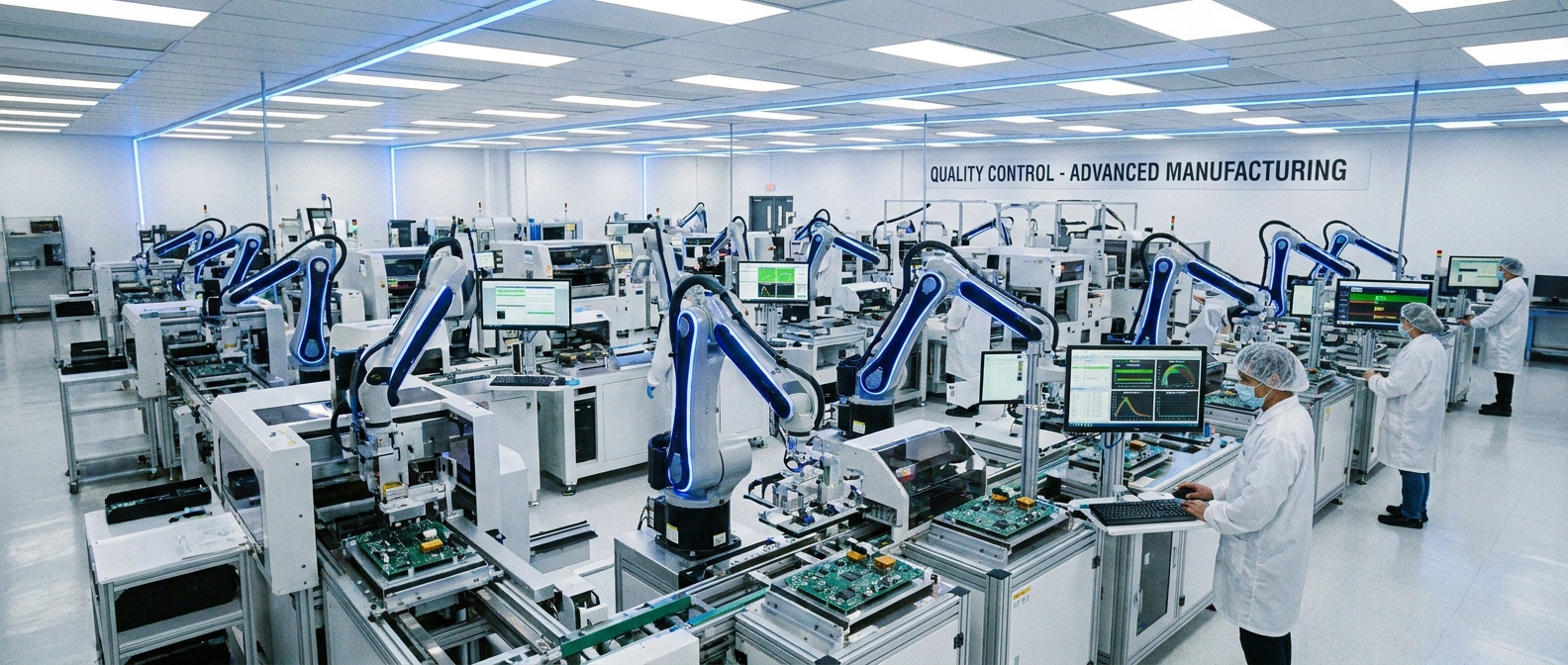
The benchmark to look for is automated testing of every individual unit before shipment, not just batch sampling. Manufacturers who run 1,000 or more automated quality tests per unit are subjecting each inverter to a comprehensive stress protocol that catches component defects, assembly errors, and performance deviations before the product reaches your project site. This level of testing requires significant capital investment in test equipment, which itself signals a manufacturer’s commitment to quality.
Specific testing protocols that indicate serious quality commitment include:
- Burn-in testing: Running the inverter under load for an extended period to identify early-life failures (infant mortality)
- Thermal cycling: Exposing units to temperature extremes to verify solder joint integrity and component stability
- Hi-pot (high potential) testing: Verifying electrical isolation between DC and AC circuits
- MPPT accuracy testing: Confirming the maximum power point tracking algorithm performs within specification
- Protection function testing: Verifying that overvoltage, undervoltage, and anti-islanding protections activate correctly
When speaking with manufacturers, ask for their quality test report format and whether you can receive a unit-specific test certificate with each shipment. Manufacturers confident in their processes will provide this without hesitation.
4. Warranty Terms and Replacement Policy
Warranty terms are one of the clearest signals of a manufacturer’s confidence in their own product’s inverter reliability. A manufacturer offering a 5-year repair warranty is telling you something very different from one offering a 12-year full replacement warranty. The difference is not just duration. It is the nature of the commitment.
A repair warranty means the manufacturer will attempt to fix a failed unit, which involves logistics, turnaround time, and the risk of recurring failures in a repaired unit. A full replacement warranty means a failed unit is replaced with a new one, eliminating repair uncertainty and minimizing your client’s downtime. For EPCs managing O&M contracts, this distinction has direct financial implications.
Key warranty evaluation criteria include:
- Duration: 10 years is the industry standard; 12 years signals above-average confidence
- Scope: Does it cover all components, or are certain parts excluded?
- Replacement vs. repair: Full replacement is significantly more valuable for EPCs
- Claim process: Is the warranty digital and easy to register? What is the response time commitment?
- Transferability: Can the warranty transfer to a new facility owner if the property is sold?
- Manufacturer solvency: A 12-year warranty is only valuable if the manufacturer will still exist in year 10
Digital warranty systems that allow online registration, claim submission, and status tracking reduce administrative friction for EPCs managing large installation portfolios. If you are evaluating Qbits inverters, you can download the warranty documentation directly to review the full terms before making a procurement decision.
For a detailed financial analysis of how warranty terms affect total cost of ownership, see our guide on Solar Inverter Lifespan: Complete Financial Planning Guide.
5. Manufacturer Track Record and Financial Stability
A solar inverter installed today needs manufacturer support for the next 10 to 25 years. This makes the financial stability and operational track record of the manufacturer a direct component of inverter reliability from your project’s perspective. An inverter from a manufacturer that exits the market in year 5 leaves you with no warranty support, no spare parts, and no firmware updates for the remaining project life.
Evaluating manufacturer track record involves several dimensions. Years in operation is a starting point, but it is not sufficient on its own. A manufacturer backed by a well-established parent group or conglomerate carries significantly lower financial risk than a standalone startup, even if the standalone startup has newer technology. The parent group’s balance sheet, reputation, and operational infrastructure provide a stability buffer that matters when you are making a 12-year warranty commitment.
Practical steps for evaluating manufacturer stability:
- Research the parent company or group backing the inverter brand
- Check the total installed base (number of units deployed in the field)
- Look for references from EPCs who have used the brand for 3 or more years
- Assess the manufacturer’s service network density in your operating regions
- Evaluate their response to past product issues (recalls, firmware updates, field failures)
For a comprehensive evaluation of inverter manufacturers operating in India, our guide on Solar Inverter Manufacturers in India: Complete Evaluation Guide for EPCs and Distributors (2026) provides a structured comparison framework.
6. Weather and Environmental Protection Ratings
India’s geographic and climatic diversity creates some of the most demanding operating conditions for solar inverters anywhere in the world. Rooftop installations in Rajasthan face ambient temperatures above 50°C in summer. Coastal installations in Kerala and Tamil Nadu contend with salt-laden humid air. Installations across the Indo-Gangetic plain deal with heavy dust accumulation. Monsoon regions experience intense rainfall and high humidity for months at a time. An inverter’s inverter reliability in Indian conditions depends heavily on how well it is engineered to handle these environmental stresses.
The IP (Ingress Protection) rating system provides a standardized measure of an enclosure’s resistance to solid particles and liquids. For Indian rooftop installations:
- IP65: Protected against dust ingress and low-pressure water jets. Acceptable for sheltered installations.
- IP66: Protected against dust ingress and high-pressure water jets. Recommended for exposed rooftop installations in monsoon-prone regions.
- IP67/IP68: Submersion-rated. Relevant for ground-mount installations in flood-prone areas.
Beyond IP ratings, evaluate the inverter’s specified operating temperature range. A unit rated for operation up to 60°C ambient temperature provides a meaningful safety margin over one rated to 45°C in regions where rooftop temperatures regularly exceed ambient air temperature by 10 to 15°C. Thermal management design, including heat sink geometry, fan quality (if applicable), and thermal derating curves, directly affects how the inverter performs and ages in high-temperature environments.
7. Surge and Voltage Protection Features
India’s power grid, while improving, still presents significant voltage fluctuation and surge risks for solar installations. Grid voltage variations, lightning-induced surges, and switching transients can damage inverter components and trigger premature failures. For EPCs, an inverter without robust built-in protection is a field reliability risk that will generate service calls and warranty claims throughout the project life.
The key protection features to verify in any inverter you evaluate include:
- DC Surge Protection Devices (SPDs): Protect the inverter’s DC input from voltage spikes originating on the solar array side, including lightning strikes on or near the array
- AC Surge Protection Devices (SPDs): Protect against grid-side transients and switching surges
- Anti-islanding protection: Mandatory for grid-connected systems; prevents the inverter from energizing a de-energized grid section, protecting utility workers and equipment
- Overvoltage and undervoltage protection: Automatic disconnection when grid voltage exceeds safe operating limits
- Over-frequency and under-frequency protection: Disconnection during grid frequency anomalies
- Reverse polarity protection: Prevents damage from incorrect DC wiring during installation
Some manufacturers offer SPDs as optional add-ons at additional cost. Others integrate them as standard features. For Indian grid conditions, integrated DC and AC SPDs should be treated as non-negotiable requirements, not optional upgrades. An inverter that fails due to a grid surge event that built-in protection would have absorbed is a reliability failure that was entirely preventable at the procurement stage.
8. Monitoring Capabilities and Remote Diagnostics
Advanced monitoring capability is often categorized as a convenience feature. For EPCs managing multiple installations, it is actually a core component of inverter reliability in practice. Here is why: the faster a fault is detected and diagnosed, the shorter the downtime. Mean Time to Repair (MTTR) is a key reliability metric, and remote monitoring directly compresses MTTR by enabling fault detection before the client notices a problem and by providing diagnostic data that allows your service team to arrive on site with the right parts and knowledge.
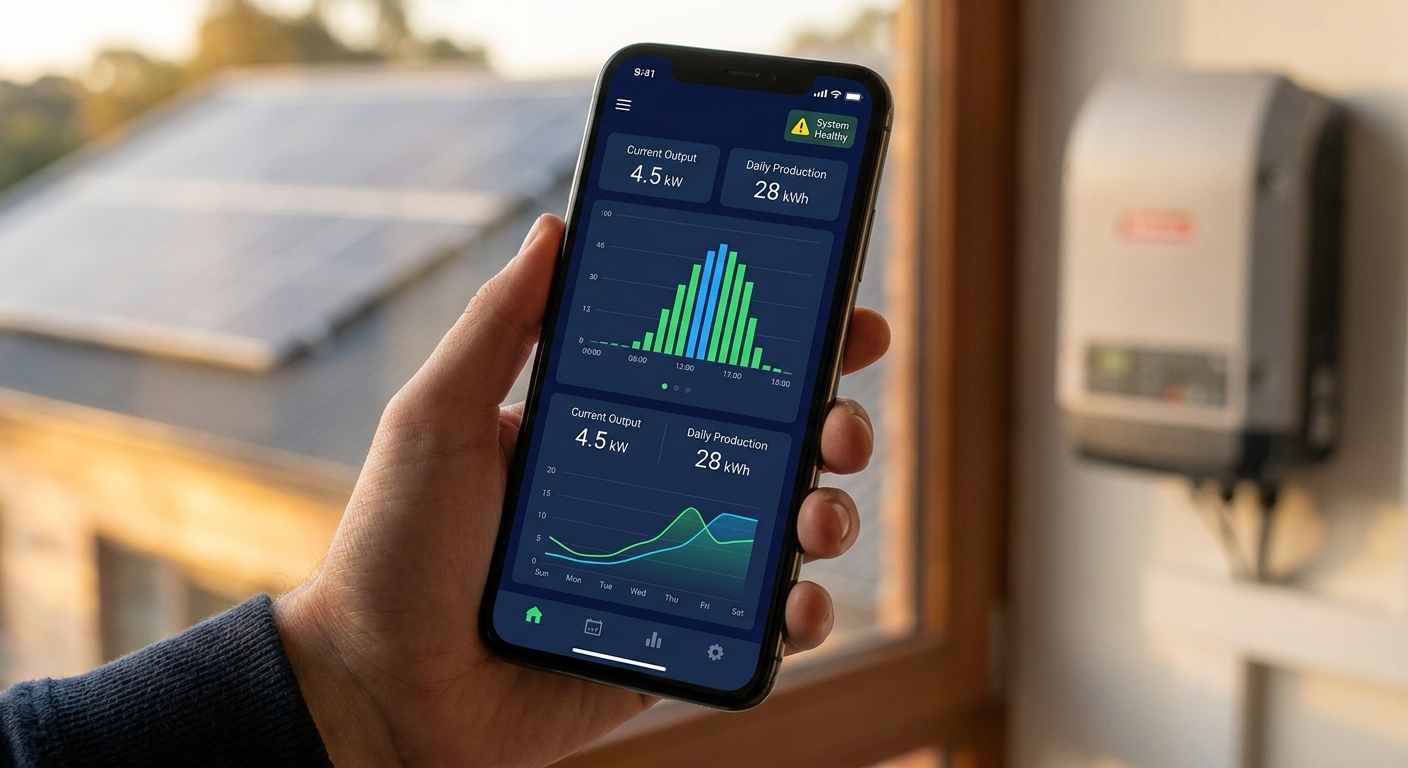
Modern inverter monitoring systems have evolved well beyond basic data logging. AI-powered monitoring platforms can identify performance anomalies that indicate developing faults before they cause complete failure. This predictive capability transforms maintenance from reactive to proactive, reducing both downtime and the cost of emergency service dispatch.
Connectivity options matter for India’s diverse installation environments:
- Wi-Fi connectivity: Suitable for residential and commercial installations with reliable broadband
- 4G connectivity: Essential for remote or industrial installations without reliable Wi-Fi infrastructure
- Bluetooth: Useful for on-site commissioning and local diagnostics without network dependency
- WhatsApp integration: Particularly relevant for the Indian market, where WhatsApp is the dominant business communication platform. Real-time alerts delivered via WhatsApp ensure that facility managers and EPC service teams receive fault notifications through a channel they actively monitor
When evaluating monitoring systems, also consider data sovereignty. Inverter performance data stored on India-based servers provides better data security and regulatory compliance than data routed through overseas cloud infrastructure. For more detail on monitoring system evaluation, see our comprehensive guide on Solar Inverter Monitoring Systems in India (2026).
9. Efficiency Ratings and Long-Term Performance Data
Peak efficiency ratings are widely cited in inverter marketing materials, but they tell only part of the story. A 98% peak efficiency figure is meaningful, but what matters more for inverter reliability and long-term ROI is the efficiency curve across the full operating range, particularly at partial load conditions where inverters spend the majority of their operating hours.
High efficiency across the operating range indicates well-designed power conversion circuitry with low internal losses. Low internal losses mean less heat generation, which directly reduces thermal stress on components and extends inverter lifespan. In this way, efficiency is not just a performance metric. It is a reliability indicator. An inverter running cooler under the same load conditions will age more slowly and fail less frequently than a less efficient unit.
Additional performance specifications that signal reliability include:
- Low start-up voltage: An inverter that begins generating power at lower irradiance levels captures more energy in morning and evening hours, and also indicates a well-calibrated MPPT system
- DC oversizing capability: The ability to accept up to 100% DC oversizing (connecting more panel capacity than the inverter’s AC rating) allows EPCs to optimize system design for Indian irradiance profiles without stressing the inverter
- Wide MPPT voltage range: A broader MPPT input range provides flexibility in string design and maintains performance under partial shading or temperature-induced voltage variations
When requesting performance data from manufacturers, ask for field performance statistics from deployed installations, not just laboratory test results. Manufacturers with large installed bases in India should be able to provide mean time between failures (MTBF) data and field efficiency statistics. If a manufacturer cannot or will not provide this data, treat it as a significant reliability concern.
For a detailed analysis of how efficiency and performance specifications affect project economics, our Solar Inverter Pricing Strategies for EPCs (2026) guide covers the full cost-benefit framework.
Inverter Reliability Checklist: A Quick Reference for EPCs

Use the following checklist when evaluating any inverter brand or model for your project pipeline. A supplier that cannot provide satisfactory answers across all 9 categories should be disqualified or deprioritized, regardless of pricing.
The 9-Indicator Inverter Reliability Checklist
- Component Quality: Can the manufacturer name their key component suppliers? Are components from recognized, traceable sources?
- Certifications: Does the specific model hold current BIS and IEC certifications? What is the IP rating?
- Quality Testing: How many automated tests are performed per unit? Is a unit-specific test certificate available?
- Warranty Terms: Is it a full replacement warranty? What is the duration and claim process?
- Manufacturer Stability: What is the parent group or backing? What is the total installed base in India?
- Environmental Protection: Is the IP rating appropriate for your installation environment? What is the operating temperature range?
- Surge Protection: Are DC and AC SPDs integrated as standard? What grid protection functions are included?
- Monitoring: What connectivity options are available? Does the platform offer AI-powered fault detection and real-time alerts?
- Efficiency and Performance Data: What is the efficiency across the operating range? Can the manufacturer provide field MTBF data?
Red Flags That Should Disqualify a Supplier
- Inability or unwillingness to disclose component origins
- Certifications that do not match the specific model being purchased
- Warranty terms that are repair-only with no replacement commitment
- No verifiable installed base or field performance data in India
- SPDs offered only as paid add-ons for Indian market installations
- No remote monitoring capability or data stored exclusively on overseas servers
- Pricing significantly below market that cannot be explained by legitimate scale advantages
How Qbits Inverters Address Each Reliability Indicator
Qbits inverters are engineered specifically for the Indian market with each of these 9 reliability indicators built into the product design and manufacturing process. German-grade electronic components form the foundation of every unit. BIS and IEC certifications cover the full product range. Each inverter undergoes 1,000+ automated quality tests before shipment. The 12-year full replacement warranty reflects genuine confidence in long-term product performance. IP66 weather protection addresses India’s demanding rooftop conditions. Integrated DC and AC SPDs protect against India’s grid voltage challenges. AI-powered WhatsApp monitoring with Wi-Fi, 4G, and Bluetooth connectivity enables proactive fault management. And 98% efficiency with low start-up voltage and up to 100% DC oversizing capability delivers the performance data that serious EPCs require.
Backed by the Heaven Group legacy, Qbits combines the financial stability and operational infrastructure that a 12-year warranty commitment demands. To explore the full product range and specifications, visit Qbits product portfolio.
Frequently Asked Questions About Inverter Reliability
What is the average lifespan of a reliable solar inverter in India?
A well-manufactured solar inverter with quality components, proper installation, and adequate environmental protection should last 10 to 15 years in Indian conditions. String inverters typically have a design life of 10 to 12 years, while premium units with superior thermal management and component quality can exceed 15 years. Inverter reliability and lifespan are directly correlated with the quality indicators covered in this guide.
How do I verify an inverter manufacturer’s warranty claims?
Request the full warranty document before purchase and review the specific terms, exclusions, and claim procedures. Check whether the warranty is registered digitally and whether you can track claim status online. Ask for references from EPCs who have successfully processed warranty claims with the manufacturer. A manufacturer with a transparent, digital warranty system and verifiable claim history is significantly more trustworthy than one offering verbal assurances.
What certifications are mandatory for solar inverters in India?
BIS certification under IS 16221 (for grid-connected inverters) is mandatory for solar inverters sold in India under the government’s quality control order. IEC 62109 safety certification and IEC 61683 efficiency measurement standards are the relevant international benchmarks. MNRE (Ministry of New and Renewable Energy) approved models lists are also relevant for government-funded projects. Always verify that the specific model and power rating you are purchasing holds current, valid certification.
How does monitoring improve inverter reliability outcomes?
Remote monitoring reduces Mean Time to Repair (MTTR) by enabling early fault detection and remote diagnostics. AI-powered monitoring platforms can identify performance anomalies that indicate developing component failures before they cause complete inverter shutdown. For EPCs managing O&M contracts, monitoring systems that deliver real-time alerts via platforms like WhatsApp allow faster response and lower service costs. Monitoring does not prevent failures, but it dramatically reduces their impact on generation revenue and client satisfaction.
What is the difference between a repair warranty and a replacement warranty?
A repair warranty commits the manufacturer to fixing a failed unit, which involves shipping logistics, repair turnaround time (often 2 to 6 weeks), and the risk of recurring failures in a repaired unit. A full replacement warranty commits the manufacturer to providing a new unit in exchange for the failed one, eliminating repair uncertainty and minimizing client downtime. For EPCs managing O&M contracts, a full replacement warranty significantly reduces the financial risk of inverter failures over the project life.
How should EPCs compare inverter reliability across different brands in India?
Use the 9-indicator framework in this guide as a structured scoring matrix. Assign each indicator a weight based on your project type and operating environment, then score each candidate brand against the criteria. Supplement the framework with references from EPCs who have deployed each brand in similar conditions, and request field MTBF data directly from manufacturers. Price should be evaluated last, after reliability qualification is complete. For a broader comparison of inverter brands in India, our Solar Inverter Manufacturers in India guide provides a detailed market overview.
Make Inverter Reliability Your Competitive Advantage
The EPCs who build the strongest reputations in India’s solar market are not necessarily the ones who find the cheapest inverters. They are the ones who consistently deliver installations that perform reliably for years without unplanned downtime, warranty disputes, or client complaints. Inverter reliability is the foundation of that reputation, and it is built at the procurement stage, not after installation.
By applying the 9-indicator framework in this guide, you can systematically identify inverters that will protect your project ROI, minimize your O&M costs, and strengthen your client relationships over the long term. Every indicator, from component quality and certifications to warranty terms and monitoring capabilities, gives you a clearer picture of what you are actually buying when you select an inverter for your next project.
If you are evaluating Qbits inverters for your upcoming projects and want to discuss how our specifications address your specific installation requirements, reach out to our team directly via WhatsApp for a technical consultation. You can also explore our full product range or contact our support team to get the detailed specifications and field performance data you need to make a confident procurement decision. For EPCs and distributors interested in a long-term supply partnership, apply to become a Qbits channel partner and access dedicated support for your project pipeline.
This blog post was written using thestacc.com