



Solar Inverter Efficiency: 7 Critical Factors That Impact Your System’s Performance

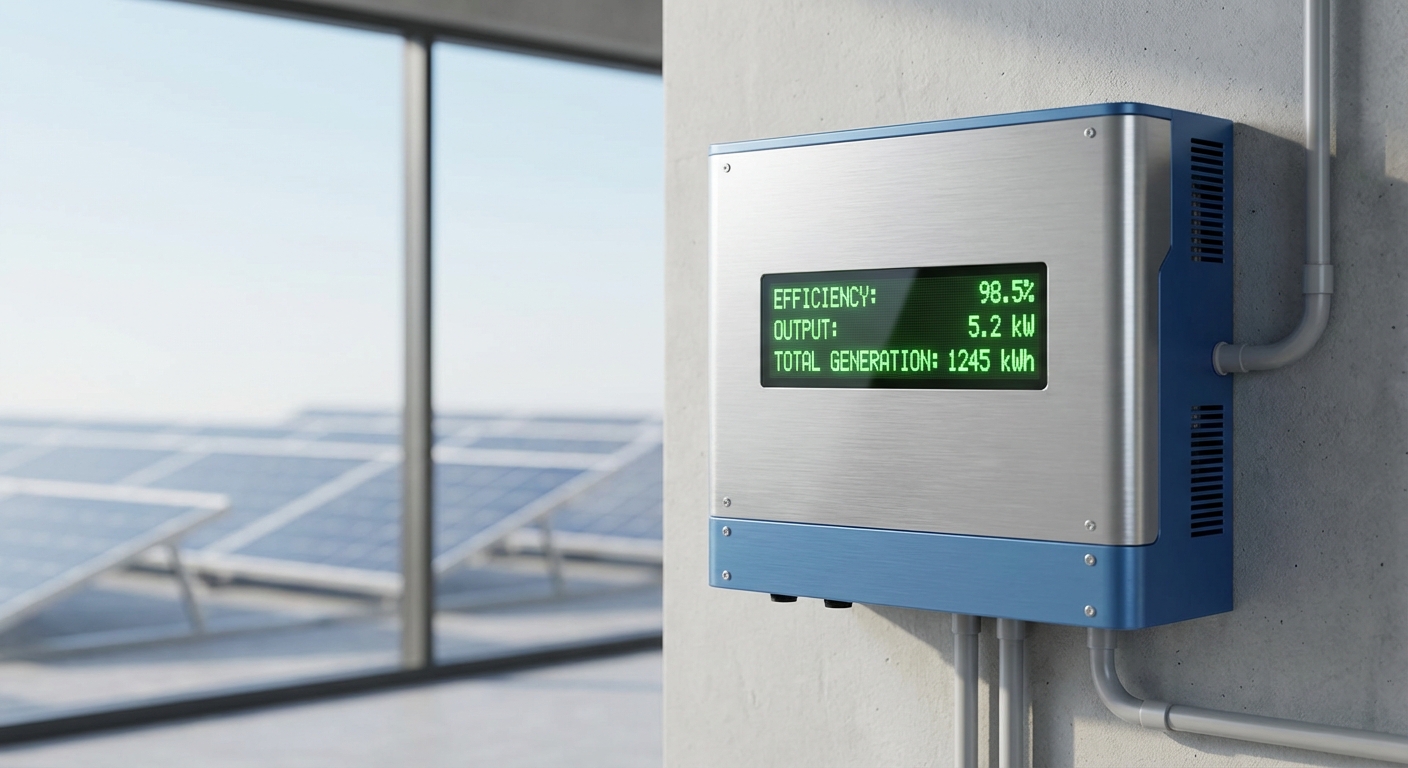
When evaluating solar inverters for your installation project, efficiency ratings often appear as simple percentages on specification sheets. But behind that “98% efficiency” claim lies a complex interplay of technologies, design choices, and engineering decisions that directly impact your system’s energy production, financial returns, and long-term performance. For solar installation companies, EPCs, and facility owners across India, understanding what truly drives inverter efficiency is essential for making informed equipment selections that maximize ROI.
Solar inverter efficiency determines how much of the DC power generated by your solar panels actually gets converted into usable AC electricity. Even a seemingly small difference—say, 95% versus 98% efficiency—can translate into thousands of kilowatt-hours of lost production over a system’s lifetime. In commercial and industrial installations where energy production directly affects operational costs and payback periods, these efficiency factors become critical business considerations.
This comprehensive guide examines the seven critical factors that determine solar inverter efficiency in real-world conditions. From conversion technologies and MPPT performance to thermal management and component quality, you’ll learn how to evaluate inverter specifications beyond marketing claims, identify red flags that signal potential performance issues, and select inverters engineered for sustained efficiency in India’s demanding climate conditions.
Understanding Solar Inverter Efficiency: Why It Matters for Your Bottom Line
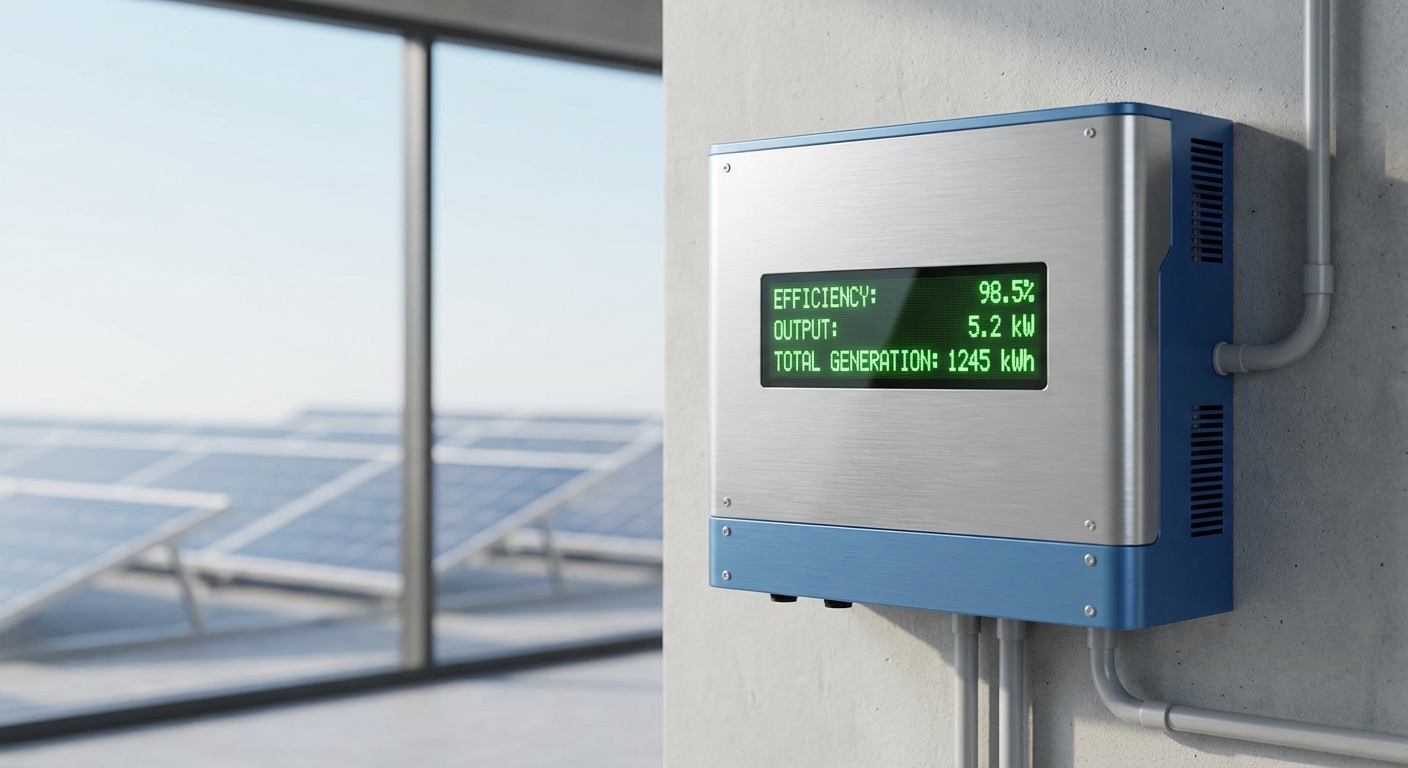
Solar inverter efficiency represents the ratio of AC power output to DC power input, expressed as a percentage. When an inverter operates at 98% efficiency, it converts 98% of the incoming DC power into AC electricity, with the remaining 2% lost primarily as heat. While this might seem negligible, the cumulative impact over years of operation significantly affects system economics.
Consider a 100 kW commercial solar installation in India generating approximately 150,000 kWh annually. With a 95% efficient inverter, you lose 7,500 kWh per year to conversion losses. A 98% efficient inverter reduces this to just 3,000 kWh—a difference of 4,500 kWh annually. Over a 25-year system lifetime, this represents 112,500 kWh of additional production, translating to substantial financial value at current and future electricity rates.
For solar installation companies and EPCs, inverter efficiency directly impacts your ability to deliver promised energy production figures to clients. Underperforming inverters lead to disappointed customers, warranty claims, and reputation damage. For distributors and channel partners, offering high-efficiency inverters with proven performance becomes a competitive differentiator in an increasingly sophisticated market.
In India’s solar market, where rooftop temperatures regularly exceed 40°C and grid conditions can be challenging, inverter efficiency isn’t just about peak performance specifications. It’s about sustained, reliable conversion efficiency across varying temperatures, input voltages, and load conditions throughout the system’s operational life. The following seven factors determine whether an inverter delivers on its efficiency promises or gradually degrades, eroding your investment returns.
1. Conversion Efficiency Ratings: Decoding the Numbers That Matter
When reviewing inverter datasheets, you’ll encounter several different efficiency metrics, each revealing different aspects of performance. Understanding these distinctions is crucial for accurate system performance modeling and equipment comparison.
Peak efficiency represents the maximum conversion efficiency an inverter achieves under optimal conditions—typically at 50-75% of rated power with ideal temperature and voltage inputs. While manufacturers prominently feature this number (often 98% or higher for quality inverters), it doesn’t reflect real-world performance across varying load conditions.
Weighted efficiency metrics provide more realistic performance indicators by calculating efficiency across different load levels weighted by typical operating conditions. The European efficiency standard (Euro efficiency) and California Energy Commission efficiency (CEC efficiency) use different weighting formulas based on regional solar irradiance patterns. For Indian installations, Euro efficiency typically provides a more relevant benchmark than peak efficiency alone.
A quality inverter maintains high efficiency across a broad load range—from 20% to 100% of rated capacity. Inverters with poor efficiency curves may achieve impressive peak numbers but suffer significant losses at partial loads, which occur frequently during morning, evening, and cloudy conditions. When comparing specifications, examine the efficiency curve graph, not just the headline peak efficiency number.
The difference between a 95% weighted efficiency and 98% weighted efficiency represents approximately 3% more energy production annually. For a 50 kW system generating 75,000 kWh per year, this translates to 2,250 kWh of additional production—equivalent to several months of electricity for a typical commercial facility. Over the inverter’s operational lifetime, this efficiency advantage compounds significantly.
Modern inverters from manufacturers like Qbits achieve 98% efficiency through advanced power electronics, optimized circuit design, and high-quality components that minimize resistive losses and switching losses. When evaluating inverter options, request complete efficiency curves and weighted efficiency calculations rather than relying solely on peak efficiency claims.
2. MPPT Technology: Maximizing Power Point Tracking Performance
Maximum Power Point Tracking (MPPT) technology represents one of the most critical efficiency factors in solar inverters, yet it’s often misunderstood or oversimplified in product comparisons. MPPT algorithms continuously adjust the electrical operating point of the solar array to extract maximum available power as conditions change throughout the day.
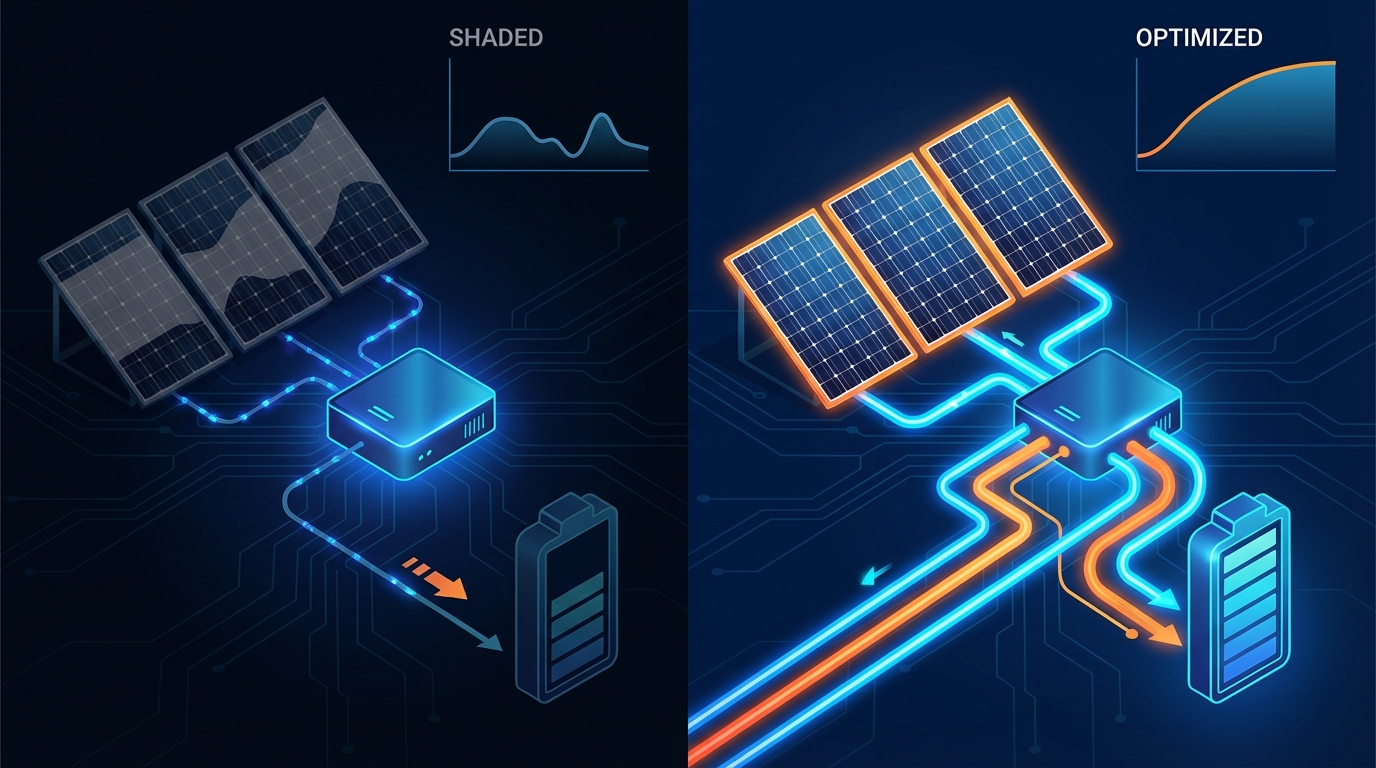
Solar panels have a specific voltage and current combination where they produce maximum power, which shifts constantly based on irradiance, temperature, and shading conditions. Without MPPT, a solar system might operate at only 70-80% of its potential output. High-quality MPPT algorithms with fast tracking speeds can capture 99.5% or more of available power, while inferior implementations may achieve only 97-98% MPPT efficiency—a subtle but significant difference.
MPPT tracking speed determines how quickly the inverter responds to changing conditions. In India’s variable weather conditions, particularly during monsoon season when cloud cover changes rapidly, fast MPPT tracking (scanning the power curve multiple times per second) prevents energy losses during transitions. Slower MPPT algorithms may lag behind changing conditions, losing production during these critical periods.
The number of MPPT inputs also affects system efficiency, particularly for installations with multiple roof orientations, varying tilt angles, or partial shading conditions. Dual or multi-MPPT configurations allow different array sections to operate at their individual optimal points rather than forcing the entire system to a compromise operating point. For commercial installations with complex roof layouts, multi-MPPT inverters can improve energy harvest by 5-15% compared to single-MPPT designs.
When evaluating MPPT performance, look for specifications including MPPT efficiency percentage (should be 99.5% or higher), MPPT voltage range (wider is better for flexibility), and the number of independent MPPT trackers. Inverters supporting high DC oversizing ratios—such as Qbits inverters with up to 100% DC oversizing capability—allow you to install more panel capacity per MPPT tracker, optimizing the cost-efficiency balance while maintaining excellent tracking performance.
For solar installation companies designing systems with modern high-wattage panels (750W and above), MPPT technology that accommodates these higher voltages and power levels without efficiency degradation becomes essential. Verify that the inverter’s MPPT range and input specifications align with your panel selection to ensure optimal performance.
3. Temperature Coefficients: How Heat Affects Inverter Performance
Temperature represents one of the most significant real-world factors affecting inverter efficiency, particularly in India where rooftop installations regularly experience ambient temperatures exceeding 40°C and inverter enclosure temperatures can reach 60-70°C during peak summer months.
All inverters experience temperature derating—a reduction in efficiency and maximum output capacity as internal temperatures rise. The temperature coefficient, typically expressed as a percentage loss per degree Celsius above a reference temperature (usually 25°C), quantifies this performance degradation. A quality inverter might have a temperature coefficient of -0.05% per °C, while inferior designs may experience -0.1% or greater losses.
Consider an inverter operating at 50°C internal temperature (common in Indian summer conditions). With a -0.05% temperature coefficient, efficiency decreases by approximately 1.25% compared to rated specifications. With a -0.1% coefficient, losses double to 2.5%. Over thousands of operating hours annually, this difference significantly impacts total energy production.
Effective thermal management design minimizes temperature-related efficiency losses through several approaches. Aluminum heat sinks with optimized fin designs dissipate heat efficiently. Intelligent fan cooling activates when needed to maintain optimal operating temperatures. Advanced inverters use temperature-aware power management that adjusts operating parameters to maintain efficiency even under thermal stress.
The inverter’s operating temperature range specification reveals its thermal capabilities. Quality inverters designed for harsh climates operate reliably from -25°C to +60°C or higher, maintaining efficiency across this range. Inverters with narrow operating ranges (such as -10°C to +45°C) may experience frequent derating or protection shutdowns during India’s extreme summer conditions, directly reducing energy production.
Weather protection ratings also affect long-term efficiency. IP66-rated enclosures, like those used in Qbits inverters, provide complete dust protection and protection against powerful water jets, ensuring that internal components remain clean and properly cooled even in dusty, monsoon-affected environments. Dust accumulation on cooling surfaces or moisture ingress can significantly degrade thermal performance and efficiency over time.
When selecting inverters for Indian installations, prioritize models with robust thermal management, wide operating temperature ranges, and high IP ratings. These specifications directly translate to sustained efficiency in real-world conditions rather than just laboratory test results.
4. Component Quality: The Foundation of Long-Term Efficiency
The internal components of a solar inverter—capacitors, inductors, semiconductors, transformers, and circuit boards—determine both initial efficiency and how well that efficiency is maintained over years of operation. Component quality represents perhaps the most important yet least visible factor affecting inverter performance.
Power semiconductors (IGBTs, MOSFETs, and diodes) handle the actual DC-to-AC conversion process. High-quality semiconductors from established manufacturers feature lower on-resistance and faster switching characteristics, directly reducing conversion losses. Premium semiconductors also exhibit better thermal stability, maintaining efficiency as temperatures rise. The difference between standard and premium semiconductors can account for 1-2% efficiency variation.
Capacitors smooth voltage fluctuations and filter harmonics in the conversion process. Film capacitors and high-grade electrolytic capacitors maintain their electrical characteristics over time and temperature, while low-quality capacitors degrade rapidly, increasing ripple current and reducing efficiency. Capacitor failure represents one of the most common inverter failure modes, often resulting from using inadequate components to reduce manufacturing costs.
German-grade electronic components, as used in Qbits inverters, undergo rigorous quality standards and testing protocols that ensure consistent performance and longevity. These components typically cost 20-40% more than standard alternatives but deliver measurably better efficiency, reliability, and operational lifespan. For commercial installations where inverter replacement involves significant labor costs and production downtime, component quality directly affects total cost of ownership.
Quality testing protocols during manufacturing identify component defects and assembly issues before inverters reach the field. Comprehensive testing—such as the 1000+ automated quality tests performed on each Qbits inverter—verifies that every unit meets efficiency specifications and will maintain performance over time. Manufacturers cutting corners on testing may ship units with marginal components that meet initial specifications but degrade rapidly under real-world stress.
Third-party certifications provide independent verification of component quality and performance. BIS (Bureau of Indian Standards) and IEC (International Electrotechnical Commission) certifications require inverters to meet specific efficiency, safety, and reliability standards through independent testing. While certification doesn’t guarantee superior performance, its absence should raise concerns about whether the manufacturer’s claims have been independently verified.
When evaluating inverters, ask manufacturers specific questions about component sourcing, quality standards, and testing protocols. Vague answers or reluctance to provide component details often indicate cost-cutting measures that will affect long-term efficiency and reliability.
5. DC Oversizing Capability: Optimizing Array-to-Inverter Ratios
DC oversizing—installing more solar panel capacity than the inverter’s rated AC output—represents a powerful strategy for improving overall system efficiency and economics. Understanding how inverters handle oversized arrays directly impacts system design and performance optimization.
The DC-to-AC ratio (also called the inverter loading ratio) compares the total DC panel capacity to the inverter’s AC output rating. A ratio of 1.0 means the panel capacity exactly matches the inverter rating. Ratios of 1.2 to 1.3 (20-30% oversizing) are common in commercial installations, while some systems push to 1.4 or higher in specific circumstances.
DC oversizing improves system efficiency through several mechanisms. Solar panels rarely operate at their rated peak capacity due to temperature effects, soiling, and non-optimal sun angles. By oversizing the array, you ensure the inverter operates closer to its optimal efficiency range (typically 50-75% load) for more hours per day. Morning and evening production increases significantly, extending the productive hours of your installation.
During peak sun conditions, an oversized array may generate more DC power than the inverter can convert, resulting in clipping losses where excess power is curtailed. However, these losses are typically minimal (occurring only during a few peak hours) and are more than offset by increased production during sub-optimal conditions. Proper system modeling balances oversizing benefits against clipping losses to optimize overall energy production.
Inverter DC oversizing capability varies significantly between models. Some inverters support only 110-120% oversizing before experiencing protection shutdowns or efficiency degradation. Advanced inverters like those from Qbits support up to 100% DC oversizing (2.0 ratio), providing maximum design flexibility for optimizing system economics.
For installations using modern high-wattage panels (750W and above), DC oversizing capability becomes even more critical. These panels generate higher voltages and currents that must fall within the inverter’s MPPT voltage range and maximum input current specifications. Inverters specifically designed to support 750W+ panels ensure you can take full advantage of the latest panel technologies without sacrificing efficiency or requiring oversized inverters.
When designing solar systems, work with inverter manufacturers to model different DC-to-AC ratios using site-specific irradiance data. The optimal ratio varies based on location, system orientation, and economic factors, but inverters with high oversizing capability provide the flexibility to optimize each installation for maximum efficiency and ROI.
6. Start-Up Voltage and Low-Light Performance
While peak efficiency during full sun conditions receives the most attention, an inverter’s performance during low-light conditions—early morning, late evening, and cloudy periods—significantly impacts total energy production. Start-up voltage and low-light efficiency separate high-performing inverters from mediocre alternatives.
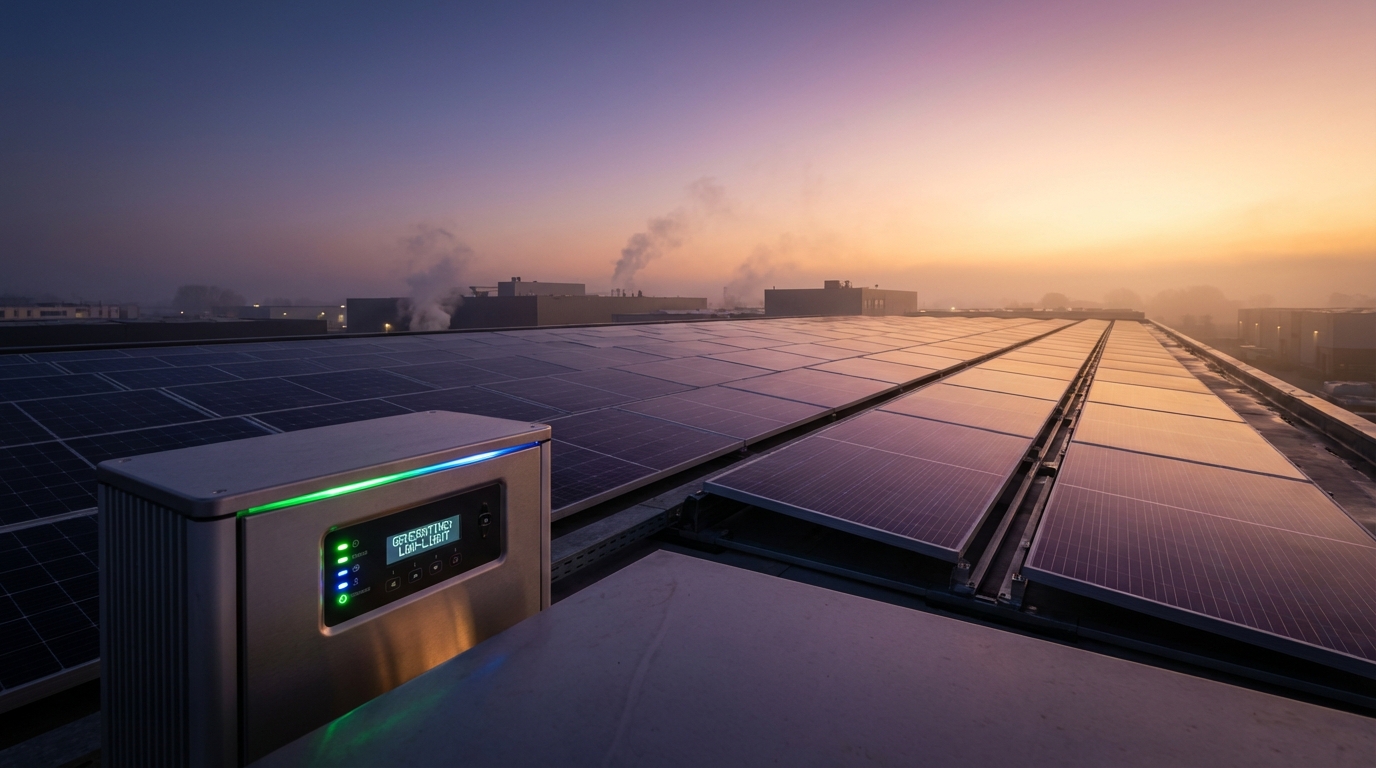
Start-up voltage (also called wake-up voltage) represents the minimum DC voltage required for the inverter to begin operating. Lower start-up voltages allow the inverter to begin producing power earlier in the morning and continue later in the evening as solar irradiance decreases. The difference between a 150V start-up voltage and a 100V start-up voltage can add 30-60 minutes of production time daily—accumulating to significant energy gains over a year.
During India’s monsoon season, cloudy conditions and variable irradiance occur frequently. Inverters with excellent low-light performance maintain high efficiency even when solar production drops to 20-30% of rated capacity. Poor low-light performance may cause the inverter to cycle on and off repeatedly or operate at significantly reduced efficiency, losing valuable production during these extended periods.
The inverter’s MPPT voltage range also affects low-light performance. A wide MPPT range (such as 200V to 850V) allows the inverter to track the maximum power point effectively even as panel voltage drops during low irradiance conditions. Narrow MPPT ranges may force the array to operate outside its optimal point during these periods, reducing efficiency.
For commercial and industrial installations, low-light performance directly affects energy production patterns and grid interaction. Systems that begin producing earlier and continue later provide more consistent daily energy profiles, potentially reducing peak demand charges and improving the value of solar production.
When comparing inverter specifications, examine the start-up voltage, MPPT voltage range, and efficiency curves at partial loads (10%, 20%, 30% of rated capacity). Inverters maintaining 95%+ efficiency down to 20% load will significantly outperform competitors that drop to 85-90% efficiency at these levels, particularly in variable weather conditions common across India.
7. Surge Protection and Power Quality: Protecting Efficiency Over Time
Long-term inverter efficiency depends not just on initial design quality but on the inverter’s ability to withstand electrical stresses that gradually degrade components and performance. Surge protection and power quality management directly affect whether an inverter maintains its efficiency over a 10-15 year operational life.
India’s electrical grid experiences frequent voltage fluctuations, harmonics, and transient surges that stress inverter components. Lightning strikes, even indirect ones several kilometers away, can induce voltage spikes of thousands of volts in solar arrays and grid connections. Without adequate protection, these events cause cumulative damage to sensitive semiconductors and control circuits, gradually degrading efficiency and eventually causing complete failure.
DC surge protection devices (SPDs) on the solar array side protect against lightning-induced surges and static buildup in the PV array. AC surge protection devices on the grid connection side guard against utility-side transients and switching surges. Quality inverters integrate both DC and AC SPDs as standard protection, with appropriate voltage ratings and energy absorption capacity for the installation environment.
Beyond surge protection, the inverter’s response to grid voltage and frequency variations affects both efficiency and longevity. Wide input voltage ranges (such as 160V to 270V AC) allow the inverter to continue operating efficiently during grid voltage fluctuations common in many Indian locations. Inverters with narrow voltage tolerance may disconnect frequently, losing production and subjecting components to repeated start-stop cycles that accelerate wear.
Power quality features including harmonic filtering and power factor correction ensure the inverter delivers clean AC power that doesn’t stress grid infrastructure or the inverter’s own output stage. Poor power quality increases losses in the inverter’s output transformer and filtering components, reducing efficiency and generating excess heat that further degrades performance.
For commercial and industrial installations, power quality directly affects the facility’s overall electrical system. Inverters producing high harmonic distortion may interfere with sensitive equipment, trigger power quality penalties from utilities, or cause premature failure of other electrical components. Quality inverters maintain total harmonic distortion (THD) below 3%, ensuring clean power delivery that maximizes efficiency and system compatibility.
When evaluating inverter protection features, verify that DC and AC surge protection is included as standard (not optional), review the voltage and frequency operating ranges, and examine power quality specifications including THD and power factor. These features protect your efficiency investment over the system’s entire operational life.
Red Flags: Warning Signs of Poor Inverter Efficiency
When evaluating inverter options for your solar projects, certain warning signs indicate potential efficiency issues that may not be apparent from headline specifications. Recognizing these red flags helps you avoid equipment that underperforms in real-world conditions.
Unrealistic efficiency claims above industry standards should trigger skepticism. While 98-98.5% peak efficiency is achievable with quality designs, claims of 99% or higher efficiency often indicate misleading measurement methods or outright fabrication. Similarly, be wary of manufacturers providing only peak efficiency without weighted efficiency or efficiency curves—this often hides poor partial-load performance.
Inadequate warranty coverage signals a manufacturer’s lack of confidence in their product’s long-term performance. Standard 5-year warranties are common in the industry, but manufacturers using premium components and rigorous testing offer extended warranties of 10-12 years. Qbits provides a 12-year full replacement warranty, reflecting confidence in component quality and long-term efficiency maintenance. Short warranties or warranties with numerous exclusions suggest the manufacturer expects significant failure rates.
Missing thermal specifications or vague temperature ratings indicate inadequate thermal management design. Quality inverters clearly specify operating temperature ranges, derating curves, and cooling methods. Absence of this information suggests the inverter may experience significant efficiency losses or frequent shutdowns in India’s hot climate conditions.
Lack of third-party certifications (BIS, IEC, or equivalent standards) means the manufacturer’s efficiency and performance claims haven’t been independently verified. While certification doesn’t guarantee superior performance, its absence should raise questions about whether the product meets basic quality and safety standards.
Poor monitoring capabilities or absence of performance tracking features may indicate the manufacturer prefers customers not closely examine actual efficiency and production. Modern inverters should provide detailed monitoring of input power, output power, efficiency, and performance metrics. Advanced systems like Qbits’ AI-powered WhatsApp monitoring make performance tracking accessible and proactive, alerting you to efficiency degradation before it significantly impacts production.
Vague component descriptions such as “high-quality components” or “international standard parts” without specific details about component sourcing, quality grades, or testing protocols often hide cost-cutting measures. Manufacturers confident in their component quality specifically mention standards like “German-grade components” or “Tier-1 semiconductor manufacturers” and provide detailed testing information.
Price can also signal potential issues. While expensive doesn’t always mean better, inverters priced significantly below market averages (20-30% less than established brands) likely achieve those savings through component quality compromises that will affect efficiency and longevity. For commercial installations where inverter performance directly impacts ROI, the lowest initial cost rarely represents the best value.
Monitoring and Maintaining Peak Efficiency
Even the highest-quality inverter requires proper monitoring and maintenance to sustain peak efficiency throughout its operational life. Modern monitoring systems transform efficiency management from reactive troubleshooting to proactive performance optimization.
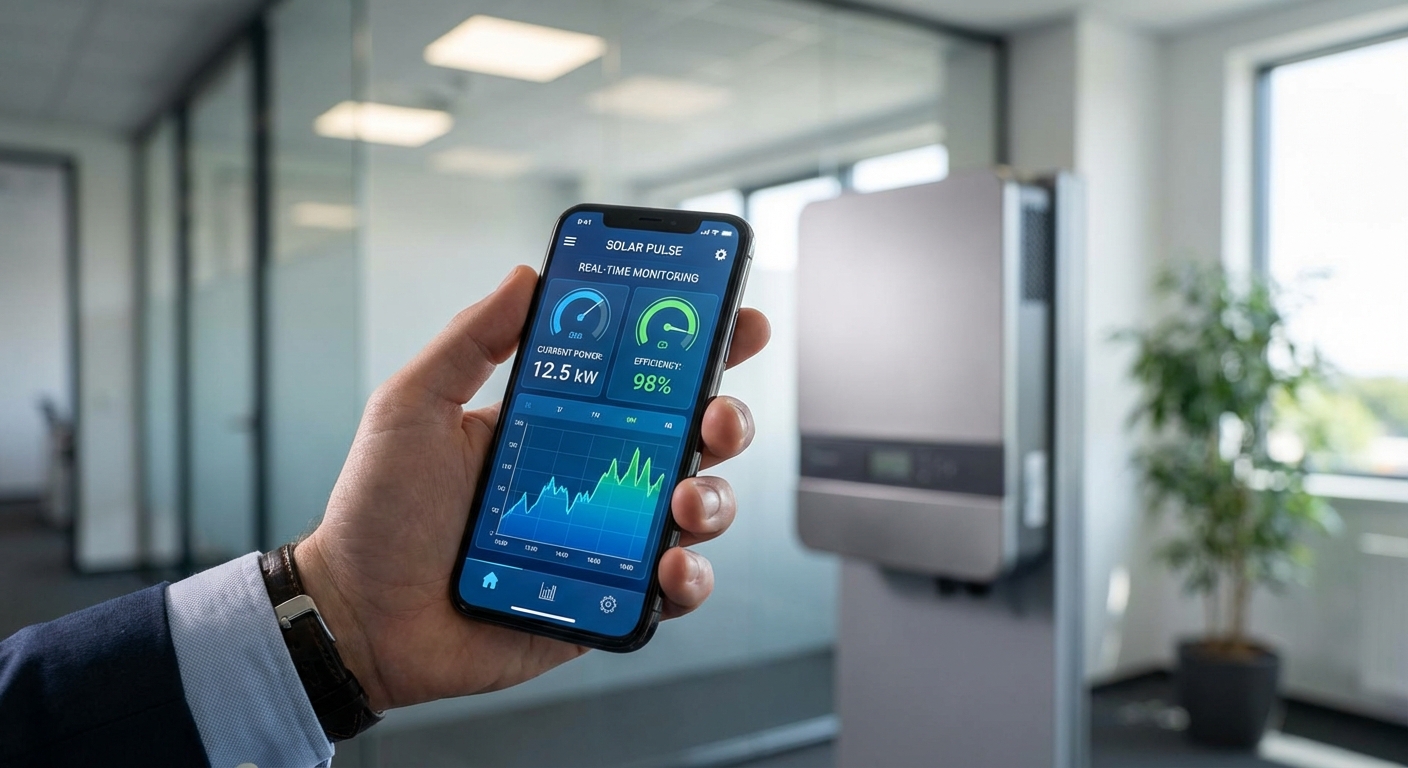
Real-time efficiency monitoring allows you to track actual conversion efficiency continuously, comparing current performance against baseline specifications. Gradual efficiency degradation—often the first sign of component aging or developing issues—becomes visible in monitoring data long before it causes obvious production losses. Early detection enables preventive maintenance that restores efficiency before significant energy losses accumulate.
Advanced monitoring systems track multiple performance parameters beyond simple energy production. DC input voltage and current, AC output voltage and current, power factor, operating temperature, and MPPT performance all provide insights into inverter health and efficiency. Deviations from expected patterns indicate specific issues requiring attention.
AI-powered monitoring, such as the system integrated into Qbits inverters, goes beyond simple data logging to provide intelligent analysis and proactive alerts. Machine learning algorithms establish performance baselines for your specific installation, automatically detecting anomalies that indicate efficiency degradation, component issues, or configuration problems. Rather than requiring constant manual monitoring, the system alerts you via WhatsApp when attention is needed, enabling rapid response to efficiency issues.
For solar installation companies and EPCs managing multiple client installations, centralized monitoring platforms allow you to track efficiency across your entire portfolio. This capability enables you to identify systemic issues, compare performance across different inverter models or installation types, and provide proactive service that differentiates your business from competitors.
Preventive maintenance based on monitoring data sustains efficiency over time. Regular cleaning of cooling fans and heat sinks, verification of electrical connections, and firmware updates all contribute to maintained performance. Monitoring data guides maintenance scheduling, focusing resources on systems showing early signs of efficiency degradation rather than applying generic maintenance schedules.
For commercial and industrial installations, efficiency monitoring integrates with broader energy management systems, providing visibility into how solar production affects overall facility energy consumption and costs. This integration enables sophisticated energy optimization strategies that maximize the value of your solar investment.
When selecting inverters, prioritize models with comprehensive monitoring capabilities, user-friendly interfaces accessible via mobile devices, and proactive alerting systems. The ability to track and maintain efficiency over time often proves more valuable than marginal differences in initial efficiency specifications.
Making the Right Choice: Evaluating Inverter Efficiency for Your Project
Selecting the right inverter for your solar installation requires balancing multiple efficiency factors against project requirements, budget constraints, and long-term performance goals. Use this comprehensive checklist to evaluate inverter options systematically:
Efficiency Specifications Checklist:
- Weighted efficiency (Euro or CEC) of 97% or higher, not just peak efficiency
- Complete efficiency curve showing performance from 10% to 100% load
- MPPT efficiency of 99.5% or higher with appropriate number of MPPT inputs for your array design
- Operating temperature range suitable for your location (-25°C to +60°C or better)
- Temperature coefficient of -0.05% per °C or better
- IP65 or IP66 weather protection rating for outdoor installations
- DC oversizing capability matching your system design requirements (1.3x to 2.0x)
- Support for high-wattage panels (750W+) if using modern modules
- Low start-up voltage (under 120V) for extended daily production
- Integrated DC and AC surge protection devices
- Wide input voltage range for grid stability tolerance
- THD under 3% for clean power quality
Quality and Support Checklist:
- Detailed component quality specifications (German-grade or equivalent)
- Comprehensive quality testing protocols (1000+ tests per unit)
- BIS and IEC certifications from independent testing laboratories
- Extended warranty coverage (10+ years) with full replacement terms
- Advanced monitoring capabilities with mobile access and proactive alerts
- Responsive technical support and service network in your region
- Clear documentation including installation manuals and performance data
Questions to Ask Manufacturers and Suppliers:
- What is the weighted efficiency (not just peak) and can you provide the complete efficiency curve?
- What specific component brands and quality grades are used in critical subsystems?
- How many quality tests does each unit undergo before shipping?
- What is the expected efficiency degradation over 10-15 years of operation?
- What monitoring capabilities are included and what is the data retention period?
- What is the typical service response time in our region?
- Can you provide references from similar installations in comparable climate conditions?
Qbits inverters address all seven critical efficiency factors through integrated design choices: 98% weighted efficiency through premium power electronics, advanced MPPT technology with up to 100% DC oversizing capability, robust thermal management with IP66 protection for India’s climate, German-grade components verified through 1000+ automated tests, support for modern 750W+ panels, low start-up voltage for extended production hours, and comprehensive surge protection for long-term reliability.
The 12-year full replacement warranty reflects confidence in sustained efficiency over time, while AI-powered WhatsApp monitoring provides proactive efficiency tracking without complex software. For solar installation companies, EPCs, distributors, and facility owners seeking inverters that deliver promised efficiency in real-world Indian conditions, this comprehensive approach to efficiency optimization ensures maximum energy production and ROI.
Ready to discuss how high-efficiency inverters can optimize your solar projects? Contact our technical team for detailed efficiency specifications, system design consultation, and performance modeling for your specific installation requirements. Explore our complete range of on-grid and hybrid inverters engineered for maximum efficiency, or become a partner to offer premium efficiency solutions to your clients.
For ongoing support and efficiency optimization throughout your inverter’s operational life, access our technical support resources and digital warranty system. Stay connected with the latest efficiency innovations and technical insights by following us on LinkedIn, Instagram, and YouTube for product demonstrations and installation best practices.
Inverter efficiency isn’t just a specification—it’s the foundation of solar system performance, financial returns, and long-term satisfaction. By understanding the seven critical factors that determine real-world efficiency and selecting inverters engineered to excel across all these dimensions, you ensure your solar investments deliver maximum value for decades to come.