



AI-Powered vs Traditional Inverter Technology in India

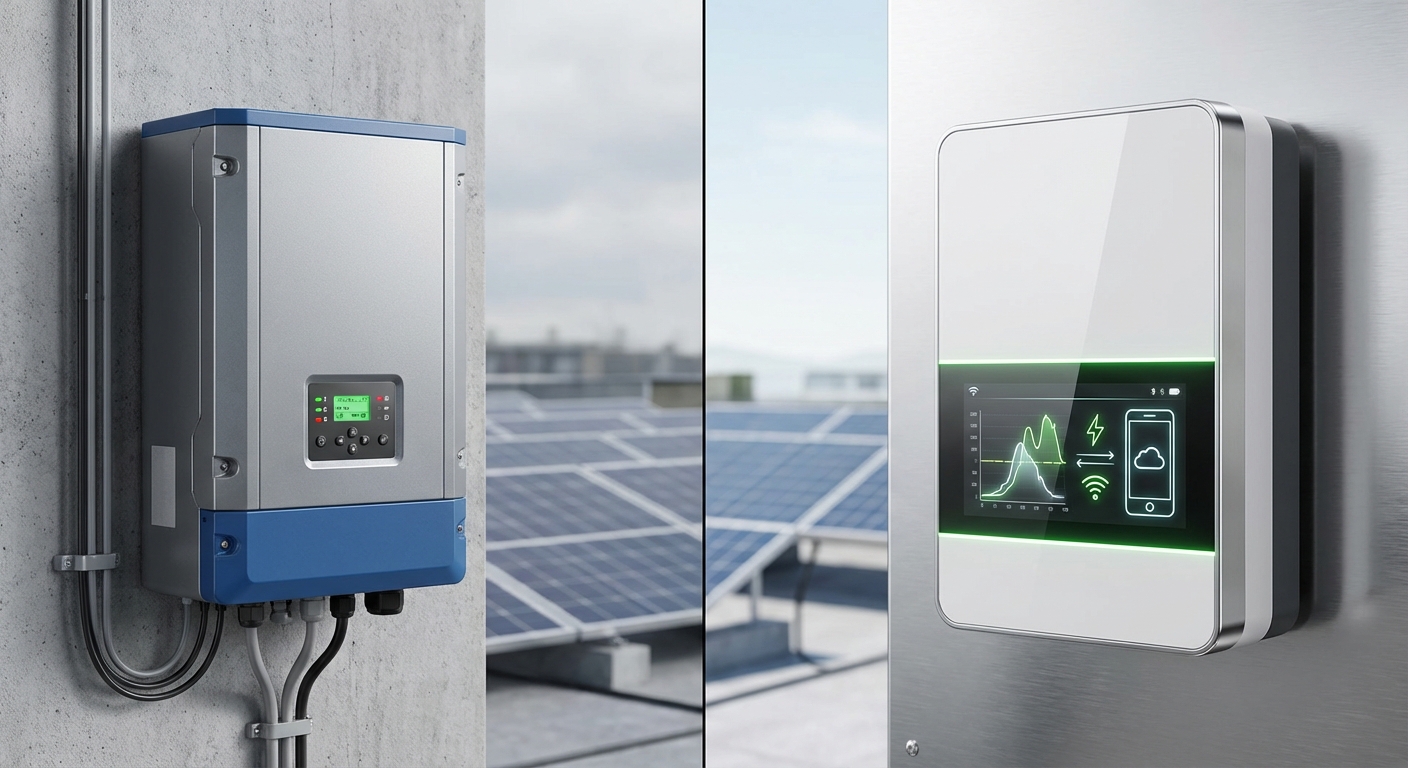
The solar industry in India is experiencing a fundamental shift in inverter technology, moving from conventional DC-to-AC conversion systems to intelligent, AI-powered platforms that redefine performance monitoring and system optimization. For EPCs, solar distributors, and commercial facility owners, understanding the differences between traditional and next-generation inverter technology is no longer optional—it’s essential for making informed investment decisions that impact project ROI, operational efficiency, and long-term system reliability.
As India’s solar capacity continues its rapid expansion in 2026, the choice between traditional inverters and AI-powered smart systems has become a critical decision point. This comprehensive comparison examines monitoring capabilities, performance optimization features, predictive maintenance advantages, warranty structures, and real-world ROI differences to help you select the right inverter technology for your solar installations across India’s diverse climate conditions.
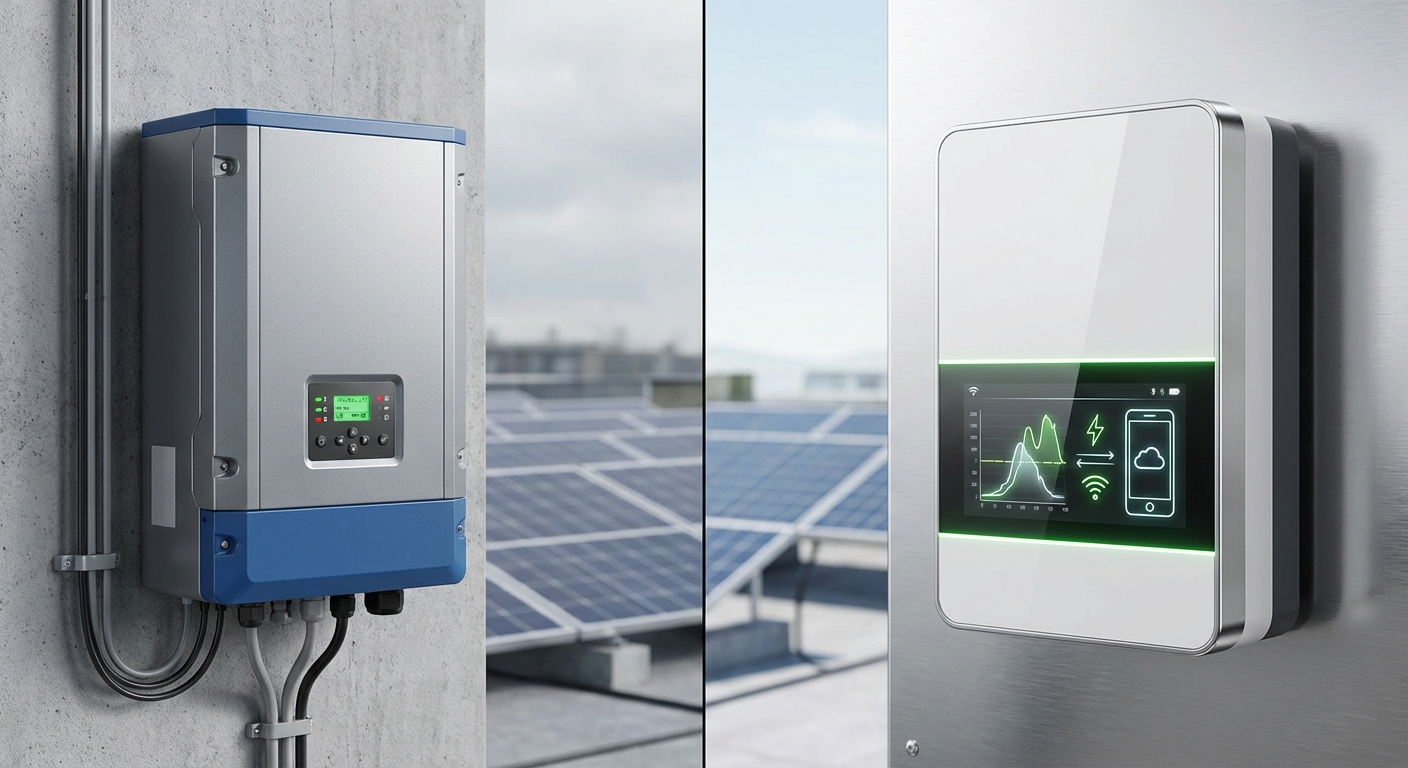
Understanding Inverter Technology Evolution in India’s Solar Market
Solar inverter technology has undergone remarkable transformation over the past decade. Early inverters focused solely on basic DC-to-AC conversion with minimal monitoring capabilities, requiring manual inspections and reactive maintenance approaches. These traditional systems served their purpose when solar installations were smaller and performance expectations were less demanding.
By 2026, the Indian solar market has matured significantly. The proliferation of high-wattage solar panels (750W and above), increasing commercial and industrial installations, and growing demand for remote monitoring have pushed inverter manufacturers to innovate beyond basic conversion functions. Today’s inverter technology landscape in India features two distinct categories: conventional inverters with standard functionality, and AI-powered smart inverters that integrate advanced monitoring, predictive analytics, and automated optimization.
The shift toward intelligent inverter systems reflects broader industry trends. EPCs managing multiple installations across different states need centralized monitoring capabilities. Facility owners require real-time performance data to validate their solar investments. Distributors seek products that differentiate them in an increasingly competitive market. These evolving requirements have made inverter technology selection a strategic decision rather than a simple procurement choice.
Understanding this evolution is crucial because the inverter represents the brain of any solar installation. While panels capture sunlight, the inverter determines how efficiently that energy converts to usable power, how quickly problems get detected, and ultimately, how well the entire system performs over its 25-year expected lifespan. The technology gap between traditional and AI-powered systems has widened considerably, creating measurable differences in total cost of ownership.
Traditional Inverter Technology: Core Features & Limitations
Traditional solar inverters in India operate on well-established principles of power electronics. These systems convert DC electricity from solar panels into AC power suitable for grid connection or facility consumption. Most conventional inverters feature basic LCD displays showing instantaneous power output, daily generation, and fundamental error codes. Their core functionality remains reliable for straightforward DC-to-AC conversion.
The monitoring capabilities of traditional inverters typically require physical presence at the installation site. Technicians must visit the location to check performance data, download logs via USB connections, or manually record readings from display panels. While some traditional models offer basic Wi-Fi connectivity, the data presentation remains rudimentary—simple graphs and tables without predictive insights or automated alerting systems.
Efficiency ratings for conventional inverters generally range from 95% to 97%, depending on the manufacturer and model. These systems use standard electronic components and follow established design architectures. Quality control processes vary significantly across manufacturers, with some conducting basic functional tests while others implement more rigorous validation protocols.
The primary limitations of traditional inverter technology become apparent during operation. When performance issues arise, facility owners often discover problems only after significant energy losses have occurred. Manual monitoring schedules mean that inverter faults, panel shading issues, or grid disturbances may go undetected for days or weeks. This reactive approach to maintenance increases downtime and reduces overall system yield.
Warranty structures for traditional inverters in India typically span 5 to 7 years, with some manufacturers offering extended warranties at additional cost. Support networks vary widely, with response times depending on manufacturer presence in specific regions. For EPCs managing installations across multiple states, coordinating warranty claims and service requests can become administratively complex.
AI-Powered Smart Inverter Technology: Next-Generation Capabilities
Next-generation inverter technology represents a fundamental reimagining of what solar inverters can accomplish beyond basic power conversion. AI-powered smart inverters integrate advanced monitoring systems, predictive analytics, and automated optimization algorithms that continuously adjust performance parameters based on real-time conditions. These systems transform inverters from passive conversion devices into active performance management platforms.
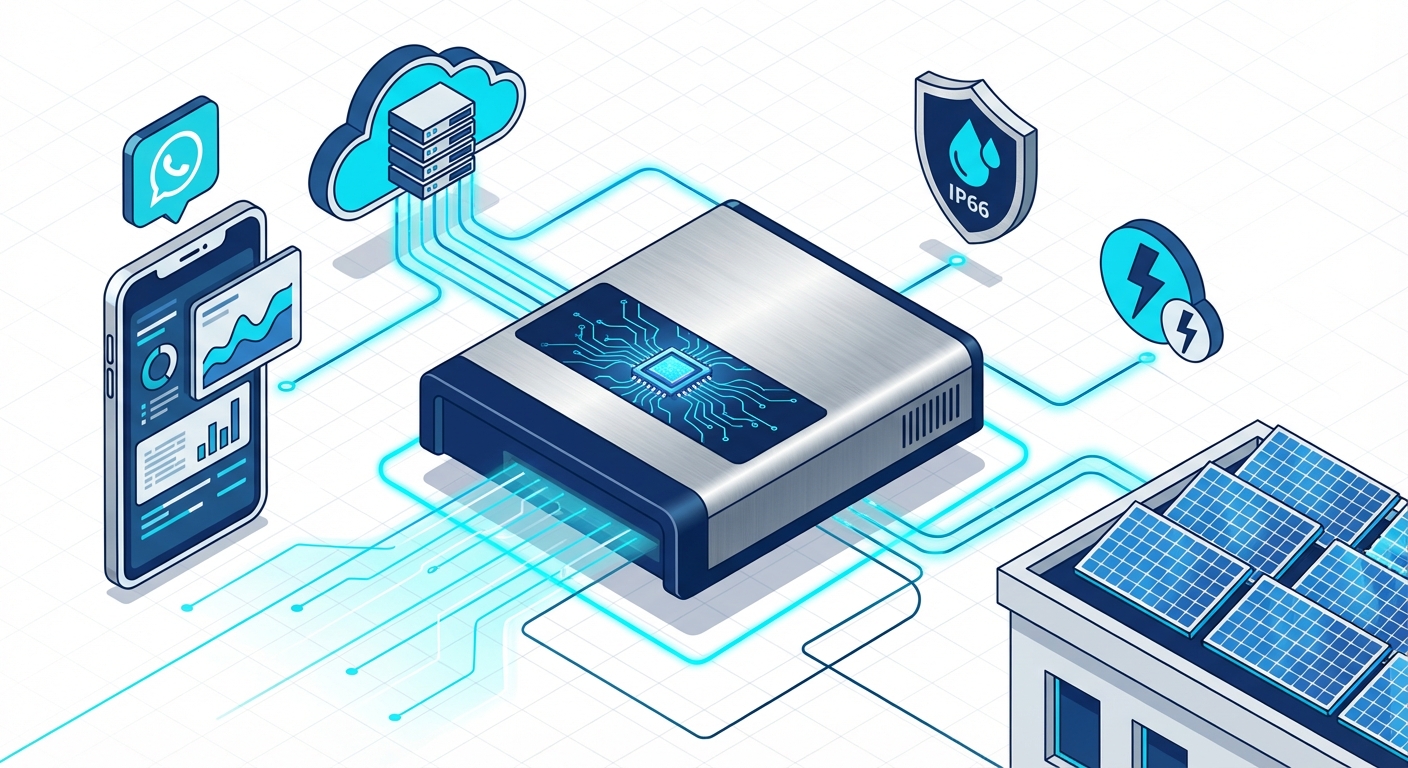
The monitoring revolution in smart inverter technology centers on multi-channel connectivity and intelligent data processing. Modern AI-powered inverters offer simultaneous Wi-Fi, 4G, and Bluetooth connectivity, ensuring reliable data transmission regardless of site conditions. The breakthrough innovation lies in accessibility—systems like Qbits’ AI-powered WhatsApp monitoring deliver real-time alerts, performance summaries, and fault notifications directly to smartphones without requiring specialized apps or complex dashboards.
Real-time performance optimization distinguishes smart inverters from their traditional counterparts. AI algorithms continuously analyze string voltages, temperature variations, grid conditions, and historical performance patterns to maximize energy yield. When the system detects suboptimal performance—whether from partial shading, soiling, or component degradation, it automatically adjusts operating parameters and alerts operators to specific issues requiring attention.
Advanced protection features in AI-powered inverter technology address India’s challenging environmental conditions. IP66 weather protection ratings ensure reliable operation during monsoon seasons, dust storms, and extreme temperature variations common across Indian rooftops. Integrated DC and AC surge protection devices safeguard against voltage fluctuations and lightning strikes, reducing equipment damage risks that plague traditional installations.
Support for high-wattage solar panels represents another critical advancement. As panel technology has evolved to 550W, 650W, and now 750W+ modules, inverter technology must accommodate higher input voltages and currents. Smart inverters engineered for modern panels support up to 100% DC oversizing, allowing EPCs to design more flexible system configurations that maximize roof space utilization and optimize energy production across varying sun conditions.
The quality assurance processes behind AI-powered inverters reflect their premium positioning. Manufacturers like Qbits implement over 1000 automated quality tests per unit, validating every component and system function before shipment. This rigorous testing, combined with German-grade electronic components, ensures consistent performance and reduces field failure rates that can devastate project economics.
Performance Comparison: Efficiency, Reliability & Monitoring
Efficiency differences between traditional and AI-powered inverter technology may appear modest on specification sheets, typically 95-97% for conventional systems versus 98%+ for advanced models, but these percentages translate to significant energy yield differences over system lifetimes. A 1-2% efficiency improvement on a 100 kW commercial installation generates thousands of additional units annually, directly impacting ROI calculations.
Beyond static efficiency ratings, AI-powered inverters maintain peak performance across wider operating ranges. Traditional inverters often experience efficiency drops during low-light conditions (early morning, late evening, or cloudy days), while smart systems optimize conversion algorithms for varying input conditions. This dynamic efficiency management increases total energy harvest, particularly in regions experiencing seasonal weather variations.
Reliability metrics reveal substantial differences in real-world performance. Traditional inverter technology relies on reactive maintenance, problems get addressed after they occur and after they’ve been detected through manual inspection. AI-powered systems shift to predictive maintenance models, identifying potential failures before they cause downtime. Automated fault detection catches issues like fan failures, capacitor degradation, or connection problems in early stages when interventions are simpler and less costly.
Weather resistance capabilities directly impact inverter lifespan in India’s harsh rooftop environments. Traditional inverters with IP65 or lower ratings may struggle with moisture ingress during monsoons or dust accumulation in arid regions. IP66-rated smart inverters provide superior protection against water jets and dust, maintaining reliable operation across India’s diverse climate zones from coastal humidity to desert heat.
The monitoring capability gap represents perhaps the most significant performance differentiator. Traditional systems provide historical data that requires interpretation and manual analysis. AI-powered inverter technology delivers actionable insights, specific recommendations, prioritized alerts, and performance benchmarking against expected output. For EPCs managing multiple installations, this intelligence difference transforms operational efficiency and customer satisfaction.
1. Monitoring Capabilities: Manual vs Intelligent Systems
Traditional inverter technology monitoring requires physical site visits or basic web portals that display raw data without context. Technicians must interpret voltage readings, current measurements, and error codes to diagnose issues. This manual approach works for single installations with dedicated on-site staff but becomes impractical for EPCs managing distributed solar portfolios across multiple cities or states.
Intelligent monitoring systems transform data into decisions. AI-powered inverters analyze performance patterns, compare actual output against weather-adjusted expectations, and identify anomalies that indicate specific problems. When a string underperforms, the system doesn’t just report low voltage, it suggests probable causes (shading, soiling, module failure) and recommends corrective actions. This diagnostic capability reduces troubleshooting time from hours to minutes.
The accessibility revolution in smart inverter technology centers on mobile-first design. WhatsApp-based monitoring eliminates the need for specialized software, training programs, or complex login procedures. Facility managers receive daily performance summaries, instant fault alerts, and monthly generation reports through a communication channel they already use. This simplicity drives higher engagement and faster response to performance issues.
Data security considerations have become increasingly important as monitoring systems move to cloud platforms. India-based server infrastructure ensures that sensitive performance data and site information remain within national boundaries, addressing data sovereignty concerns for government projects and security-conscious commercial clients. Traditional systems with offshore data storage may face compliance challenges in certain sectors.
The operational cost implications of monitoring capabilities are substantial. EPCs using traditional inverters typically budget for regular site visits, manual data collection, and reactive service calls. Those deploying AI-powered systems reduce site visit frequency by 60-70%, as remote monitoring identifies most issues and enables targeted interventions only when necessary. This operational efficiency improvement directly enhances project profitability.
2. Predictive Maintenance: Reactive vs Proactive Approaches
Traditional inverter technology operates on a fix-when-broken maintenance philosophy. Inverters run until they fail, then technicians diagnose problems and order replacement parts. This reactive approach seems cost-effective initially, no preventive maintenance expenses, but the hidden costs of unplanned downtime, emergency service calls, and lost energy production often exceed proactive maintenance investments.
Predictive maintenance capabilities in AI-powered inverters fundamentally change the economics of solar operations. By continuously monitoring component health indicators, fan bearing vibrations, capacitor performance degradation, thermal patterns, and connection resistance, smart systems identify developing problems weeks or months before they cause failures. This early warning enables scheduled maintenance during planned downtime, avoiding production losses.
The cost implications of unplanned downtime vary by installation type but are always significant. A commercial rooftop system generating 500 units daily loses ₹4,000-6,000 in value for each day of downtime (assuming ₹8-12 per unit). If a traditional inverter fails and requires 3-5 days for diagnosis, part procurement, and repair, the lost production value can exceed ₹20,000-30,000 per incident. Predictive maintenance that prevents such failures delivers measurable ROI.
Extended equipment lifespan represents another predictive maintenance benefit. Traditional inverters operating without performance optimization may run components at suboptimal temperatures, voltages, or duty cycles that accelerate wear. AI-powered systems continuously optimize operating parameters to minimize component stress, potentially extending inverter lifespan by 2-3 years beyond conventional systems. This longevity improvement significantly impacts total cost of ownership calculations.
For EPCs and distributors, predictive maintenance capabilities create competitive advantages. Offering clients proactive monitoring and scheduled maintenance programs differentiates service packages and creates recurring revenue opportunities. The ability to demonstrate reduced downtime and extended equipment life strengthens customer relationships and generates positive referrals in India’s relationship-driven solar market.
3. Warranty & Support: Standard vs Premium Protection
Warranty structures reveal manufacturer confidence in their inverter technology and significantly impact total cost of ownership. Traditional inverters in India typically carry 5-7 year warranties, with some manufacturers offering extended coverage at 15-25% of the inverter cost. These standard warranties usually cover parts replacement but may exclude labor costs, shipping expenses, or consequential damages from inverter failures.
Premium warranty offerings like Qbits’ 12-year full replacement warranty represent a fundamental shift in risk allocation. Extended warranties transfer long-term performance risk from the facility owner or EPC to the manufacturer, providing financial predictability for project economics. For commercial installations with 10-15 year power purchase agreements, warranty coverage spanning the critical early years ensures stable system performance during the payback period.
Digital warranty systems streamline claim processes and reduce administrative friction. Traditional warranty management involves manual documentation, email exchanges, and paper-based approval workflows that can extend claim resolution times to weeks or months. Digital platforms enable instant warranty registration, automated claim submission with performance data, and transparent tracking of service requests. This efficiency particularly benefits distributors managing warranty claims across multiple client installations.
Manufacturer support networks determine how quickly warranty claims translate to restored system operation. Traditional inverter manufacturers in India may have limited service presence outside major metros, requiring third-party service providers or long wait times for technician deployment. Manufacturers with established support infrastructure and trained service networks across multiple states provide faster response times and more consistent service quality.
The warranty value proposition extends beyond failure coverage to include performance guarantees. Some AI-powered inverter warranties specify minimum efficiency levels and uptime percentages, providing recourse if systems underperform. These performance-based warranties align manufacturer incentives with customer success, creating partnerships rather than transactional vendor relationships. For EPCs evaluating inverter selection criteria, warranty structure deserves equal weight with technical specifications.
ROI Analysis: Total Cost of Ownership Comparison
Initial investment differences between traditional and AI-powered inverter technology typically range from 15-30%, with smart inverters commanding premium pricing for their advanced features. A traditional 50 kW inverter might cost ₹2.5-3 lakhs, while an AI-powered equivalent ranges from ₹3-3.5 lakhs. This upfront cost difference often dominates initial decision-making, but comprehensive ROI analysis requires examining total cost of ownership over the system’s operational life.
Operational cost savings from AI-powered monitoring accumulate throughout the system lifetime. Remote monitoring reduces site visit requirements by approximately 60-70%, saving ₹3,000-5,000 per visit in travel costs, technician time, and administrative overhead. For an EPC managing 20 installations, this translates to annual savings of ₹1.5-2 lakhs in operational expenses. Over a 12-year period, these monitoring efficiencies can offset much of the initial technology premium.
Reduced maintenance and downtime costs provide additional ROI contributions. Predictive maintenance prevents costly emergency repairs and minimizes production losses from unexpected failures. Industry data suggests AI-powered systems experience 40-50% fewer unplanned downtime events compared to traditional inverters. For a 100 kW commercial installation, avoiding just two major downtime incidents annually saves ₹40,000-60,000 in lost production value.
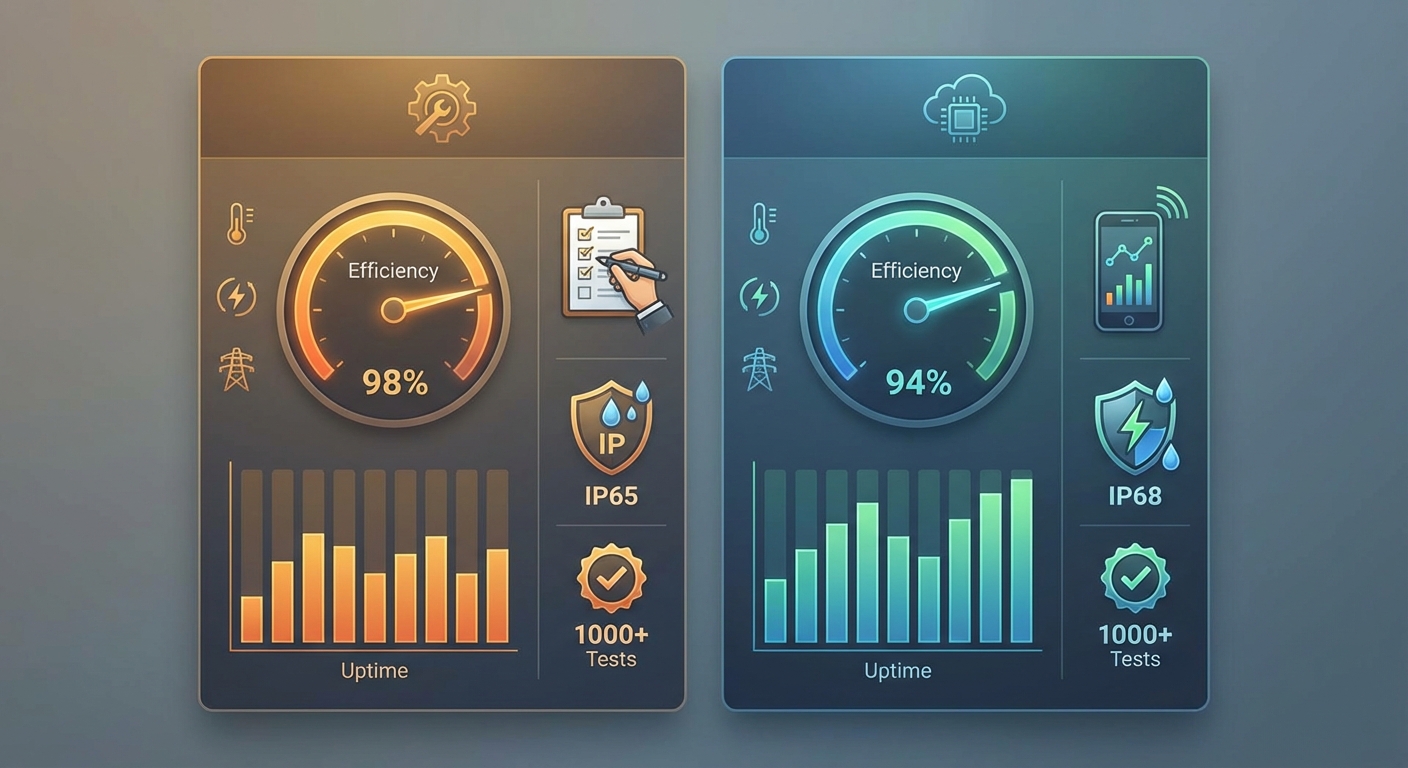
Energy yield optimization through intelligent performance management increases revenue generation. AI-powered inverters that maintain 98% efficiency versus 96% for traditional systems produce 2% more energy from identical panel arrays. On a 100 kW system generating 1.5 lakh units annually, this 2% improvement yields 3,000 additional units worth ₹24,000-36,000 per year at typical commercial tariffs. Compounded over 12 years, this efficiency advantage generates ₹3-4 lakhs in additional revenue.
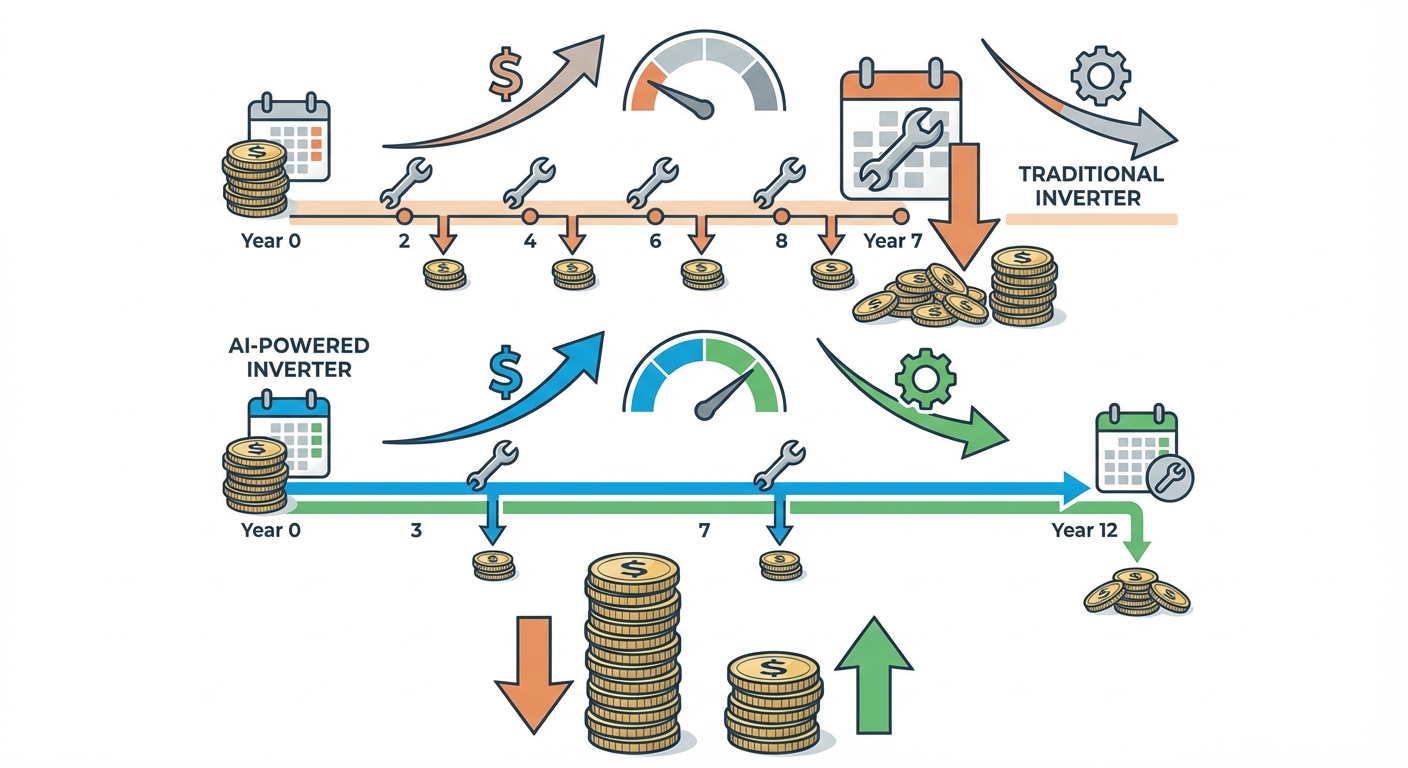
Long-term ROI calculations must account for warranty coverage differences. Traditional inverters requiring replacement after 7-8 years incur additional capital expenses of ₹2.5-3 lakhs for a 50 kW system. AI-powered inverters with 12-year warranties eliminate this mid-life replacement cost, providing ₹2.5-3 lakhs in avoided expenses. This warranty value alone can justify the initial technology premium for many commercial installations.
Payback period analysis reveals that AI-powered inverter technology typically achieves cost parity with traditional systems within 4-6 years when accounting for operational savings, reduced downtime, improved efficiency, and warranty value. For the remaining 6-8 years of the warranty period, the smart inverter delivers superior net returns. EPCs and facility owners focused on long-term value rather than minimum initial cost consistently find AI-powered systems deliver better total returns on investment.
Real-World Performance: Case Study Insights from Indian Installations
Commercial and industrial installations across India provide valuable performance data comparing inverter technology approaches. A 250 kW rooftop installation in Ahmedabad using AI-powered inverters with WhatsApp monitoring reported 99.2% uptime over 18 months, with the three downtime incidents identified and resolved within 4 hours through remote diagnostics. A comparable traditional inverter installation in the same industrial park experienced 96.8% uptime, with average resolution times of 2-3 days due to delayed problem detection and diagnosis.
Residential project performance demonstrates monitoring accessibility benefits. A 50-home solar community in Pune using smart inverters with mobile monitoring reported 85% homeowner engagement with performance data, compared to less than 20% engagement for a similar community with traditional inverters requiring web portal logins. This engagement translated to faster reporting of performance issues and higher customer satisfaction scores.
Harsh weather condition performance validates the importance of robust inverter technology design. Coastal installations in Kerala and Mumbai using IP66-rated AI-powered inverters maintained consistent performance through monsoon seasons, while traditional IP65-rated systems in similar environments experienced moisture-related failures requiring warranty replacements. The superior weather protection eliminated downtime during critical high-generation summer months preceding monsoon onset.
Actual efficiency and uptime metrics from field installations confirm specification sheet claims. A portfolio of 15 commercial installations across Maharashtra, Gujarat, and Rajasthan using AI-powered inverters averaged 97.8% efficiency and 98.9% uptime over 24 months. Comparable traditional inverter installations averaged 96.1% efficiency and 96.2% uptime. These real-world performance differences translate to measurable revenue impacts for facility owners and strengthen EPC reputations for delivering high-performing systems.
EPC feedback on installation and support experiences highlights operational considerations beyond technical specifications. Installers report that AI-powered inverters with comprehensive quality testing exhibit lower field failure rates during the critical first year of operation, reducing warranty claim administration and protecting profit margins. The combination of reliable hardware, intelligent monitoring, and responsive manufacturer support creates positive installation experiences that drive repeat business and referrals.
Selection Criteria: Choosing the Right Inverter Technology for Your Project
Project size and complexity significantly influence appropriate inverter technology selection. Small residential installations (3-5 kW) with homeowners who rarely check performance data may function adequately with traditional inverters, though smart monitoring still provides value through automated fault detection. Medium to large commercial installations (50 kW+) with performance-based contracts or power purchase agreements strongly benefit from AI-powered monitoring and optimization capabilities that maximize revenue generation.
Budget versus long-term value analysis requires examining total cost of ownership rather than initial capital outlay. Projects with tight upfront budgets but long operational horizons (15-25 years) should prioritize inverter technology that minimizes lifetime costs through reduced maintenance, extended warranties, and improved efficiency. Conversely, short-term installations or demonstration projects might justify traditional inverters if the installation period doesn’t extend beyond basic warranty coverage.
Monitoring and maintenance capability requirements depend on organizational resources and installation geography. EPCs with dedicated O&M teams and local presence near installations can leverage traditional inverters with manual monitoring. Organizations managing distributed installations across multiple states or those without dedicated solar maintenance staff require AI-powered remote monitoring to maintain performance visibility and enable timely interventions.
Panel compatibility considerations have become increasingly important as module technology advances. Projects using modern high-wattage panels (650W, 750W, or higher) require inverters engineered to handle increased input voltages and currents. AI-powered inverter technology designed for next-generation panels supports up to 100% DC oversizing, providing design flexibility and future-proofing as panel technology continues evolving. Traditional inverters may lack this headroom, limiting system optimization options.
Warranty and manufacturer support evaluation should examine coverage duration, replacement versus repair terms, service network presence, and claim process efficiency. For guidance on comprehensive evaluation frameworks, review our detailed analysis of inverter manufacturers in India. Manufacturers offering extended warranties, digital claim systems, and established support infrastructure across your target installation regions provide superior long-term value and reduced operational risk.
BIS and IEC certification requirements ensure inverters meet Indian safety and performance standards. Both traditional and AI-powered inverters should carry appropriate certifications, but verify that advanced features like surge protection, weather resistance ratings, and monitoring systems also comply with relevant standards. Certified products reduce liability risks and ensure eligibility for government incentive programs and utility interconnection approvals.
Traditional inverters still make sense for specific scenarios: very small installations where monitoring complexity exceeds benefits, temporary or demonstration systems with short operational periods, or situations where budget constraints absolutely prevent premium technology investment. However, these scenarios represent decreasing portions of India’s solar market as system sizes grow and performance expectations increase.
AI-powered inverter technology becomes essential for commercial and industrial installations, distributed solar portfolios, projects with performance guarantees or power purchase agreements, installations in harsh environmental conditions, and any situation where remote monitoring and predictive maintenance deliver operational value. As the technology premium continues narrowing and operational benefits become better documented, smart inverters are rapidly becoming the default choice for quality-focused EPCs and facility owners.
Future of Inverter Technology in India’s Solar Industry
Emerging trends in smart inverter technology point toward even greater integration of artificial intelligence and machine learning capabilities. Future systems will likely incorporate advanced forecasting algorithms that predict generation patterns based on weather data, automatically adjust operating parameters for seasonal variations, and provide increasingly sophisticated diagnostic capabilities that identify specific component failures before they impact performance.
Integration with energy storage systems represents a critical evolution path for inverter technology in India. Hybrid inverters that seamlessly manage solar generation, battery charging and discharging, and grid interaction are becoming essential as energy storage costs decline and time-of-use tariffs create arbitrage opportunities. AI-powered hybrid systems will optimize energy flows based on tariff structures, load patterns, and grid conditions to maximize economic returns from combined solar-plus-storage installations.
Grid stability and smart grid compatibility requirements are driving inverter technology development toward advanced grid support functions. Modern inverters increasingly provide reactive power support, voltage regulation, frequency response, and other ancillary services that enhance grid stability. As India’s renewable energy penetration increases, these grid-interactive capabilities will transition from optional features to mandatory requirements, favoring advanced inverter platforms over traditional designs.
Regulatory developments affecting inverter technology include evolving interconnection standards, cybersecurity requirements for connected devices, and potential mandates for advanced monitoring capabilities on commercial installations. EPCs and distributors should monitor regulatory trends and select inverter platforms that can accommodate future requirement changes through firmware updates rather than hardware replacements.
What EPCs should prepare for in 2026 and beyond includes continued convergence toward AI-powered monitoring as the industry standard, increasing customer expectations for real-time performance visibility, growing importance of data analytics in demonstrating system value, and competitive pressure to offer predictive maintenance and performance optimization services. Organizations that build expertise with advanced inverter technology now will be better positioned to capture market opportunities as these trends accelerate.
The trajectory is clear: inverter technology is evolving from passive power conversion devices to active performance management platforms that optimize energy production, predict maintenance needs, and provide actionable intelligence to system operators. This evolution creates opportunities for EPCs, distributors, and facility owners who embrace advanced technology and challenges for those clinging to traditional approaches in an increasingly sophisticated market.
Making the Right Inverter Technology Choice for Your Solar Future
The comparison between traditional and AI-powered inverter technology reveals substantial differences in monitoring capabilities, predictive maintenance, warranty protection, and total cost of ownership. While traditional inverters continue serving basic conversion functions, AI-powered smart inverters deliver measurable advantages in operational efficiency, system uptime, energy yield optimization, and long-term reliability that justify their technology premium for most commercial and industrial applications.
For EPCs and solar distributors, inverter technology selection directly impacts competitive positioning, customer satisfaction, and long-term profitability. Offering clients AI-powered monitoring, extended warranties, and predictive maintenance capabilities differentiates service packages and creates value beyond commodity pricing competition. The operational efficiencies from remote monitoring and reduced site visits improve project margins while delivering superior customer experiences.
Facility owners evaluating inverter options should prioritize total cost of ownership over initial capital costs, examining efficiency differences, warranty coverage, monitoring capabilities, and expected maintenance expenses across the system’s operational life. The analysis consistently favors AI-powered inverter technology for installations where performance visibility, uptime maximization, and long-term reliability create measurable value. Understanding inverter lifespan implications helps frame these decisions within comprehensive financial planning.
As India’s solar industry matures and performance expectations increase, the gap between traditional and AI-powered inverter technology will likely widen further. Early adopters of smart inverter platforms gain operational experience, build customer relationships around advanced monitoring services, and position themselves for emerging opportunities in hybrid systems and grid-interactive installations. The question is no longer whether to adopt AI-powered inverter technology, but when and how to make the transition most effectively.
Qbits Energy combines next-generation inverter technology with German-grade components, comprehensive 12-year warranties, and AI-powered WhatsApp monitoring designed specifically for India’s solar market. Whether you’re an EPC seeking reliable products for your installation portfolio, a distributor building a premium brand offering, or a facility owner investing in long-term solar performance, understanding the inverter technology landscape empowers better decisions. Explore our complete product range to see how AI-powered smart inverters deliver superior performance, or connect with our team to discuss which inverter technology best fits your specific project requirements and operational goals.
This blog post was written using thestacc.com