



Solar Inverter Quality: 8 Red Flags EPCs Must Avoid

For solar EPCs and distributors operating in India’s competitive market, your reputation hinges on one critical decision: the inverter quality you choose for your installations. A single batch of substandard inverters can trigger a cascade of warranty claims, emergency service calls, and damaged client relationships that take years to rebuild. Yet many procurement teams focus solely on upfront costs, overlooking the red flags that separate premium inverters from mass-market alternatives destined for premature failure.
The stakes are particularly high in India, where extreme temperatures, voltage fluctuations, and harsh rooftop conditions test every component of your solar installations. When an inverter fails within the first two years, you’re not just replacing a component—you’re absorbing labor costs, managing angry customers, and watching your profit margins evaporate. Understanding inverter quality assessment is no longer optional; it’s essential for protecting your business and delivering the reliable solar solutions your clients expect.
This comprehensive guide reveals the eight critical red flags that indicate substandard inverter quality, helping you make informed purchasing decisions that protect both your reputation and your bottom line. Whether you’re evaluating solar inverter manufacturers in India or comparing international brands, these quality indicators will help you identify the difference between inverters built to last and those destined to fail.
Why Inverter Quality Determines Your EPC’s Reputation
The financial impact of poor inverter quality extends far beyond the initial purchase price. When an inverter fails prematurely, your EPC business absorbs multiple costs simultaneously. First, there’s the direct replacement cost, which often includes not just the inverter itself but also shipping, customs duties, and inventory management expenses. Second, you face labor costs for diagnosis, removal, and reinstallation—often requiring two site visits and consuming valuable technician time that could be spent on profitable new installations.
Beyond immediate costs, inverter failures devastate customer retention and referral networks. In India’s tight-knit business communities, word spreads quickly when solar installations underperform. A single commercial client experiencing repeated inverter issues can influence dozens of potential customers in their industry network. Research shows that dissatisfied customers tell an average of 15 people about their negative experiences, while satisfied customers tell only 11 people about positive ones. For solar EPCs, this asymmetry means that inverter quality problems create disproportionate reputational damage.
The true cost of warranty claims compounds over time. Each service call requires coordination, scheduling, parts procurement, and follow-up documentation. For a typical 100kW commercial installation, a single inverter replacement can cost ₹50,000-₹80,000 in total expenses when you factor in all direct and indirect costs. Multiply this across multiple installations, and the financial impact becomes substantial. EPCs working with premium inverter brands report 70-80% fewer warranty claims compared to those using mass-market alternatives, translating directly to improved profitability.
India’s harsh climate conditions amplify these quality concerns. Rooftop temperatures regularly exceed 60°C during summer months, while monsoon humidity creates condensation risks inside poorly sealed enclosures. Voltage fluctuations from unstable grid connections stress power electronics, and dust accumulation affects cooling systems. These environmental factors mean that inverter quality standards appropriate for European markets may prove inadequate for Indian installations. EPCs must evaluate suppliers based on their understanding of and preparation for these specific challenges.
1. Poor Component Quality: The Foundation of Inverter Failures
The electronic components inside an inverter determine its lifespan, efficiency, and reliability under stress. German-grade components from manufacturers like Infineon, EPCOS, and Vishay undergo rigorous quality control and offer superior temperature tolerance, longer operational lifespans, and better performance consistency. In contrast, mass-market inverters often use generic components from unverified suppliers, sacrificing long-term reliability for immediate cost savings. The difference in component quality can mean the difference between a 15-year operational life and failure within 3-5 years.
Critical components to scrutinize include capacitors, which are often the first to fail in high-temperature environments. Premium electrolytic capacitors rated for 105°C operation with low ESR (Equivalent Series Resistance) values maintain performance across temperature extremes. Substandard capacitors rated for only 85°C operation will degrade rapidly on Indian rooftops. Similarly, IGBT (Insulated Gate Bipolar Transistor) modules from reputable manufacturers offer superior switching characteristics and thermal management compared to generic alternatives that generate excessive heat and reduce overall system efficiency.
Transformers and inductors represent another quality differentiator. Premium inverters use copper-wound transformers with proper insulation ratings and thermal management, while budget alternatives may use aluminum windings or inadequate core materials that increase losses and generate heat. PCB (Printed Circuit Board) quality also varies dramatically—multi-layer boards with proper copper thickness, conformal coating for moisture protection, and professional soldering processes indicate serious manufacturing standards. Single-layer boards with thin copper traces and poor solder joints signal cost-cutting that compromises reliability.
When evaluating suppliers, ask specific questions about component sourcing: Which manufacturers supply your IGBTs and capacitors? What temperature ratings do your electrolytic capacitors carry? Can you provide component datasheets and origin certificates? Reputable manufacturers like Qbits openly discuss their use of German-grade components and provide documentation to verify sourcing. Suppliers who deflect these questions or provide vague answers about “international standard components” are raising immediate red flags about inverter quality.
2. Inadequate Manufacturing Quality Control Processes
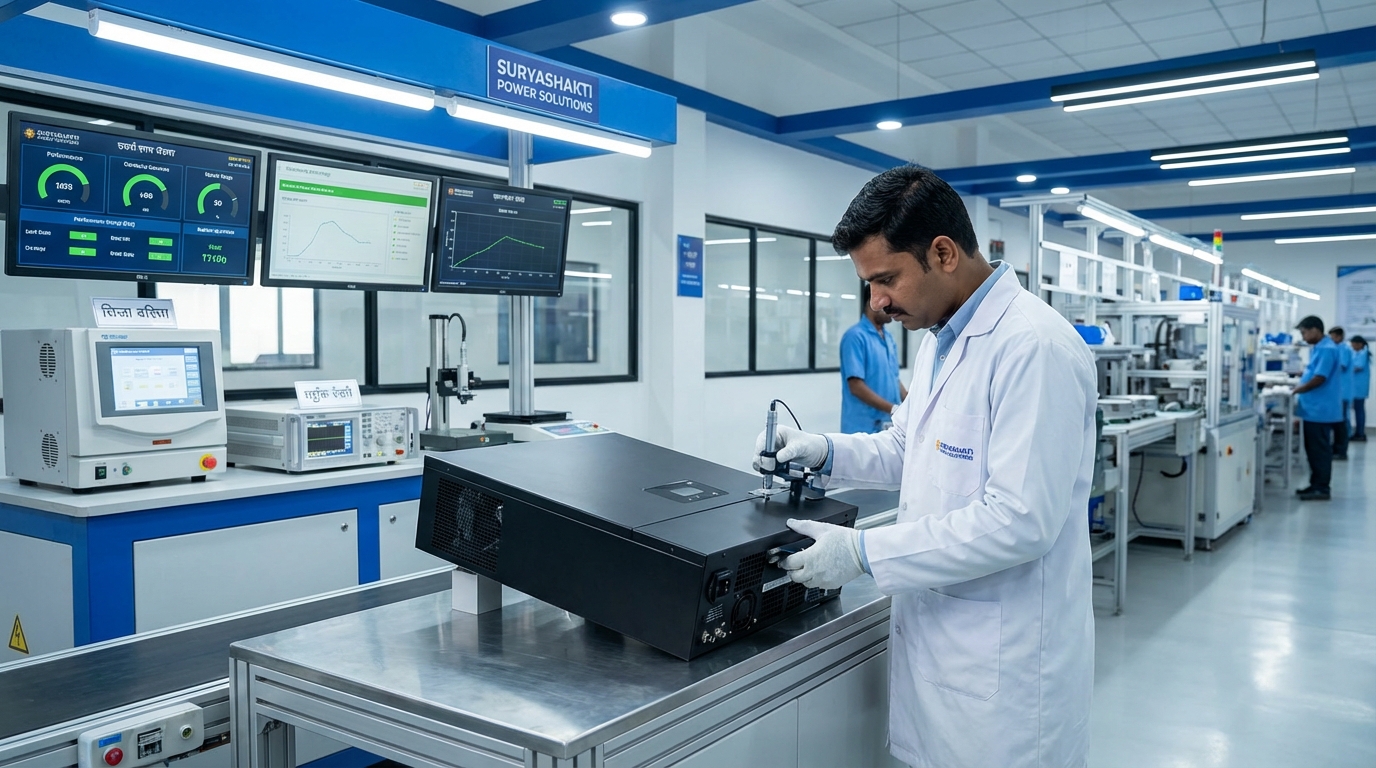
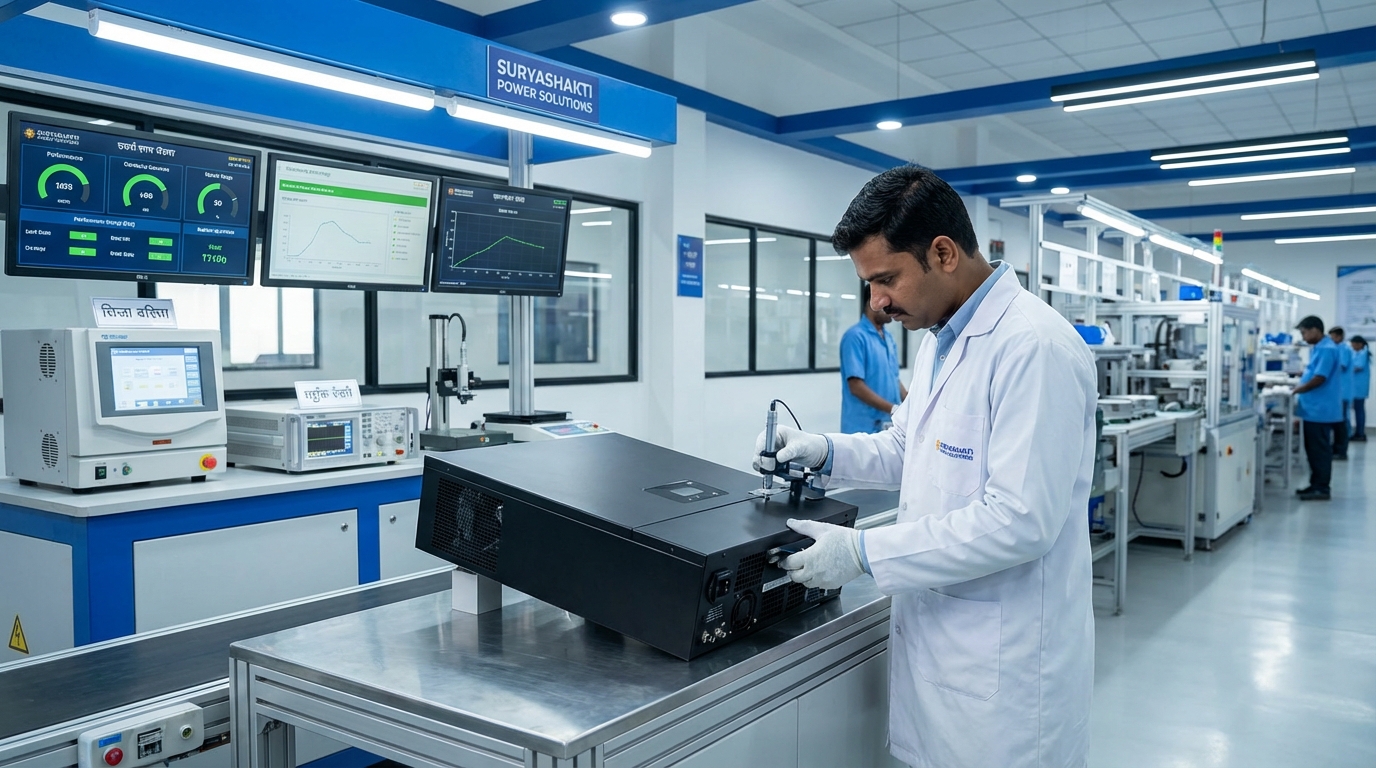
Manufacturing quality control separates inverters that perform reliably for 12-15 years from those that fail within warranty periods. When a manufacturer claims to perform “1000+ quality tests,” this should mean comprehensive automated testing protocols that verify every functional parameter of every unit produced. Premium manufacturers implement automated test equipment (ATE) that checks input voltage ranges, output power quality, efficiency curves, protection functions, communication interfaces, and thermal performance under controlled conditions.
Red flags during manufacturing facility visits include excessive manual processes, lack of environmental controls, and absence of automated testing stations. Quality inverter production requires cleanroom or controlled-environment assembly areas to prevent dust and moisture contamination during PCB assembly. If you observe open-air assembly areas, workers without ESD (Electrostatic Discharge) protection, or casual handling of sensitive electronic components, these indicate inadequate quality standards that will manifest as field failures.
Automated testing protocols should include burn-in testing, where inverters operate at full load for extended periods to identify infant mortality failures before shipping. Thermal cycling tests verify performance across temperature extremes, while voltage stress tests confirm protection circuits function correctly. Manufacturers who rely primarily on sample testing rather than 100% unit testing are gambling with your reputation—a single defective unit in a batch can trigger cascading failures across an installation.
ISO 9001 certification provides baseline quality management verification, but it’s not sufficient alone. Ask about specific quality control procedures: What percentage of units undergo full load testing? How long is your burn-in period? What environmental stress tests do you perform? Can you provide test reports for specific serial numbers? Manufacturers with robust quality control welcome these questions and provide detailed documentation. Those who cannot or will not provide specifics are signaling that their inverter quality claims lack substance.
3. Insufficient Environmental Testing and Protection Standards
Environmental protection ratings directly impact inverter longevity in real-world installations. The IP (Ingress Protection) rating system defines protection against solid objects and liquids, with IP66 rating indicating complete dust protection and protection against powerful water jets from any direction. For Indian rooftop installations exposed to monsoon rains, dust storms, and direct sunlight, IP66 protection is essential. Inverters with lower ratings like IP54 or IP65 may function initially but will experience accelerated degradation as moisture and dust penetrate enclosures.
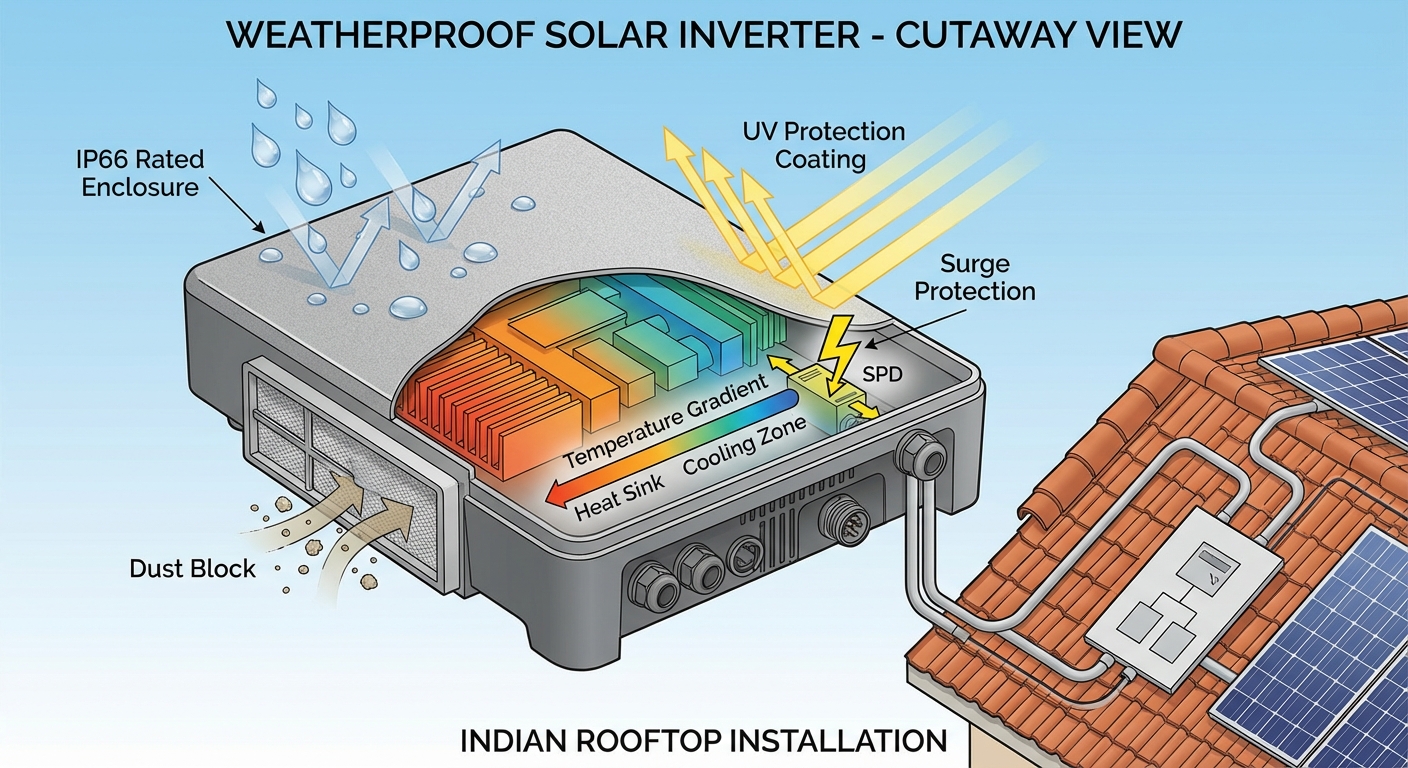
Temperature cycling testing verifies that inverters maintain performance across the extreme temperature swings common in Indian installations. Rooftop-mounted inverters may experience 40°C temperature differences between night and day, causing expansion and contraction that stresses solder joints, component leads, and enclosure seals. Premium manufacturers conduct thermal cycling tests through hundreds of temperature cycles, identifying potential failure points before production. Inverters that haven’t undergone rigorous thermal testing often develop solder joint failures, capacitor degradation, and seal breaches within the first few years of operation.
Humidity and moisture ingress protection requires more than just sealed enclosures. Condensation can form inside inverter enclosures when warm, humid air enters during the day and cools at night. Quality inverters incorporate conformal coating on PCBs, sealed cable entry points with proper glands, and sometimes active ventilation with filtered air exchange. Manufacturers who understand Indian climate conditions design specifically for these challenges. Those simply adapting designs from temperate climates often overlook critical moisture protection features.
UV degradation testing ensures that enclosure materials, cable insulation, and display components withstand years of direct sunlight exposure without becoming brittle or discolored. Substandard plastics and coatings degrade under UV exposure, leading to cracks that compromise IP ratings and allow moisture ingress. When evaluating inverter quality, ask about UV testing protocols and examine sample units that have been in field operation for 3-5 years. Visible degradation of enclosure materials indicates inadequate material selection and testing.
4. Weak Surge Protection and Power Quality Features
India’s electrical grid presents unique challenges that demand robust surge protection and power quality features. Voltage fluctuations, lightning strikes, and switching transients can destroy inverter electronics within microseconds if adequate protection isn’t implemented. Premium inverters incorporate both DC and AC surge protection devices (SPDs) with appropriate voltage ratings and energy absorption capabilities. These SPDs should be replaceable components rather than integrated circuits, allowing for maintenance after surge events without replacing the entire inverter.
DC-side surge protection guards against lightning-induced voltages traveling through solar panel strings. Quality SPDs on the DC input should handle surge currents of at least 20kA per string and respond within nanoseconds to clamp voltage spikes. AC-side protection defends against grid-originated surges and should similarly handle substantial surge currents while maintaining low let-through voltages. Inverters lacking adequate SPDs or using undersized protection components will experience frequent failures in areas with unstable grid conditions or high lightning activity.
Voltage fluctuation tolerance is critical for Indian installations where grid voltage may vary ±15-20% from nominal values. Quality inverters maintain operation across wide input voltage ranges and implement sophisticated control algorithms that adjust output to maintain grid compliance even when input conditions are poor. Inverters with narrow operating voltage ranges will frequently disconnect from the grid, reducing energy production and frustrating system owners. Ask suppliers about their voltage operating range and how the inverter responds to voltage sags and swells.
Power factor correction capabilities and harmonic distortion limits affect both inverter performance and grid compatibility. Premium inverters maintain power factors above 0.99 and keep total harmonic distortion (THD) below 3%, ensuring clean power delivery that complies with grid codes and maximizes energy transfer efficiency. Substandard inverters may exhibit poor power factors and high harmonic content that can trigger grid disconnections and reduce overall system performance. When assessing inverter quality, request detailed specifications on power quality parameters and grid compliance certifications.
5. Unrealistic Efficiency Claims and Performance Specifications
Efficiency specifications require careful scrutiny because manufacturers may cite peak efficiency figures that occur only under ideal conditions rarely encountered in real installations. A claimed “98% efficiency” might represent peak efficiency at 50% load under optimal temperature conditions, while weighted efficiency across typical operating conditions may be significantly lower. The European efficiency standard provides a more realistic measure by weighting efficiency at different load levels (5%, 10%, 20%, 30%, 50%, and 100%) according to typical operating patterns.
Low voltage startup performance significantly impacts energy production, particularly during early morning and late evening hours when solar irradiance is low. Quality inverters begin operation at DC voltages as low as 80-100V, capturing energy that inverters with higher startup voltages miss. Over a year, this difference can represent 2-3% of total energy production. Manufacturers who don’t clearly specify startup voltage or claim unrealistically low values without supporting test data are raising red flags about the accuracy of their performance claims.
DC oversizing capabilities allow installers to connect more solar panel capacity than the inverter’s rated AC output, compensating for system losses and maximizing energy production during optimal conditions. Premium inverters support 130-150% DC oversizing with sophisticated maximum power point tracking (MPPT) algorithms that efficiently manage excess DC power. Inverters claiming to support extreme oversizing ratios (200%+) without adequate thermal management and MPPT capability may experience overheating, reduced lifespan, and poor performance. Verify oversizing claims with actual installation examples and thermal performance data.
Temperature derating factors often hide in specification fine print but dramatically impact real-world performance. All inverters reduce output power as ambient temperature increases to protect components from thermal stress. Quality manufacturers clearly specify derating curves showing output power at various temperatures. An inverter rated for 10kW at 25°C might deliver only 8kW at 50°C ambient temperature, a realistic rooftop condition in Indian summers. Manufacturers who don’t provide clear derating specifications or claim minimal temperature impact on performance are likely overstating their inverter quality and real-world capabilities.
6. Inadequate Warranty Terms and Support Infrastructure
Warranty terms reveal manufacturer confidence in their product quality and financial stability. A 12-year full replacement warranty represents a substantial financial commitment that manufacturers only offer when they’re confident in component quality and manufacturing processes. In contrast, warranties with numerous exclusions, pro-rated coverage, or repair-only terms indicate that the manufacturer expects significant failure rates and is limiting their financial exposure. When evaluating warranties, read the complete terms and conditions, not just the headline warranty period.
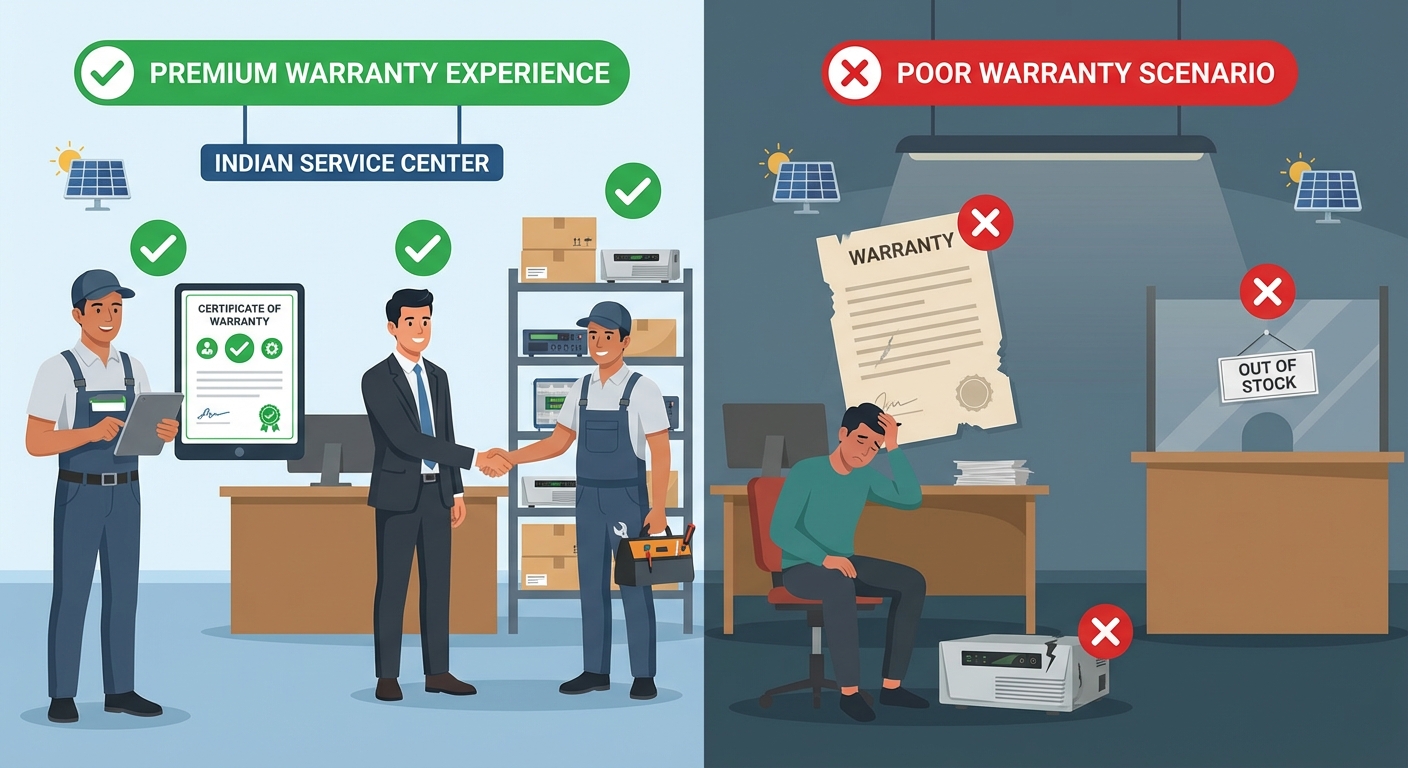
Red flags in warranty terms include exclusions for “environmental damage,” requirements for specific installation conditions that are impractical in real installations, mandatory use of manufacturer-approved installers that limit your operational flexibility, and pro-rated coverage that reduces manufacturer responsibility over time. Quality warranties cover manufacturing defects and component failures without excessive exclusions, provide full replacement rather than repair, and include reasonable terms that acknowledge real-world installation conditions. Qbits’ 12-year full replacement warranty backed by the Heaven Group’s financial stability exemplifies the warranty structure that protects EPC investments.
Manufacturer service network infrastructure in India determines whether warranty claims are resolved quickly or become prolonged nightmares. A manufacturer with regional service centers, trained technicians, and adequate spare parts inventory can resolve issues within days. Those relying on centralized service or international logistics may leave your installations offline for weeks or months. Before committing to a supplier, verify their service network: How many service centers do they operate in India? What’s their average response time for warranty claims? Do they maintain spare parts inventory domestically or rely on imports?
Digital warranty systems streamline claim processing and provide transparency throughout the warranty lifecycle. Modern systems allow you to register installations digitally, track warranty status in real-time, and submit claims through online portals with automated workflows. Paper-based warranty systems create administrative burdens, increase processing times, and often result in disputes over warranty validity. When assessing inverter quality and manufacturer support, evaluate their warranty management infrastructure as carefully as the product specifications. Learn more about comprehensive warranty systems in our guide on solar inverter selection criteria for EPCs.
7. Limited Monitoring and Diagnostic Capabilities
Advanced monitoring and diagnostic capabilities separate modern intelligent inverters from basic power conversion devices. Real-time monitoring allows EPCs to identify performance issues before they escalate into failures, optimize system performance, and provide value-added services to clients. Quality inverters incorporate comprehensive data logging that tracks energy production, voltage and current parameters, temperature, and fault events with timestamp precision. This data enables predictive maintenance and rapid troubleshooting when issues arise.
Real-time fault detection and alert systems minimize downtime by notifying installers and system owners immediately when problems occur. AI-powered monitoring systems like Qbits’ WhatsApp-based alerts provide instant notifications through familiar communication channels, eliminating the need for dedicated monitoring apps or complex software installations. Inverters lacking robust monitoring capabilities leave EPCs blind to system performance, discovering problems only when customers complain about reduced energy production or complete system failures.
Remote diagnostics and troubleshooting features reduce service costs by allowing technicians to assess problems before dispatching to sites. Quality monitoring systems provide detailed fault codes, historical performance data, and sometimes remote parameter adjustment capabilities that enable resolution without site visits. Inverters with limited diagnostic capabilities require on-site investigation for every issue, increasing service costs and extending downtime. When evaluating suppliers, test their monitoring platforms: How detailed is the data provided? Can you access historical performance? What alert mechanisms are available?
Integration with modern monitoring platforms and energy management systems adds value for commercial and industrial installations. Inverters supporting standard communication protocols like Modbus, MQTT, or RESTful APIs enable integration with building management systems, energy analytics platforms, and third-party monitoring services. Proprietary monitoring systems that don’t support open standards lock you into vendor-specific ecosystems and limit your ability to provide comprehensive energy management solutions. For more insights on monitoring capabilities, explore our detailed analysis of solar inverter monitoring systems in India.
8. Lack of Compliance with Indian Standards and Certifications
BIS (Bureau of Indian Standards) certification is mandatory for solar inverters sold in India and verifies compliance with IS 61683 and other relevant standards. However, not all BIS certifications are equal, some manufacturers obtain certification for a single model and then sell variants that haven’t undergone testing. When evaluating inverter quality, verify that the specific model you’re purchasing carries valid BIS certification, not just that the manufacturer has BIS certification for some products. Request certification documents with model numbers and validity dates.
IEC (International Electrotechnical Commission) standards provide internationally recognized benchmarks for inverter performance, safety, and testing. Key standards include IEC 62109 for safety requirements, IEC 61683 for efficiency testing, and IEC 61727 for grid connection requirements. Manufacturers claiming IEC compliance should provide test reports from accredited laboratories. Be wary of vague claims about “international standards” without specific standard numbers and test documentation, these often indicate that products haven’t undergone rigorous third-party testing.
MNRE (Ministry of New and Renewable Energy) maintains an Approved List of Models and Manufacturers (ALMM) for solar modules and has discussed similar requirements for inverters. While not currently mandatory for inverters, MNRE guidelines and approved lists provide additional verification of manufacturer credibility and product quality. Manufacturers actively engaged with MNRE programs and compliant with evolving regulations demonstrate commitment to the Indian solar market and regulatory compliance.
CE marking indicates compliance with European safety and electromagnetic compatibility directives, providing additional confidence in product design and testing. However, CE marking alone is insufficient for Indian installations, it must be accompanied by BIS certification and verification of suitability for Indian grid conditions. When verifying certifications, be alert for counterfeit certificates and fraudulent claims. Request original certificates, verify certificate numbers with issuing bodies when possible, and examine test reports for consistency with claimed specifications. Authentic certifications from reputable testing laboratories are hallmarks of genuine inverter quality.
How Qbits Addresses These Quality Concerns
Qbits Energy has engineered its inverter lineup specifically to address the quality concerns that plague solar EPCs and distributors in India. Starting with component selection, Qbits sources German-grade electronic components from verified tier-one manufacturers, ensuring that capacitors, IGBTs, and other critical components meet stringent temperature ratings and longevity standards. This component quality foundation translates directly to extended operational lifespans and reduced failure rates compared to mass-market alternatives using generic components.
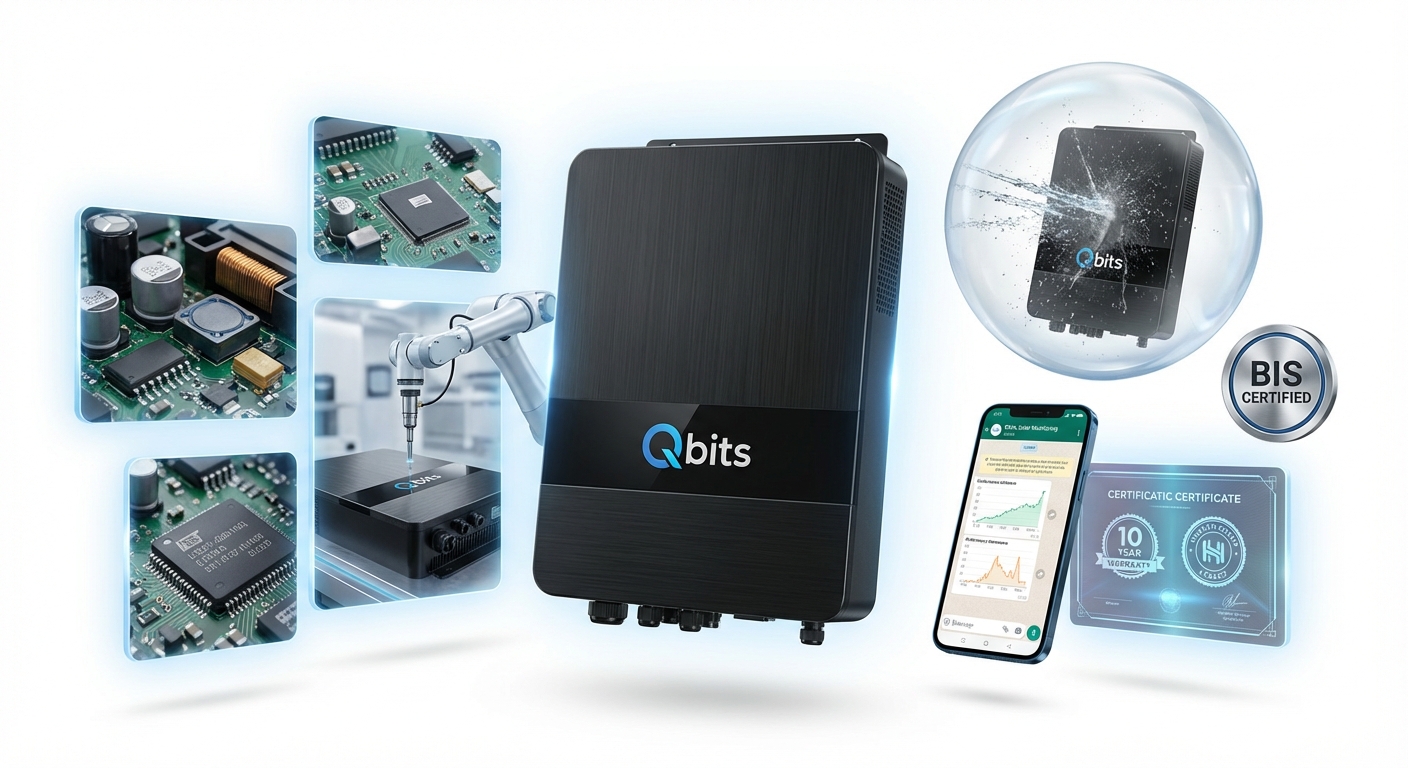
The manufacturing process incorporates 1000+ automated quality tests per unit, verifying every functional parameter before inverters leave the factory. This comprehensive testing protocol includes burn-in testing, thermal cycling, voltage stress testing, and full-load performance verification. By testing 100% of units rather than relying on sample testing, Qbits eliminates the risk of defective units reaching installations. The Heaven Group’s manufacturing legacy brings decades of precision engineering experience to every production run.
IP66 weather protection ensures that Qbits inverters withstand India’s harsh rooftop conditions, from monsoon rains to dust storms and extreme temperatures. The robust enclosure design, sealed cable entry points, and conformal-coated PCBs provide multiple layers of environmental protection. This attention to environmental resilience means that Qbits inverters maintain performance and reliability even in challenging installation locations where lesser inverters would experience accelerated degradation.
The 12-year full replacement warranty backed by the Heaven Group’s financial stability demonstrates Qbits’ confidence in product quality and provides EPCs with genuine protection against premature failures. Unlike pro-rated or repair-only warranties that shift costs to installers, Qbits’ full replacement warranty ensures that any manufacturing defects or component failures are resolved without financial burden to your business. The digital warranty system streamlines registration and claim processing, reducing administrative overhead and accelerating resolution times.
AI-powered WhatsApp monitoring represents a breakthrough in accessibility and usability for the Indian market. Rather than requiring dedicated apps or complex software installations, Qbits delivers real-time performance data, fault alerts, and diagnostic information through WhatsApp, a platform already familiar to virtually all users. This monitoring approach reduces training requirements, increases adoption rates, and ensures that system owners and installers receive immediate notification of any performance issues. Combined with Wi-Fi, 4G, and Bluetooth connectivity options, Qbits provides flexible monitoring solutions for diverse installation scenarios.
BIS and IEC certifications verify that Qbits inverters meet all mandatory Indian standards and internationally recognized performance benchmarks. The 98% efficiency rating, support for up to 750W solar panels, and 100% DC oversizing capability ensure that Qbits inverters deliver maximum energy production from modern high-power solar installations. For EPCs seeking to differentiate their offerings with premium inverter quality backed by comprehensive support, explore Qbits’ complete product lineup and discover how German engineering meets Indian market requirements.
Quality Assessment Checklist for EPCs
Implementing a systematic quality assessment process protects your EPC business from costly mistakes and ensures consistent inverter quality across your installations. Use this comprehensive checklist when evaluating potential inverter suppliers:
Pre-Purchase Evaluation
- Component Documentation: Request datasheets for critical components (capacitors, IGBTs, transformers) and verify manufacturer origins
- Manufacturing Facility: Schedule factory visits to observe production processes, quality control procedures, and environmental controls
- Testing Protocols: Obtain detailed descriptions of quality testing procedures, including burn-in duration, thermal cycling, and voltage stress tests
- Certification Verification: Verify BIS certification validity for specific models, request IEC test reports from accredited laboratories
- Warranty Analysis: Review complete warranty terms and conditions, identify exclusions and limitations, assess manufacturer financial stability
- Service Network: Map service center locations, verify spare parts availability, understand average response times for warranty claims
- Monitoring Capabilities: Test monitoring platforms, evaluate data granularity, verify alert mechanisms and remote diagnostic features
Questions for Supplier Meetings
- What specific component manufacturers supply your capacitors, IGBTs, and other critical components?
- What percentage of production units undergo full-load testing versus sample testing?
- How long is your burn-in testing period, and at what load percentage?
- What IP rating do your inverters carry, and can you provide test reports verifying this rating?
- What is your field failure rate for units in operation for 3-5 years?
- How many service centers do you operate in India, and what regions do they cover?
- What is your average warranty claim resolution time from submission to replacement?
- Can you provide references from EPCs who have installed 1MW+ of your inverters?
Documentation to Request and Verify
- BIS certification documents with model numbers and validity dates
- IEC test reports from accredited laboratories (IEC 62109, IEC 61683, IEC 61727)
- Component datasheets and origin certificates for critical components
- Complete warranty terms and conditions document
- Service network map with contact information for regional centers
- Quality control process documentation and ISO 9001 certification
- Temperature derating curves and efficiency curves at various load levels
- Installation and commissioning manuals with technical specifications
Pilot Testing Recommendations
Before committing to large-volume purchases, conduct pilot installations that allow you to evaluate real-world performance:
- Diverse Conditions: Install pilot units in varied environments (coastal, inland, high-temperature, high-humidity) to assess environmental resilience
- Monitoring Evaluation: Test monitoring systems thoroughly, verify alert reliability, assess data accuracy against independent measurements
- Support Testing: Submit test warranty claims or support requests to evaluate manufacturer responsiveness and service quality
- Performance Tracking: Monitor pilot installations for at least 6-12 months, tracking efficiency, uptime, and any fault events
- Customer Feedback: Gather feedback from system owners about monitoring usability, satisfaction with performance, and any concerns
This systematic approach to inverter quality assessment minimizes risk and ensures that your EPC business builds a reputation on reliable, high-performance solar installations. For additional guidance on inverter selection criteria, review our comprehensive guide on solar inverter lifespan and financial planning.
Protecting Your EPC Business Through Quality-First Procurement
The eight red flags outlined in this guide represent the difference between solar installations that deliver reliable performance for 15+ years and those that generate warranty claims, service calls, and reputational damage. Poor component quality, inadequate manufacturing processes, insufficient environmental protection, weak surge protection, unrealistic performance claims, inadequate warranties, limited monitoring capabilities, and lack of proper certifications all signal substandard inverter quality that will ultimately cost your EPC business far more than any initial purchase price savings.
For solar EPCs and distributors operating in India’s demanding market conditions, quality-first procurement isn’t just good practice, it’s essential for business survival and growth. The harsh environmental conditions, grid instability, and competitive pressures of the Indian solar market mean that only inverters engineered specifically for these challenges will deliver the performance and reliability your clients expect. Cutting corners on inverter quality to reduce upfront costs inevitably leads to higher total cost of ownership when warranty claims, service expenses, and lost customer relationships are factored into the equation.
Qbits Energy’s approach to inverter manufacturing, combining German-grade components, 1000+ quality tests, IP66 protection, 12-year warranties, and AI-powered monitoring, demonstrates what premium inverter quality looks like when engineered specifically for Indian market requirements. By implementing the quality assessment checklist and evaluation criteria outlined in this guide, your EPC business can confidently select inverter suppliers who will support your reputation rather than undermine it.
Take the first step toward protecting your EPC business and delivering superior solar installations. Contact Qbits Energy today to discuss how our premium inverter quality, comprehensive warranties, and dedicated support infrastructure can differentiate your solar installations in India’s competitive market. Whether you’re an established EPC looking to upgrade your inverter supplier or a distributor seeking a premium brand to add to your portfolio, explore partnership opportunities that align quality engineering with business success.
This blog post was written using thestacc.com