



Indian vs International Solar Inverters: Complete Comparison

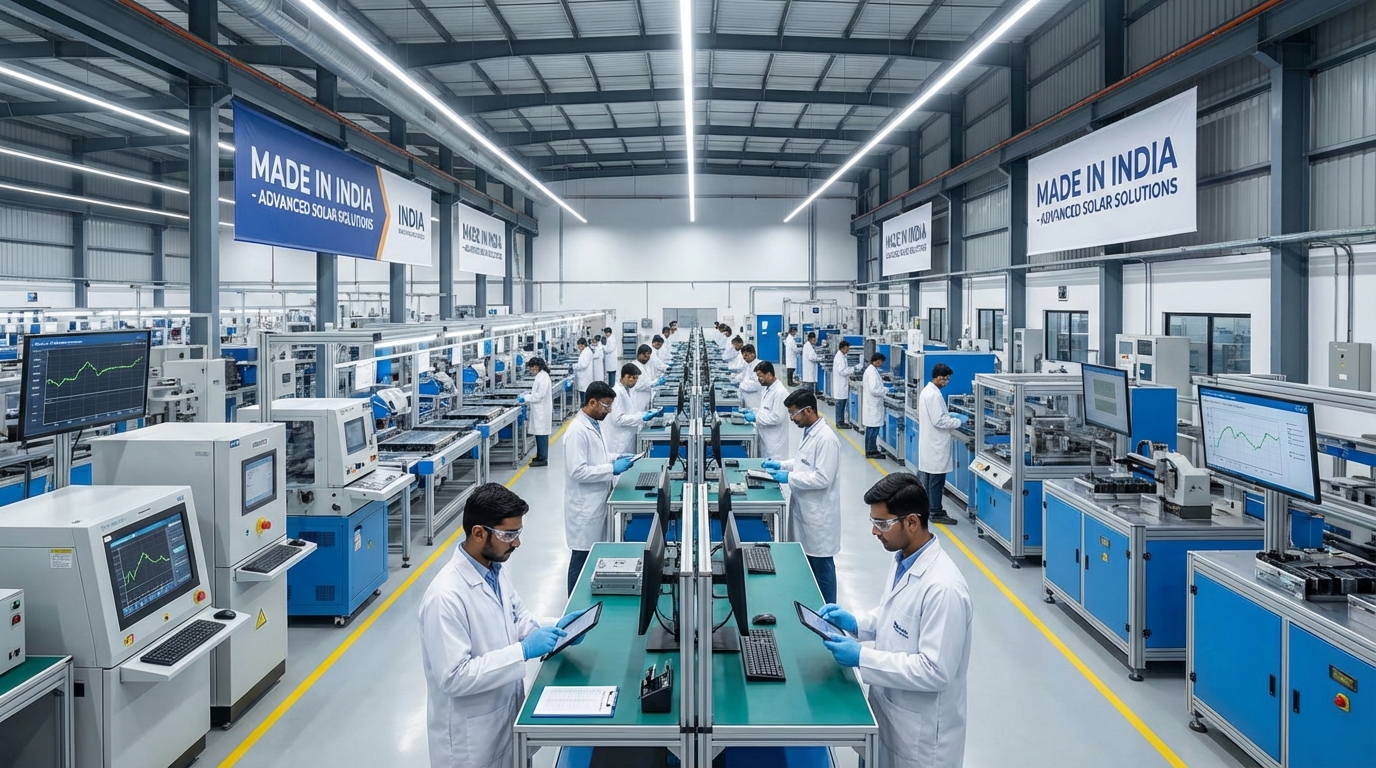
The solar inverter market in India has evolved dramatically over the past decade. What was once dominated entirely by international brands now features a growing ecosystem of domestic manufacturers delivering world-class technology at competitive prices. For EPCs, distributors, and facility owners making inverter comparison India decisions, understanding the nuanced differences between Indian and international solar inverters is critical to project success and long-term ROI.
This comprehensive guide examines the performance, pricing, warranty support, component quality, and total cost of ownership across Indian-manufactured and international solar inverters. Whether you’re an EPC planning your next commercial installation or a distributor evaluating product portfolios, this analysis provides the data-driven insights needed for informed inverter comparison India decisions in 2026.
Understanding the Indian Solar Inverter Market Landscape in 2026
India’s solar inverter manufacturing sector has matured significantly, driven by government initiatives like Make in India and Atmanirbhar Bharat. The market now features a diverse mix of established international players and emerging domestic manufacturers who have invested heavily in R&D and quality infrastructure.
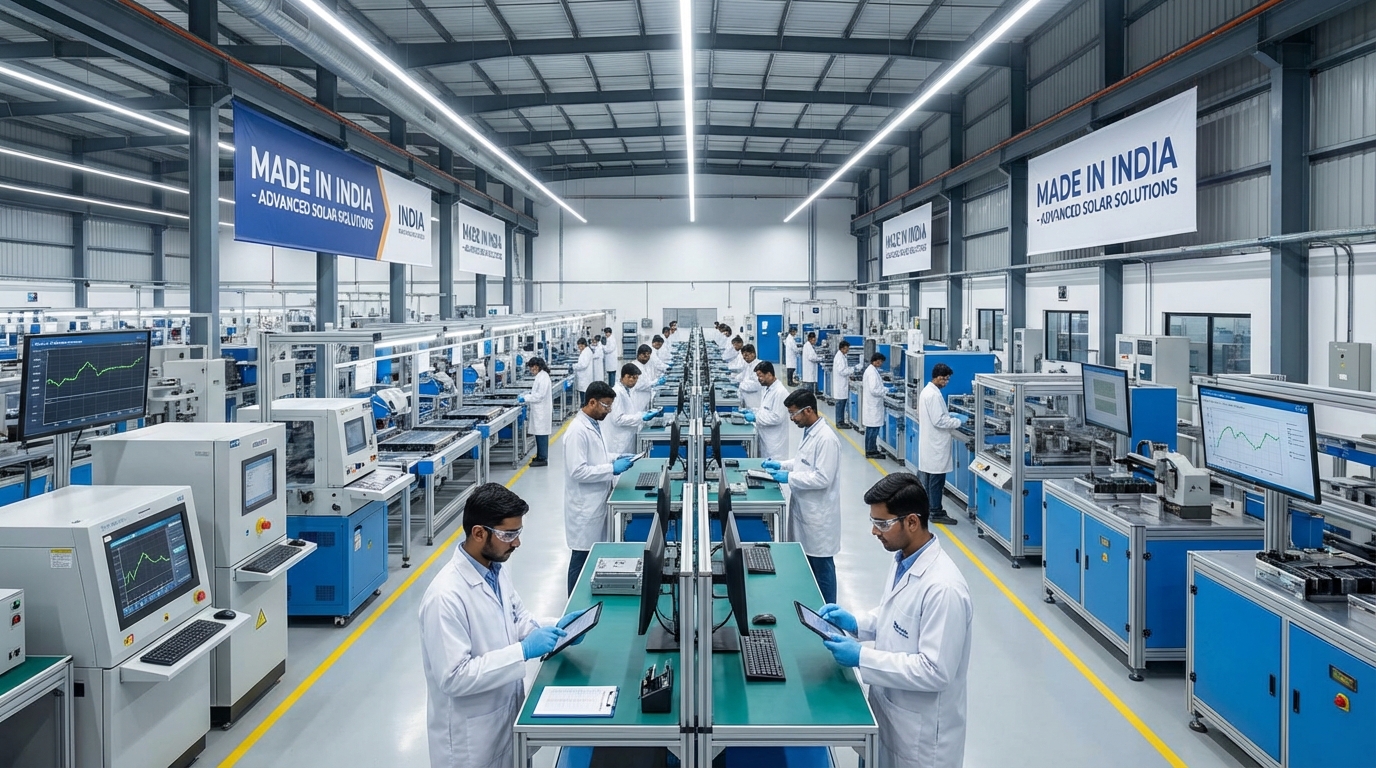
The domestic manufacturing landscape includes companies backed by established industrial groups, bringing decades of engineering expertise to solar technology. These manufacturers have established sophisticated production facilities with automated quality testing protocols, often conducting 1000+ quality tests per unit to match international standards.
International brands like Sungrow, Fronius, Growatt, and Solis continue to hold significant market share, particularly in large-scale commercial and utility projects. However, their pricing includes import duties, logistics costs, and international warranty processing that can impact total project economics.
The regulatory environment has also evolved. BIS certification requirements ensure that both domestic and international inverters meet minimum quality and safety standards for the Indian market. This certification baseline has elevated the overall quality floor, making inverter comparison India evaluations more focused on advanced features, warranty terms, and support infrastructure rather than basic functionality.
For EPCs and distributors, this market maturity presents both opportunity and complexity. The expanded choice requires more sophisticated evaluation frameworks that go beyond simple price comparisons to examine total cost of ownership, local support capabilities, and long-term reliability under Indian operating conditions.
Performance Comparison: Indian vs International Solar Inverters
When conducting an inverter comparison India analysis, performance metrics provide the foundation for technical evaluation. Both Indian and international manufacturers now achieve 98% efficiency ratings in their premium product lines, narrowing what was once a significant gap.
Efficiency and Real-World Performance
Maximum efficiency ratings tell only part of the story. Real-world performance under varying load conditions, temperature extremes, and grid instability reveals more meaningful differences. Indian manufacturers have optimized their inverters specifically for Indian grid conditions, including voltage fluctuations and frequent power quality issues that international designs may not prioritize.
Modern Indian inverters feature low start-up voltages that enable earlier morning generation and extended evening production, particularly valuable during monsoon seasons when light levels fluctuate. This optimization for Indian solar irradiance patterns can deliver 2-4% additional annual energy yield compared to inverters designed for European or Chinese conditions.
Weather Resistance and Durability
India’s diverse climate zones demand robust weather protection. IP66 weather protection ratings have become standard among premium Indian manufacturers, providing dust-tight and water-resistant enclosures suitable for harsh rooftop installations from Rajasthan’s desert heat to Kerala’s monsoon humidity.
International inverters often carry similar IP ratings, but their thermal management systems may be optimized for European temperature ranges rather than sustained 45-50°C ambient temperatures common in Indian summers. Indian manufacturers conduct extended temperature testing specific to local conditions, ensuring reliable operation during peak summer months when system performance is most critical.
DC Oversizing and Panel Compatibility
The rapid evolution of solar panel technology has created compatibility challenges. Modern panels now reach 750W capacity, requiring inverters with adequate DC oversizing capability. Leading Indian manufacturers now offer up to 100% DC oversizing, matching international competitors and enabling optimal system design flexibility.
This capability is particularly important for EPCs designing systems with future expansion potential or optimizing for specific roof orientations where oversizing compensates for non-ideal tilt angles. The proper inverter sizing approach considers both current panel specifications and future technology roadmaps.
Grid Stability and Protection Features
Both Indian and international inverters incorporate DC and AC surge protection devices (SPDs) to safeguard against lightning strikes and grid transients. However, Indian manufacturers often include more robust surge protection as standard equipment, recognizing the higher incidence of grid disturbances in many Indian distribution networks.
Anti-islanding protection, reactive power control, and grid support functions are now standard across quality inverters regardless of origin. The key differentiator lies in how quickly and reliably these protection systems respond to Indian grid conditions, where voltage and frequency variations may be more frequent than in developed markets.
Component Quality and Manufacturing Standards
Component sourcing and quality control protocols represent critical differentiators in any inverter comparison India evaluation. The quality of internal electronics directly impacts inverter lifespan, reliability, and long-term performance degradation.
Electronic Component Sourcing
Premium Indian manufacturers have adopted German-grade electronic components for critical subsystems including power conversion stages, control circuits, and communication modules. This component strategy matches or exceeds the specifications used by international brands, eliminating what was historically a significant quality gap.
The sourcing of capacitors, IGBTs, and microcontrollers from established European and Japanese suppliers ensures consistent quality and availability. Some Indian manufacturers maintain dual-source strategies for critical components, reducing supply chain vulnerability compared to international brands that may rely on single-source procurement.
Quality Testing Protocols
Manufacturing quality control has become a key competitive differentiator. Leading Indian inverter manufacturers now conduct 1000+ automated quality tests per unit before shipment, covering electrical performance, thermal cycling, humidity resistance, and communication functionality.
These testing protocols often exceed the requirements of international brands’ standard production lines, which may reserve extensive testing for premium product tiers. For EPCs and distributors, this comprehensive testing translates to lower field failure rates and reduced warranty claim processing.
Certification and Compliance
BIS and IEC certification requirements establish minimum standards, but leading manufacturers pursue additional certifications to demonstrate quality commitment. International brands typically carry CE marking and country-specific certifications from their home markets, while Indian manufacturers increasingly obtain international certifications to support export ambitions.
The certification landscape has leveled the playing field, ensuring that any inverter sold in India meets baseline safety and performance requirements. The evaluation of inverter manufacturers should examine testing rigor beyond minimum certification requirements.
Manufacturing Legacy and Brand Reputation
International brands leverage decades of global solar market presence, providing confidence through established track records. However, many Indian manufacturers bring equally impressive industrial legacies from related sectors including power electronics, industrial automation, and electrical equipment manufacturing.
Companies backed by established industrial groups combine solar-specific innovation with decades of manufacturing excellence and quality systems. This heritage provides the financial stability and engineering expertise necessary for long-term product support and continuous innovation.
Pricing and Total Cost of Ownership Analysis
Price represents the most visible factor in any inverter comparison India decision, but total cost of ownership provides the more meaningful economic metric for EPCs and facility owners planning 25-year solar investments.

Initial Purchase Price Comparison
Indian-manufactured inverters typically offer 15-30% lower initial purchase prices compared to equivalent international brands. This price advantage stems from lower manufacturing costs, eliminated import duties, and reduced logistics expenses.
For a typical 100kW commercial installation, this price differential can represent ₹50,000-₹150,000 in initial capital savings. For EPCs managing multiple projects annually, these savings compound significantly across their project portfolio.
Import Duties and Logistics Costs
International inverters incur import duties, customs clearance fees, and international shipping costs that domestic products avoid. These costs add 10-20% to the base product price, depending on the country of origin and current trade policies.
Additionally, international supply chains introduce lead time variability and inventory management challenges. EPCs working with domestic manufacturers benefit from shorter delivery cycles, easier warranty replacement logistics, and reduced working capital tied up in inventory.
Installation and Commissioning Costs
Installation costs remain relatively consistent across inverter brands, but commissioning complexity varies. Inverters with intuitive interfaces and comprehensive local language documentation reduce commissioning time and training requirements for installation teams.
Indian manufacturers increasingly provide commissioning support in regional languages and maintain technical support teams familiar with local installation practices. This localization reduces the learning curve for EPCs expanding their service territories across different Indian states.
Maintenance and Service Costs Over Lifespan
Long-term maintenance costs depend heavily on local service infrastructure. International brands with limited Indian service networks may require expensive technician travel, extended downtime during warranty claims, or costly component imports for repairs.
Indian manufacturers with distributed service networks across tier-2 and tier-3 cities provide faster response times and lower service costs. For commercial installations where downtime directly impacts revenue, this service accessibility represents significant economic value.
Total Cost of Ownership Framework
A comprehensive TCO analysis for inverter comparison India should include:
- Initial capital cost: Purchase price including duties, shipping, and taxes
- Installation costs: Labor, commissioning, and integration expenses
- Financing costs: Interest on capital if project-financed
- Maintenance costs: Scheduled maintenance and monitoring over 25 years
- Warranty replacement costs: Out-of-pocket expenses for warranty claims
- Downtime costs: Lost generation revenue during failures and repairs
- End-of-life disposal: Decommissioning and recycling expenses
When calculated over a 25-year system lifespan, the initial price premium of international inverters may be offset by superior warranty terms and lower failure rates, or conversely, the lower initial cost of Indian inverters may be eroded by higher service costs. The financial planning approach for inverter lifespan provides detailed TCO calculation frameworks.
Warranty Coverage and After-Sales Support Infrastructure
Warranty terms and after-sales support infrastructure represent critical risk mitigation factors in any inverter comparison India evaluation. The warranty doesn’t just protect against product failure—it reflects manufacturer confidence in product quality and commitment to long-term customer relationships.
Warranty Duration and Terms
Warranty duration has become a key competitive differentiator. While international brands typically offer 5-10 year standard warranties with paid extension options, leading Indian manufacturers now provide 12-year full replacement warranties as standard equipment.
The warranty structure matters as much as duration. Full replacement warranties commit the manufacturer to replace defective units entirely, while repair warranties may involve extended downtime, refurbished components, or pro-rated coverage that shifts costs to the customer over time.
Warranty Claim Processing
The warranty claim experience varies dramatically between manufacturers. International brands may require shipping defective units internationally for analysis, creating 4-8 week replacement cycles. Indian manufacturers with local service infrastructure can often complete warranty replacements within 7-10 days.
Digital warranty systems streamline the claim process, providing online registration, automated claim tracking, and transparent status updates. These systems reduce administrative burden for EPCs managing multiple installations and provide facility owners with confidence in warranty accessibility.
Local Service Center Network
Service center distribution across India determines practical warranty accessibility. International brands typically maintain service centers in major metros, requiring expensive technician travel for installations in tier-2 and tier-3 cities.
Indian manufacturers increasingly establish distributed service networks covering smaller cities and rural areas where solar adoption is accelerating. This geographic coverage reduces response times, lowers service costs, and improves customer satisfaction for EPCs serving diverse markets.
Technical Support and Training
Ongoing technical support extends beyond warranty claims to include troubleshooting assistance, system optimization guidance, and installer training. Indian manufacturers often provide more accessible technical support through regional language helplines, WhatsApp support channels, and local training programs.
For distributors building their solar business, manufacturer-provided training programs accelerate team capability development and reduce the technical expertise barrier to market entry. International brands may offer training primarily in English and in limited locations, creating accessibility challenges for regional distributors.
Monitoring Capabilities and Smart Features
Advanced monitoring and smart features have evolved from premium options to essential requirements for modern solar installations. The inverter comparison India landscape now includes sophisticated AI-powered monitoring systems that were unavailable just a few years ago.
AI-Powered Monitoring Systems
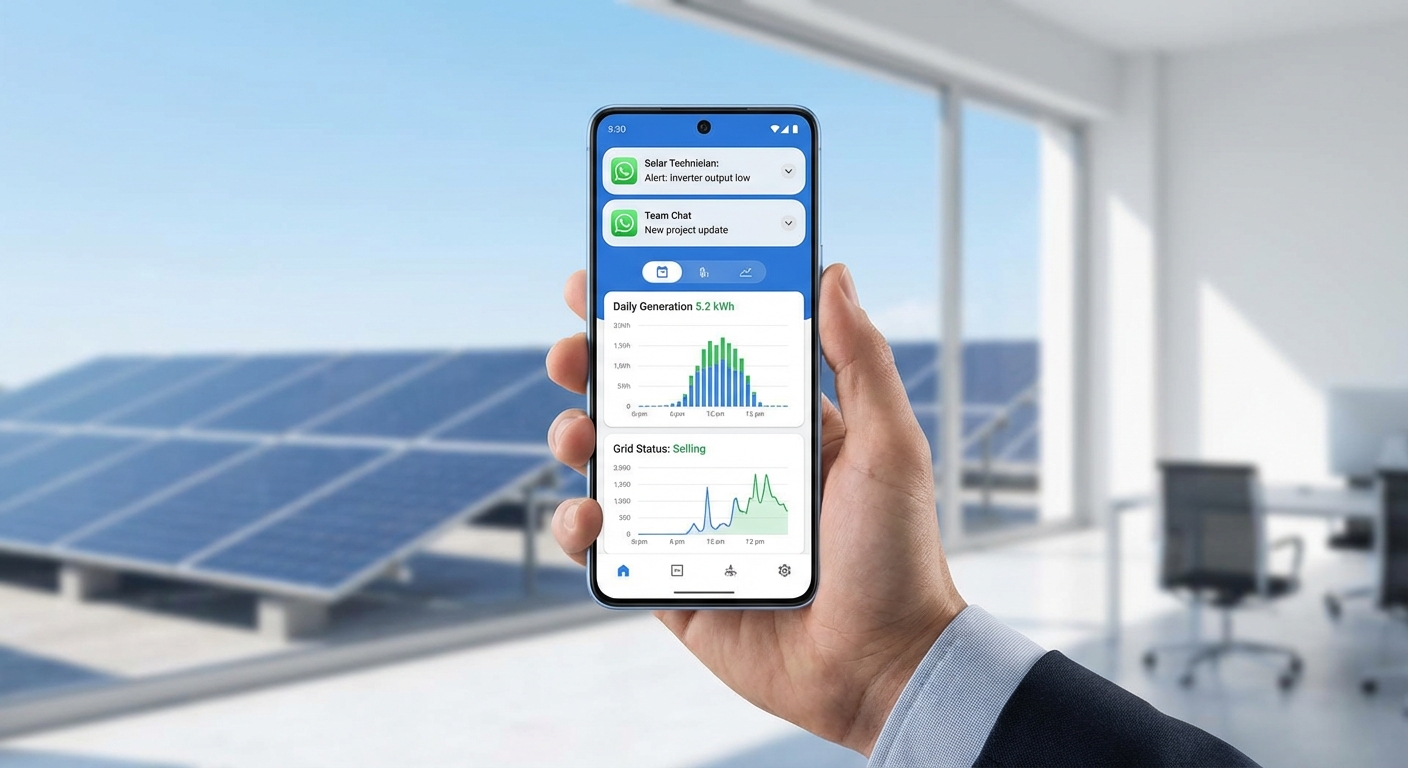
Leading Indian manufacturers have developed AI-powered monitoring platforms that analyze system performance, predict maintenance needs, and provide automated troubleshooting guidance. These systems learn from thousands of installations to identify performance anomalies and recommend corrective actions.
The integration of WhatsApp monitoring represents a uniquely Indian innovation, recognizing that WhatsApp is the dominant communication platform for Indian businesses. Real-time alerts, performance reports, and troubleshooting support delivered through WhatsApp provide accessibility that proprietary apps cannot match.
International brands typically offer web-based monitoring portals and dedicated mobile apps, which provide comprehensive data but may require additional training and separate login credentials that create adoption barriers for smaller EPCs and facility managers.
Connectivity Options and Reliability
Modern inverters support multiple connectivity options including Wi-Fi, 4G, and Bluetooth, ensuring reliable data transmission regardless of site conditions. This redundancy is particularly valuable in rural installations where internet connectivity may be intermittent.
The reliability of monitoring connectivity directly impacts the value of remote monitoring features. Inverters with robust connectivity and automatic reconnection protocols minimize data gaps and ensure continuous performance visibility for EPCs managing distributed installation portfolios.
Data Security and Server Location
Data security considerations have gained prominence as solar installations become critical infrastructure. India-based server infrastructure ensures that system performance data remains within national boundaries, addressing data sovereignty concerns for government and defense installations.
International brands typically host monitoring data on global cloud platforms, which may raise compliance concerns for sensitive installations. For EPCs serving government clients or critical infrastructure projects, domestic data hosting can be a decisive factor in inverter comparison India evaluations.
User Interface and Accessibility
The monitoring interface design impacts daily usability for facility managers and maintenance teams. Interfaces designed specifically for Indian users incorporate regional language support, intuitive navigation for users with varying technical backgrounds, and mobile-first design recognizing smartphone-dominant access patterns.
International monitoring platforms often prioritize feature comprehensiveness over accessibility, creating steep learning curves that reduce actual utilization. The evolution of solar inverter monitoring systems demonstrates how user-centered design improves operational outcomes.
Inverter Comparison India: Key Decision Factors for EPCs and Distributors
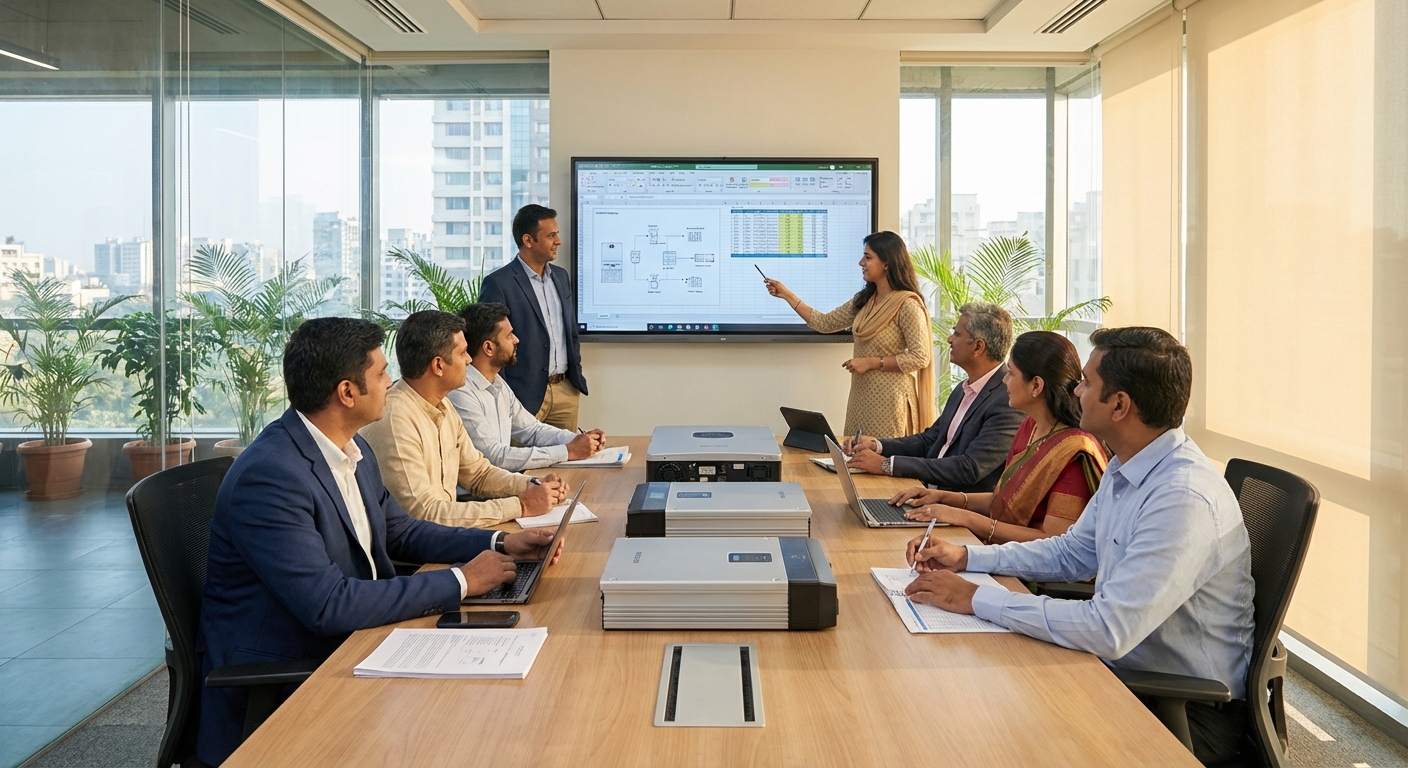
EPCs and distributors face unique considerations when conducting inverter comparison India evaluations. Beyond technical specifications and pricing, business factors including client expectations, supply chain reliability, and partner programs significantly impact product selection decisions.
Project Type Considerations
Different project types favor different inverter selection strategies. Residential installations prioritize compact design, quiet operation, and user-friendly monitoring, where Indian manufacturers’ WhatsApp integration and local service networks provide compelling advantages.
Commercial and industrial projects emphasize reliability, warranty terms, and monitoring capabilities for portfolio management. The 12-year warranty offered by leading Indian manufacturers reduces replacement reserve requirements and improves project economics for C&I installations.
Large-scale utility projects may still favor established international brands due to financing requirements, where lender familiarity with international brands can streamline project approval despite higher equipment costs.
Client Expectations and Brand Perception
Client brand preferences influence inverter selection, particularly for premium residential and corporate installations. International brands benefit from established global reputations, while Indian manufacturers must demonstrate quality through certifications, warranties, and performance data.
However, brand perception is shifting as Indian manufacturers demonstrate consistent quality and Indian clients increasingly value local manufacturing, faster service, and supporting domestic industry. EPCs should educate clients on objective performance metrics rather than relying solely on brand recognition.
Supply Chain and Inventory Management
Supply chain reliability impacts project timelines and working capital requirements. Indian manufacturers offer shorter lead times, easier inventory replenishment, and reduced import documentation complexity compared to international suppliers.
For distributors, domestic sourcing reduces inventory carrying costs and minimizes the risk of obsolete inventory due to product updates or technology changes. The ability to order smaller quantities more frequently improves cash flow management for growing distribution businesses.
Technical Support and Training Programs
Manufacturer-provided technical support and training programs accelerate EPC capability development and reduce troubleshooting costs. Indian manufacturers increasingly offer comprehensive training programs, installation certification, and ongoing technical support through regional teams.
International brands may provide training primarily through online resources or limited in-person sessions in major cities, creating accessibility challenges for EPCs based in tier-2 and tier-3 markets where solar adoption is accelerating rapidly.
Partner Programs and Business Support
Distributor and EPC partner programs provide business development support, marketing resources, and preferential pricing that impact overall business economics. Indian manufacturers often structure partner programs specifically for the Indian market, including regional exclusivity options, marketing fund support, and joint customer development initiatives.
International brands typically operate through established distribution networks with limited flexibility for emerging partners. For new entrants to the solar distribution business, Indian manufacturers may offer more accessible partnership terms and dedicated business development support.
ROI Analysis: Indian vs International Inverters for Different Applications
Return on investment calculations provide the ultimate decision framework for inverter comparison India evaluations. ROI analysis must account for application-specific factors including system size, usage patterns, electricity tariffs, and financing structures.
Residential Installation ROI
For residential installations, the lower initial cost of Indian inverters combined with 12-year warranties typically delivers superior ROI compared to international alternatives. A typical 5kW residential system might save ₹15,000-₹25,000 in initial inverter costs while receiving equivalent or superior warranty protection.
Over a 25-year system lifespan, this initial savings compounds through reduced financing costs and earlier payback achievement. The local service network advantage further improves ROI by minimizing downtime costs during any warranty claims or service requirements.
Commercial and Industrial Project Economics
C&I projects involve larger system sizes where inverter costs represent a smaller percentage of total project costs, but where reliability and monitoring capabilities significantly impact operational economics. The inverter comparison India analysis for C&I projects should emphasize total cost of ownership over initial price.
For a 500kW commercial installation, the initial price advantage of Indian inverters might represent ₹200,000-₹400,000 in capital savings. However, the ROI calculation must also consider monitoring system value, warranty claim processing speed, and service network accessibility over the 25-year project life.
Payback Period Calculations
Inverter selection impacts overall system payback periods through both initial cost and long-term reliability. Systems using lower-cost Indian inverters with comprehensive warranties typically achieve 6-12 month faster payback compared to equivalent systems with premium international inverters.
This payback acceleration is particularly valuable for commercial clients evaluating solar investments against alternative capital deployment options. The faster payback reduces investment risk and improves internal rate of return calculations that drive C&I solar adoption decisions.
Long-Term Value Proposition
Solar installations represent 25-year investments where inverter replacement costs significantly impact lifetime economics. The inverter lifespan planning approach should account for expected replacement cycles and associated costs.
Inverters with 12-year warranties reduce the probability of out-of-warranty replacement costs during the first half of system life. Even if inverter replacement becomes necessary after year 12, the initial capital savings from choosing Indian manufacturers can fund the replacement while maintaining superior overall ROI.
Risk Factors and Mitigation
ROI calculations should incorporate risk factors including manufacturer business continuity, technology obsolescence, and regulatory changes. Indian manufacturers backed by established industrial groups provide business continuity confidence comparable to international brands.
Technology obsolescence risk affects all inverter manufacturers as grid codes evolve and new features become standard. Indian manufacturers’ faster product update cycles and local engineering teams may provide advantages in adapting to India-specific regulatory changes compared to international brands’ global product development cycles.
Making the Right Choice: Decision Framework for Inverter Comparison India
Effective inverter comparison India decisions require structured evaluation frameworks that balance technical performance, economic factors, and business considerations. This decision framework guides EPCs, distributors, and facility owners through systematic inverter selection.
Evaluation Checklist for EPCs and Distributors
A comprehensive evaluation checklist should include:
- Technical specifications: Efficiency, DC oversizing, weather protection, surge protection
- Quality indicators: Component sourcing, testing protocols, certifications, manufacturing legacy
- Warranty terms: Duration, full replacement vs repair, claim processing speed
- Service infrastructure: Service center locations, response times, technical support accessibility
- Monitoring capabilities: Connectivity options, user interface, data security, AI features
- Pricing and TCO: Initial cost, installation expenses, maintenance costs, downtime risk
- Business factors: Supply chain reliability, training programs, partner support, brand reputation
The systematic approach to inverter selection provides detailed evaluation methodologies for each criterion.
When to Choose Indian Manufacturers
Indian-manufactured inverters offer compelling advantages for:
- Price-sensitive projects where initial capital cost significantly impacts project feasibility
- Residential and small commercial installations where local service accessibility and user-friendly monitoring provide operational advantages
- Projects in tier-2 and tier-3 cities where international brand service networks have limited presence
- Clients prioritizing domestic manufacturing and supporting Indian industry
- Installations requiring India-based data hosting for security or compliance reasons
- EPCs building long-term manufacturer relationships with accessible partner programs
When International Brands Make Sense
International inverters may be preferred for:
- Large utility-scale projects where lender requirements favor established international brands
- Premium residential clients with strong international brand preferences
- Projects with specific technical requirements available only from specialized international manufacturers
- Installations by EPCs with existing international brand relationships and trained service teams
- Export-oriented manufacturing facilities where international brand alignment supports corporate sustainability reporting
Hybrid Approach for Different Project Types
Many successful EPCs and distributors adopt hybrid strategies, offering both Indian and international inverters for different project types and client segments. This approach maximizes market coverage while optimizing product selection for each application.
A typical hybrid strategy might specify Indian manufacturers for residential and small commercial projects while reserving international brands for large C&I installations with specific brand requirements. This segmentation optimizes both project economics and client satisfaction across diverse project portfolios.
Future-Proofing Your Inverter Selection
The solar inverter market continues evolving rapidly with new features, improved efficiency, and enhanced monitoring capabilities. Future-proof inverter selection considers:
- Firmware update capabilities for adding features and adapting to grid code changes
- Modular design enabling component upgrades without full inverter replacement
- Battery integration readiness for future hybrid system conversion
- Communication protocol compatibility with emerging smart grid and virtual power plant platforms
- Manufacturer R&D investment indicating commitment to continuous innovation
Indian manufacturers’ focus on the domestic market positions them to rapidly adapt to India-specific regulatory changes and grid evolution, potentially providing future-proofing advantages over international brands’ global product strategies.
Conclusion: Making Informed Inverter Comparison India Decisions
The inverter comparison India landscape in 2026 offers EPCs, distributors, and facility owners unprecedented choice between high-quality Indian and international solar inverters. The historical quality gap has largely closed, with leading Indian manufacturers now delivering performance, reliability, and features comparable to international competitors.
The decision framework should prioritize total cost of ownership over initial price, warranty terms over brand recognition, and local service infrastructure over global market presence. For most residential and commercial applications, Indian manufacturers like Qbits offer compelling value propositions through 12-year full replacement warranties, AI-powered WhatsApp monitoring, German-grade components, and distributed service networks optimized for Indian conditions.
International brands retain advantages in specific segments including utility-scale projects and premium installations with strong brand preferences. However, the economic and operational benefits of Indian manufacturers make them the optimal choice for the majority of solar installations across India’s diverse markets.
As you evaluate inverter options for your next project, consider not just the specifications and price, but the complete ecosystem of warranty support, monitoring capabilities, service accessibility, and long-term manufacturer commitment that determines actual project success over 25-year system lifespans.
Ready to make an informed inverter comparison India decision for your next solar project? Explore Qbits’ complete range of on-grid and hybrid solar inverters engineered with AI-powered monitoring, 12-year warranties, and German-grade components. Our team provides comprehensive technical support to help EPCs and distributors select the optimal inverter solution for each application. Contact our technical team today to discuss your specific project requirements and discover how Qbits inverters deliver superior performance and value for Indian solar installations.
For distributors and channel partners looking to expand their product portfolio with a trusted Indian inverter brand backed by comprehensive support and competitive margins, explore our partnership opportunities and join India’s next-generation solar inverter ecosystem.
This blog post was written using thestacc.com