



Solar Inverter Lifespan: Complete Financial Planning Guide

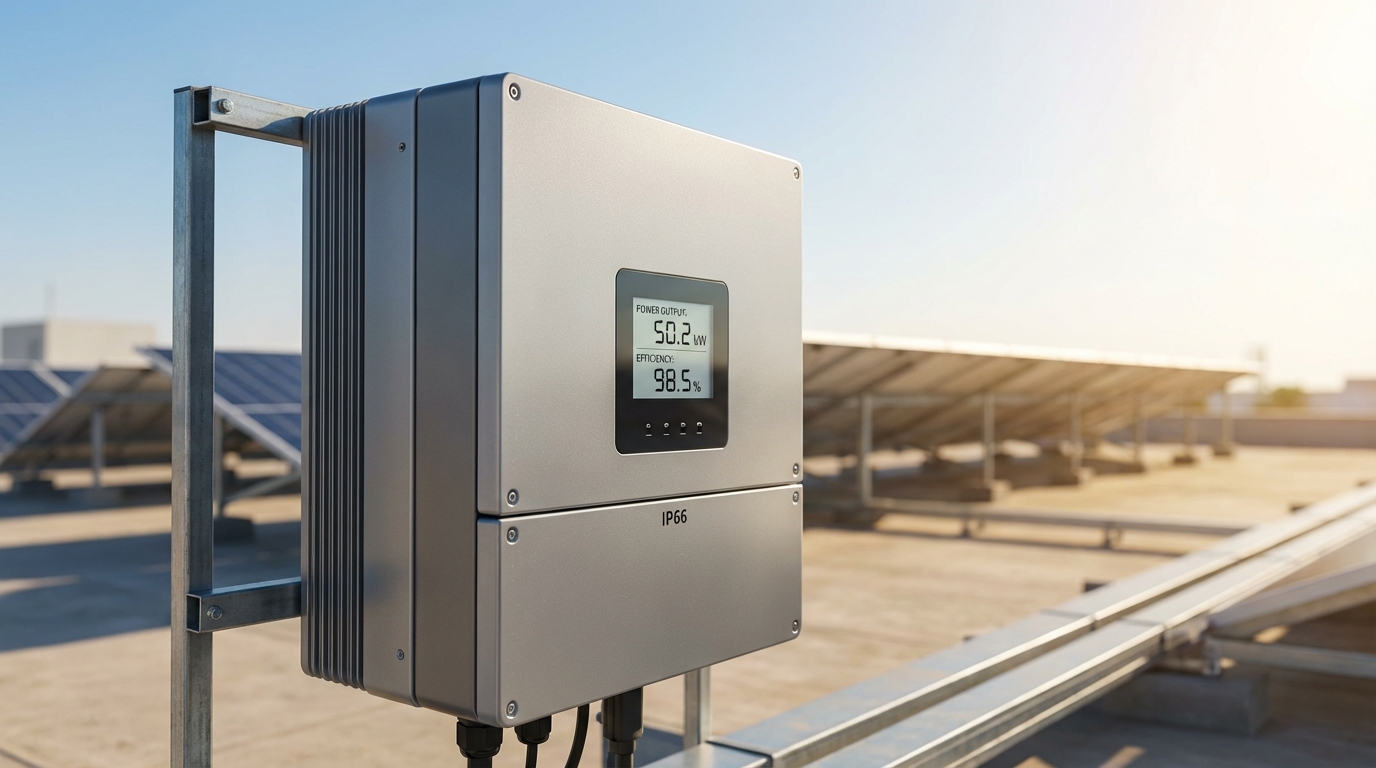
When investing in solar energy infrastructure, understanding the true inverter lifespan is critical for accurate financial planning and long-term ROI calculations. While solar panels typically last 25-30 years, inverters—the heart of any solar installation—have a significantly shorter operational life. For EPCs, distributors, and facility owners across India, this lifespan gap creates a crucial planning challenge that directly impacts total cost of ownership and project profitability.
The reality is stark: most solar installations will require at least one, and often two, inverter replacements during the system’s lifetime. Without proper financial planning for these replacement cycles, solar projects can face unexpected costs that erode returns and disrupt operations. This comprehensive guide explores everything you need to know about inverter lifespan expectations, the factors that influence longevity, and how to build a robust financial framework that accounts for the complete lifecycle costs of your solar investment.
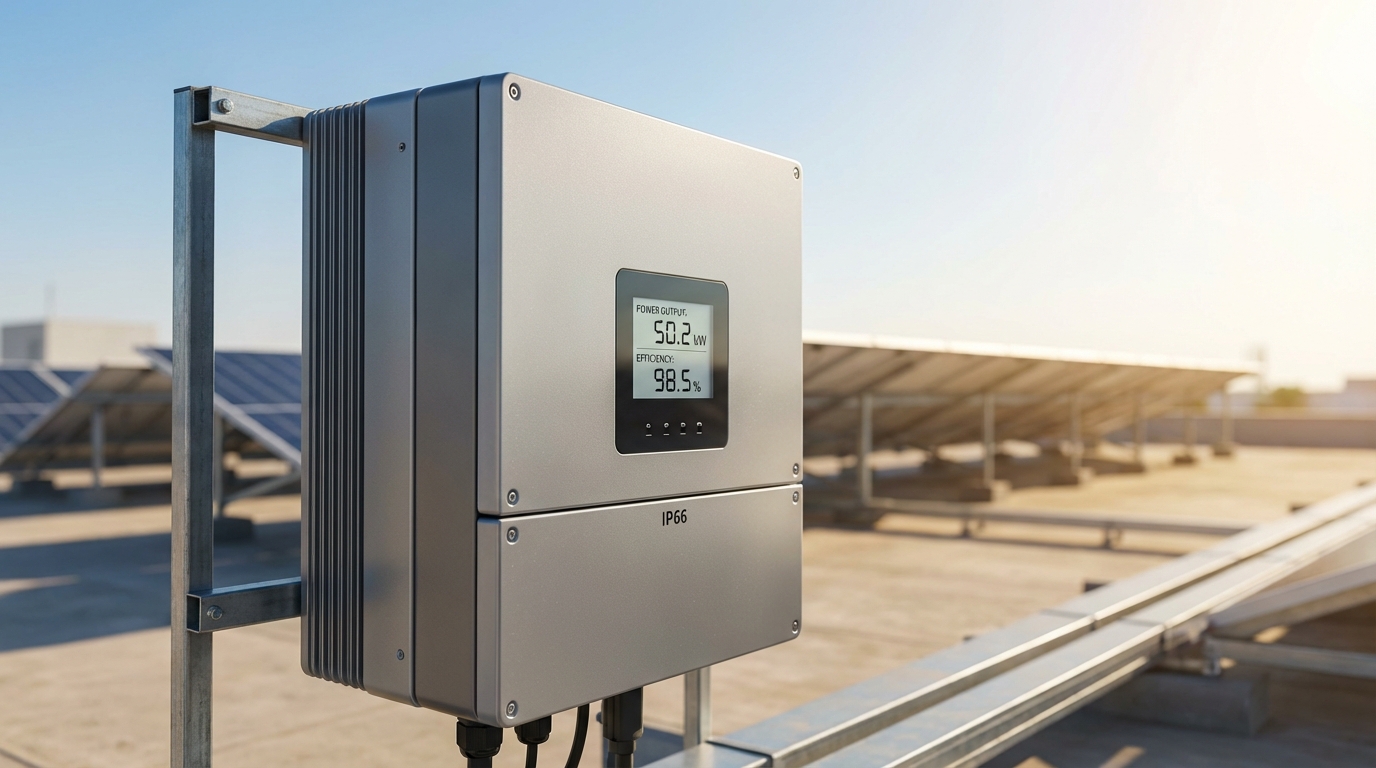
Understanding Solar Inverter Lifespan: What to Expect in 2026
The inverter lifespan question is one of the most critical considerations in solar project planning, yet it’s often underestimated or overlooked entirely. In 2026, industry data shows that the average solar inverter operates effectively for 10-15 years under optimal conditions. However, this range varies significantly based on technology type, component quality, environmental conditions, and maintenance practices.
String inverters, the most common type in commercial and residential installations, typically deliver reliable performance for 10-15 years. Hybrid inverters with battery integration systems often fall into the 10-12 year range due to the additional complexity and thermal stress from battery charging cycles. Microinverters, while offering certain advantages in residential applications, generally provide similar longevity when properly installed and maintained.
The fundamental challenge lies in the mismatch between solar panel warranties (typically 25-30 years) and inverter lifespan expectations. This gap means that even with the most reliable inverters, facility owners and EPCs must plan for at least one replacement cycle, and potentially two, over the life of a solar installation. For a 100 kW commercial installation in India, this translates to replacement costs ranging from ₹3-5 lakhs per cycle, depending on technology and market conditions.
What makes 2026 different from previous years is the increasing availability of premium inverters with extended warranty coverage and superior component quality. Manufacturers like Qbits are now offering 12-year full replacement warranties backed by German-grade electronic components and rigorous quality testing protocols. These advances are gradually extending the practical inverter lifespan and reducing the total cost of ownership for solar installations across India.
1. Typical Inverter Lifespan by Type and Technology
Understanding the inverter lifespan variations across different technologies is essential for making informed purchasing decisions and accurate financial projections. Not all inverters are created equal, and the type of technology you select will significantly impact replacement timing and long-term costs.
String inverters remain the workhorse of commercial and industrial solar installations in India. These centralized units typically deliver 10-15 years of reliable operation, with the upper end of this range reserved for premium models featuring high-quality capacitors, advanced thermal management, and robust surge protection. The lifespan of string inverters is heavily influenced by the quality of internal components, particularly electrolytic capacitors, which are often the first components to degrade under thermal stress.
Hybrid inverters with battery integration capabilities represent a growing segment of the Indian solar market. These sophisticated systems manage both solar generation and battery storage, creating additional thermal and electrical stress on components. As a result, hybrid inverter lifespan typically ranges from 10-12 years. However, the added functionality and energy independence they provide often justify the potentially shorter operational life and higher replacement costs.
The distinction between on-grid and hybrid configurations also affects longevity expectations. On-grid inverters generally experience less stress because they don’t manage battery charging cycles or provide backup power during grid outages. This simpler operational profile can extend the practical inverter lifespan by 1-2 years compared to hybrid systems operating in similar environmental conditions.
Component quality represents the single most important factor in determining actual inverter lifespan. Premium inverters built with German-grade components, film capacitors instead of electrolytic capacitors, and advanced cooling systems consistently outperform budget alternatives. Qbits inverters, for example, undergo 1000+ automated quality tests per unit and feature components specifically selected for longevity in harsh Indian operating conditions. This attention to component quality can mean the difference between a 10-year and 15-year operational life.
2. Critical Factors That Affect Inverter Lifespan
The actual inverter lifespan you experience in the field depends on a complex interplay of environmental, operational, and maintenance factors. Understanding these variables allows EPCs and facility owners to optimize installation practices and extend equipment life beyond manufacturer averages.
Temperature and Climate Impact
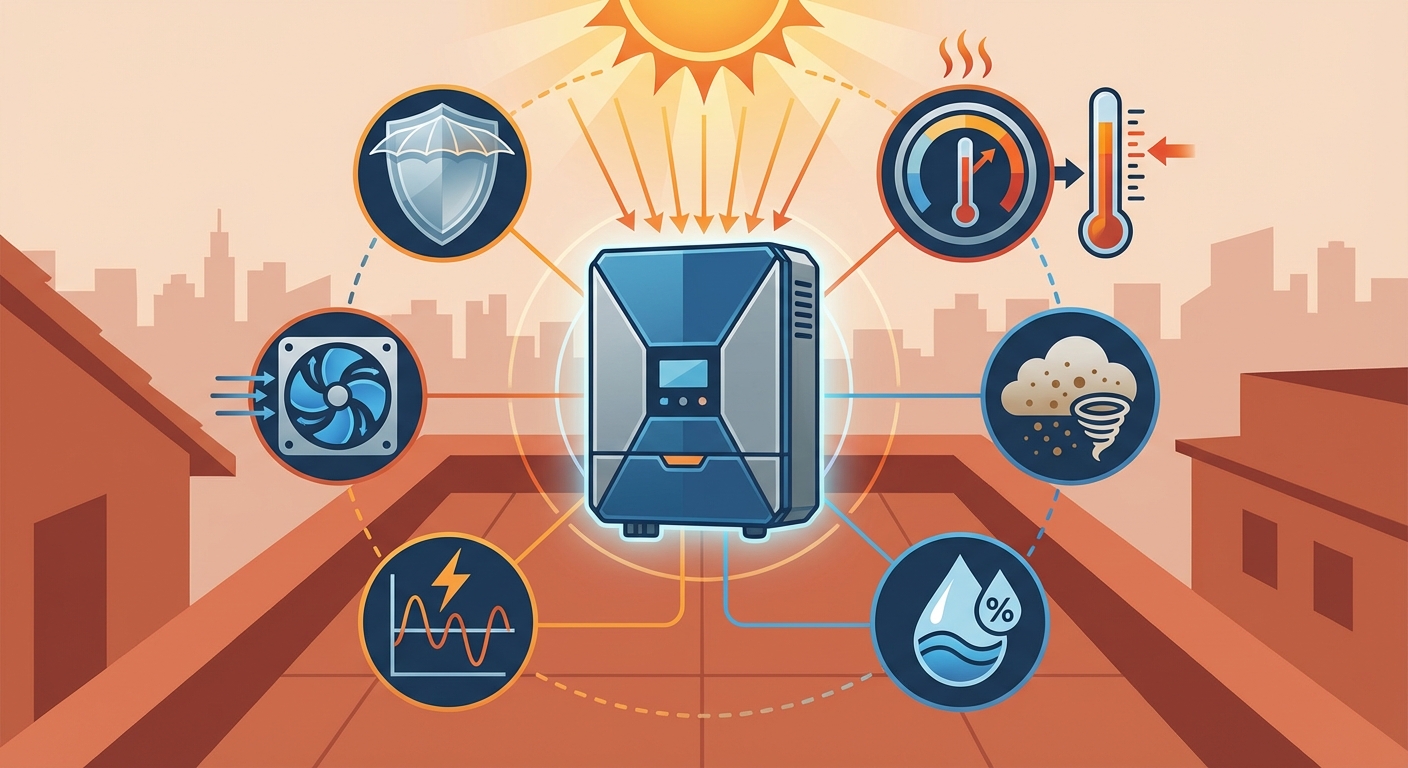
Temperature is the primary enemy of electronic components, and nowhere is this more evident than in rooftop solar installations across India. Ambient temperatures regularly exceed 45°C during summer months, and inverter enclosures can experience internal temperatures 10-15°C higher than ambient conditions. Every 10°C increase in operating temperature can reduce electronic component life by approximately 50%, making thermal management absolutely critical for inverter lifespan optimization.
High-quality inverters address this challenge through multiple strategies. Advanced cooling systems with intelligent fan control maintain optimal internal temperatures. IP66 weather protection ratings ensure that dust and moisture don’t compromise cooling efficiency or create corrosion issues. Proper installation location—with adequate ventilation and shade where possible, can add years to inverter operational life. In harsh Indian climates, these thermal management features aren’t optional luxuries; they’re essential for achieving expected lifespan targets.
Humidity and dust exposure create additional challenges, particularly in coastal regions and industrial areas. Moisture ingress can cause corrosion of circuit boards and connections, while dust accumulation impedes cooling and creates hotspots. Inverters with robust weather sealing and conformal coating on circuit boards demonstrate significantly better longevity in these challenging environments.
Grid Conditions and Power Quality
Grid stability varies considerably across different regions of India, and poor power quality directly impacts inverter lifespan. Voltage fluctuations, frequency variations, and sudden grid disconnections create electrical stress on inverter components, particularly input and output stage electronics. Over time, this repeated stress accelerates component degradation and increases failure risk.
High-quality surge protection devices (SPDs) on both DC and AC sides provide essential protection against voltage spikes and lightning-induced surges. Inverters equipped with robust SPDs and wide input voltage ranges can tolerate grid instability without suffering accelerated wear. This protection is particularly valuable in rural and semi-urban areas where grid quality may be less consistent than in major metropolitan centers.
The quality of the installation itself also plays a crucial role. Proper cable sizing, secure connections, and correct grounding all contribute to reduced electrical stress and extended component life. Poor installation practices, undersized cables, loose connections, inadequate grounding, can reduce inverter lifespan by years, regardless of the quality of the equipment itself.
3. The True Cost of Inverter Ownership Over 25 Years
Calculating the true cost of inverter lifespan and replacement cycles is essential for accurate solar project financial modeling. The initial inverter purchase represents only a portion of the total cost of ownership over a typical 25-year solar installation lifetime.
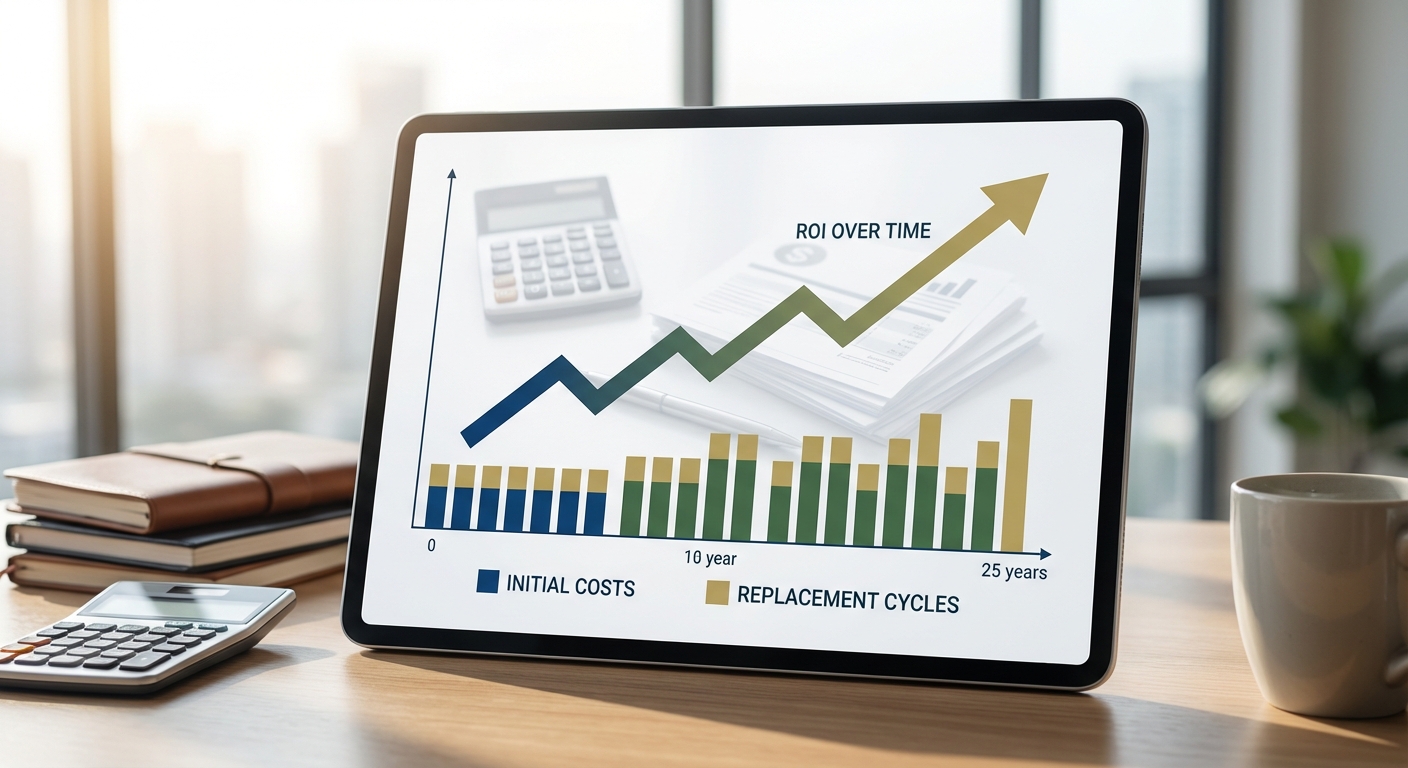
For a typical commercial solar installation in India, the inverter represents approximately 10-15% of the total project cost. A 100 kW system might have an initial inverter cost of ₹4-6 lakhs, depending on technology and brand selection. However, this initial investment is just the beginning of the financial story.
With an average inverter lifespan of 12 years, a 25-year solar installation will require at least one complete inverter replacement, and potentially a second partial replacement or major component overhaul. Assuming inverter costs remain relatively stable (accounting for technology improvements offsetting inflation), the total inverter investment over 25 years could reach ₹10-15 lakhs for that same 100 kW system.
The total cost of ownership calculation must also account for several hidden costs that often catch facility owners by surprise. System downtime during inverter failure and replacement can result in lost generation revenue. Labor costs for removal and installation of replacement units add to the direct equipment expense. In some cases, technology changes may require system reconfiguration or additional components to integrate newer inverter models with existing solar arrays.
Replacement Cost Planning
Smart financial planning requires establishing a replacement reserve fund from the beginning of the solar installation’s operational life. A simple approach is to divide the expected replacement cost by the number of years until replacement. For example, if you expect a ₹5 lakh replacement in year 12, setting aside approximately ₹42,000 annually creates a dedicated fund that eliminates financial surprises.
This approach becomes more sophisticated when you account for the time value of money and potential technology improvements. Inverter technology continues to advance, with efficiency improvements and cost reductions occurring over time. The replacement inverter you purchase in year 12 may offer better performance at a similar or lower price point than your original equipment. However, it’s prudent to budget conservatively and assume replacement costs similar to initial purchase prices.
The replacement versus repair decision framework also impacts long-term costs. As inverters age beyond 8-10 years, repair costs for component failures can approach 30-50% of replacement cost. At this point, replacement often makes more financial sense, particularly when considering the improved efficiency, warranty coverage, and monitoring capabilities of newer equipment. For more guidance on selecting the right equipment, review our comprehensive solar inverter selection criteria for EPCs.
4. Warranty Coverage and Financial Protection
Warranty coverage represents a critical financial protection mechanism that directly impacts the true cost of inverter lifespan management. In the Indian solar market, standard warranty terms typically range from 5-10 years, with significant variation in what’s actually covered under warranty provisions.
Understanding warranty details is essential because not all warranties provide equal protection. Some manufacturers offer limited warranties that cover only specific components or require customers to pay for labor, shipping, or diagnostic costs. Others provide comprehensive full replacement warranties that cover all costs associated with equipment failure during the warranty period.
The value of extended warranty coverage becomes clear when you calculate the financial protection it provides. A 12-year full replacement warranty, such as that offered by Qbits, can eliminate the need for the first replacement cycle entirely if the inverter fails within the warranty period. For a ₹5 lakh inverter, this represents substantial financial protection and risk reduction.
Digital warranty systems are transforming how warranty claims are processed and tracked. Modern warranty platforms allow EPCs and facility owners to register equipment digitally, track warranty status, and initiate claims through streamlined online processes. This reduces the administrative burden and speeds up resolution when equipment issues arise. Qbits’ digital warranty system provides transparency and quick access to warranty documentation, making the claim process straightforward when needed.
When evaluating inverter options, calculate the effective cost per year of operation including warranty coverage. An inverter with a higher upfront cost but 12-year warranty may deliver better value than a cheaper option with only 5-year coverage, particularly when you factor in the peace of mind and financial protection the extended warranty provides.
5. Maximizing Inverter Lifespan: Best Practices for EPCs and Facility Owners
While component quality and environmental conditions play major roles in determining inverter lifespan, proper installation and maintenance practices can add years to equipment operational life. These best practices represent low-cost investments that deliver substantial returns through extended equipment longevity.
Installation location selection is the first critical decision. Inverters should be mounted in locations with maximum shade and ventilation, away from direct sunlight exposure whenever possible. While rooftop mounting is often necessary, positioning inverters on the north-facing side of structures or under protective canopies can reduce thermal stress significantly. Adequate clearance around the inverter, at least 30-50 cm on all sides, ensures proper airflow and cooling efficiency.
Regular maintenance schedules prevent small issues from becoming major failures. Quarterly visual inspections should check for dust accumulation, loose connections, signs of overheating, and proper operation of cooling fans. Annual professional maintenance should include thermal imaging to identify hotspots, connection torque verification, and cleaning of air filters and cooling vents. These simple maintenance activities can extend inverter lifespan by 2-3 years compared to completely neglected equipment.
Environmental protection measures also contribute to longevity. In high-dust environments, installing inverters in enclosures with filtered air intake reduces dust ingress. In coastal areas, applying protective coatings to external surfaces prevents salt-induced corrosion. These relatively inexpensive protective measures pay dividends through extended equipment life and reduced failure rates.
Monitoring Systems and Predictive Maintenance
Advanced monitoring systems represent one of the most effective tools for maximizing inverter lifespan through early problem detection. AI-powered monitoring platforms continuously track inverter performance parameters, identifying subtle degradation patterns that indicate developing issues before they cause complete failures.
Real-time monitoring of key parameters, operating temperature, input/output voltage, efficiency, and error codes, allows facility managers and EPCs to respond quickly to abnormal conditions. A gradual increase in operating temperature might indicate a failing cooling fan that can be replaced before it causes component damage. Declining efficiency trends can signal the need for cleaning or maintenance before performance degradation becomes severe.
Modern monitoring solutions like Qbits’ AI-powered WhatsApp monitoring system make this sophisticated capability accessible and user-friendly. Facility owners receive instant alerts on their mobile devices when performance issues arise, enabling rapid response without requiring constant manual monitoring. This proactive approach to maintenance can prevent catastrophic failures and extend practical inverter lifespan well beyond industry averages. Learn more about the benefits in our detailed guide to solar inverter monitoring systems in India.
6. Inverter Selection for Optimal Long-Term ROI
The inverter selection decision has profound implications for long-term ROI and total cost of ownership. While upfront cost is certainly a consideration, focusing exclusively on initial price often leads to higher lifetime costs and reduced returns on solar investments.
Component quality indicators provide valuable insights into expected inverter lifespan and reliability. Look for inverters that use film capacitors rather than electrolytic capacitors, as film capacitors demonstrate superior longevity under thermal stress. Advanced cooling systems with temperature-controlled fans maintain optimal operating conditions. Robust surge protection on both DC and AC sides protects against grid instabilities and lightning events common in India.
Manufacturing quality standards offer another important evaluation criterion. Inverters that undergo comprehensive testing protocols, such as the 1000+ automated quality tests performed on each Qbits unit, demonstrate lower field failure rates and longer operational lives. BIS and IEC certifications verify compliance with safety and performance standards, providing assurance of baseline quality levels.
Manufacturer reputation and support infrastructure in India should factor heavily into selection decisions. A premium inverter from a manufacturer with limited local presence and support capabilities may prove more problematic than a mid-range option from a company with strong service networks and responsive technical support. The ability to quickly obtain replacement parts, technical assistance, and warranty service directly impacts system uptime and long-term satisfaction.
Efficiency ratings also contribute to long-term value calculations. A 98% efficient inverter generates approximately 2-3% more electricity over its lifetime compared to a 95% efficient unit. Over 12-15 years of operation, this efficiency advantage can generate thousands of rupees in additional revenue, partially offsetting any premium in initial purchase price. When evaluating options, consider our complete evaluation guide for solar inverter manufacturers in India.
7. Financial Planning Framework for Inverter Replacement
Developing a comprehensive financial planning framework for inverter lifespan management ensures that replacement costs don’t create unexpected financial burdens or disrupt solar project economics. This framework should integrate replacement planning into the initial project financial model and ongoing operational budgeting.
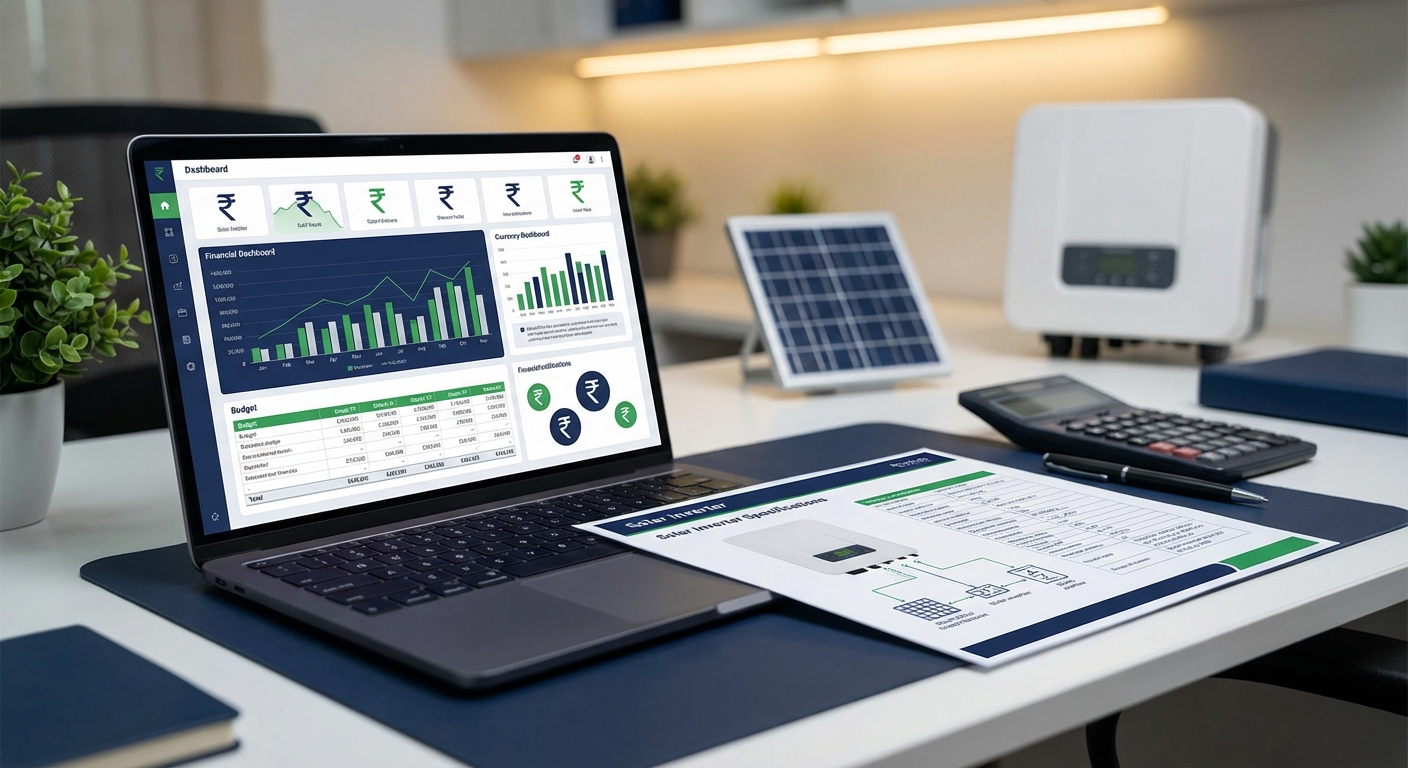
Creating a replacement reserve fund represents the most straightforward approach to financial planning. Calculate the expected replacement cost based on current inverter prices, then divide by the expected inverter lifespan to determine annual reserve contributions. For example, a ₹6 lakh inverter with a 12-year expected life requires annual reserves of ₹50,000. This amount can be set aside from solar generation revenue or included in operational budgets from the project’s inception.
Calculating annual depreciation provides another perspective on inverter costs. Under Indian tax regulations, solar equipment typically qualifies for accelerated depreciation benefits. Understanding the depreciation schedule helps facility owners optimize tax benefits while planning for eventual replacement. The depreciation approach also provides a clear framework for accounting purposes and financial reporting.
Tax implications and depreciation benefits can significantly impact the net cost of inverter replacement. When replacement becomes necessary, the new equipment qualifies for depreciation benefits that offset a portion of the replacement cost. Consulting with tax advisors to optimize the timing and structure of replacement investments can enhance overall project returns.
Financing options for replacement inverters have expanded in recent years. Some manufacturers and distributors offer financing programs specifically for equipment replacement. Leasing arrangements can spread replacement costs over multiple years, improving cash flow management. For large commercial installations, equipment financing may provide more favorable terms than drawing down operational reserves or taking on general business debt.
When to Replace vs. Repair Your Inverter
The decision to replace or repair an aging inverter requires careful cost-benefit analysis. As a general guideline, when repair costs exceed 40-50% of replacement cost, replacement typically makes better financial sense. This threshold accounts for the fact that replacement provides a new warranty period, improved efficiency, and modern monitoring capabilities that repairs cannot deliver.
Performance degradation thresholds also inform replacement timing. If inverter efficiency has declined by more than 5% from original specifications, or if the unit experiences frequent nuisance shutdowns and error conditions, replacement often proves more cost-effective than ongoing repairs and lost generation revenue.
Technology upgrade opportunities during replacement cycles can provide additional value. Replacing a 10-year-old inverter with current technology may enable support for higher-wattage solar panels (up to 750W per panel with modern inverters), improved monitoring capabilities, and better grid support functions. These technology improvements can enhance overall system performance and value beyond simple like-for-like replacement.
Making Informed Decisions About Inverter Lifespan and Total Cost of Ownership
Understanding inverter lifespan expectations and planning for the complete lifecycle costs of solar installations separates successful solar projects from those that underperform financial projections. The key insights from this comprehensive guide provide a framework for making informed decisions that optimize long-term returns.
Quality components and manufacturing standards directly impact operational life and reliability. Investing in premium inverters with German-grade components, comprehensive quality testing, and robust weather protection delivers better long-term value than focusing exclusively on minimizing upfront costs. The difference between a 10-year and 15-year inverter lifespan can represent savings of ₹3-5 lakhs per 100 kW of installed capacity.
Warranty coverage provides essential financial protection and risk mitigation. A 12-year full replacement warranty eliminates the need for the first replacement cycle and provides peace of mind throughout the critical early years of solar system operation. When evaluating inverter options, calculate the effective annual cost including warranty coverage to understand true value.
Proactive maintenance and advanced monitoring systems extend equipment life and prevent costly failures. AI-powered monitoring platforms enable predictive maintenance approaches that identify issues before they cause system downtime. Regular maintenance schedules and proper installation practices can add years to practical inverter lifespan at minimal cost.
Financial planning frameworks that account for replacement cycles from project inception eliminate surprises and ensure solar investments deliver expected returns throughout their operational life. Establishing replacement reserve funds, understanding depreciation benefits, and evaluating financing options provide multiple pathways to managing lifecycle costs effectively.
For EPCs, distributors, and facility owners across India, partnering with reliable manufacturers who combine quality engineering with comprehensive support makes all the difference in long-term solar project success. Qbits inverters deliver the combination of German-grade components, 12-year warranty coverage, AI-powered monitoring, and rigorous quality testing that extends inverter lifespan and optimizes total cost of ownership.
Ready to make informed decisions about your solar inverter investments? Explore Qbits’ complete range of on-grid and hybrid inverters engineered for longevity and backed by industry-leading warranty coverage. For personalized guidance on inverter selection and financial planning for your specific project requirements, connect with our technical team today. Take the first step toward optimizing your solar investment’s long-term performance and returns with inverters built to last.
This blog post was written using thestacc.com