



Solar Inverter Selection: 10 Critical Criteria for EPCs


For solar EPCs and installation companies operating in India’s rapidly expanding renewable energy market, inverter selection represents one of the most critical procurement decisions that directly impacts project profitability, client satisfaction, and long-term reputation. A poorly chosen inverter can transform a promising solar installation into a maintenance nightmare, eroding margins through warranty claims, service calls, and damaged client relationships. Conversely, strategic inverter selection based on rigorous evaluation criteria ensures stable performance, minimal downtime, and installations that generate referrals for years to come.
The Indian solar inverter market presents both opportunities and challenges for EPCs. With dozens of inverter brands India competing for market share, distinguishing between genuinely superior products and marketing hype requires systematic evaluation. This comprehensive guide walks you through ten critical criteria that separate reliable, high-performance inverters from those that will compromise your projects and reputation.
Why Inverter Selection Determines Project Success
The inverter serves as the brain and heart of every solar installation, converting DC power from panels into usable AC electricity while managing grid synchronization, safety protocols, and performance optimization. When EPCs prioritize inverter selection as a strategic decision rather than a commodity purchase, the benefits cascade throughout the entire project lifecycle.

Poor inverter choices create immediate financial consequences. Service calls for inverter troubleshooting consume technician time and transportation costs. Warranty claims require administrative resources and create cash flow gaps. Most damaging, inverter failures force EPCs to manage angry clients whose expected energy savings evaporate during extended downtime periods. In India’s competitive solar market, a single high-profile inverter failure can cost an EPC dozens of potential referrals.
The financial impact extends beyond direct costs. Inverter ROI calculations must account for the total cost of ownership over the system’s 25-year lifespan. An inverter with a rock-bottom inverter cost but a 5-year warranty will likely require replacement at least once, potentially twice, during the system’s operational life. Meanwhile, premium inverters with 12-year warranties and superior component quality deliver lower lifecycle costs despite higher upfront investment.
Client satisfaction hinges on inverter reliability. Residential customers expect their solar systems to operate silently and invisibly, generating savings without requiring attention. Commercial and industrial clients demand consistent performance that supports their sustainability goals and financial projections. When inverters deliver on these expectations, satisfied clients become your most effective marketing channel. When they fail, negative reviews spread quickly through industry networks and online platforms.
The Indian solar inverter landscape has matured significantly, with both international brands and domestic inverter manufacturers India offering increasingly sophisticated products. Understanding how to evaluate these options systematically separates successful EPCs from those struggling with quality issues and client complaints.
1. Component Quality and Manufacturing Standards
Component quality forms the foundation of inverter lifespan and reliability. The electronic components inside an inverter determine whether it operates flawlessly for 12+ years or begins experiencing failures within the first few years of operation. EPCs must look beyond marketing claims to understand actual component sourcing and manufacturing standards.
German-grade electronic components represent the gold standard in inverter manufacturing. These components undergo rigorous testing and maintain tight tolerances that ensure consistent performance across varying temperature ranges and electrical conditions. When evaluating inverters, ask manufacturers specifically about component sourcing. Vague answers like “international standard components” should raise immediate red flags.
Manufacturing quality testing protocols reveal a manufacturer’s commitment to reliability. Leading manufacturers like Qbits conduct 1000+ automated quality tests on every inverter unit before it leaves the factory. These tests verify electrical performance, safety features, thermal management, and component integration under simulated real-world conditions. Request detailed information about quality testing procedures during the inverter selection process.
Certification requirements provide baseline quality assurance. In India, BIS/IEC certification ensures inverters meet minimum safety and performance standards. However, certification alone doesn’t guarantee superior quality. Examine the manufacturer’s testing infrastructure, quality management systems, and component traceability protocols. Manufacturers with ISO certifications and documented quality processes demonstrate systematic approaches to reliability.
Manufacturer legacy and backing matter significantly. Companies supported by established industrial groups bring financial stability, engineering expertise, and long-term commitment to the market. Qbits, backed by the Heaven Group legacy, combines decades of industrial experience with next-generation inverter technology. This backing ensures the company will remain operational to honor warranties and provide support throughout your installations’ operational lives.
Red flags to avoid: Manufacturers who refuse to disclose component sourcing, lack detailed quality testing documentation, operate without proper certifications, or have unclear corporate backing should be eliminated from consideration regardless of attractive pricing.
2. Warranty Terms and Manufacturer Support
Warranty terms directly impact your total cost of ownership calculations and risk exposure. The inverter warranty landscape in India varies dramatically, with standard offerings ranging from 5 to 12 years. Understanding warranty structure, coverage scope, and claim processes is essential for informed inverter selection.
Full replacement warranties provide superior protection compared to repair warranties. When an inverter fails under a full replacement warranty, the manufacturer provides a new unit rather than attempting repairs that may not address underlying quality issues. Qbits offers a 12-year full replacement warranty on their inverters, demonstrating confidence in component quality and manufacturing standards while eliminating uncertainty about repair quality and turnaround times.
Warranty claim processes reveal how manufacturers treat their EPC partners. Complex claim procedures requiring extensive documentation, multiple approval levels, and long processing times create operational headaches and client dissatisfaction. Digital warranty systems streamline the process, allowing EPCs to register installations, track warranty status, and initiate claims through user-friendly online platforms. During inverter selection, request demonstrations of the warranty claim process and ask for average claim resolution timeframes.
Extended warranty periods reduce replacement costs over system lifespans. A 12-year warranty covers nearly half of a typical 25-year solar system’s operational life, significantly reducing the probability of out-of-warranty replacement costs. When comparing inverters with different warranty periods, calculate the net present value of potential replacement costs to understand true lifecycle economics.
Manufacturer financial stability determines whether warranty commitments will be honored. Research the manufacturer’s corporate backing, years in operation, and market presence. Companies with strong financial foundations and established parent organizations are more likely to remain operational and honor warranty commitments throughout the full warranty period. For EPCs, this stability translates to reduced risk and greater confidence in long-term project performance.
Red flags to avoid: Complicated warranty claim procedures, repair-only warranties, manufacturers with unclear financial backing, warranty terms that exclude common failure modes, or companies with poor reputations for honoring warranty commitments should disqualify inverters from consideration.
3. Monitoring Capabilities and Remote Management
Advanced inverter monitoring capabilities have evolved from nice-to-have features to essential requirements for professional solar installations. Real-time monitoring reduces operation and maintenance costs, enables proactive troubleshooting, and provides clients with transparency that builds trust and satisfaction.
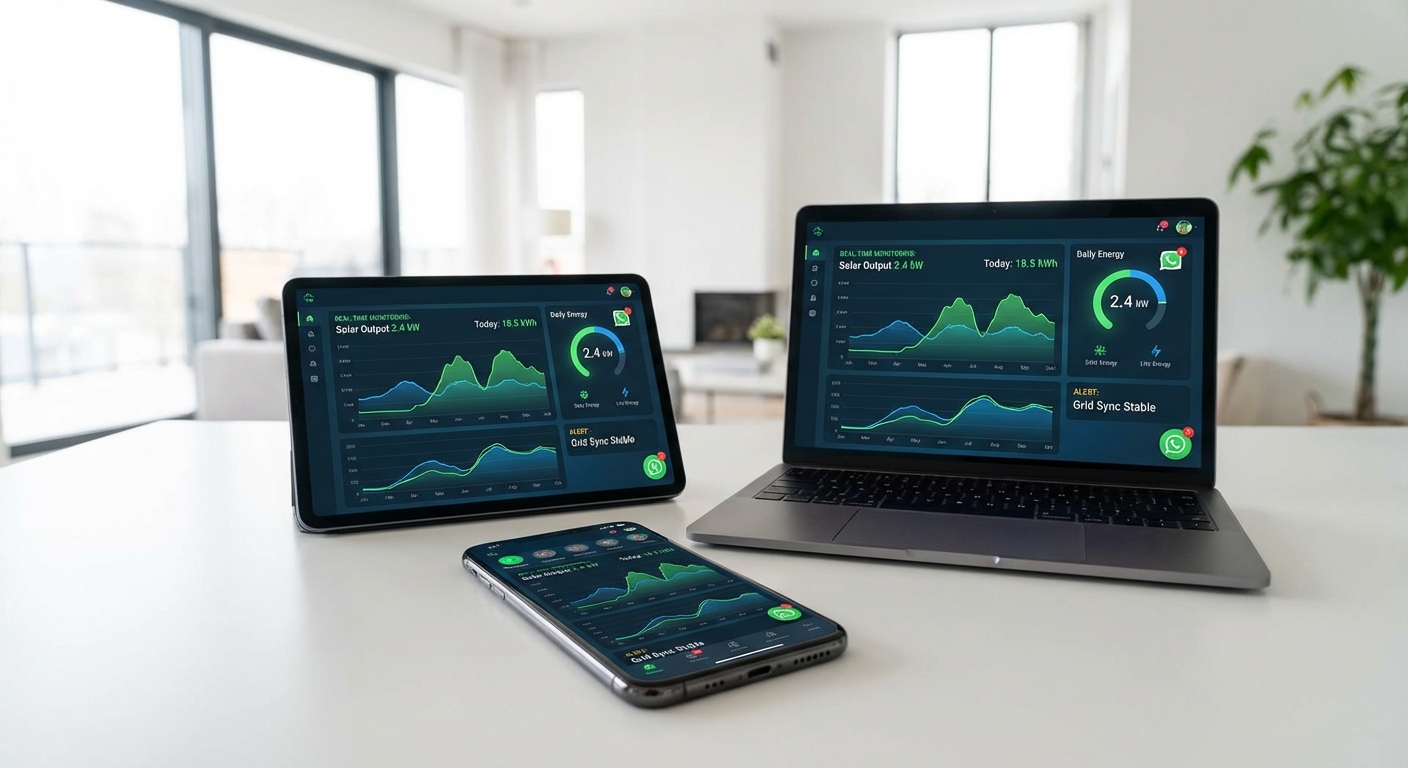
AI-powered monitoring systems represent the cutting edge of inverter technology. These systems analyze performance data in real-time, identifying anomalies that indicate potential issues before they cause system failures. Predictive alerts allow EPCs to schedule preventive maintenance during convenient windows rather than responding to emergency service calls. When evaluating inverter selection options, prioritize systems with intelligent monitoring that goes beyond basic data logging.
WhatsApp monitoring integration addresses the unique needs of the Indian market. While sophisticated web dashboards and mobile apps provide comprehensive data, WhatsApp monitoring delivers critical alerts through a platform that virtually every Indian user already has installed and checks regularly. Qbits’ AI-powered WhatsApp monitoring sends instant notifications about system issues, production milestones, and performance anomalies directly to installers and system owners, ensuring rapid response to any problems.
Connectivity options determine monitoring reliability across diverse installation environments. Look for inverters offering multiple connectivity pathways including Wi-Fi, 4G, and Bluetooth. This redundancy ensures monitoring remains operational even when one connectivity method experiences issues. Rural installations particularly benefit from 4G connectivity that doesn’t depend on customer Wi-Fi networks.
Data security and server location considerations have become increasingly important. Inverters that store performance data on India-based servers provide better data security, faster access speeds, and compliance with evolving data localization regulations. During inverter selection, verify where monitoring data is stored and what security protocols protect sensitive system information.
Monitoring systems directly impact operation and maintenance costs. EPCs managing multiple installations can monitor entire portfolios from centralized dashboards, identifying issues across sites without physical inspections. This capability reduces travel costs, enables faster response times, and allows smaller technical teams to manage larger installation portfolios. Calculate these O&M savings when comparing inverters with different monitoring capabilities.
Red flags to avoid: Basic monitoring with limited alerting, systems requiring proprietary hardware for connectivity, monitoring platforms with poor user interfaces, lack of mobile access, or unclear data security practices should raise concerns during evaluation.
4. Weather Protection and Durability Ratings
Indian climate conditions present significant challenges for rooftop solar equipment. Extreme heat, monsoon rains, coastal humidity, and dust exposure require inverters with robust weather protection. The inverter installation India environment demands careful attention to durability ratings and enclosure design.
IP66 weather protection provides comprehensive defense against environmental challenges. This rating certifies complete dust protection and resistance to powerful water jets from any direction. For rooftop installations exposed to monsoon conditions and regular cleaning with high-pressure water, IP66 rating is essential. Lower IP ratings like IP65 or IP54 may seem adequate but leave inverters vulnerable to moisture ingress that causes premature failures.
Indian climate challenges extend beyond rain protection. Summer temperatures regularly exceed 45°C in many regions, while coastal installations face salt-laden air that corrodes electronic components. Northern installations experience significant temperature swings between summer and winter. During inverter selection, verify the inverter’s operating temperature range and ask about thermal management systems that prevent overheating-related performance degradation.
Enclosure design and materials impact long-term durability. High-quality powder-coated aluminum enclosures resist corrosion better than painted steel alternatives. Examine how cable entry points are sealed, whether ventilation systems include dust filters, and how the enclosure design prevents water pooling. These details determine whether an inverter maintains its weather protection rating throughout years of exposure.
Thermal management directly affects inverter efficiency and lifespan. Inverters generate heat during operation, and excessive temperatures accelerate component degradation. Look for designs incorporating intelligent cooling systems, heat sinks, and thermal monitoring that reduces power output if temperatures approach dangerous levels. This protection prevents catastrophic failures even during extreme heat events.
Red flags to avoid: IP ratings below IP65, vague specifications about operating temperature ranges, enclosures showing signs of cost-cutting in materials or sealing, lack of thermal management features, or designs that trap heat should eliminate inverters from consideration for Indian installations.
5. Efficiency Metrics and Performance Standards
Inverter efficiency directly impacts system energy production and client returns on investment. Understanding efficiency specifications, how they’re measured, and their real-world implications is crucial for effective inverter selection that maximizes project performance.
Peak efficiency ratings of 98% represent the current standard for quality inverters. This specification indicates that the inverter converts 98% of incoming DC power to usable AC power under optimal conditions, with only 2% lost as heat. However, peak efficiency tells only part of the story. Examine the efficiency curve across different power levels, as inverters often operate below peak capacity during morning, evening, and cloudy conditions.
Low start-up voltage capabilities extend daily production hours. Inverters with low start-up voltage thresholds begin generating power earlier in the morning and continue operating later in the evening when solar irradiance is low. This extended operating window increases total daily energy production, particularly valuable during winter months with shorter days. Qbits inverters feature low start-up voltage that maximizes production across all lighting conditions.
MPPT efficiency and tracking capabilities optimize power extraction from solar panels. Maximum Power Point Tracking algorithms continuously adjust operating parameters to extract maximum available power as conditions change throughout the day. Superior MPPT algorithms respond faster to changing conditions and maintain optimal operating points more consistently. Ask manufacturers about MPPT efficiency ratings and response times during evaluation.
Performance under partial shading separates good inverters from great ones. In real-world installations, shadows from trees, buildings, chimneys, or nearby structures often affect portions of the array. Inverters with advanced MPPT algorithms and multiple MPPT channels minimize production losses under these conditions. Request performance data showing how inverters handle partial shading scenarios common in your installation environments.
Efficiency impacts inverter ROI calculations significantly. A 2% efficiency difference between a 96% and 98% efficient inverter translates to 2% more energy production annually. Over a 25-year system lifespan, this compounds to substantial additional revenue. Calculate the net present value of this additional production when comparing inverters with different efficiency specifications.
Red flags to avoid: Efficiency ratings below 97%, lack of detailed efficiency curves, poor MPPT performance specifications, no data on partial shading performance, or efficiency claims without independent verification should raise concerns during inverter selection.
6. Surge Protection and Grid Safety Features
Indian grid conditions present unique challenges that require robust surge protection and safety features. Voltage fluctuations, lightning strikes, and grid instability can damage inverters and connected equipment without proper protection. Comprehensive safety features protect your installations and limit liability exposure.
DC and AC surge protection devices (SPDs) form the first line of defense against voltage spikes. Quality inverters integrate SPDs on both the DC input side (protecting against lightning strikes to solar panels) and AC output side (protecting against grid surges). Qbits inverters include integrated DC and AC surge protection that safeguards the inverter and connected equipment from transient voltage events common in Indian electrical infrastructure.
Voltage fluctuation handling capabilities determine inverter reliability in areas with unstable grid power. Many Indian locations experience voltage swings outside the nominal 230V ±10% range. Inverters must continue operating safely across wide voltage ranges without damage or shutdowns. During inverter selection, verify the acceptable input voltage range and how the inverter responds to out-of-range conditions.
Anti-islanding protection requirements ensure safety during grid outages. When grid power fails, inverters must immediately stop feeding power to prevent dangerous conditions for utility workers repairing lines. This safety feature is mandatory under Indian grid codes. Verify that inverters include certified anti-islanding protection with rapid detection and shutdown capabilities.
Grid compliance standards vary by region and utility. Ensure selected inverters meet all applicable Indian standards including CEA regulations, state-specific requirements, and utility interconnection specifications. Non-compliant inverters may be rejected during inspection, creating project delays and additional costs. Request documentation showing compliance with relevant standards.
Red flags to avoid: Missing or inadequate surge protection, narrow acceptable voltage ranges, lack of proper anti-islanding protection, non-compliance with Indian grid codes, or vague safety feature specifications should disqualify inverters regardless of other attractive features.
7. DC Oversizing Capacity for Modern Panels
Solar panel technology continues advancing rapidly, with modern panels reaching 650W, 700W, and even 750W+ power ratings. Inverter selection must account for these high-wattage panels and provide adequate DC oversizing capacity to optimize system performance and future-proof installations.
Supporting 750W+ high-wattage solar panels requires inverters designed for higher DC input voltages and currents. Older inverter designs may not accommodate the electrical characteristics of modern panels, limiting design flexibility and forcing EPCs to use outdated panel technology. Verify that inverters support the latest panel specifications including maximum power voltage, open-circuit voltage, and short-circuit current ratings.
100% DC oversizing capability provides significant design flexibility. This specification allows EPCs to connect DC array capacity up to twice the inverter’s rated AC output. For example, a 5kW inverter with 100% oversizing supports up to 10kW of connected panel capacity. Qbits inverters offer up to 100% DC oversizing capability, enabling optimized designs that maximize energy production while managing costs effectively.
DC oversizing delivers multiple benefits for system performance. Higher DC-to-AC ratios ensure inverters operate closer to peak efficiency for more hours daily, as the inverter reaches rated output earlier in the morning and maintains it later in the evening. Oversizing also compensates for panel degradation over time, maintaining system performance as panels age. Additionally, oversized arrays better handle soiling losses and partial shading conditions.
Future-proofing installations for panel upgrades becomes possible with adequate oversizing capacity. If panels require replacement due to damage or clients want to increase system capacity, inverters with high oversizing limits accommodate more powerful replacement panels without inverter upgrades. This flexibility adds value for clients and creates upsell opportunities for EPCs.
Calculating optimal oversizing ratios depends on project specifics including location, shading conditions, panel orientation, and client energy consumption patterns. As a general guideline, 120-130% DC-to-AC ratios work well for most Indian installations, while specific situations may benefit from higher ratios up to 150% or 200% where inverters support it.
Red flags to avoid: Limited DC oversizing capacity below 120%, inability to support modern high-wattage panels, unclear specifications about maximum DC input parameters, or designs that limit future system expansion should be carefully evaluated during inverter selection.
8. On-Grid vs Hybrid Inverter Selection
Choosing between on-grid vs hybrid inverters represents a critical decision point that impacts system functionality, cost, and future flexibility. Understanding when each inverter type provides optimal value helps EPCs recommend appropriate solutions for different client needs and installation scenarios.
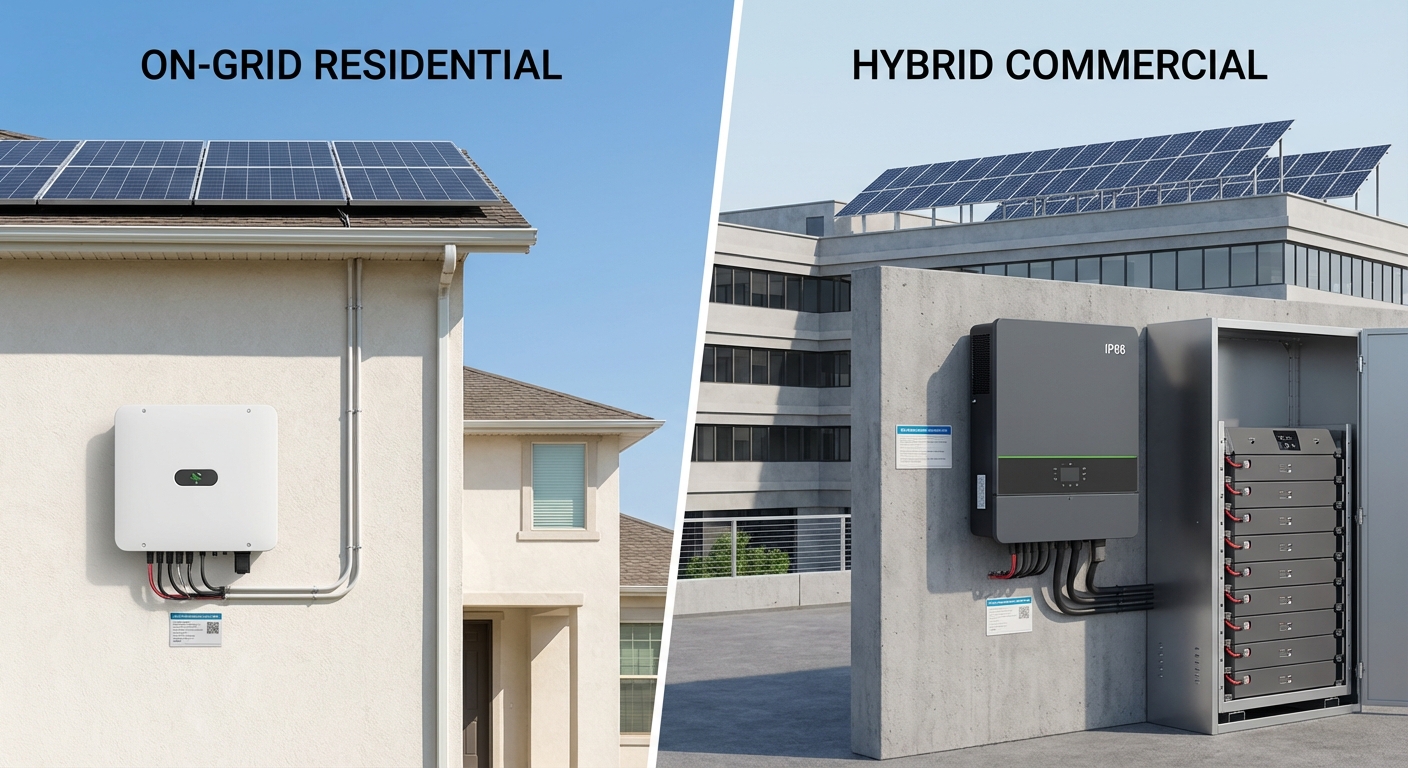
On-grid inverters provide the most cost-effective solution for clients with reliable grid power who primarily want to reduce electricity bills. These inverters synchronize with grid power, feeding solar production directly to loads and exporting excess to the grid where net metering is available. For residential installations in urban areas with stable grid power, on-grid inverters deliver excellent value without the added cost and complexity of battery integration.
Qbits manufactures specialized on-grid residential inverters supporting up to 750W panels and on-grid commercial & industrial inverters for larger installations. These inverters optimize for grid-tied performance with features like rapid grid synchronization, wide voltage range tolerance, and advanced monitoring capabilities. For EPCs focused on maximizing client ROI in grid-connected scenarios, on-grid inverters provide the best economics.
Hybrid inverter benefits become compelling for clients experiencing frequent power outages, those in areas with time-of-use electricity pricing, or installations where energy independence is a priority. Hybrid inverters integrate battery storage, allowing systems to store excess solar production for use during outages or expensive peak pricing periods. This functionality commands a premium but delivers value that justifies the additional investment for appropriate applications.
Cost-benefit analysis for hybrid inverter India installations must account for battery costs, replacement cycles, and the value of backup power. In areas with frequent extended outages, hybrid systems provide substantial value. In locations with reliable grid power, the additional cost may not justify the benefits. Help clients understand these tradeoffs during the design phase to set appropriate expectations.
Residential vs commercial & industrial applications often drive different inverter selection decisions. Residential clients frequently value backup power for essential loads during outages, making hybrid systems attractive. Commercial and industrial clients typically prioritize maximum ROI and may prefer on-grid systems unless their operations are particularly sensitive to power interruptions or they can capitalize on demand charge reduction through battery storage.
Future battery integration considerations matter even for current on-grid installations. Some clients may want to add battery storage later as costs decline or their needs change. While dedicated hybrid inverters provide the best battery integration, this flexibility comes at a cost premium. Discuss future plans with clients during system design to make informed decisions about inverter selection.
Red flags to avoid: Recommending hybrid systems when clients don’t need backup power, overselling battery storage benefits, failing to explain battery replacement costs, or selecting on-grid inverters for clients with clear backup power needs all represent poor inverter selection practices that damage client relationships.
9. Manufacturer Support and Technical Assistance
Manufacturer support quality directly impacts your installation efficiency, troubleshooting capabilities, and ability to resolve client issues quickly. Comprehensive technical assistance separates manufacturers who view EPCs as partners from those who see them merely as customers.
Pre-sales technical consultation helps EPCs design optimal systems for specific applications. Quality manufacturers provide engineering support during the design phase, helping size inverters appropriately, optimize DC-to-AC ratios, and address site-specific challenges. This consultation reduces design errors that create problems during installation or operation. During inverter selection, evaluate the manufacturer’s willingness to provide detailed technical support before purchase commitments.
Installation training and documentation ensure your technicians can install and commission inverters correctly. Comprehensive installation manuals, video tutorials, and hands-on training programs reduce installation time and minimize errors. Qbits provides detailed technical documentation and training resources that help EPCs install systems efficiently and correctly the first time, reducing callbacks and warranty claims.
After-sales support and inverter troubleshooting capabilities determine how quickly you can resolve issues when they arise. Responsive technical support teams that answer calls promptly, provide accurate diagnostics, and expedite warranty replacements minimize system downtime. Test manufacturer support responsiveness during the evaluation phase by calling with technical questions and noting response times and answer quality.
Spare parts availability in India impacts repair turnaround times. Manufacturers maintaining local inventory of critical components can ship replacements quickly, while those requiring parts from overseas create extended downtime. Ask about spare parts stocking locations, typical shipping times, and whether critical components are available for immediate shipment.
Partner programs for EPCs and distributors provide additional value beyond product quality. Look for manufacturers offering technical training, marketing support, lead generation assistance, and preferential pricing for volume commitments. Qbits’ partner program provides comprehensive support for solar installation companies and distributors, creating mutually beneficial relationships that support business growth.
Red flags to avoid: Manufacturers with poor support responsiveness, limited technical documentation, no training programs, unclear warranty claim processes, or adversarial relationships with installers should be avoided regardless of product quality or pricing.
10. Total Cost of Ownership vs Upfront Inverter Cost
Focusing exclusively on upfront inverter cost represents one of the most common and expensive mistakes in inverter selection. Total cost of ownership analysis over the system’s operational lifespan reveals the true economics of different inverter options and often justifies premium products that appear expensive initially.
Beyond initial inverter cost considerations, EPCs must account for warranty period, expected lifespan, monitoring capabilities, efficiency ratings, and manufacturer support quality. A budget inverter with a 5-year warranty and 96% efficiency may cost 30% less upfront than a premium inverter with a 12-year warranty and 98% efficiency. However, the premium inverter likely delivers lower total costs through reduced replacement expenses, higher energy production, and lower O&M costs.
Warranty period impact on lifecycle costs is substantial. An inverter requiring replacement after 8 years incurs not only the replacement unit cost but also labor, transportation, system downtime, and client communication expenses. A 12-year warranty eliminates these costs for nearly half the system’s operational life. Calculate the probability-weighted cost of replacement for different warranty periods when comparing options.
Maintenance and replacement expenses extend beyond the inverter itself. Service calls for troubleshooting consume technician time and vehicle costs. Failed inverters may require emergency service during inconvenient times. Client relationship management during failures requires administrative resources. Premium inverters with superior reliability and monitoring reduce these soft costs that don’t appear on purchase orders but significantly impact profitability.
Monitoring system value in reducing O&M costs deserves careful consideration. Advanced monitoring with predictive alerts allows proactive maintenance scheduling, reducing emergency service calls. Remote troubleshooting capabilities solve many issues without site visits. Portfolio-level monitoring enables efficient management of multiple installations. These capabilities reduce ongoing costs throughout the system’s operational life.
Inverter ROI calculations must incorporate all these factors using net present value analysis. Calculate the present value of energy production differences due to efficiency variations, probability-weighted replacement costs based on warranty periods, estimated O&M cost differences, and the value of client satisfaction and referrals. This comprehensive analysis often reveals that premium inverters deliver superior returns despite higher upfront costs.
For EPCs, inverter selection also impacts business reputation and growth. Installations using reliable, high-quality inverters generate satisfied clients who provide referrals and positive reviews. Systems experiencing frequent issues damage reputation and create negative word-of-mouth that costs future business. Factor these long-term business impacts into inverter selection decisions.
Red flags to avoid: Making decisions based solely on upfront cost, failing to calculate total cost of ownership, ignoring soft costs like service calls and client management, or selecting inverters that compromise long-term reputation for short-term margin should be avoided in professional inverter selection processes.
Red Flags to Avoid During Inverter Selection
Recognizing warning signs during the evaluation process helps EPCs avoid problematic inverters before they create project issues. These red flags indicate potential quality, support, or reliability problems that will likely cause headaches after installation.
Vague technical specifications suggest manufacturers hiding inferior components or performance. Detailed datasheets should specify component grades, efficiency curves across power levels, precise operating temperature ranges, and comprehensive electrical parameters. Specifications using terms like “international standard components” or “high efficiency” without specific numbers indicate products to avoid.
Unverified efficiency claims without independent testing certification should raise immediate concerns. Reputable manufacturers provide test reports from accredited laboratories confirming efficiency ratings, safety compliance, and performance specifications. Request these certifications during evaluation and verify their authenticity with the issuing organizations.
Limited warranty coverage with numerous exclusions indicates manufacturers expecting quality issues. Carefully review warranty terms for exclusions related to environmental conditions, installation practices, or usage patterns. Warranties requiring specific maintenance procedures or excluding common failure modes provide less protection than they appear to offer.
Poor manufacturer reputation discovered through industry research should disqualify products from consideration. Check online reviews, ask other EPCs about their experiences, and research the manufacturer’s history in the market. Companies with patterns of warranty disputes, poor support, or quality issues will likely create similar problems for your installations.
Inadequate local support infrastructure creates problems when issues arise. Manufacturers without Indian service centers, local spare parts inventory, or responsive technical support teams leave EPCs struggling to resolve problems. Verify local support capabilities before committing to inverter brands, particularly for international manufacturers.
Missing certifications or non-compliance with Indian standards creates regulatory risks. All inverters must meet BIS certification requirements and comply with CEA regulations. Products lacking proper certifications may be rejected during inspections, creating project delays and forcing expensive replacements. Always verify certification status before purchase.
For comprehensive guidance on evaluating inverter manufacturers India, review our detailed manufacturer evaluation guide that provides additional criteria for assessing inverter suppliers.
Practical Inverter Selection Checklist for EPCs
This systematic checklist guides EPCs through the inverter selection process, ensuring all critical factors receive appropriate evaluation before purchase decisions. Use this framework for every inverter procurement to maintain consistent quality standards across your installations.

Pre-Procurement Evaluation Checklist
Project Requirements Assessment:
- System size and configuration (residential, commercial, industrial)
- Grid stability and backup power requirements (on-grid vs hybrid)
- Panel specifications and DC oversizing needs
- Environmental conditions (temperature, humidity, dust exposure)
- Monitoring and remote management requirements
- Budget constraints and total cost of ownership targets
- Client priorities (cost, reliability, features, warranty)
Technical Specification Verification Steps
Component and Manufacturing Quality:
- Verify component grade specifications (German-grade preferred)
- Review quality testing protocols (1000+ tests minimum)
- Confirm BIS/IEC certifications and compliance documentation
- Research manufacturer backing and financial stability
- Request factory quality management system documentation
Performance and Efficiency:
- Verify peak efficiency rating (98% target for quality inverters)
- Review efficiency curves across power levels
- Confirm low start-up voltage specifications
- Evaluate MPPT efficiency and tracking capabilities
- Request partial shading performance data
Protection and Durability:
- Confirm IP66 weather protection rating minimum
- Verify operating temperature range for local conditions
- Check DC and AC surge protection specifications
- Review enclosure materials and sealing design
- Evaluate thermal management features
Monitoring and Connectivity:
- Assess monitoring platform capabilities and user interface
- Verify connectivity options (Wi-Fi, 4G, Bluetooth)
- Test alert and notification systems
- Confirm data security and server location
- Evaluate mobile app functionality
Manufacturer Assessment Criteria
Warranty and Support Evaluation:
- Review warranty period (12-year minimum recommended)
- Confirm full replacement vs repair warranty structure
- Test warranty claim process and documentation requirements
- Verify digital warranty system availability
- Research manufacturer’s warranty claim reputation
Technical Support and Training:
- Evaluate pre-sales technical consultation availability
- Review installation documentation and training resources
- Test after-sales support responsiveness
- Confirm spare parts availability and shipping times
- Assess partner program benefits and support
Cost Comparison Framework
Total Cost of Ownership Analysis:
- Calculate upfront inverter cost per watt
- Estimate lifecycle energy production based on efficiency
- Calculate probability-weighted replacement costs
- Estimate O&M cost differences based on monitoring and reliability
- Factor in warranty value and manufacturer support quality
- Calculate net present value of total costs over 25 years
- Compare inverter ROI across shortlisted options
Client Requirement Matching Process
Final Selection Criteria:
- Match inverter capabilities to client priorities
- Verify solution addresses all project requirements
- Confirm budget alignment with total cost of ownership
- Assess manufacturer support for project timeline
- Review all red flags and ensure none are present
- Document selection rationale for client presentation
This systematic approach to inverter selection ensures EPCs make informed decisions based on comprehensive evaluation rather than marketing claims or price alone. By following this checklist for every project, you’ll consistently select inverters that deliver reliable performance, satisfied clients, and profitable installations.
Making Confident Inverter Selection Decisions
Strategic inverter selection separates successful solar EPCs from those struggling with quality issues, warranty claims, and dissatisfied clients. By systematically evaluating component quality, warranty terms, monitoring capabilities, weather protection, efficiency metrics, surge protection, oversizing capacity, inverter type, manufacturer support, and total cost of ownership, you’ll make informed decisions that ensure long-term project success.
The Indian solar market continues evolving rapidly, with next-generation inverters offering capabilities that were unavailable just a few years ago. Manufacturers like Qbits are raising industry standards with AI-powered monitoring, 12-year warranties, German-grade components, and comprehensive support programs designed specifically for Indian EPCs and installation companies. These advances enable EPCs to deliver superior installations that generate client satisfaction and referrals.
Remember that inverter selection impacts every aspect of your solar business. Quality inverters reduce service calls, minimize warranty claims, and create satisfied clients who become your most effective marketing channel. Budget inverters may appear to save money initially but often cost far more through reduced efficiency, shorter lifespans, and damaged reputation. Calculate total cost of ownership honestly, prioritize long-term value over short-term savings, and select inverters that support your business growth objectives.
For EPCs ready to elevate their installations with next-generation inverter technology, Qbits offers comprehensive solutions engineered for Indian conditions. Our on-grid and hybrid inverters combine German-grade components, AI-powered WhatsApp monitoring, IP66 weather protection, and 12-year full replacement warranties to deliver the reliability and performance your projects demand. Explore our complete product range to discover how Qbits inverters can differentiate your installations and drive client satisfaction.
Take the next step in optimizing your inverter selection process today. Whether you need technical consultation for a specific project, want to discuss partnership opportunities, or have questions about how Qbits inverters can support your business growth, our team is ready to help. Contact us now to speak with our technical experts and discover why leading EPCs across India are choosing Qbits for their solar installations. Your reputation depends on the inverters you install—make confident inverter selection decisions with Qbits.
This blog post was written using thestacc.com