



Solar Inverter ROI Calculator: How to Measure Your Investment Returns in 2026

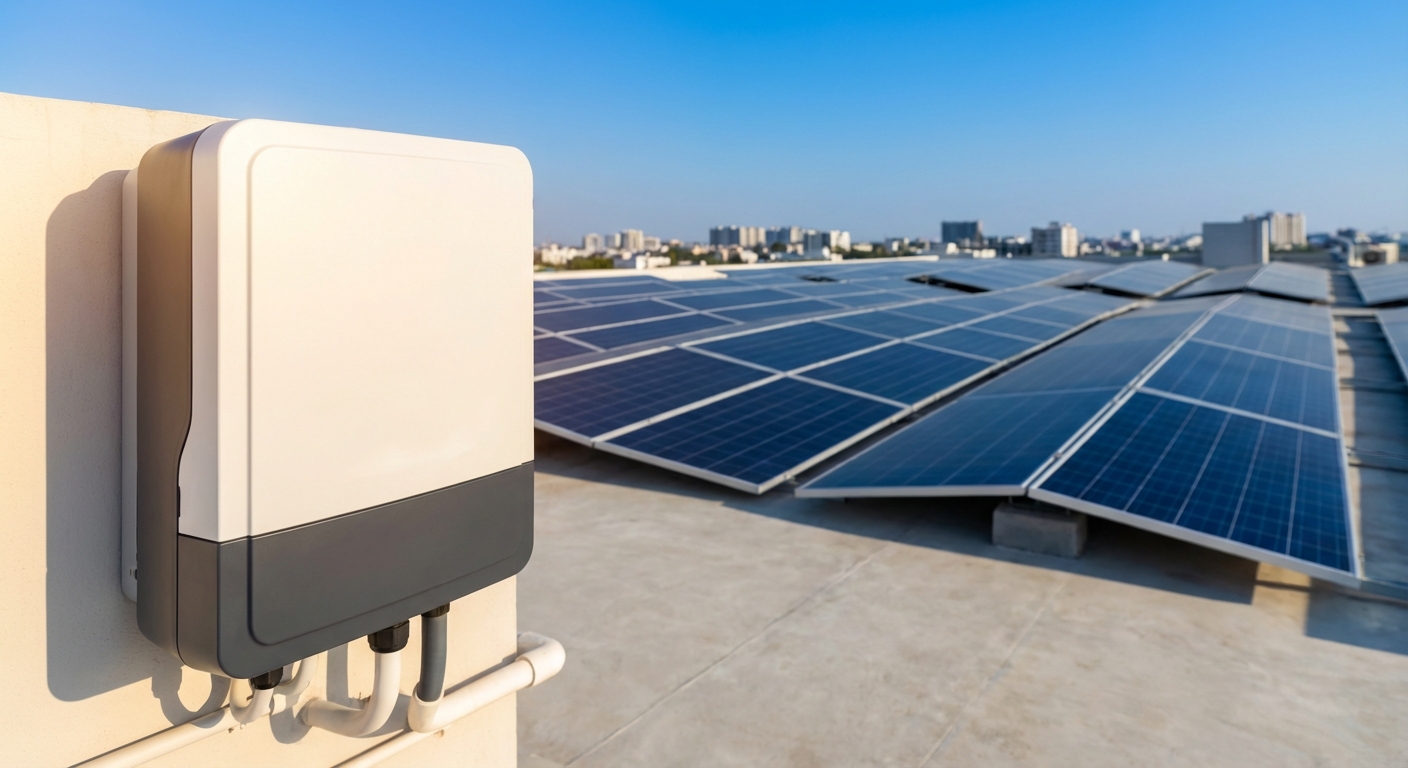
Solar energy investments in India have surged dramatically in 2026, with businesses and homeowners increasingly recognizing the financial benefits of renewable power. However, the true profitability of your solar installation hinges significantly on one critical component: your solar inverter. Understanding and calculating your inverter ROI (Return on Investment) is essential for making informed decisions that maximize your long-term returns and ensure your solar system delivers optimal financial performance throughout its operational lifetime.
Whether you’re a solar installation company evaluating equipment options for client projects, a distributor selecting products for your portfolio, or a commercial facility owner planning a solar investment, calculating inverter ROI enables you to compare options objectively, justify investment decisions, and optimize system performance. This comprehensive guide walks you through the essential formulas, key factors, and practical strategies for measuring and maximizing your solar inverter investment returns in the Indian market.
Understanding Solar Inverter ROI: Why It Matters for Your Investment
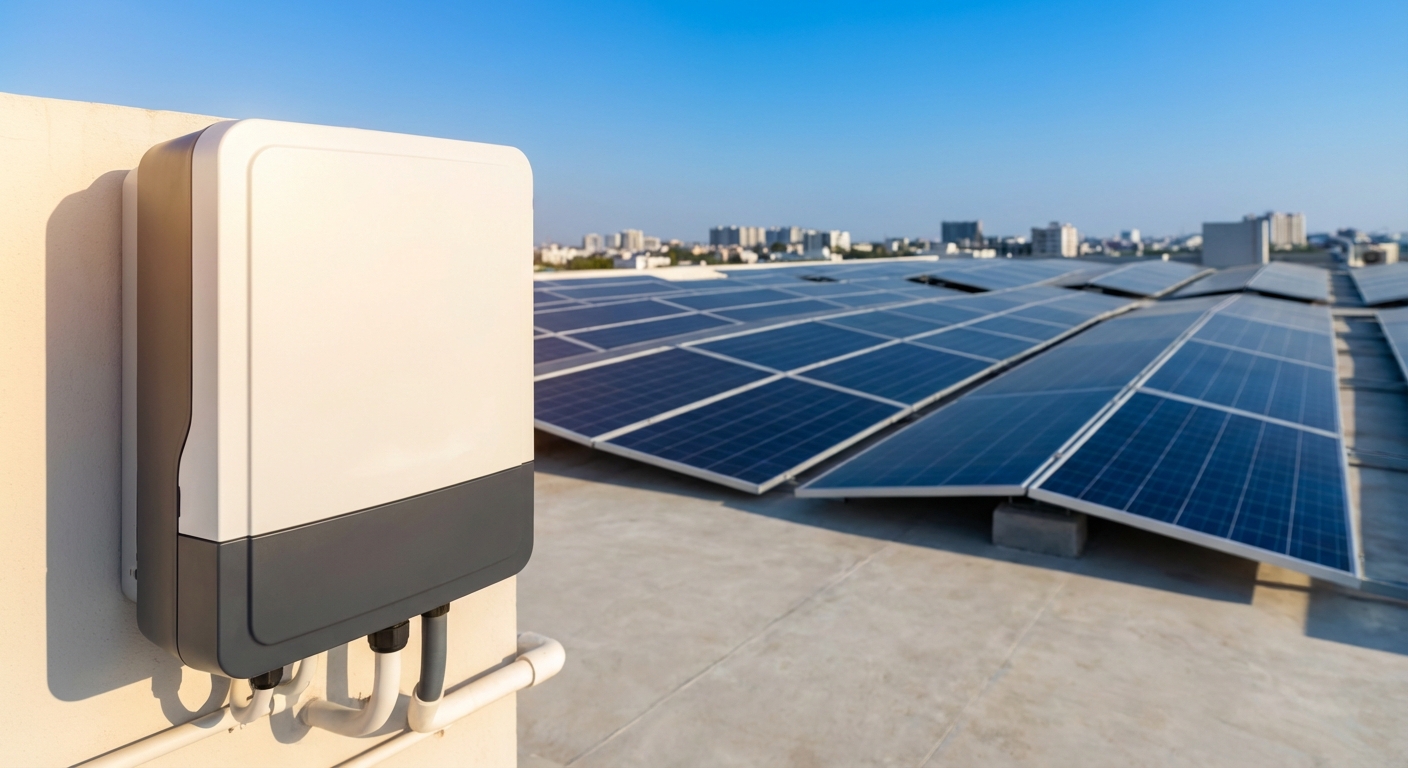
Solar inverter ROI represents the financial return you receive from your inverter investment relative to its total cost over the system’s operational lifetime. Unlike simple payback calculations that only measure how long it takes to recover your initial investment, comprehensive ROI analysis accounts for ongoing operational costs, maintenance expenses, efficiency losses, warranty coverage, and the time value of money.
The inverter typically represents 10-15% of your total solar installation cost, yet it profoundly impacts your system’s overall financial performance. A high-efficiency inverter with superior reliability can generate thousands of rupees in additional revenue over its lifetime compared to a lower-quality alternative, even if the upfront cost is slightly higher.
In the Indian solar market, where weather conditions can be harsh and grid stability varies by region, inverter selection becomes even more critical. Factors like IP66 weather protection, surge protection capabilities, and monitoring systems directly influence long-term reliability and, consequently, your ROI. An inverter failure during peak generation months can result in significant revenue losses, making durability and warranty coverage essential ROI considerations.
Key financial metrics for evaluating inverter investments include:
- Return on Investment (ROI): The percentage return on your inverter investment over its lifetime
- Payback Period: The time required to recover your initial inverter investment through energy savings or revenue
- Net Present Value (NPV): The present value of future cash flows minus the initial investment
- Levelized Cost of Energy (LCOE): The per-unit cost of energy generated over the system’s lifetime
- Internal Rate of Return (IRR): The discount rate that makes NPV equal to zero
For solar EPCs and installation companies, demonstrating strong inverter ROI to clients builds trust and justifies premium equipment recommendations. For distributors, understanding ROI helps position products effectively in competitive markets. For facility owners, accurate ROI calculations ensure solar investments align with financial objectives and deliver promised returns.
1. Calculate Your Solar Inverter ROI: Essential Formulas and Methods
Calculating solar inverter ROI requires a systematic approach that accounts for all costs and benefits over the equipment’s operational lifetime. Let’s break down the essential formulas and methods you need to accurately measure your investment returns.

Basic ROI Formula for Solar Inverters
The fundamental ROI formula provides a percentage return on your inverter investment:
ROI = [(Total Benefits – Total Costs) / Total Costs] × 100
Where:
- Total Benefits: Cumulative energy savings or revenue generated over the inverter’s lifetime
- Total Costs: Initial purchase price + installation + maintenance + monitoring + replacement costs
For example, if your inverter investment totals ₹2,50,000 (including installation) and generates ₹6,00,000 in energy savings over 12 years, your ROI would be:
ROI = [(₹6,00,000 – ₹2,50,000) / ₹2,50,000] × 100 = 140%
Calculating Total Cost of Ownership
Accurate ROI calculation requires understanding your complete cost structure:
- Initial Equipment Cost: Inverter purchase price from manufacturer or distributor
- Installation Costs: Labor, mounting hardware, electrical connections, and commissioning
- Monitoring System: Hardware and subscription costs (though advanced systems like AI-powered WhatsApp monitoring may be included)
- Annual Maintenance: Routine inspections, cleaning, and preventive maintenance
- Repair Costs: Component replacements not covered by warranty
- Insurance: Equipment coverage and liability protection
- Replacement Costs: End-of-life replacement expenses (reduced significantly with extended warranties)
A 12-year full replacement warranty dramatically reduces total cost of ownership by eliminating replacement expenses during the warranty period, directly improving your ROI compared to standard 5-year warranties that may require costly replacements or repairs after coverage expires.
Determining Energy Savings and Revenue Generation
The benefits side of your ROI equation depends on your installation type:
For On-Grid Residential Systems:
- Calculate monthly electricity bill savings based on solar generation
- Account for net metering credits where applicable
- Factor in electricity tariff escalation (typically 5-8% annually in India)
For Commercial & Industrial Installations:
- Calculate avoided demand charges and peak consumption costs
- Include tax benefits and accelerated depreciation advantages
- Account for power purchase agreement (PPA) revenue if applicable
For Hybrid Systems:
- Add backup power value during grid outages
- Calculate peak shaving benefits from battery integration
- Include avoided diesel generator costs
Payback Period Calculation
The simple payback period tells you how long it takes to recover your inverter investment:
Payback Period = Total Investment Cost / Annual Energy Savings
For a more accurate calculation that accounts for escalating electricity rates:
Discounted Payback Period considers the time value of money and changing energy costs over time. Most quality solar inverters in India achieve payback periods of 4-7 years, depending on system size, local electricity rates, and inverter efficiency.
Real-World ROI Example: 50kW Commercial Installation
Let’s examine a practical example for a commercial installation in India:
- System Size: 50kW on-grid commercial inverter
- Inverter Cost: ₹3,50,000 (including installation)
- Annual Generation: 75,000 kWh (assuming 1,500 kWh/kW/year)
- Commercial Electricity Rate: ₹8 per kWh
- Annual Savings: ₹6,00,000
- Inverter Efficiency: 98% (vs 96% for standard inverter)
- Warranty Period: 12 years full replacement
- Annual Maintenance: ₹15,000
Year 1-12 Analysis:
- Total energy savings: ₹6,00,000 × 12 years = ₹72,00,000 (before escalation)
- With 6% annual tariff escalation: ₹1,00,80,000 (approximate)
- Total maintenance costs: ₹15,000 × 12 = ₹1,80,000
- Total costs: ₹3,50,000 + ₹1,80,000 = ₹5,30,000
- Net benefit: ₹1,00,80,000 – ₹5,30,000 = ₹95,50,000
- ROI: [(₹95,50,000) / ₹5,30,000] × 100 = 1,802%
- Simple Payback Period: 0.88 years (approximately 10.5 months)
The 2% efficiency advantage of a high-quality inverter (98% vs 96%) translates to an additional 1,500 kWh annually for this 50kW system, worth approximately ₹12,000 per year—₹1,44,000 over 12 years. This efficiency premium alone can justify a higher initial investment in quality equipment.
2. Identify Key Factors That Impact Inverter ROI
Multiple technical and operational factors influence your solar inverter’s financial returns. Understanding these variables enables you to make informed equipment selections that optimize long-term profitability.
Inverter Efficiency and Performance
Inverter efficiency directly determines how much of your solar panel’s DC power gets converted to usable AC electricity. Even small efficiency differences compound significantly over years of operation.
Efficiency Impact on Revenue:
- A 98% efficiency inverter converts 98 kW of every 100 kW generated by panels
- A 96% efficiency inverter converts only 96 kW, losing 2 kW to heat and conversion losses
- For a 50kW system generating 75,000 kWh annually, this 2% difference equals 1,500 kWh lost per year
- Over 12 years at ₹8/kWh, this represents ₹1,44,000 in lost revenue
DC Oversizing Capabilities: Modern inverters supporting up to 100% DC oversizing allow you to connect more panel capacity than the inverter’s rated AC output. This maximizes energy capture during low-light conditions (early morning, late evening, cloudy days) without wasting generation during peak sun hours. The ability to support high-wattage panels (750W+) ensures your system remains compatible with evolving panel technology, protecting your investment against obsolescence.
Low Start-Up Voltage: Inverters with lower start-up voltage thresholds begin generating earlier in the morning and continue later in the evening, capturing additional generation hours daily. Over a year, this can add 2-5% to total energy production, directly improving ROI.
Warranty Coverage and Long-Term Protection
Warranty terms profoundly impact total cost of ownership and risk exposure. The difference between a 5-year standard warranty and a 12-year full replacement warranty can represent tens of thousands of rupees in potential savings.
Warranty Value Analysis:
- Standard 5-Year Warranty: Requires inverter replacement or major repairs around year 6-8, costing ₹2,00,000-₹3,50,000 for commercial systems
- 12-Year Full Replacement Warranty: Eliminates replacement costs during the warranty period, with manufacturer bearing all repair/replacement expenses
- Digital Warranty Systems: Streamlined claim processes reduce downtime and administrative burden, minimizing revenue losses during service events
For a 50kW commercial installation, avoiding a single inverter replacement at year 7 saves approximately ₹3,00,000, directly adding 57% to your ROI calculation. Extended warranties also provide predictable operating expenses, essential for financial planning and project financing.
Maintenance Costs and System Monitoring
Ongoing maintenance expenses and monitoring capabilities significantly influence operational costs and system uptime.
Traditional Monitoring Limitations:
- Manual site visits for performance checks: ₹5,000-₹10,000 per visit
- Delayed problem detection leading to extended downtime
- Reactive maintenance after failures occur
- Limited performance data for optimization
AI-Powered Monitoring Advantages:
- Real-time alerts via WhatsApp enable immediate issue detection and response
- Remote diagnostics reduce unnecessary site visits by 60-80%
- Predictive maintenance prevents failures before they occur
- Performance analytics identify optimization opportunities
- Multi-connectivity options (Wi-Fi, 4G, Bluetooth) ensure reliable data transmission
For solar EPCs managing multiple installations, intelligent monitoring systems reduce operational overhead while improving client satisfaction through proactive service. The ability to monitor systems remotely and receive instant alerts about performance issues minimizes revenue losses from undetected failures.
Maintenance Cost Comparison (Annual, 50kW System):
- Basic inverter without smart monitoring: ₹25,000-₹35,000 (including reactive repairs and site visits)
- Inverter with AI-powered monitoring: ₹12,000-₹18,000 (primarily preventive maintenance)
- Annual savings: ₹13,000-₹17,000
- 12-year savings: ₹1,56,000-₹2,04,000
Component Quality and Durability
The quality of internal components directly affects inverter longevity, reliability, and maintenance requirements. German-grade electronic components offer superior performance compared to standard components, particularly in harsh operating conditions common across India.
High-quality components provide:
- Extended operational lifespan (15+ years vs 8-10 years for standard components)
- Better thermal management reducing heat-related failures
- Improved reliability in high-temperature environments (45°C+ ambient)
- Lower failure rates and reduced maintenance interventions
- Consistent performance over time with minimal degradation
Rigorous quality testing—such as 1000+ automated quality tests per unit—identifies potential failures before deployment, reducing field failure rates and associated costs. For commercial installations where downtime directly impacts revenue, reliability becomes a critical ROI factor.
Weather Protection and Environmental Resilience
Indian rooftop installations face extreme environmental challenges: intense heat, monsoon rains, dust storms, high humidity, and coastal salt exposure. Inverter durability in these conditions directly impacts ROI through reduced failures and maintenance costs.
IP66 Weather Protection Benefits:
- Complete dust ingress protection prevents component contamination
- Water jet protection ensures monsoon resilience
- Reduced corrosion and environmental damage
- Lower cleaning and maintenance requirements
- Extended equipment lifespan in harsh conditions
Surge Protection Value: Integrated DC and AC surge protection devices (SPDs) protect against voltage fluctuations and lightning strikes common in Indian grid conditions. A single surge event can destroy an unprotected inverter, resulting in ₹2,00,000-₹4,00,000 in replacement costs and weeks of lost generation. Comprehensive surge protection eliminates this risk, protecting your ROI.
3. Compare Different Inverter Types for Maximum ROI
Different inverter configurations offer distinct ROI profiles depending on your application, energy consumption patterns, and grid conditions. Understanding these differences enables optimal equipment selection for your specific requirements.
On-Grid Inverter ROI for Residential Installations
On-grid residential inverters offer the simplest configuration and typically the fastest payback periods for homes with stable grid connectivity.
ROI Advantages:
- Lower initial investment compared to hybrid systems
- Maximum energy export to grid for net metering benefits
- Minimal maintenance requirements
- Straightforward installation reducing labor costs
Typical ROI Profile (5kW Residential):
- Investment: ₹35,000-₹50,000
- Annual savings: ₹40,000-₹50,000 (depending on consumption and tariff)
- Payback period: 10-15 months
- 12-year ROI: 900-1,200%
For residential installations, supporting modern high-wattage panels (750W+) ensures system compatibility with current panel technology, maximizing generation capacity within available roof space.
Hybrid Inverter ROI with Battery Integration
Hybrid inverters offer additional value through backup power capability and energy independence, though with higher initial investment.
ROI Advantages:
- Backup power during grid outages (critical for businesses)
- Peak shaving reduces demand charges for commercial users
- Energy arbitrage opportunities (store cheap power, use during expensive peak hours)
- Avoided diesel generator costs and fuel expenses
- Enhanced energy security and independence
ROI Considerations:
- Higher initial cost (₹15,000-₹25,000 premium over on-grid)
- Battery costs add significantly to total investment
- Battery replacement every 5-10 years impacts long-term costs
- More complex maintenance requirements
When Hybrid Offers Superior ROI:
- Areas with frequent grid outages (backup value justifies premium)
- Commercial facilities with high demand charges
- Businesses where power interruptions cause significant losses
- Locations with time-of-use tariffs enabling energy arbitrage
Commercial & Industrial Inverter ROI Considerations
Commercial and industrial installations present unique ROI dynamics due to larger system sizes, higher electricity rates, and business-critical power requirements.
C&I ROI Advantages:
- Higher commercial electricity rates (₹7-₹12/kWh) accelerate payback
- Demand charge reductions provide additional savings
- Tax benefits and accelerated depreciation improve financial returns
- Larger system sizes achieve better economies of scale
- Corporate sustainability goals add intangible value
Critical C&I Selection Factors:
- Reliability: Downtime directly impacts business operations and revenue
- Monitoring: Remote management essential for facility managers
- Scalability: Ability to expand system as business grows
- Warranty: Long-term protection critical for financial planning
- Support: Responsive service minimizes downtime costs
For C&I installations, the cost of downtime often exceeds the inverter’s purchase price. A single day of lost generation for a 100kW system can represent ₹10,000-₹15,000 in lost savings, making reliability and warranty coverage paramount ROI considerations.
Inverter Sizing and Oversizing Strategies
Proper inverter sizing optimization directly impacts both initial costs and long-term returns.
Undersizing Strategy (DC:AC Ratio > 1.0):
- Lower inverter cost for given panel capacity
- Maximizes energy capture during non-peak hours
- Accepts some clipping during peak generation
- Optimal for locations with frequent cloud cover or haze
100% DC Oversizing Capability: Inverters supporting up to 2:1 DC:AC ratios enable aggressive oversizing strategies that maximize ROI in specific conditions. For example, a 50kW inverter supporting 100kW of panel capacity captures significantly more energy during morning, evening, and cloudy conditions while accepting minimal clipping during peak sun hours.
4. Optimize Your Inverter Selection for Better Returns
Strategic inverter selection based on comprehensive evaluation criteria ensures you maximize ROI while minimizing risk. Here’s how to evaluate options systematically.
Matching Inverter Capacity to System Requirements
Proper capacity matching ensures optimal performance without overpaying for unnecessary capability.
Key Sizing Considerations:
- Panel Wattage Compatibility: Ensure inverter supports current high-wattage panels (750W+) to avoid premature obsolescence
- String Configuration: Match inverter MPPT inputs to your panel layout for maximum efficiency
- Voltage Range: Verify inverter voltage window accommodates your string voltage across temperature ranges
- Oversizing Capability: Select inverters supporting appropriate DC:AC ratios for your location and goals
For solar EPCs, selecting inverters with flexible sizing capabilities reduces inventory complexity while ensuring optimal performance across diverse projects.
Evaluating Quality Certifications and Standards
Certifications provide objective validation of inverter quality, safety, and performance.
Essential Certifications for Indian Market:
- BIS Certification: Mandatory for Indian market, ensures compliance with national standards
- IEC Standards: International quality and safety benchmarks
- ISO Certifications: Manufacturing quality management systems
Certified products reduce risk of regulatory issues, ensure insurance coverage validity, and provide confidence in product quality—all factors that protect your ROI.
Assessing Protection Features and Durability
Comprehensive protection features prevent costly failures and extend equipment lifespan.
Critical Protection Features:
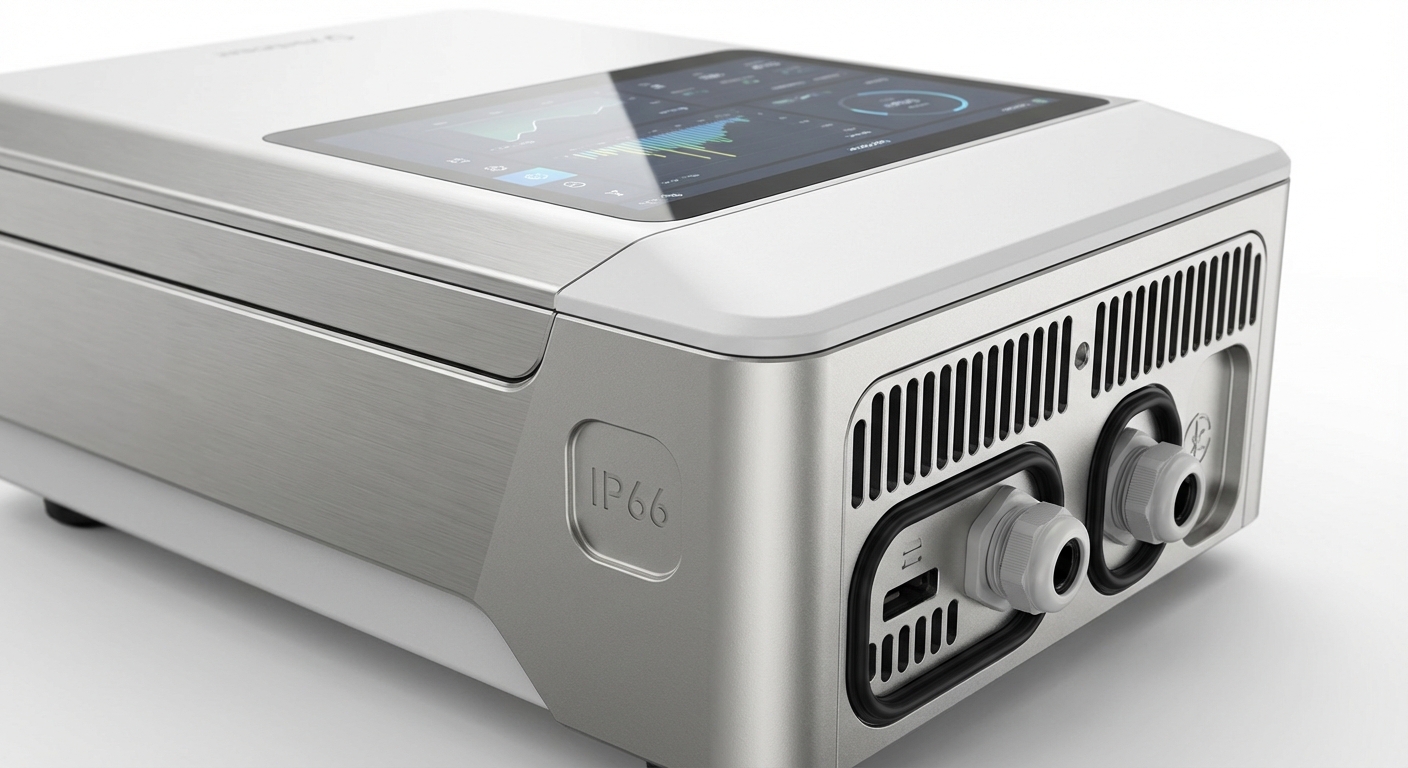
- IP66 Weather Rating: Essential for harsh Indian rooftop conditions
- DC Surge Protection: Protects against panel-side voltage spikes
- AC Surge Protection: Guards against grid-side disturbances
- Thermal Management: Effective cooling for high-temperature operation
- Anti-islanding Protection: Safety feature for grid-tied systems
Each protection feature prevents specific failure modes that could result in expensive repairs or replacements, directly protecting your investment returns.
Evaluating Monitoring and Connectivity Options
Advanced monitoring capabilities reduce operational costs while improving system performance and uptime.
Essential Monitoring Features:
- Real-time Performance Data: Generation, efficiency, and system health metrics
- Instant Alerts: Immediate notification of faults or performance issues
- Remote Diagnostics: Troubleshooting without site visits
- Historical Analytics: Performance trends and optimization insights
- Multi-device Access: Monitor from smartphones, tablets, or computers
AI-Powered WhatsApp Monitoring: Innovative monitoring via WhatsApp provides instant alerts through a platform already familiar to Indian users, eliminating the need for separate apps or complex interfaces. This accessibility ensures issues are addressed promptly, minimizing downtime and revenue losses.
Connectivity Options: Multiple connectivity methods (Wi-Fi, 4G, Bluetooth) ensure reliable data transmission regardless of site conditions. For remote installations or locations with poor internet connectivity, 4G backup ensures continuous monitoring capability.
Data Security Considerations
For commercial installations, data security and privacy are increasingly important considerations.
India-Based Server Benefits:
- Data sovereignty and compliance with Indian regulations
- Faster data access and reduced latency
- Protection from international data transfer restrictions
- Enhanced privacy and security control
For businesses handling sensitive operations, knowing that system performance data remains within Indian jurisdiction provides additional peace of mind and regulatory compliance.
Balancing Upfront Cost vs. Long-Term Value
The lowest initial price rarely delivers the best ROI. Comprehensive value analysis considers total cost of ownership over the equipment’s lifetime.
Value Analysis Framework:
- Initial Cost: Purchase price + installation
- Efficiency Premium: Additional revenue from higher conversion efficiency
- Warranty Value: Avoided replacement/repair costs during warranty period
- Maintenance Savings: Reduced operational costs from reliability and monitoring
- Longevity: Extended operational life beyond warranty period
- Downtime Risk: Potential revenue losses from failures
A ₹50,000 premium for a higher-quality inverter with 98% efficiency, 12-year warranty, and advanced monitoring typically delivers ₹2,00,000-₹3,00,000 in additional value over 12 years through improved efficiency, avoided replacements, and reduced maintenance costs—a 400-600% return on the quality premium alone.
5. Maximize Your Inverter ROI Through Proper Installation and Maintenance
Even the highest-quality inverter will underperform without proper installation and ongoing maintenance. These operational factors significantly impact your realized ROI.
Professional Installation Impact on Performance
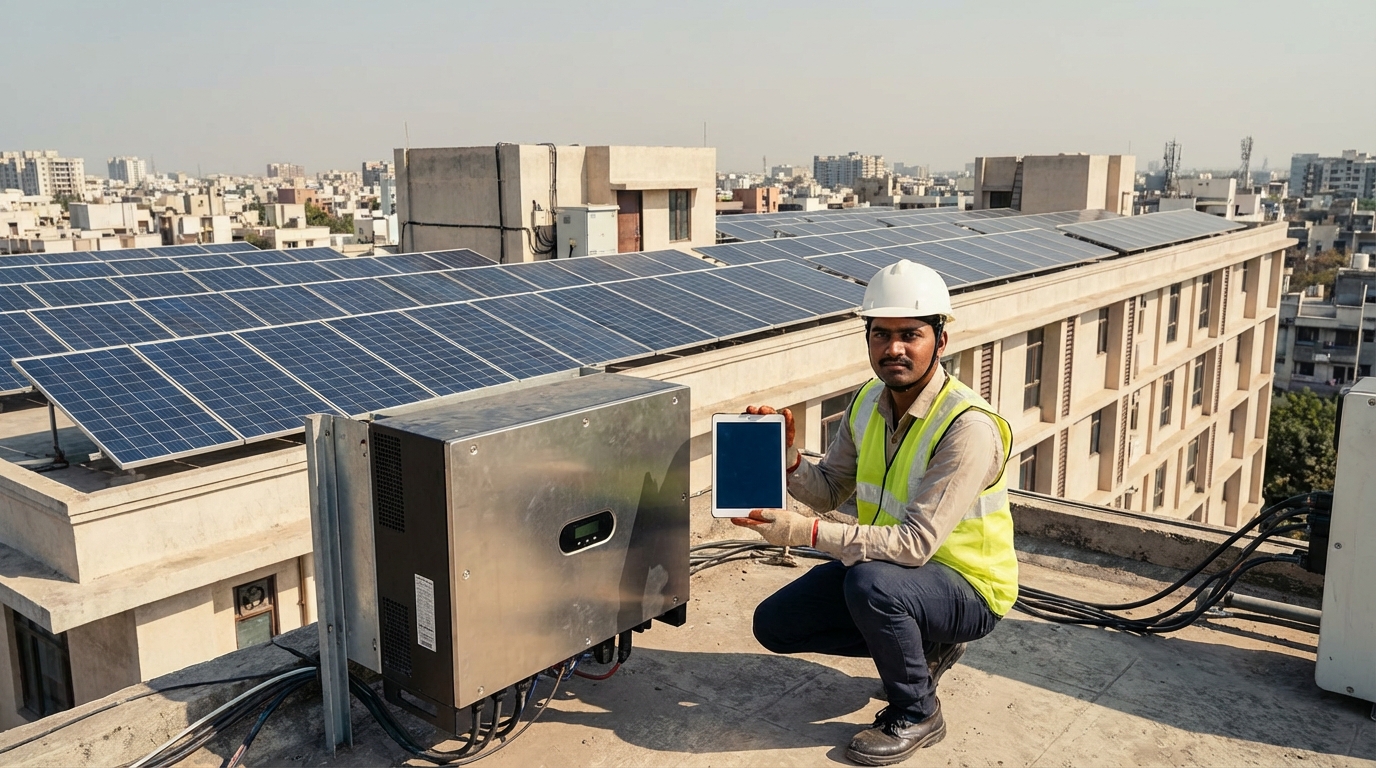
Quality installation ensures optimal performance and prevents issues that degrade ROI.
Critical Installation Factors:
- Location Selection: Adequate ventilation, shade protection, accessibility for maintenance
- Mounting Quality: Secure installation preventing vibration and environmental damage
- Cable Sizing: Appropriate conductor sizes minimizing voltage drop and power losses
- Grounding: Proper earthing for safety and surge protection effectiveness
- Commissioning: Thorough testing and configuration optimization
Poor installation can reduce system performance by 5-15%, directly impacting your ROI. For a 50kW system, this represents ₹30,000-₹90,000 in annual losses—₹3,60,000-₹10,80,000 over 12 years.
For solar installation companies and EPCs, partnering with manufacturers offering comprehensive installation support and training ensures consistent quality across projects, protecting both your reputation and your clients’ investments.
Leveraging Smart Monitoring for Proactive Management
Active monitoring transforms system management from reactive to proactive, minimizing downtime and optimizing performance.
Proactive Monitoring Strategies:
- Daily Performance Review: Quick checks ensure system operates at expected levels
- Alert Response Protocols: Immediate investigation of fault notifications
- Performance Benchmarking: Compare actual vs. expected generation to identify issues
- Trend Analysis: Identify gradual performance degradation before it becomes critical
- Remote Troubleshooting: Diagnose and often resolve issues without site visits
For solar EPCs managing multiple installations, centralized monitoring platforms enable efficient fleet management, allowing small teams to oversee hundreds of systems effectively. This operational efficiency directly improves service profitability while ensuring client satisfaction.
Preventive Maintenance Schedules
Regular preventive maintenance prevents failures and extends equipment lifespan.
Recommended Maintenance Schedule:
- Monthly: Visual inspection, performance data review, alert log check
- Quarterly: Connection tightness check, ventilation cleaning, display/indicator verification
- Semi-Annual: Thermal imaging scan, detailed performance analysis, firmware updates
- Annual: Comprehensive system inspection, surge protection verification, warranty documentation review
Preventive maintenance costs approximately ₹12,000-₹18,000 annually for commercial systems but prevents failures costing ₹50,000-₹2,00,000 in repairs and lost generation, delivering 3-15x ROI on maintenance investment alone.
Optimizing System Configuration for Local Conditions
Fine-tuning inverter settings for your specific location and conditions maximizes performance.
Configuration Optimization Areas:
- MPPT Settings: Optimize tracking algorithms for local irradiance patterns
- Temperature Compensation: Adjust for local temperature ranges
- Grid Parameters: Configure for local voltage and frequency characteristics
- Export Limits: Set appropriate limits for net metering compliance
- Communication Settings: Optimize connectivity for reliable monitoring
Proper configuration can improve system performance by 2-5%, representing significant additional revenue over the system’s lifetime.
Addressing Issues Promptly to Minimize Downtime
Quick response to problems minimizes revenue losses from system downtime.
Downtime Cost Example (50kW Commercial System):
- Daily generation: ~200 kWh (average across year)
- Value at ₹8/kWh: ₹1,600 per day
- One week downtime: ₹11,200 lost revenue
- One month downtime: ₹48,000 lost revenue
Intelligent monitoring with instant alerts enables rapid response, often resolving issues within hours rather than days or weeks. For installations without monitoring, problems may go undetected for extended periods, resulting in substantial revenue losses.
For commercial facility owners, establishing clear service protocols with your EPC or maintenance provider—including guaranteed response times and escalation procedures—protects your investment returns by ensuring rapid issue resolution.
Real-World ROI Examples: Indian Solar Installations in 2026
Examining real-world scenarios illustrates how different factors combine to influence actual inverter ROI across various applications.
Case Study 1: Residential On-Grid Installation (5kW)
System Details:
- Location: Pune, Maharashtra
- Inverter: 5kW on-grid with 98% efficiency
- Investment: ₹45,000 (inverter + installation)
- Panel capacity: 6.5kW (30% oversizing)
- Annual generation: 8,500 kWh
- Electricity rate: ₹7/kWh (residential)
- Warranty: 12-year full replacement
Financial Performance:
- Annual savings: ₹59,500
- Annual maintenance: ₹3,000
- Net annual benefit: ₹56,500
- Simple payback: 0.8 years (9.6 months)
- 12-year total savings: ₹7,86,000 (with 6% tariff escalation)
- Total costs: ₹81,000 (initial + maintenance)
- 12-Year ROI: 870%
The high efficiency and DC oversizing capability captured an additional 500 kWh annually compared to a standard inverter, worth ₹3,500/year or ₹42,000 over 12 years. The 12-year warranty eliminated a potential ₹40,000 replacement cost around year 7.
Case Study 2: Commercial Installation (100kW)
System Details:
- Location: Bangalore, Karnataka
- Inverter: 100kW on-grid commercial with AI monitoring
- Investment: ₹7,00,000 (inverter + installation + monitoring)
- Panel capacity: 150kW (50% oversizing)
- Annual generation: 1,65,000 kWh
- Commercial electricity rate: ₹9/kWh
- Demand charge savings: ₹1,20,000/year
- Warranty: 12-year full replacement
Financial Performance:
- Annual energy savings: ₹14,85,000
- Annual demand charge savings: ₹1,20,000
- Total annual benefit: ₹16,05,000
- Annual maintenance: ₹18,000 (reduced due to smart monitoring)
- Net annual benefit: ₹15,87,000
- Simple payback: 0.44 years (5.3 months)
- 12-year total benefits: ₹2,22,00,000 (with escalation)
- Total costs: ₹9,16,000 (initial + maintenance)
- 12-Year ROI: 2,323%
The AI-powered monitoring prevented three potential failure events over 12 years (detected and resolved remotely), avoiding an estimated 15 days of total downtime worth ₹2,40,000. The IP66 weather protection ensured reliable operation through five monsoon seasons without weather-related failures.
Case Study 3: Hybrid Installation for Business with Unreliable Grid
System Details:
- Location: Lucknow, Uttar Pradesh
- Inverter: 25kW hybrid with battery integration
- Investment: ₹4,50,000 (inverter + installation, excluding batteries)
- Panel capacity: 35kW
- Annual generation: 45,000 kWh
- Commercial electricity rate: ₹8.5/kWh
- Avoided diesel generator costs: ₹80,000/year
- Avoided business disruption losses: ₹1,20,000/year
- Warranty: 12-year full replacement
Financial Performance:
- Annual energy savings: ₹3,82,500
- Avoided diesel costs: ₹80,000
- Avoided disruption losses: ₹1,20,000
- Total annual benefit: ₹5,82,500
- Annual maintenance: ₹22,000
- Net annual benefit: ₹5,60,500
- Simple payback: 0.8 years (9.6 months)
- 12-year total benefits: ₹78,00,000 (with escalation)
- Total costs: ₹7,14,000 (initial + maintenance)
- 12-Year ROI: 992%
For this business experiencing frequent grid outages, the hybrid inverter’s backup capability delivered value far exceeding the premium over a standard on-grid inverter. The avoided business disruption losses alone justified the additional investment.
Common Mistakes That Reduce Inverter ROI
Avoiding these common pitfalls protects your investment returns and ensures optimal system performance.
1. Choosing Based Solely on Lowest Price
The cheapest inverter rarely delivers the best ROI. A ₹30,000 savings on initial purchase can result in ₹2,00,000+ in lost value through lower efficiency, shorter lifespan, higher maintenance costs, and warranty limitations.
Better Approach: Evaluate total cost of ownership over 12+ years, including efficiency differences, warranty coverage, maintenance requirements, and reliability track record.
2. Undersizing or Oversizing Incorrectly
Improper sizing wastes money and reduces performance.
Undersizing Risks:
- Inverter operates at maximum capacity continuously, reducing lifespan
- Cannot accommodate future system expansion
- Excessive clipping wastes available solar generation
Oversizing Risks:
- Higher initial cost without corresponding benefits
- Inverter operates inefficiently at low load levels
- Wasted capacity that never gets utilized
Better Approach: Work with experienced solar professionals to optimize sizing based on panel capacity, location, shading, and future expansion plans. Strategic oversizing (20-50% DC:AC ratio) often delivers optimal ROI.
3. Neglecting Monitoring and Maintenance
Systems without active monitoring and regular maintenance underperform significantly, often without owners realizing it.
Consequences:
- Undetected failures result in extended downtime
- Gradual performance degradation goes unnoticed
- Small issues escalate into major failures
- Warranty claims missed due to lack of documentation
Better Approach: Invest in comprehensive monitoring systems and establish regular maintenance schedules. The cost is minimal compared to the value protected.
4. Ignoring Warranty Terms and Coverage Details
Not all warranties are equal. Understanding coverage details prevents expensive surprises.
Critical Warranty Questions:
- Full replacement or repair warranty?
- What components are covered?
- What are the exclusions and limitations?
- How is the claim process handled?
- What is the manufacturer’s track record on honoring claims?
- Is there a digital warranty system for easy claims?
Better Approach: Prioritize manufacturers offering comprehensive warranty coverage with proven claim fulfillment track records and streamlined digital warranty systems.
5. Failing to Account for Indian Weather Conditions
Inverters without adequate environmental protection fail prematurely in harsh Indian conditions.
Environmental Challenges:
- Extreme temperatures (45°C+ in summer)
- Heavy monsoon rains and humidity
- Dust storms and air pollution
- Coastal salt exposure
- Voltage fluctuations and grid instability
Better Approach: Select inverters specifically designed for Indian conditions with IP66 weather protection, comprehensive surge protection, and proven performance in local environments.
6. Overlooking Monitoring Accessibility
Complex monitoring systems that require specialized software or training often go unused, defeating their purpose.
Better Approach: Choose monitoring solutions that integrate with familiar platforms (like WhatsApp) and provide intuitive interfaces accessible from any device. Monitoring is only valuable if it’s actually used.
Frequently Asked Questions About Solar Inverter ROI
What is a good ROI for solar inverters in India?
A well-selected solar inverter in India typically delivers 800-2,000% ROI over 12 years, depending on system size, electricity rates, and application. Commercial installations generally achieve higher ROI percentages due to higher electricity rates and demand charge savings. Residential systems typically see 800-1,200% ROI, while commercial systems often exceed 1,500-2,500% ROI over the warranty period.
The key is evaluating ROI over the full warranty period (12 years for quality inverters) rather than just the initial payback period. Systems with higher efficiency, comprehensive warranties, and advanced monitoring consistently deliver superior long-term returns despite potentially higher initial costs.
How long does it take to recover inverter investment?
Payback periods for quality solar inverters in India typically range from 6-18 months, depending on system size and electricity rates:
- Residential systems (3-10kW): 10-18 months
- Commercial systems (25-100kW): 6-12 months
- Industrial systems (100kW+): 4-8 months
Commercial installations achieve faster payback due to higher electricity rates (₹8-₹12/kWh vs ₹6-₹8/kWh residential) and additional demand charge savings. Systems with higher efficiency and optimal sizing recover investment faster through increased energy generation.
Does inverter efficiency really impact ROI significantly?
Yes, efficiency differences compound dramatically over time. The difference between a 98% efficient inverter and a 96% efficient inverter represents:
- 5kW residential system: ~₹3,500/year or ₹42,000 over 12 years
- 50kW commercial system: ~₹12,000/year or ₹1,44,000 over 12 years
- 100kW industrial system: ~₹24,000/year or ₹2,88,000 over 12 years
These efficiency gains alone often justify a 10-15% premium in inverter cost, delivering 3-5x return on the efficiency investment. Additionally, higher-efficiency inverters typically feature better components and thermal management, contributing to longer lifespan and reliability.
Should I choose on-grid or hybrid for better ROI?
The optimal choice depends on your specific situation:
Choose On-Grid When:
- Grid is stable with minimal outages
- Primary goal is maximizing energy export and net metering benefits
- Budget is constrained and backup power isn’t critical
- Facility operates only during daylight hours
Choose Hybrid When:
- Grid outages are frequent or prolonged
- Business operations are disrupted by power interruptions
- Facility has high demand charges that can be reduced through peak shaving
- Time-of-use tariffs enable energy arbitrage opportunities
- Backup power value exceeds the hybrid premium (typically ₹15,000-₹25,000)
For most commercial applications with reliable grid connectivity, on-grid inverters deliver superior ROI through lower initial cost and simpler operation. Hybrid systems excel when backup power provides tangible business value or enables demand charge optimization.
How does warranty affect long-term returns?
Warranty coverage profoundly impacts ROI by eliminating replacement costs during the coverage period. Consider this comparison:
5-Year Standard Warranty (50kW System):
- Likely replacement needed around year 7: ₹3,00,000
- Additional maintenance and repairs years 6-12: ₹80,000
- Total additional costs: ₹3,80,000
12-Year Full Replacement Warranty (50kW System):
- No replacement costs during warranty period: ₹0
- Minimal maintenance costs: ₹20,000
- Total additional costs: ₹20,000
- Warranty value: ₹3,60,000 saved
For a 50kW commercial system with ₹3,50,000 initial inverter cost, the extended warranty alone delivers 103% ROI by eliminating replacement expenses. This doesn’t account for avoided downtime, simplified financial planning, and reduced risk—all valuable benefits of comprehensive warranty coverage.
Additionally, digital warranty systems streamline claim processes, reducing administrative burden and minimizing downtime during service events. For solar EPCs managing multiple installations, efficient warranty claim handling reduces operational overhead while improving client satisfaction.
Maximize Your Solar Inverter ROI with Qbits
Calculating and optimizing solar inverter ROI requires understanding the complex interplay of efficiency, reliability, warranty coverage, monitoring capabilities, and long-term operational costs. While initial price comparisons may seem straightforward, comprehensive ROI analysis reveals that quality, durability, and advanced features deliver substantially superior returns over the system’s operational lifetime.
Qbits inverters are engineered specifically to maximize ROI for Indian solar installations through:
- 98% Efficiency: Industry-leading conversion efficiency maximizes energy generation and revenue
- 12-Year Full Replacement Warranty: Eliminates replacement costs and provides predictable operating expenses
- German-Grade Components: Superior reliability and longevity reduce maintenance costs and failures
- AI-Powered WhatsApp Monitoring: Proactive system management minimizes downtime and operational overhead
- IP66 Weather Protection: Proven durability in harsh Indian rooftop conditions
- Comprehensive Surge Protection: Protects your investment against voltage fluctuations and grid instability
- 750W+ Panel Support: Future-proof compatibility with modern high-wattage panels
- 100% DC Oversizing: Flexible configuration for optimal energy capture
For solar installation companies and EPCs, partnering with Qbits provides your clients with superior long-term returns while differentiating your offerings in competitive markets. Our comprehensive support, digital warranty system, and proven reliability reduce your operational burden while enhancing client satisfaction. Become a Partner to access competitive pricing and comprehensive support for your solar projects.
For distributors and channel partners, Qbits offers a premium product portfolio backed by the Heaven Group legacy, enabling you to serve quality-conscious customers seeking maximum ROI. Our advanced features and comprehensive warranty coverage provide compelling value propositions that close sales and build long-term customer relationships.
For commercial and industrial facility owners, Qbits inverters deliver the reliability, efficiency, and monitoring capabilities essential for protecting your solar investment. Our 12-year warranty and proven performance ensure your system delivers promised returns throughout its operational lifetime, while AI-powered monitoring provides the visibility and control you need for effective asset management.
Ready to maximize your solar inverter ROI? Explore our complete product range to find the optimal inverter solution for your specific requirements, or contact our team for personalized ROI analysis and product recommendations tailored to your installation.
For technical support, warranty information, or assistance with existing installations, visit our support portal or download your warranty documentation. Our team is committed to ensuring your Qbits inverter delivers maximum returns throughout its operational lifetime.
Follow us on LinkedIn, Facebook, Instagram, and YouTube for the latest updates on solar technology, ROI optimization strategies, and industry insights.