



Top Solar Inverter Brands in India 2026: Detailed Comparison & Performance Analysis

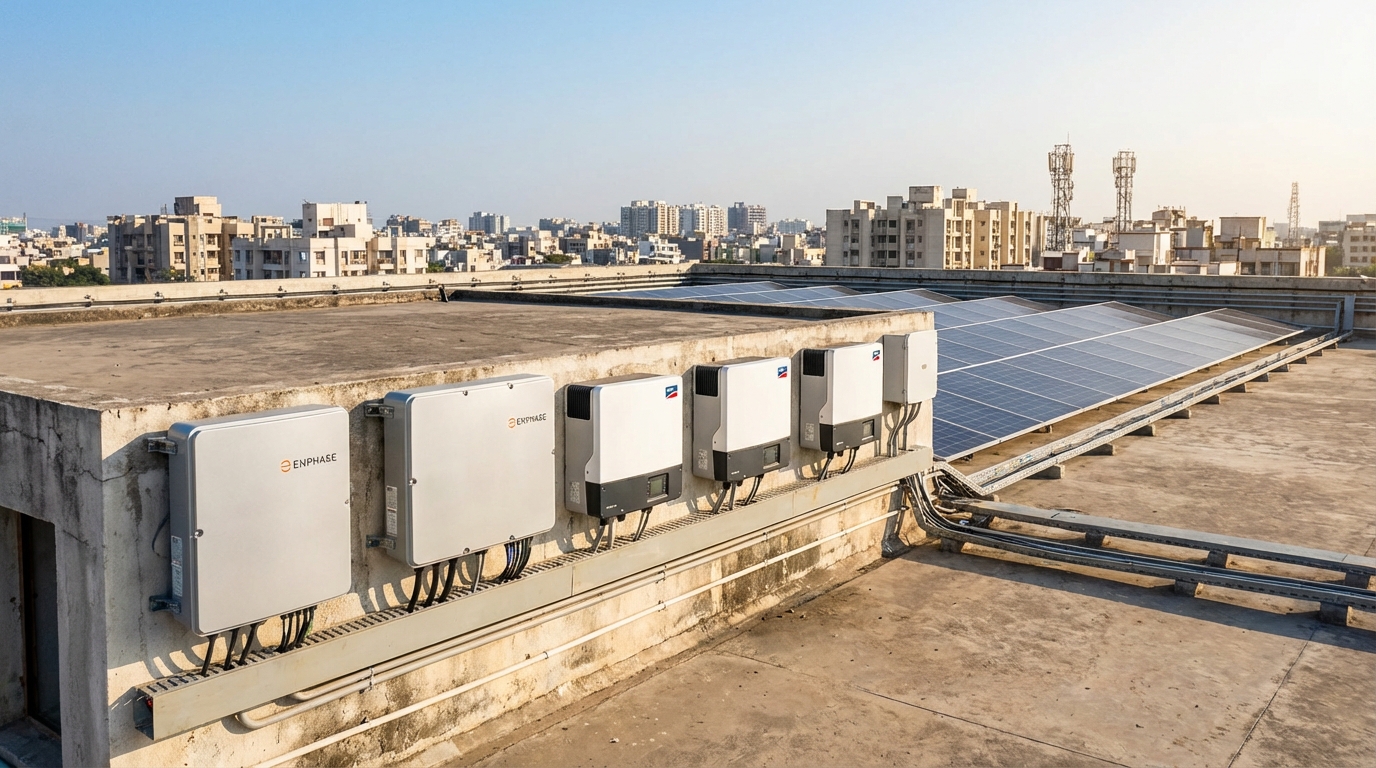
Selecting the right solar inverter brand is one of the most critical decisions for solar installers, EPCs, and facility owners in India. With the solar market expanding rapidly in 2026, the choice of inverter directly impacts system efficiency, long-term ROI, maintenance costs, and overall project success. This comprehensive comparison analyzes the top inverter brands India has to offer, examining warranty coverage, efficiency ratings, monitoring capabilities, weather protection, and value proposition to help you make an informed decision for your residential or commercial solar installations.
The Indian solar inverter market has evolved significantly, with both international giants and innovative domestic manufacturers competing for market share. Understanding the nuanced differences between brands like Qbits, Sungrow, Growatt, Fronius, and Solis is essential for optimizing your solar investment and ensuring reliable performance under India’s diverse climate conditions.
Understanding the Solar Inverter Landscape in India
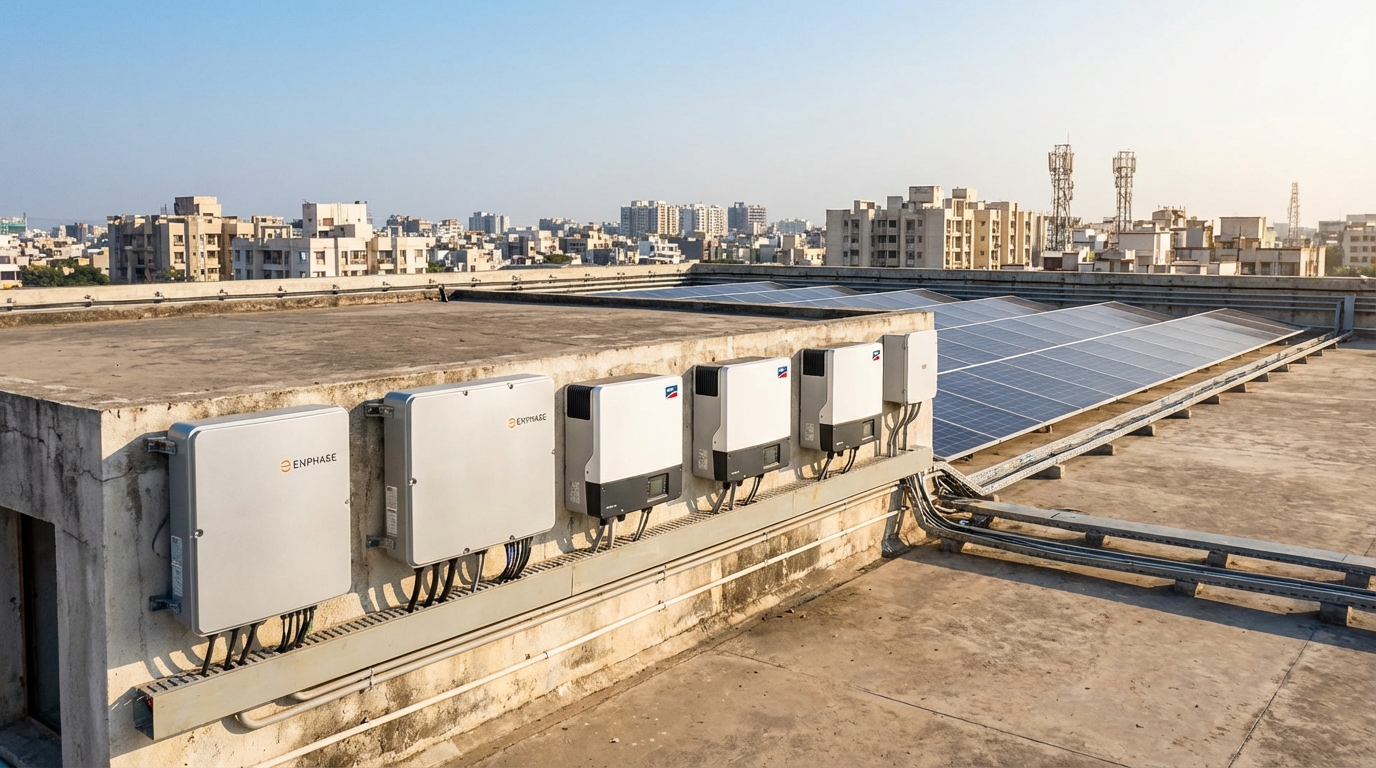
The solar inverter market in India has matured considerably by 2026, driven by aggressive renewable energy targets, declining solar costs, and increasing awareness of energy independence. The market now features a diverse mix of global brands with established reputations and emerging Indian manufacturers leveraging advanced technology and local market understanding.
Choosing the right inverter brand matters significantly for your project’s ROI. A quality inverter with robust warranty coverage can operate efficiently for 15-20 years, while a substandard choice may require replacement within 5-7 years, dramatically affecting your payback period. For commercial and industrial installations, even a 1-2% difference in efficiency can translate to lakhs of rupees in lost revenue over the system’s lifetime.
Key factors that differentiate inverter brands include manufacturing quality, component sourcing, warranty terms, monitoring capabilities, weather protection standards, and after-sales support infrastructure. Indian climate conditions present unique challenges—extreme heat in summer months, monsoon humidity, coastal salt corrosion, and dust accumulation—making weather protection and component quality paramount considerations.
The best solar inverters India offers must demonstrate proven performance under these harsh conditions while providing installers and facility owners with reliable monitoring, responsive technical support, and comprehensive warranty protection.
Critical Comparison Factors for Inverter Brands India
When evaluating inverter manufacturers for your solar projects, several critical factors determine long-term performance and value:
Warranty Coverage and Replacement Policies
Warranty terms vary dramatically across brands, ranging from standard 5-year coverage to extended 12-year full replacement warranties. The warranty structure matters as much as duration—some manufacturers offer repair-based warranties requiring component replacement and service visits, while others provide full unit replacement, minimizing downtime and labor costs. For solar installers and EPCs, warranty claims processes, response times, and the manufacturer’s track record on honoring warranties are crucial considerations.
Efficiency Ratings and Real-World Performance
Inverter efficiency ratings typically range from 95% to 98.5% across leading brands. However, laboratory efficiency ratings don’t always translate to real-world performance. Factors like start-up voltage, performance under partial load conditions, heat dissipation capabilities, and efficiency degradation over time significantly impact actual energy yield. The best inverters maintain high efficiency across varying load conditions and temperature ranges typical in Indian installations.
Monitoring Capabilities and Remote Access
Modern inverter monitoring systems have evolved from basic LCD displays to sophisticated cloud-based platforms with smartphone apps, real-time alerts, and predictive maintenance capabilities. Advanced monitoring features include Wi-Fi, 4G, and Bluetooth connectivity, WhatsApp integration for instant notifications, detailed performance analytics, and remote troubleshooting capabilities. For installers managing multiple sites and facility owners tracking energy production, robust monitoring systems reduce maintenance costs and maximize uptime.
Weather Protection Standards
IP (Ingress Protection) ratings indicate an inverter’s resistance to dust and water ingress. In India’s challenging climate, IP65 or IP66 ratings are essential for rooftop installations exposed to monsoon rains, dust storms, and extreme temperatures. Higher IP ratings ensure longer inverter lifespan and reduce failure rates in harsh environmental conditions.
Component Quality and Manufacturing Standards
The quality of internal components—capacitors, transformers, circuit boards, and cooling systems—directly impacts reliability and longevity. Premium manufacturers use industrial-grade components from reputable suppliers, implement rigorous quality testing protocols, and maintain certifications like BIS, IEC, and ISO standards. The number of quality tests performed per unit and the manufacturer’s production legacy provide insights into build quality.
Pricing and Value Proposition
While inverter cost is an important consideration, the lowest price rarely delivers the best value. Total cost of ownership includes purchase price, installation costs, maintenance expenses, warranty coverage, efficiency losses, and potential replacement costs. A comprehensive value analysis considers all these factors against the inverter’s expected performance and lifespan.
Detailed Brand Comparison: Leading Inverter Manufacturers
This detailed comparison examines five leading brands available in the Indian market, analyzing their strengths, weaknesses, and ideal use cases. The evaluation focuses on factors most relevant to solar installers, EPCs, and commercial facility owners making purchasing decisions for residential and C&I projects.
Qbits: AI-Powered Innovation with German Engineering
Qbits represents India’s next generation of solar inverter manufacturing, combining advanced AI-powered monitoring with German-grade electronic components. Backed by the Heaven Group legacy, Qbits has positioned itself as a premium domestic manufacturer focused specifically on Indian market requirements.
Key Features and Specifications:
- Warranty: Industry-leading 12-year full replacement warranty with digital warranty system for seamless claims processing
- Efficiency: 98% efficiency ratings with low start-up voltage for maximum energy harvest
- Monitoring: AI-powered WhatsApp monitoring system with Wi-Fi, 4G, and Bluetooth connectivity for real-time alerts and performance tracking
- Weather Protection: IP66 rating designed specifically for harsh Indian rooftop conditions
- Panel Support: Supports up to 750W high-wattage panels with up to 100% DC oversizing capability
- Quality Assurance: 1000+ automated quality tests per unit ensuring consistent performance
- Protection: Integrated DC and AC Surge Protection Devices (SPDs) for voltage fluctuation protection
- Product Range: On-grid residential inverters, commercial & industrial inverters, and hybrid inverters with battery integration
- Certifications: BIS/IEC certified products meeting Indian standards
Pros:
- Exceptional 12-year warranty provides long-term peace of mind and reduces replacement costs
- AI-powered WhatsApp monitoring offers unique accessibility for Indian users familiar with the platform
- IP66 weather protection specifically engineered for Indian climate challenges
- German-grade components and rigorous quality testing ensure reliability
- India-focused design and support infrastructure with responsive local service
- Competitive pricing compared to European brands while maintaining premium quality
- Support for modern 750W+ high-wattage panels future-proofs installations
- Digital warranty system streamlines claims and reduces administrative burden
Cons:
- Newer brand with shorter market track record compared to established international manufacturers
- Smaller global footprint may be a consideration for multinational projects
- Brand awareness still building among some installer communities
Best Suited For: Solar installers and EPCs seeking premium-quality inverters with exceptional warranty coverage and advanced monitoring for residential and commercial projects. Ideal for facility owners prioritizing long-term reliability, intelligent monitoring, and India-specific engineering. Particularly valuable for installations in challenging weather conditions requiring robust protection and for projects where remote monitoring and quick troubleshooting are essential.
Learn more about Qbits inverter specifications and features to evaluate how they align with your project requirements.
Sungrow: Global Leader with International Focus
Sungrow is one of the world’s largest inverter manufacturers with a strong global presence and extensive experience in utility-scale solar projects. The company offers a comprehensive product portfolio spanning residential, commercial, and utility applications.
Key Features and Specifications:
- Warranty: Standard 5-year warranty with optional extensions available
- Efficiency: High efficiency ratings up to 98.5% on select models
- Monitoring: iSolarCloud platform with mobile app access and data analytics
- Weather Protection: IP65/IP66 ratings on most models
- Product Range: Extensive portfolio from residential string inverters to large central inverters
- Global Presence: Established service network across multiple countries
Pros:
- Proven track record with installations worldwide providing confidence in reliability
- Extensive product range suitable for projects of all scales
- Strong R&D capabilities and continuous product innovation
- Established service network in India with multiple service centers
- High efficiency ratings deliver strong energy yield
Cons:
- Standard 5-year warranty shorter than some competitors, increasing long-term risk
- Global focus may result in less customization for India-specific requirements
- Monitoring platform may lack India-specific features like WhatsApp integration
- Premium pricing on many models
- Warranty extension costs can add significantly to total investment
Best Suited For: Large-scale commercial and utility projects where global brand recognition and extensive product range are priorities. Suitable for multinational corporations seeking consistent inverter specifications across international installations.
Growatt: Mass-Market Accessibility
Growatt has established itself as a volume player in the global solar market, focusing on competitive pricing and broad product availability. The brand targets cost-conscious installers and projects where budget constraints are primary considerations.
Key Features and Specifications:
- Warranty: Standard 5-10 year warranty depending on model and market
- Efficiency: Efficiency ratings typically 97-97.5%
- Monitoring: ShinePhone app and web portal for system monitoring
- Weather Protection: IP65 rating on most models
- Product Range: Wide variety of residential and commercial inverters
- Pricing: Competitive pricing positioned for mass-market appeal
Pros:
- Attractive pricing makes solar more accessible for budget-conscious projects
- Wide product availability through extensive distributor network
- Decent efficiency ratings for the price point
- Growing service network in India
Cons:
- Component quality may not match premium brands, potentially affecting longevity
- Shorter warranty periods increase replacement risk over system lifetime
- Less rigorous quality testing compared to premium manufacturers
- Service response times can vary significantly by region
- Monitoring features less advanced than AI-powered alternatives
- Lower IP ratings may be insufficient for harsh Indian weather conditions
Best Suited For: Budget-conscious residential installations where upfront cost is the primary decision factor. Suitable for projects with shorter payback expectations or where premium features are not required.
Fronius: Premium European Engineering
Fronius represents the premium segment of the inverter market, offering Austrian engineering excellence and advanced features. The brand targets high-end residential and commercial installations where performance and quality are paramount.
Key Features and Specifications:
- Warranty: 5-year standard warranty with extension options
- Efficiency: Industry-leading efficiency up to 98.5%
- Monitoring: Fronius Solar.web platform with comprehensive analytics
- Weather Protection: IP65/IP66 ratings with robust construction
- Build Quality: Premium European components and manufacturing
- Features: Advanced grid management and power quality features
Pros:
- Exceptional build quality and component selection ensure reliability
- Industry-leading efficiency maximizes energy production
- Advanced features suitable for sophisticated grid requirements
- Strong brand reputation in premium market segment
- Comprehensive monitoring and diagnostic capabilities
Cons:
- Premium pricing significantly higher than domestic alternatives
- Standard warranty period not commensurate with price premium
- Limited India-specific features or customization
- Service network less extensive in tier-2 and tier-3 cities
- Monitoring platform lacks India-specific integrations like WhatsApp
- Higher upfront cost may extend payback period
Best Suited For: High-end residential installations and commercial projects where budget is less constrained and premium European engineering is valued. Suitable for applications requiring advanced grid management features or where brand prestige is important.
Solis: Standard Performance with Global Reach
Solis offers a middle-ground positioning between budget and premium brands, providing reliable performance with global distribution. The company focuses on string inverters for residential and commercial applications.
Key Features and Specifications:
- Warranty: Standard 5-10 year warranty depending on model
- Efficiency: Efficiency ratings around 97.5-98%
- Monitoring: SolisCloud monitoring platform with mobile access
- Weather Protection: IP65 rating standard
- Product Range: Focus on string inverters for residential and commercial use
Pros:
- Balanced pricing between budget and premium segments
- Reliable performance for standard applications
- Growing presence in Indian market
- Decent efficiency ratings
Cons:
- Standard warranty terms don’t differentiate from competitors
- No India-based server data security unlike some domestic manufacturers
- Monitoring features less advanced than AI-powered alternatives
- Limited differentiation in feature set
- Service network still developing in some regions
Best Suited For: Standard commercial applications where proven reliability is needed without premium pricing. Suitable for installers seeking middle-tier options for routine projects.
Side-by-Side Comparison: Key Specifications
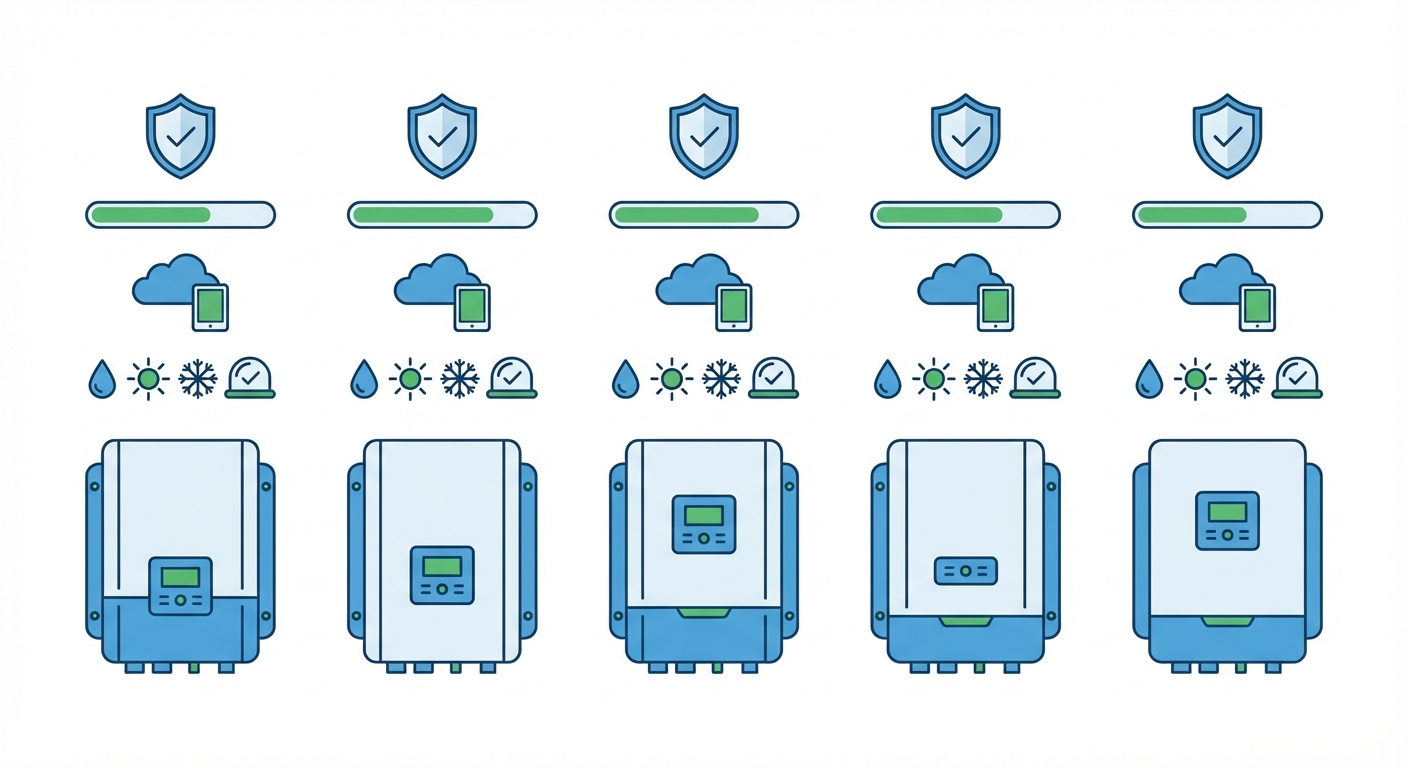
This comprehensive comparison table highlights the critical differences between leading inverter brands India offers, enabling data-driven decision-making for your solar projects:
Warranty Comparison
Warranty coverage represents one of the most significant differentiators among brands:
- Qbits: 12-year full replacement warranty with digital warranty system—industry-leading coverage reducing long-term replacement risk
- Sungrow: 5-year standard warranty with paid extension options available
- Growatt: 5-10 year warranty varying by model and market segment
- Fronius: 5-year standard warranty with extension packages at additional cost
- Solis: 5-10 year standard warranty depending on product line
The extended warranty offered by Qbits provides substantial value over the system’s lifetime, potentially saving lakhs in replacement costs compared to brands requiring inverter replacement after 5-7 years.
Efficiency and Performance
Efficiency ratings directly impact energy production and inverter ROI:
- Qbits: 98% efficiency with low start-up voltage and consistent performance across load ranges
- Sungrow: Up to 98.5% efficiency on premium models
- Growatt: 97-97.5% efficiency typical across product range
- Fronius: Up to 98.5% efficiency with excellent partial-load performance
- Solis: 97.5-98% efficiency on most models
While efficiency differences appear small, a 1% efficiency gap on a 100 kW commercial installation can result in 8,000-10,000 kWh of lost production annually, translating to significant revenue impact over the system’s lifetime.
Monitoring and Connectivity
Advanced monitoring capabilities reduce maintenance costs and maximize uptime:
- Qbits: AI-powered WhatsApp monitoring with Wi-Fi, 4G, and Bluetooth connectivity—unique India-focused approach providing instant alerts on familiar platform
- Sungrow: iSolarCloud platform with mobile app and web portal access
- Growatt: ShinePhone app with basic monitoring features
- Fronius: Solar.web platform with comprehensive analytics and diagnostics
- Solis: SolisCloud monitoring with standard mobile access
For installers managing multiple sites, the WhatsApp integration offered by Qbits provides unparalleled accessibility, enabling quick response to alerts without requiring separate app installations or platform logins.
Weather Protection Standards
IP ratings determine inverter durability in India’s challenging climate:
- Qbits: IP66 rating specifically engineered for harsh Indian rooftop conditions including monsoon, dust, and extreme heat
- Sungrow: IP65/IP66 ratings depending on model
- Growatt: IP65 rating standard across most products
- Fronius: IP65/IP66 ratings with robust European construction standards
- Solis: IP65 rating typical
The IP66 rating provides superior protection against dust ingress and high-pressure water jets, essential for installations exposed to monsoon conditions and requiring high-pressure cleaning.
Component Quality and Testing
Manufacturing quality determines long-term reliability:
- Qbits: German-grade electronic components with 1000+ automated quality tests per unit, backed by Heaven Group manufacturing legacy
- Sungrow: Industrial-grade components with comprehensive testing protocols
- Growatt: Standard components with basic quality assurance
- Fronius: Premium European components with rigorous Austrian manufacturing standards
- Solis: Standard industrial components with routine testing
The extensive quality testing implemented by premium manufacturers like Qbits and Fronius significantly reduces field failure rates, minimizing costly service calls and system downtime.
Value Proposition Analysis
Total cost of ownership over the system’s lifetime provides the clearest value comparison:
- Qbits: Premium quality at competitive pricing with 12-year warranty reducing replacement costs—excellent value proposition for long-term installations
- Sungrow: Premium pricing with standard warranty—value depends on project scale and global brand requirement
- Growatt: Lowest upfront cost but shorter warranty and potentially higher replacement risk
- Fronius: Highest pricing with standard warranty—premium justified primarily by brand prestige and advanced features
- Solis: Mid-range pricing with standard features—balanced option for routine applications
For most residential and commercial installations in India, the combination of competitive pricing, extended warranty, and advanced monitoring makes Qbits an compelling value proposition, particularly when factoring in the reduced risk of premature replacement.
Choosing the Right Inverter Brand for Your Project
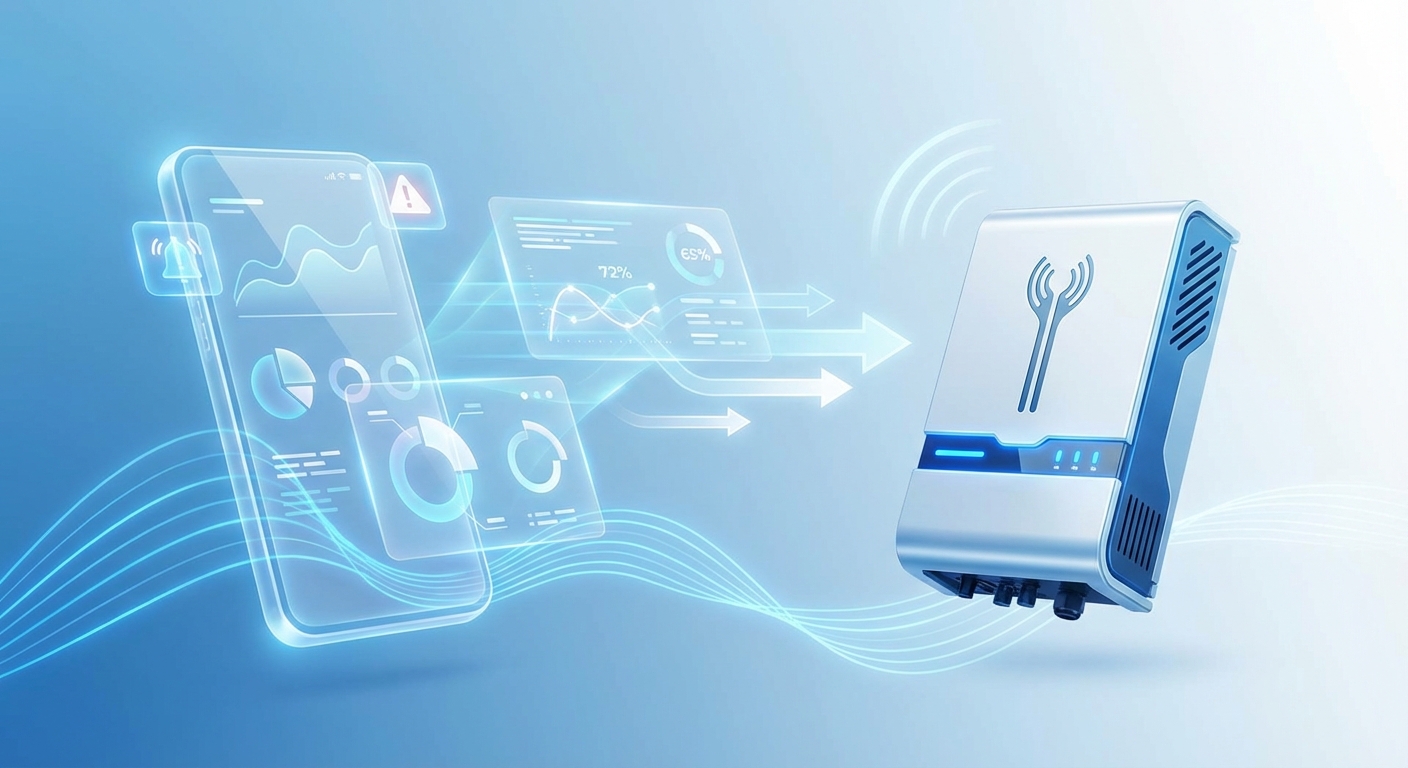
Selecting the optimal inverter brand requires evaluating your specific project requirements, budget constraints, and long-term objectives. This decision framework helps solar installers, EPCs, and facility owners make informed choices:
Decision Framework for Solar Installers and EPCs
When specifying inverters for client projects, consider these critical factors:
Client Budget and Value Expectations: Determine whether the client prioritizes lowest upfront cost or best long-term value. For clients focused on total cost of ownership and inverter ROI, brands offering extended warranties and superior efficiency deliver better value despite potentially higher initial investment.
Project Scale and Complexity: Large commercial and industrial installations benefit from brands with robust service networks and proven track records at scale. Residential projects may prioritize ease of monitoring and homeowner-friendly features like WhatsApp integration.
After-Sales Support Requirements: Evaluate the manufacturer’s service network in your operating regions. Brands with responsive local support reduce your service burden and improve client satisfaction. Digital warranty systems streamline claims processing and reduce administrative overhead.
Differentiation and Competitive Advantage: Offering inverters with unique features like AI-powered monitoring or industry-leading warranties can differentiate your installation services and justify premium pricing for your projects.
Residential vs Commercial & Industrial Considerations
Residential Installations: Homeowners value simplicity, reliability, and peace of mind. Features like WhatsApp monitoring, extended warranties, and user-friendly interfaces enhance the ownership experience. Support for high-wattage panels (750W+) future-proofs installations as panel technology advances. The ability to upgrade to hybrid inverter India configurations for battery integration provides flexibility as energy storage becomes more accessible.
Commercial & Industrial Projects: C&I installations prioritize maximum efficiency, robust monitoring, and minimal downtime. Even small efficiency differences significantly impact ROI on large systems. Advanced monitoring with real-time alerts enables proactive maintenance, reducing costly production losses. Extended warranty coverage is particularly valuable for C&I projects where inverter replacement involves significant labor costs and business disruption.
Climate-Specific Requirements in India
India’s diverse climate zones present unique challenges requiring careful inverter selection:
Coastal Regions: High humidity and salt corrosion demand IP66 protection and corrosion-resistant components. Brands specifically engineered for harsh conditions perform better long-term.
Northern Plains: Extreme temperature variations from winter to summer require inverters with wide operating temperature ranges and effective thermal management.
Monsoon-Prone Areas: Superior water ingress protection (IP66) is essential for installations exposed to heavy rainfall and high-pressure water exposure during cleaning.
Dusty Environments: Industrial areas and regions with high dust levels benefit from IP66 dust protection and designs facilitating easy cleaning without compromising protection.
Long-Term ROI Calculations
Comprehensive ROI analysis should include:
- Initial Investment: Inverter purchase price plus installation costs
- Energy Production: Efficiency ratings and real-world performance under local conditions
- Maintenance Costs: Service visits, monitoring platform fees, and troubleshooting expenses
- Replacement Risk: Probability of inverter replacement based on warranty coverage and component quality
- Downtime Costs: Revenue lost during inverter failures or maintenance (particularly critical for C&I)
- Monitoring Value: Labor savings from remote monitoring and automated alerts
A comprehensive ROI calculation often reveals that premium inverters with extended warranties and superior efficiency deliver better returns despite higher upfront costs, particularly for commercial installations with 15-20 year planning horizons.
Support and Service Network Importance
The manufacturer’s support infrastructure significantly impacts long-term satisfaction:
- Local Service Centers: Proximity to service centers reduces response times and transportation costs
- Technical Support Accessibility: Responsive helplines, WhatsApp support, and online resources enable quick inverter troubleshooting
- Spare Parts Availability: Local inventory of replacement parts minimizes downtime
- Warranty Claim Process: Digital warranty systems and streamlined claims processing reduce administrative burden
- Training and Resources: Manufacturer-provided training for installers improves installation quality and reduces callbacks
For installers and EPCs, partnering with manufacturers offering comprehensive support reduces your service obligations and improves project profitability. Consider exploring partnership opportunities with manufacturers providing robust channel support.
Installation and Support Considerations
Beyond product specifications, installation complexity and after-sales support significantly impact project success and long-term satisfaction.
Installation Complexity Across Brands
Modern inverters have become increasingly installer-friendly, but differences remain:
Physical Installation: Most string inverters feature similar mounting systems, but weight, dimensions, and cable management design affect installation time. Inverters with integrated DC and AC surge protection simplify installation by reducing external component requirements.
Commissioning and Configuration: User-friendly interfaces and mobile app-based commissioning reduce setup time. Brands offering Bluetooth or Wi-Fi configuration eliminate the need for laptop-based setup, particularly valuable for rooftop installations.
Documentation and Support: Comprehensive installation manuals, video tutorials, and technical support during commissioning reduce installation challenges and callbacks. Manufacturers providing installer training programs improve installation quality across their channel network.
After-Sales Support and Service Networks in India
The quality of after-sales support varies significantly among inverter manufacturers India:
Service Network Coverage: Evaluate the manufacturer’s service center locations relative to your project sites. Brands with extensive networks in tier-2 and tier-3 cities provide better support for geographically distributed installations.
Response Times: Manufacturer commitments on response times for service requests impact system uptime. For commercial installations, rapid response is critical to minimize revenue losses.
Remote Support Capabilities: Advanced monitoring platforms enabling remote diagnostics and troubleshooting reduce the need for on-site visits, lowering maintenance costs and improving response times.
Qbits provides comprehensive support through their dedicated service portal, ensuring installers and facility owners receive timely assistance when needed.
Digital Warranty Systems and Claim Processes
Traditional warranty processes involving physical documentation and manual claims processing create administrative burden and delays. Digital warranty systems offer significant advantages:
- Automated Registration: Digital systems automatically register warranties during commissioning, eliminating paperwork
- Easy Access: Online warranty certificates accessible anytime reduce documentation management
- Streamlined Claims: Digital claims submission with automated processing reduces approval times
- Transparency: Real-time claim status tracking improves communication and reduces follow-up calls
Qbits’ digital warranty system exemplifies this approach, allowing installers and owners to download warranty certificates instantly and submit claims efficiently.
Monitoring System Setup and Accessibility
The ease of monitoring system setup and ongoing accessibility affects user satisfaction:
Initial Configuration: Monitoring systems requiring complex network configuration or IT support create barriers for residential users. Solutions with simple Wi-Fi or 4G connectivity and mobile app-based setup improve adoption.
User Interface: Intuitive dashboards displaying key metrics—current production, daily yield, system status—in easily understood formats enhance user experience. Overly technical interfaces may overwhelm residential users.
Alert Systems: Effective alert mechanisms notify users of performance issues, faults, or maintenance requirements. WhatsApp-based alerts leverage a platform familiar to Indian users, ensuring notifications are seen and acted upon promptly.
Multi-Site Management: For installers and EPCs managing multiple installations, platforms supporting multi-site dashboards and aggregated reporting reduce monitoring overhead.
Troubleshooting and Technical Support
Effective inverter troubleshooting requires accessible technical support:
- Support Channels: Multiple support channels—phone, email, WhatsApp, online chat—provide flexibility for different user preferences and urgency levels
- Technical Expertise: Knowledgeable support staff who can diagnose issues remotely and provide clear guidance reduce resolution times
- Documentation: Comprehensive troubleshooting guides, FAQs, and video tutorials enable self-service resolution of common issues
- Escalation Processes: Clear escalation paths for complex issues ensure problems don’t languish unresolved
Manufacturers investing in robust support infrastructure demonstrate commitment to customer success beyond the initial sale.
Future-Proofing Your Solar Investment
As solar technology evolves rapidly, selecting inverters that accommodate future developments protects your investment and maximizes long-term value.
High-Wattage Panel Compatibility
Solar panel technology has advanced dramatically, with 750W+ panels becoming standard in 2026. Inverters must support these high-wattage panels to avoid premature obsolescence:
Input Voltage Ranges: Modern high-wattage panels operate at higher voltages. Inverters with wide input voltage ranges accommodate current and future panel technologies.
MPPT Efficiency: Advanced Maximum Power Point Tracking algorithms optimize energy harvest from high-wattage panels across varying conditions.
String Configuration Flexibility: Inverters supporting various string configurations provide design flexibility for different panel types and installation constraints.
Qbits inverters support up to 750W panels, ensuring compatibility with current high-efficiency modules and providing headroom for future panel technology advances.
DC Oversizing Capabilities
DC oversizing—installing more panel capacity than the inverter’s rated AC output—improves energy production, particularly in locations with suboptimal conditions:
Benefits of Oversizing: DC oversizing increases morning and evening production, compensates for soiling and degradation, and improves performance on cloudy days. Oversizing ratios of 120-130% are common in commercial installations.
Inverter Support: Not all inverters support significant oversizing. Qbits inverters accommodate up to 100% DC oversizing (200% total DC capacity), providing substantial design flexibility and performance optimization opportunities.
Clipping Considerations: While oversizing causes some peak clipping, the increased overall energy production typically delivers better ROI, particularly in India where peak sun hours are limited.
Hybrid Inverter Options for Battery Integration
As battery storage costs decline, the ability to integrate energy storage becomes increasingly valuable:
On-Grid vs Hybrid Decision: The on-grid vs hybrid decision depends on current requirements and future plans. Pure on-grid inverters offer simplicity and lower cost for installations without immediate storage needs. Hybrid inverters provide battery integration capability, enabling future storage addition without inverter replacement.
Retrofit Considerations: Replacing an on-grid inverter with a hybrid model later involves additional costs and system downtime. For installations where battery storage is likely within 5-7 years, hybrid inverters may offer better long-term value despite higher upfront costs.
Battery Compatibility: Hybrid inverters vary in battery compatibility. Models supporting multiple battery brands and chemistries provide flexibility and avoid vendor lock-in.
Qbits offers both on-grid and hybrid inverter options, allowing installers to select the optimal configuration for each project’s current needs and future expansion plans.
Software Updates and Monitoring Improvements
Inverters with updateable firmware and evolving monitoring platforms provide ongoing value:
Firmware Updates: Over-the-air firmware updates enable manufacturers to improve performance, add features, and address issues without hardware replacement. This capability extends the effective lifespan of the inverter.
Monitoring Platform Evolution: Cloud-based monitoring platforms can add features, improve interfaces, and integrate with new technologies over time. Manufacturers committed to platform development provide increasing value throughout the system’s lifetime.
Grid Code Compliance: As grid codes evolve, updateable inverters can adapt to new requirements through firmware updates, avoiding premature obsolescence.
Scalability for Expanding Installations
Many installations expand over time as energy needs grow or additional roof space becomes available:
Modular Architecture: String inverter architectures facilitate easy expansion by adding additional inverters as capacity increases.
Monitoring Integration: Monitoring platforms that seamlessly integrate multiple inverters simplify management of expanded systems.
Consistent Product Lines: Manufacturers maintaining consistent product lines over time enable matching inverters when expanding, simplifying design and maintenance.
Frequently Asked Questions About Inverter Brands in India
Which inverter brand offers the longest warranty in India?
Qbits currently offers the industry-leading 12-year full replacement warranty in the Indian market, significantly longer than the standard 5-year warranties provided by most competitors. This extended coverage reduces long-term replacement risk and provides superior value over the system’s lifetime. The warranty is backed by a digital warranty system for streamlined claims processing.
What is the average lifespan of solar inverters?
Quality solar inverters typically last 15-20 years with proper maintenance, though performance may degrade slightly over time. The actual inverter lifespan depends heavily on component quality, operating conditions, and maintenance. Inverters with premium components, rigorous quality testing, and superior weather protection tend to achieve longer operational lives. In India’s challenging climate, inverters with IP66 protection and robust thermal management perform better long-term than those with lower protection standards.
How important is IP66 rating for Indian weather conditions?
IP66 rating is highly important for Indian installations, particularly rooftop systems exposed to monsoon rains, dust storms, and extreme temperatures. The IP66 standard provides superior protection against dust ingress and high-pressure water jets compared to IP65. This enhanced protection significantly reduces failure rates in harsh conditions and extends inverter lifespan. For coastal installations facing salt corrosion or industrial areas with high dust levels, IP66 protection is essential for reliable long-term operation.
Can I monitor my inverter remotely via smartphone?
Yes, all modern inverter brands offer smartphone monitoring through dedicated mobile apps or web portals. However, the sophistication and accessibility of monitoring systems vary significantly. Advanced solutions like Qbits’ AI-powered WhatsApp monitoring provide alerts and status updates through the familiar WhatsApp platform, eliminating the need for separate app installations. Other brands require dedicated apps with varying levels of functionality. When evaluating inverter monitoring options, consider ease of setup, alert mechanisms, data granularity, and multi-site management capabilities.
What efficiency rating should I look for?
Target inverter efficiency ratings of 97.5% or higher for modern installations. Premium inverters achieve 98-98.5% efficiency. While the difference between 97% and 98% efficiency appears small, it translates to significant energy production differences over the system’s lifetime. For a 100 kW commercial installation, a 1% efficiency difference results in approximately 8,000-10,000 kWh of lost production annually. Beyond peak efficiency, consider efficiency across the load curve, as inverters operating at partial load for extended periods should maintain high efficiency across the range.
How do I choose between on-grid and hybrid inverters?
The on-grid vs hybrid decision depends on your current requirements and future plans. Choose on-grid inverters for installations without immediate battery storage needs, offering simplicity and lower upfront costs. Select hybrid inverters if battery storage is planned within 5-7 years, as retrofitting storage later requires inverter replacement with associated costs and downtime. Hybrid inverters also provide backup power capabilities during grid outages, valuable in areas with unreliable grid supply. Consider your energy usage patterns, grid reliability, battery storage economics, and future expansion plans when making this decision. For detailed guidance on inverter selection for your specific project, contact technical experts who can evaluate your requirements.
Making Your Inverter Brand Decision
Selecting the right inverter brand represents one of the most consequential decisions in solar project planning, directly impacting system performance, maintenance costs, and long-term ROI. This comprehensive comparison of leading inverter brands India offers reveals significant differences in warranty coverage, efficiency ratings, monitoring capabilities, weather protection, and overall value proposition.
For solar installers, EPCs, and facility owners prioritizing long-term reliability, advanced monitoring, and comprehensive warranty protection, Qbits emerges as a compelling choice. The combination of industry-leading 12-year warranty, AI-powered WhatsApp monitoring, IP66 weather protection, German-grade components, and competitive pricing delivers exceptional value for residential and commercial installations across India’s diverse climate zones.
While established international brands like Sungrow and Fronius offer proven track records and global presence, their standard warranty terms and premium pricing may not align with the value expectations of cost-conscious Indian projects. Budget brands like Growatt provide accessible entry points but potentially sacrifice long-term reliability and advanced features.
The optimal choice depends on your specific project requirements, budget constraints, and long-term objectives. Consider the total cost of ownership over the system’s 20-year lifespan, factoring in efficiency losses, maintenance costs, replacement risk, and monitoring value. For most residential and commercial installations in India, inverters offering extended warranties, robust weather protection, and intelligent monitoring deliver superior returns despite potentially higher initial investment.
As you evaluate options for your next solar project, prioritize manufacturers demonstrating commitment to the Indian market through localized features, responsive support infrastructure, and engineering specifically addressing Indian climate challenges. The right inverter brand becomes a long-term partner in your solar journey, not just a component in your system.
Ready to explore how Qbits inverters can enhance your solar installations? Inquire now to discuss your project requirements with technical experts, or explore the complete Qbits product portfolio to find the ideal inverter solution for your residential or commercial solar projects. For installation partners seeking to differentiate their services with premium inverters and comprehensive support, discover partnership opportunities with Qbits.
Stay connected with the latest solar technology insights and product updates by following Qbits on LinkedIn, Instagram, and YouTube for technical videos and installation guides.