



Solar Inverter Cost Breakdown 2026: Pricing Factors & Budget Planning Guide

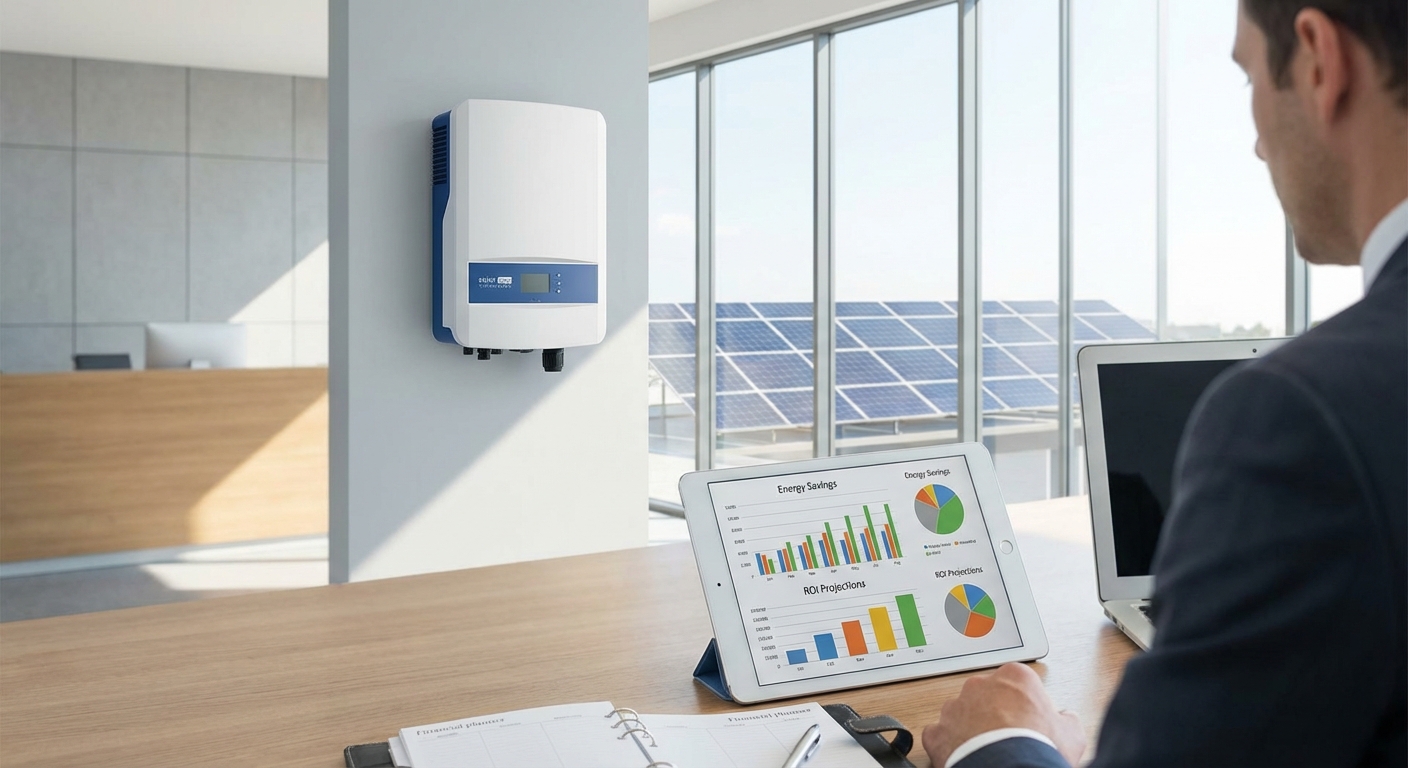
When planning a solar installation in India, understanding inverter cost is crucial for accurate budgeting and maximizing return on investment. Solar inverters represent a significant portion of your total project expenditure—typically 10-15% for residential systems and 8-12% for commercial installations—yet they’re the critical component that converts DC power from panels into usable AC electricity. In 2026, India’s solar market is experiencing rapid growth, with inverter pricing becoming increasingly competitive while quality standards continue to rise. This comprehensive guide breaks down solar inverter costs across different types, explores the factors that influence pricing, and helps solar installers, EPCs, and facility owners make informed investment decisions that balance upfront costs with long-term value.
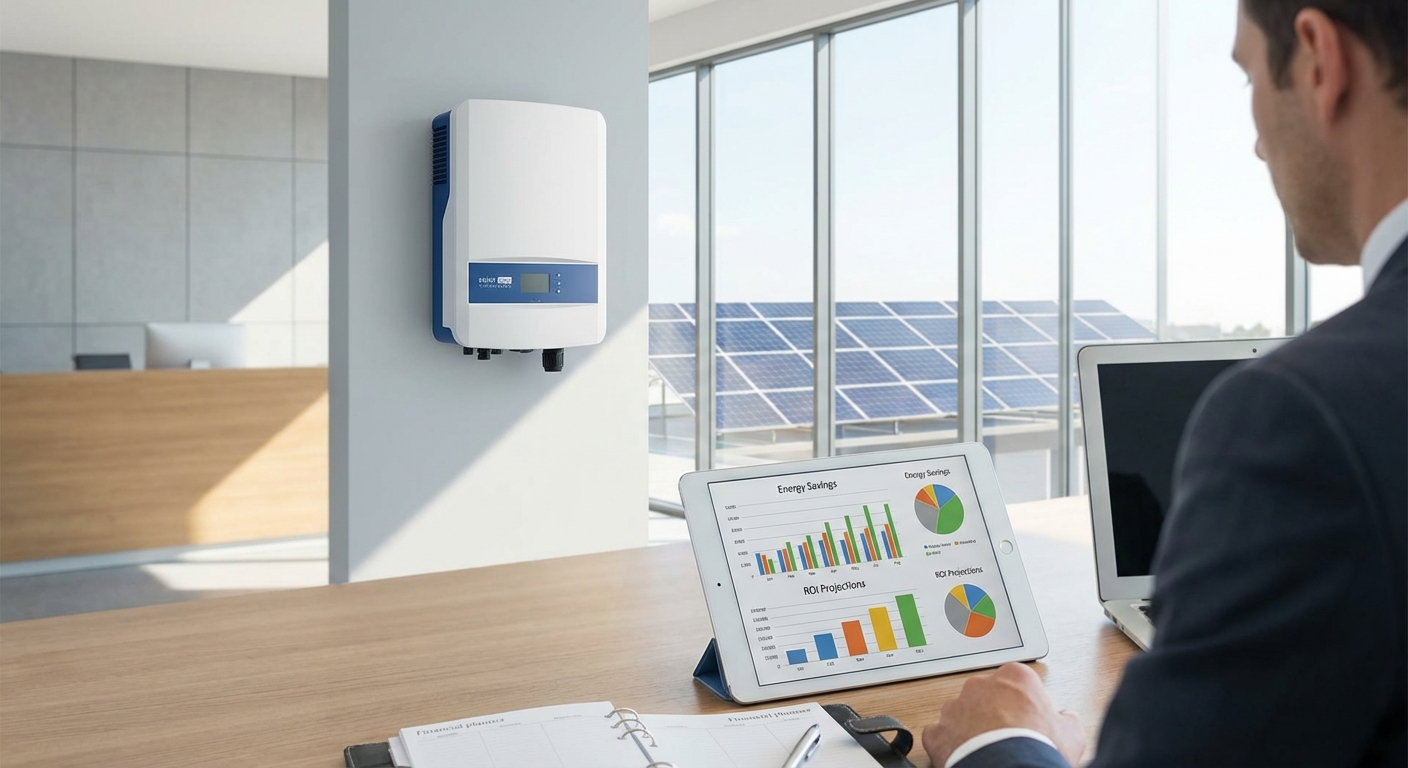
Understanding Solar Inverter Cost in India’s Growing Market
The Indian solar inverter market in 2026 has matured significantly, with domestic manufacturers like Qbits Energy bringing advanced technology and competitive pricing to challenge international brands. The cost landscape has evolved beyond simple price-per-watt calculations to encompass total cost of ownership, warranty value, and performance reliability over the system’s lifespan.
Current market pricing for solar inverters in India varies considerably based on type, capacity, and quality tier. On-grid residential inverters typically range from ₹4,500 to ₹12,000 per kW, while commercial and industrial inverters can range from ₹3,800 to ₹10,000 per kW due to economies of scale. Hybrid inverters with battery integration capabilities command premium pricing, generally 30-50% higher than comparable on-grid models, reflecting their additional functionality and sophisticated power management systems.
Understanding inverter cost matters profoundly for project ROI. An inverter operating at 98% efficiency versus 95% efficiency can generate 3% more revenue over its lifetime—translating to lakhs of rupees on commercial installations. Similarly, a 12-year warranty versus a standard 5-year warranty eliminates potential replacement costs that could reach 40-60% of the original inverter investment.
Quality impacts long-term value in ways that aren’t immediately apparent in purchase price comparisons. Premium inverters built with German-grade electronic components and subjected to rigorous quality testing demonstrate significantly lower failure rates in harsh Indian conditions—extreme temperatures, high humidity, and voltage fluctuations. The initial cost premium of 15-25% for quality-tier inverters typically pays for itself within 3-4 years through reduced maintenance, fewer replacements, and consistent performance.
Solar Inverter Cost by Type: On-Grid vs Hybrid Comparison
Different inverter types serve distinct applications, and their pricing reflects both functionality and market positioning. Understanding these cost differences helps solar professionals recommend appropriate solutions for specific project requirements.
On-Grid Residential Inverter Pricing
On-grid residential inverters for home installations typically range from 1kW to 10kW capacity. In 2026, pricing structures break down as follows:
- 1-3kW systems: ₹5,500-₹12,000 per kW (higher per-kW cost due to fixed component costs)
- 3-5kW systems: ₹5,000-₹10,000 per kW (most common residential size, competitive pricing)
- 5-10kW systems: ₹4,500-₹9,000 per kW (better economies of scale)
Modern residential inverters from manufacturers like Qbits Energy support up to 750W panel capacity, accommodating the latest high-wattage solar modules without requiring oversized inverters. This capability represents significant value, as it future-proofs installations against panel technology advancements.
On-Grid Commercial & Industrial Inverter Costs
Commercial and industrial installations benefit from volume pricing and larger capacity units. C&I inverters typically range from 10kW to 100kW+ per unit:
- 10-25kW systems: ₹4,200-₹8,500 per kW
- 25-50kW systems: ₹4,000-₹7,800 per kW
- 50kW+ systems: ₹3,800-₹7,200 per kW
C&I inverters often include advanced features like 100% DC oversizing capability, allowing installers to connect more panel capacity than the inverter’s rated AC output. This flexibility optimizes energy capture during non-peak hours and compensates for panel degradation over time.
Hybrid Inverter Pricing with Battery Integration
Hybrid inverters combine grid-tie functionality with battery charging and backup capabilities. Their sophisticated power management systems command premium pricing:
- Residential hybrid (3-10kW): ₹7,500-₹16,000 per kW
- Commercial hybrid (10kW+): ₹6,800-₹14,000 per kW
The 30-50% cost premium over on-grid inverters reflects additional components including battery management systems, transfer switches, and more complex control electronics. For facilities requiring backup power or operating under time-of-use tariffs, hybrid inverters deliver value through energy arbitrage and grid independence.
When Each Type Makes Financial Sense
Choosing between on-grid and hybrid inverters depends on specific use cases. On-grid inverters offer the best ROI for installations with stable grid connectivity and net metering arrangements, where the grid effectively serves as a virtual battery. Hybrid inverters justify their premium in scenarios with frequent power outages, high demand charges, or time-of-use electricity pricing where stored solar energy can offset expensive peak-hour grid consumption.
Key Factors That Determine Inverter Cost
Solar inverter pricing isn’t arbitrary—specific technical specifications and quality factors directly influence cost. Understanding these elements helps buyers evaluate whether pricing reflects genuine value or marketing positioning.
Component Quality: German-Grade vs Standard Electronics
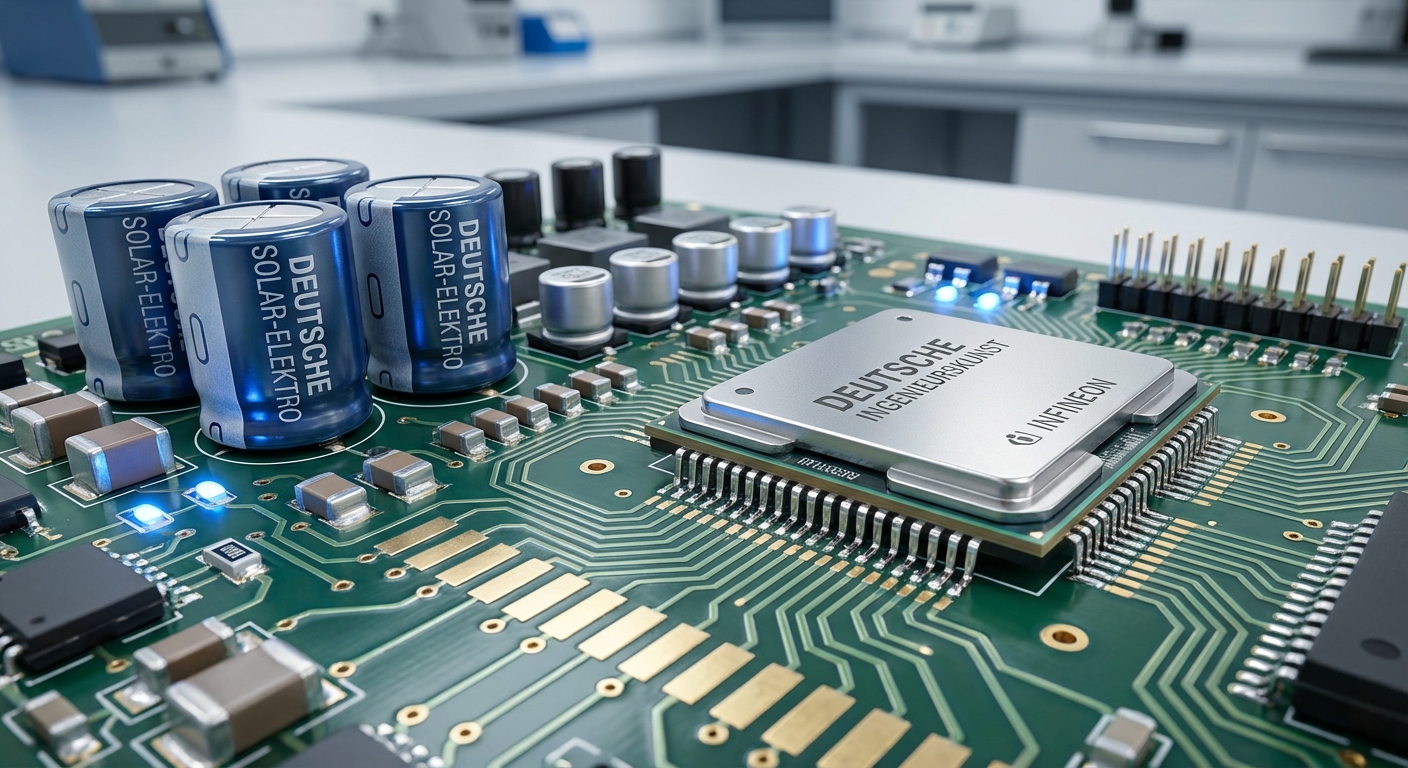
The electronic components inside an inverter—capacitors, inductors, MOSFETs, and microprocessors—fundamentally determine reliability and lifespan. German-grade components from manufacturers like Infineon, EPCOS, and Würth Elektronik undergo stricter quality control and offer superior temperature tolerance, longer rated lifespans, and lower failure rates compared to standard-grade alternatives.
Qbits Energy inverters utilize German-grade electronic components throughout their product line, contributing to their premium positioning. While this increases manufacturing costs by 12-18%, it translates to measurably better performance in India’s challenging environmental conditions—where rooftop temperatures can exceed 70°C and humidity levels fluctuate dramatically.
Efficiency Ratings and Their Impact on Pricing
Inverter efficiency directly affects energy generation and revenue. Modern premium inverters achieve 98% efficiency, meaning only 2% of DC power is lost during conversion. Standard inverters typically operate at 95-96% efficiency. This 2-3% difference might seem minor, but over a 25-year solar system lifespan, it represents substantial energy and revenue differences.
For a 100kW commercial installation generating 150,000 kWh annually, the difference between 95% and 98% efficiency equals 4,500 kWh per year—worth approximately ₹36,000 annually at ₹8 per unit. Over 12 years, this totals ₹4.32 lakhs, often exceeding the initial cost premium for the higher-efficiency inverter.
Warranty Length and Replacement Terms
Warranty coverage significantly impacts total cost of ownership. Standard inverter warranties in India range from 5-7 years, while premium manufacturers offer extended coverage. Qbits Energy provides a 12-year full replacement warranty—among the longest in the Indian market—backed by their digital warranty system for seamless claims processing.
The value of extended warranty becomes clear when considering replacement costs. If a 10kW inverter fails in year 8 with only a 5-year warranty, the owner faces ₹50,000-₹90,000 in replacement costs plus installation and downtime losses. A 12-year warranty eliminates this risk, effectively providing ₹50,000-₹90,000 in additional value.
Advanced Monitoring Features
Modern inverters incorporate sophisticated monitoring capabilities that add cost but deliver operational value. Basic inverters offer simple LED indicators, while advanced models provide comprehensive remote monitoring through multiple connectivity options.
Qbits Energy’s AI-powered WhatsApp monitoring system represents innovative thinking in the Indian market, where WhatsApp penetration exceeds 500 million users. This system provides real-time alerts, performance analytics, and troubleshooting guidance directly through WhatsApp, eliminating the need for separate monitoring apps. Combined with Wi-Fi, 4G, and Bluetooth connectivity, these monitoring features add ₹2,000-₹5,000 to inverter costs but reduce service call expenses and system downtime significantly.
Weather Protection Ratings
India’s diverse climate—from coastal humidity to desert heat to monsoon rainfall—demands robust weather protection. IP66 weather protection ensures complete dust sealing and protection against powerful water jets, essential for rooftop installations exposed to harsh conditions.
Standard IP54 or IP65 ratings offer adequate protection in controlled environments but may fail prematurely in challenging installations. The ₹1,500-₹3,000 cost premium for IP66-rated enclosures pays dividends through extended equipment life and reduced weather-related failures.
Surge Protection and Safety Features
Voltage fluctuations and lightning strikes pose significant risks to solar installations in India. Premium inverters incorporate comprehensive protection including DC and AC surge protection devices (SPDs), over-voltage protection, and anti-islanding safeguards.
These protection systems add ₹2,000-₹6,000 to inverter costs but prevent catastrophic failures that could destroy not only the inverter but connected panels and electrical systems. For commercial installations, a single unprotected lightning strike could cause ₹5-15 lakhs in damage—making surge protection an essential investment rather than optional feature.
Manufacturing Quality Standards and Testing
Rigorous quality testing ensures inverters perform reliably over their rated lifespan. Manufacturers employing comprehensive testing protocols incur higher production costs but deliver superior products. Qbits Energy subjects each inverter to 1000+ automated quality tests covering electrical performance, thermal cycling, humidity exposure, and safety compliance.
This testing regime, combined with BIS/IEC certification, adds approximately ₹1,000-₹2,500 per unit to manufacturing costs but virtually eliminates infant mortality failures and ensures consistent performance. For solar installers, this translates to fewer warranty claims, reduced service costs, and enhanced reputation.
Premium vs Standard: Component Quality Cost Analysis
The debate between premium and standard inverters centers on initial cost versus long-term value. A detailed cost analysis reveals the true financial implications of this choice.
Initial Cost Difference Breakdown
For a typical 5kW residential installation, the cost difference between standard and premium inverters breaks down as follows:
- Standard inverter: ₹25,000-₹35,000 (₹5,000-₹7,000 per kW)
- Premium inverter: ₹35,000-₹50,000 (₹7,000-₹10,000 per kW)
- Cost premium: ₹10,000-₹15,000 (28-43% higher)
This initial premium reflects superior components, extended warranty, advanced monitoring, and comprehensive protection systems. The question becomes whether this premium delivers equivalent or greater value over the system’s operational life.
Longevity and Failure Rate Comparisons
Industry data from Indian installations reveals significant reliability differences between quality tiers. Standard inverters show failure rates of 8-12% within the first 5 years, while premium inverters with German-grade components demonstrate failure rates below 2% over the same period.
For a solar installation company managing 500 inverters, this difference means 40-60 failures requiring service calls, replacement units, and customer relationship management versus fewer than 10 failures. The operational cost savings—in service labor, replacement units, and customer satisfaction—substantially favor premium inverters.
Maintenance Cost Implications
Premium inverters require minimal maintenance beyond periodic cleaning and visual inspection. Standard inverters may require component replacements, firmware updates to address bugs, and more frequent service interventions. Over a 12-year period, maintenance costs for standard inverters can reach ₹8,000-₹15,000, while premium inverters typically require less than ₹3,000 in maintenance.
Real-World Performance in Indian Conditions
India’s environmental challenges—temperatures exceeding 50°C in summer, 90%+ humidity during monsoons, and significant voltage fluctuations—stress inverter components. Premium inverters engineered for these conditions maintain rated performance, while standard inverters may experience thermal derating, reduced efficiency, and accelerated component aging.
Field data from installations across India shows premium inverters maintaining 97-98% of rated efficiency after 5 years, while standard inverters often decline to 92-94% efficiency due to component degradation. This performance gap widens over time, significantly impacting energy generation and revenue.
Hidden Costs in Solar Inverter Investments
The inverter’s purchase price represents only part of the total investment. Several additional costs—some obvious, others easily overlooked—affect the true cost of inverter ownership.
Installation and Commissioning Costs
Professional installation and commissioning typically add ₹2,000-₹5,000 for residential inverters and ₹5,000-₹15,000 for commercial units. These costs cover mounting, electrical connections, grounding, surge protection installation, and system configuration. While tempting to minimize installation costs, improper installation voids warranties and creates safety hazards.
Mounting Structures and Accessories
Inverters require appropriate mounting structures, typically costing ₹800-₹2,500 depending on inverter size and mounting location. Additional accessories include DC and AC disconnects (₹1,500-₹4,000), cable management systems (₹500-₹2,000), and weatherproof enclosures for outdoor installations (₹2,000-₹6,000).
Monitoring System Setup Fees
While many modern inverters include built-in monitoring, some systems require separate monitoring hardware or subscription fees. Traditional monitoring systems may cost ₹3,000-₹8,000 for hardware plus ₹1,000-₹3,000 annually for cloud services. Qbits Energy’s integrated AI-powered monitoring eliminates these additional costs by providing comprehensive monitoring through WhatsApp without subscription fees.
Maintenance and Service Costs Over Lifespan
Annual maintenance for solar inverters includes cleaning, connection inspection, and performance verification. Professional maintenance costs ₹1,500-₹3,500 annually for residential systems and ₹5,000-₹15,000 for commercial installations. Over 12 years, this totals ₹18,000-₹42,000 for residential and ₹60,000-₹1,80,000 for commercial systems.
Downtime Costs from Inverter Failures
Often overlooked, downtime costs can exceed the inverter’s value for commercial installations. A failed 50kW inverter on a commercial facility generating ₹40,000 monthly revenue costs ₹1,300+ per day in lost generation. If replacement takes 7-14 days, downtime losses reach ₹9,000-₹18,000—potentially exceeding the service cost itself.
Premium inverters with comprehensive warranties and responsive service networks minimize downtime. Qbits Energy’s support infrastructure and 12-year replacement warranty ensure rapid resolution, protecting revenue generation.
Upgrade Costs for Expanding Systems
Many solar installations expand over time as energy needs grow. Inverters with limited oversizing capability may require complete replacement during expansion, while inverters supporting 100% DC oversizing accommodate additional panels without inverter replacement. This flexibility can save ₹30,000-₹1,00,000+ in future upgrade costs.
ROI Calculations: When Higher Inverter Cost Makes Sense
Return on investment analysis reveals when premium inverter costs deliver superior financial outcomes compared to budget alternatives.
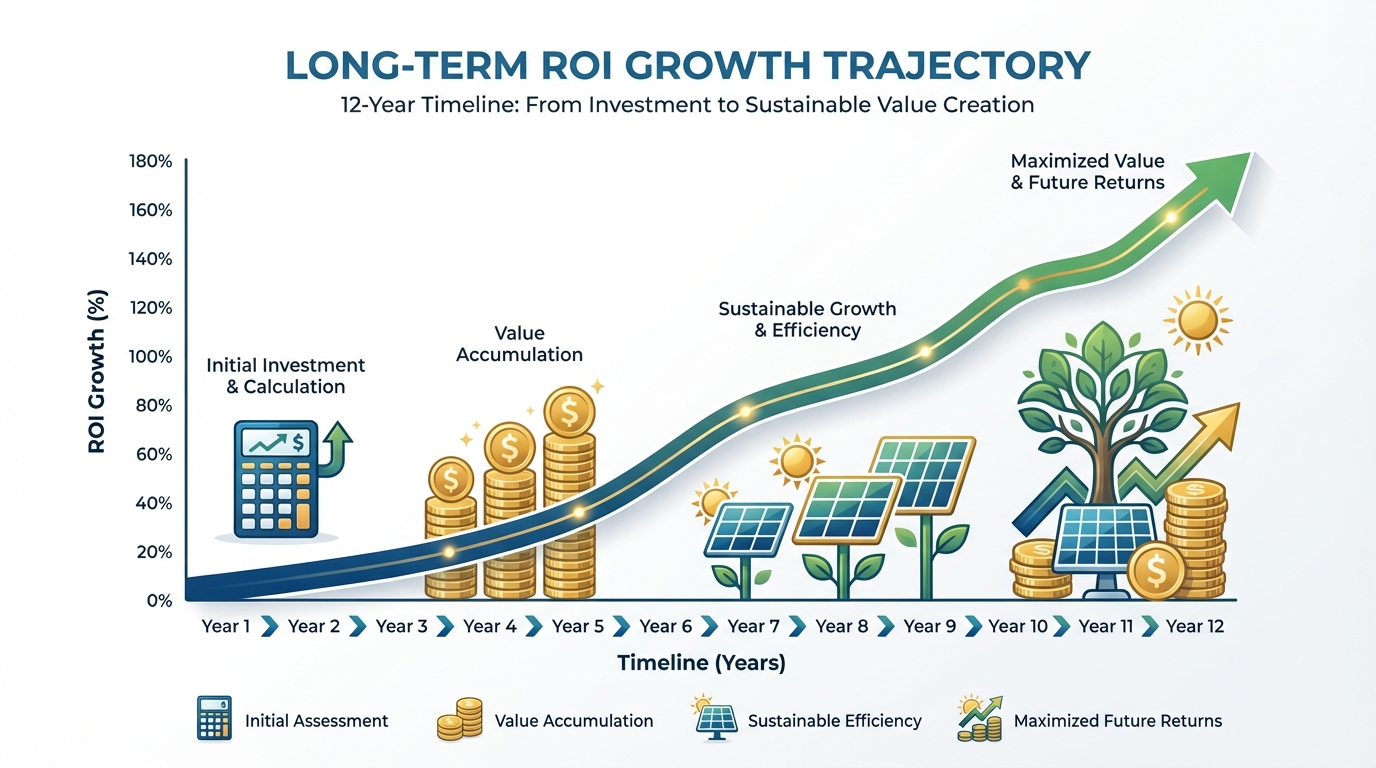
Calculating Total Cost of Ownership Over 12+ Years
Total cost of ownership (TCO) encompasses all costs over the inverter’s operational life. For a 10kW commercial installation, TCO comparison reveals:
Standard Inverter TCO (12 years):
- Initial cost: ₹50,000
- Installation: ₹8,000
- Maintenance (12 years): ₹36,000
- Replacement (year 8, out of warranty): ₹50,000
- Efficiency losses (95% vs 98%): ₹1,08,000
- Total TCO: ₹2,52,000
Premium Inverter TCO (12 years):
- Initial cost: ₹75,000
- Installation: ₹10,000
- Maintenance (12 years): ₹24,000
- Replacement: ₹0 (covered by 12-year warranty)
- Efficiency losses: ₹0 (baseline at 98%)
- Total TCO: ₹1,09,000
The premium inverter delivers ₹1,43,000 in savings over 12 years despite costing ₹25,000 more initially—a compelling financial case for quality investment.
Efficiency Impact on Energy Generation Revenue
Efficiency differences directly impact revenue generation. A 100kW commercial installation generating 1,50,000 kWh annually at ₹8 per unit produces ₹12,00,000 in annual revenue. The difference between 95% and 98% efficiency equals ₹36,000 annually—₹4,32,000 over 12 years.
This efficiency advantage alone often justifies the premium inverter cost, with all other benefits (warranty, reliability, monitoring) representing additional value.
Warranty Value in ROI Calculations
Extended warranty provides quantifiable financial value. The probability of inverter failure increases significantly after year 5, with standard inverters showing 15-25% cumulative failure rates by year 10. A 12-year warranty eliminates replacement costs during this high-risk period.
For a ₹75,000 inverter, the warranty value in years 6-12 can be calculated as: (Failure probability × Replacement cost) = (20% × ₹75,000) = ₹15,000 in expected value, plus elimination of downtime costs and service hassles.
Case Scenarios: Residential vs C&I Installations
Residential Scenario (5kW system): A homeowner investing in solar primarily for electricity bill reduction benefits from premium inverters through consistent performance and warranty peace of mind. The ₹10,000-₹15,000 premium pays back within 4-5 years through efficiency gains and eliminated replacement risk.
C&I Scenario (100kW system): A commercial facility using solar for cost reduction and sustainability goals sees dramatic ROI from premium inverters. The efficiency advantage alone generates ₹36,000+ annually, while warranty coverage eliminates ₹2-3 lakh replacement risk. Premium inverter investment pays back within 2-3 years with continued benefits throughout the system life.
Break-Even Analysis for Different Quality Tiers
Break-even analysis identifies when premium inverter costs are recovered through operational savings. For most installations, break-even occurs within 3-5 years, with the remaining 7-9 years delivering pure financial advantage. Installations with high electricity costs, poor grid reliability, or critical power requirements see even faster payback periods.
Budget Planning Guide for Solar Installers and Facility Owners
Effective budget planning ensures optimal allocation of resources across solar system components while maintaining quality standards that deliver long-term value.

How to Allocate Budget Across System Components
A well-balanced solar installation budget typically allocates:
- Solar panels: 40-50% of total project cost
- Inverter: 10-15% of total project cost
- Mounting structures: 10-15% of total project cost
- Balance of system (cables, connectors, protection): 8-12% of total project cost
- Installation labor: 12-18% of total project cost
- Design, permits, commissioning: 5-8% of total project cost
While tempting to reduce inverter allocation to fund additional panels, this approach often backfires. An undersized or low-quality inverter becomes the system’s weakest link, limiting performance and creating reliability issues that negate the benefits of additional panel capacity.
Percentage of Total Project Cost for Inverters
Inverters should represent 10-15% of total project cost for optimal balance. For a ₹3,00,000 residential installation (5kW), this means ₹30,000-₹45,000 for the inverter. For a ₹25,00,000 commercial installation (100kW), inverter budget should be ₹2,50,000-₹3,75,000.
Projects allocating less than 8% to inverters often compromise on quality, while those exceeding 18% may be overspecified or inefficiently designed. The 10-15% range typically delivers optimal performance-to-cost ratio.
When to Prioritize Inverter Quality Over Panel Quantity
Several scenarios justify prioritizing inverter quality even if it means slightly fewer panels:
- Limited roof space: When expansion isn’t possible, maximizing efficiency from existing capacity through premium inverters makes sense
- Critical applications: Facilities requiring high reliability (hospitals, data centers, manufacturing) benefit from premium inverter reliability
- Harsh environments: Coastal, industrial, or extreme climate locations demand robust inverters to ensure longevity
- Long-term ownership: Owners planning 15-25 year system operation benefit from premium inverter durability and warranty
Budget Planning for Residential Projects
Residential solar budgets typically range from ₹50,000-₹60,000 per kW installed capacity. For a 5kW system (₹2,50,000-₹3,00,000 total), allocate:
- Panels (5kW): ₹1,20,000-₹1,50,000
- Inverter: ₹35,000-₹50,000 (premium tier recommended)
- Mounting structure: ₹30,000-₹40,000
- Balance of system: ₹20,000-₹30,000
- Installation: ₹35,000-₹45,000
- Design & commissioning: ₹10,000-₹15,000
Residential projects benefit significantly from premium inverters due to limited technical oversight and the importance of hassle-free operation for homeowners.
Budget Planning for C&I Installations
Commercial and industrial projects achieve better economies of scale, with costs ranging from ₹40,000-₹50,000 per kW for larger installations. For a 100kW system (₹40,00,000-₹50,00,000 total), allocate:
- Panels (100kW): ₹18,00,000-₹22,00,000
- Inverter: ₹4,00,000-₹6,00,000 (premium tier essential)
- Mounting structure: ₹4,50,000-₹6,00,000
- Balance of system: ₹3,50,000-₹5,00,000
- Installation: ₹6,00,000-₹8,00,000
- Design, engineering & commissioning: ₹3,00,000-₹4,00,000
C&I projects should prioritize inverter quality due to higher revenue at stake and the significant cost of downtime. The efficiency and reliability advantages of premium inverters deliver measurable ROI for commercial applications.
Questions to Ask Suppliers About Pricing
When evaluating inverter proposals, solar professionals should ask:
- What specific component brands are used (capacitors, MOSFETs, microprocessors)?
- What testing protocols does each unit undergo before shipping?
- What exactly does the warranty cover—full replacement or repair only?
- What is the typical warranty claim response time and process?
- Are monitoring features included or do they require additional subscriptions?
- What is the inverter’s efficiency curve at different load levels?
- What surge protection is included as standard?
- What is the expected failure rate based on field data?
- What service network exists for rapid response to issues?
- Can the inverter accommodate future system expansion?
Suppliers unable or unwilling to provide detailed answers to these questions may be offering commodity products rather than engineered solutions. For critical information about Qbits Energy products and specifications, visit their product portfolio or contact their technical team.
Inverter Cost Trends and Future Outlook in India
Understanding market trends helps solar professionals make informed decisions about timing investments and selecting technologies with strong future support.
2026 Pricing Trends in Indian Solar Market
The Indian solar inverter market in 2026 shows several notable trends. Domestic manufacturing has intensified, with companies like Qbits Energy leveraging local production to offer competitive pricing while maintaining quality standards. This has created downward pressure on pricing for standard-tier products while premium-tier pricing remains stable due to component costs and advanced features.
Import duties on solar equipment continue influencing pricing dynamics, making locally manufactured inverters increasingly attractive from both cost and supply chain reliability perspectives. The “Make in India” initiative has matured, with domestic manufacturers now matching or exceeding international quality standards while offering better pricing and service support.
Impact of Local Manufacturing on Costs
Local manufacturing reduces costs through several mechanisms: elimination of import duties (typically 20-40% on finished inverters), reduced logistics costs, faster delivery times, and better service support. Qbits Energy’s domestic manufacturing, backed by the Heaven Group legacy, delivers these advantages while maintaining German-grade component quality.
For solar installers and EPCs, locally manufactured inverters offer additional benefits beyond cost—faster warranty service, readily available spare parts, and technical support in local languages and time zones. These operational advantages translate to reduced project risk and improved customer satisfaction.
Technology Advancements Affecting Pricing
Several technology trends are influencing inverter costs in 2026. AI-powered monitoring and predictive maintenance capabilities are becoming standard in premium inverters, adding ₹2,000-₹5,000 to costs but delivering significant operational value. Wide MPPT voltage ranges and support for 750W+ panels are becoming expected features rather than premium options.
Integration of IoT connectivity—Wi-Fi, 4G, Bluetooth—is now standard in quality inverters, with costs declining as these technologies mature. Advanced features like remote firmware updates, cloud-based analytics, and mobile app control are transitioning from luxury to standard offerings.
Expected Cost Trajectory for Next 2-3 Years
Industry analysts project modest price declines of 5-10% for standard-tier inverters over the next 2-3 years as manufacturing scales and competition intensifies. Premium-tier inverters are expected to maintain stable pricing as advanced features and quality components offset manufacturing efficiencies.
However, component quality and warranty terms matter more than absolute price. A ₹40,000 inverter with 5-year warranty and 95% efficiency delivers less value than a ₹50,000 inverter with 12-year warranty and 98% efficiency, even if the former drops to ₹35,000 in two years.
How to Future-Proof Inverter Investments
Future-proofing inverter investments requires focusing on several key factors:
- Oversizing capability: Select inverters supporting 100% DC oversizing to accommodate system expansion
- High panel voltage support: Ensure compatibility with 750W+ panels for future panel upgrades
- Extended warranty: Choose 10-12 year warranties to cover the high-risk failure period
- Established manufacturer: Select brands with strong market presence and service infrastructure
- Firmware updateability: Ensure inverters support remote firmware updates for feature additions
- Standard communication protocols: Choose inverters using industry-standard monitoring protocols
Qbits Energy inverters incorporate these future-proofing features, ensuring installations remain current and supportable throughout their operational life.
Making the Right Investment Decision
Solar inverter selection represents a critical decision that impacts system performance, reliability, and financial returns for 12-25 years. While inverter cost is an important consideration, it should be evaluated within the context of total cost of ownership, operational value, and long-term reliability.
Balancing Upfront Cost with Long-Term Value
The analysis throughout this guide demonstrates that premium inverters typically deliver superior financial outcomes despite higher initial costs. For most installations—residential and commercial—the 15-30% cost premium for quality inverters pays back within 3-5 years through efficiency gains, warranty value, and reduced maintenance, with continued benefits for the remaining system life.
Solar installers and EPCs should educate clients about total cost of ownership rather than focusing solely on upfront costs. A ₹10,000 saving on a budget inverter often costs ₹50,000-₹1,00,000+ over the system’s life through efficiency losses, replacements, and maintenance.
Red Flags in Low-Cost Inverter Offerings
Several warning signs indicate potentially problematic low-cost inverters:
- Vague component specifications: Inability to specify component brands or origins
- Short warranties: 3-5 year warranties suggest manufacturer lacks confidence in product longevity
- No established service network: Lack of service infrastructure indicates potential support issues
- Missing certifications: Absence of BIS/IEC certification raises safety and quality concerns
- Unrealistic efficiency claims: Claims exceeding 98.5% efficiency are typically marketing rather than reality
- No monitoring capabilities: Modern inverters should include comprehensive monitoring as standard
- Limited technical documentation: Quality manufacturers provide detailed technical specifications
How to Evaluate Inverter Cost Proposals
When comparing inverter proposals, create a comprehensive evaluation matrix including:
- Initial purchase price per kW
- Warranty length and coverage terms
- Rated efficiency at multiple load levels
- Component quality specifications
- Monitoring features and costs
- Service network and response times
- Manufacturer reputation and market presence
- Calculated total cost of ownership over 12 years
This comprehensive evaluation reveals true value beyond simple price comparison. Qbits Energy’s combination of German-grade components, 12-year warranty, AI-powered monitoring, and 98% efficiency delivers compelling value when evaluated holistically rather than on price alone.
Next Steps for Solar Professionals and Facility Owners
For solar installation companies, EPCs, and distributors evaluating inverter options for upcoming projects, the next steps include:
- Assess project requirements: Determine capacity needs, environmental conditions, and reliability requirements
- Calculate total cost of ownership: Use the TCO framework from this guide to compare options
- Request detailed specifications: Obtain component details, test reports, and warranty terms
- Evaluate manufacturer support: Assess service networks, technical support, and warranty processes
- Consider long-term partnership: Select manufacturers offering distributor programs and ongoing support
For facility owners planning solar installations, work with experienced installers who prioritize quality components and can demonstrate total cost of ownership calculations. The lowest-price proposal rarely delivers the best long-term value.
Qbits Energy welcomes inquiries from solar professionals and facility owners seeking reliable, high-performance inverters backed by comprehensive warranty and support. Contact the team to discuss specific project requirements, receive detailed technical specifications, or explore partnership opportunities. For distributors and channel partners interested in adding Qbits inverters to their portfolio, explore partnership opportunities to access competitive pricing, technical training, and comprehensive support.
Understanding solar inverter costs in 2026 requires looking beyond purchase price to evaluate efficiency, warranty, reliability, and total cost of ownership. By making informed decisions based on comprehensive analysis rather than initial cost alone, solar professionals and facility owners can maximize ROI while ensuring reliable, long-lasting solar installations that deliver value for decades.